
Product Fit
Sizing, inserts and structure planned around how the item sits inside.
Compare board, print, colour, finishes, inserts, dielines and proofing options, then match each choice to the structure, product and use conditions of the packaging.

Packaging capability is useful when it solves a specific production problem. Board controls stiffness, folding and handling. Structure controls fit and opening behaviour. Print and colour control how artwork reproduces. Finishes alter surface appearance and touch. Inserts manage movement or presentation. Dielines connect the physical structure to the artwork. The right specification combines only the capabilities the project actually needs.
If the packaging format itself is still undecided, start with custom packaging or the relevant packaging style first. If printing is already the dominant commercial requirement, custom printed boxes carries the print-led decision. Use these capabilities to resolve the technical choices once the packaging route is clear.
The same specification does not work equally well for shelf display, parcel delivery, repeated warehouse handling and premium presentation. Material duty, closure, print coverage, insert geometry and finishing should be set around where the pack is stored, filled, handled, displayed and opened.
A useful capability review therefore starts with the conditions the package must survive or create, then selects the technical controls that change that outcome.
Sizing, inserts and structure planned around how the item sits inside.
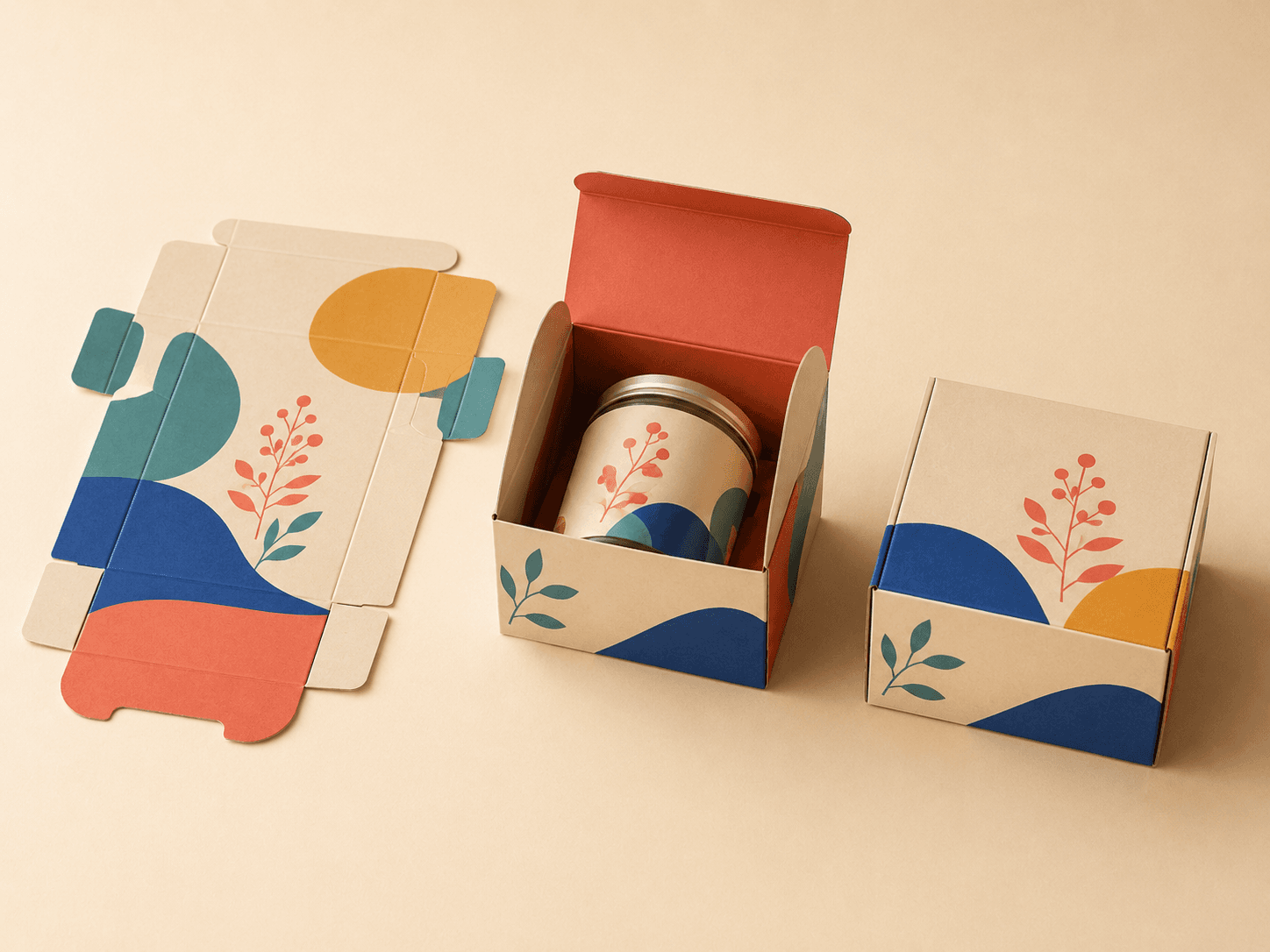
Boxes, sleeves and bags chosen for easier folding, filling and closing.
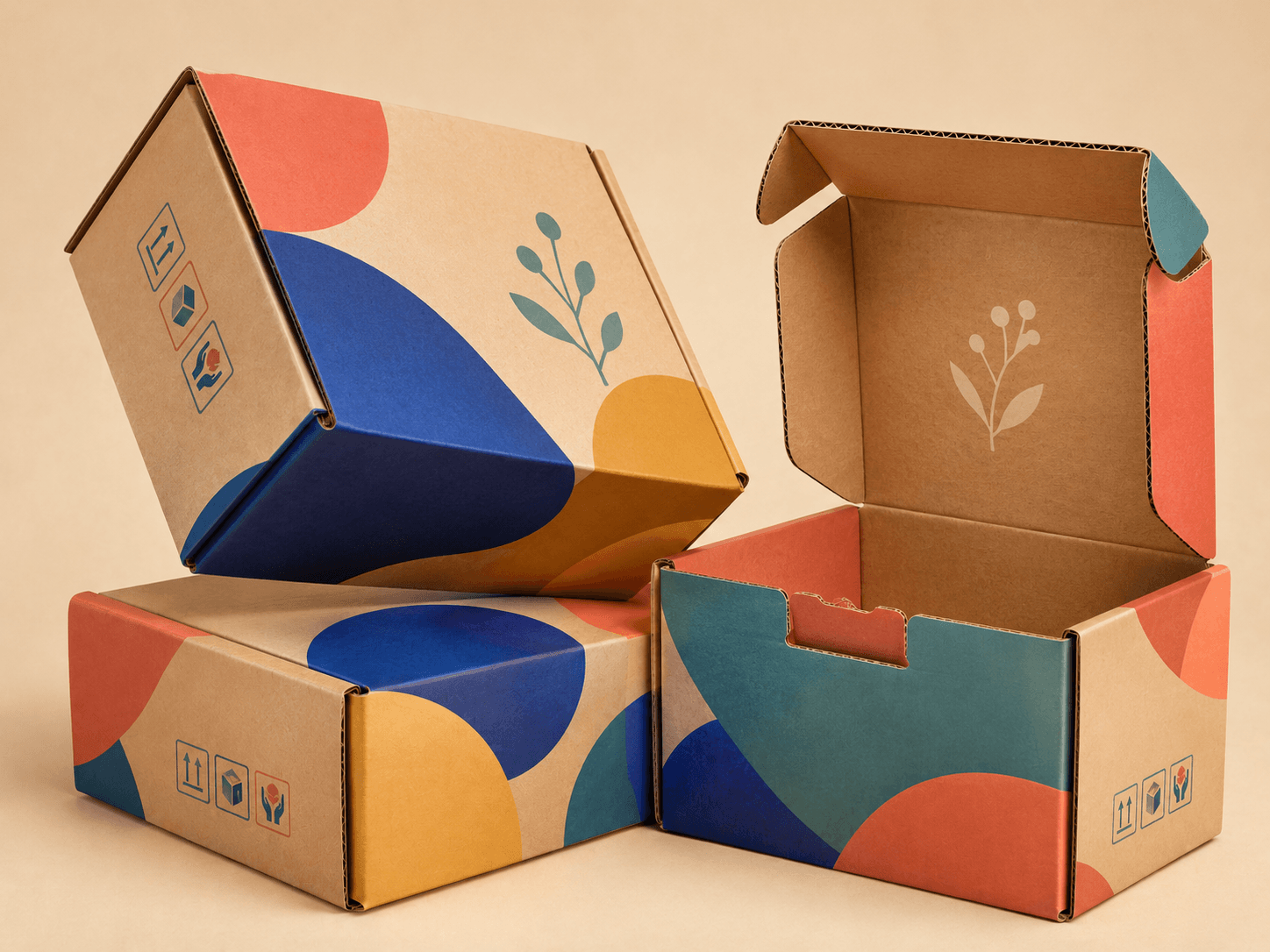
Board strength and closure style matched to shipping and courier movement.
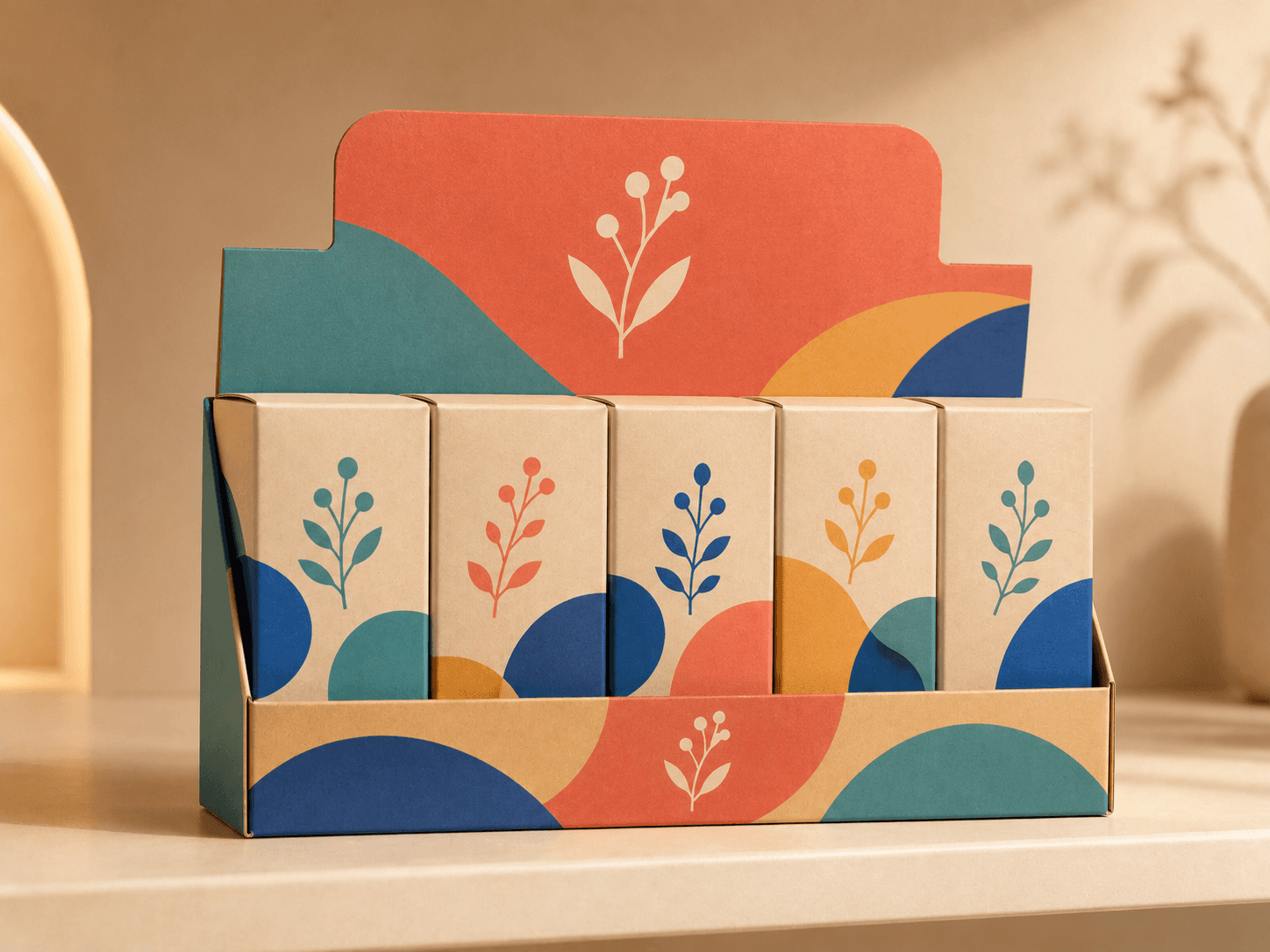
Print areas, front panels and finishes planned for clear product presentation.

The reveal, finish and insert fit shaped around first impression.
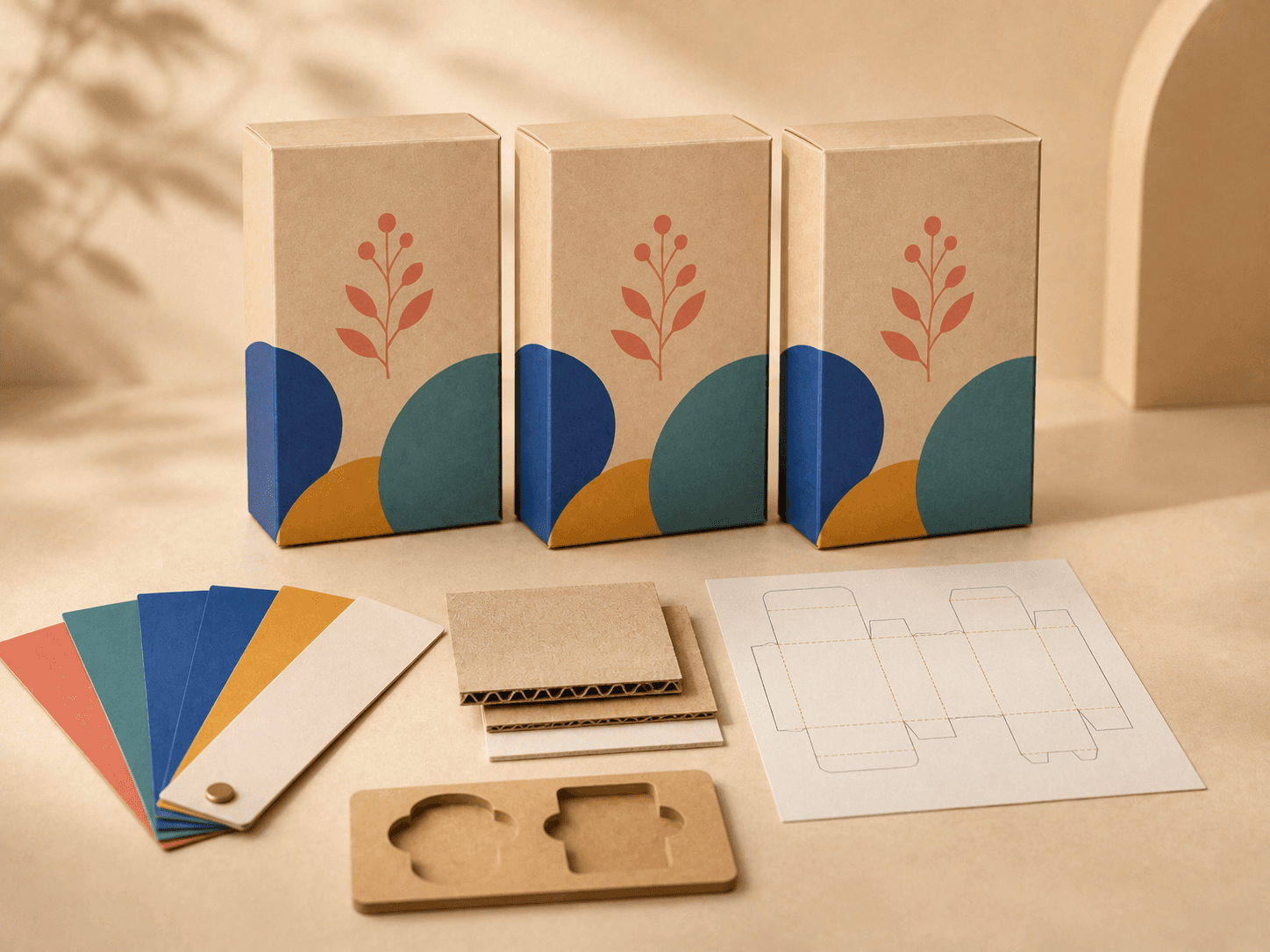
Specifications kept clear so future runs stay consistent and easier to reorder.
Subtext: Select paperboard, kraft, corrugated board, rigid board or speciality stock based on strength, finish and print needs.
Adjust dimensions, panels, openings, flaps and closures so the packaging fits the product properly.
Choose digital, offset or flexographic printing based on artwork detail, order quantity and production needs.
Use CMYK, Pantone matching, rich black, white ink or inside print colour for controlled brand presentation.
Add matte, gloss, soft-touch, foil, embossing, debossing or spot UV for a more refined surface.
Improve product fit with cardboard inserts, corrugated partitions, die cut cradles, dividers or layer pads.
Review structure, board, colour, print and finish details before moving into full production.
Reduce waste with right-sized packaging, paper-based inserts, recyclable board choices and efficient storage.
Choose board by the physical job first. Paperboard is suited to many folding cartons and sleeves where crease behaviour, print surface and flat storage matter. Corrugated board adds a fluted layer for mailers and shipping structures where stacking and delivery handling matter. Rigid board supports presentation structures that need a thicker, non-collapsing feel. Kraft describes a stock appearance or paper choice, not a strength class by itself.
When the material decision is still open, paperboard, corrugated and rigid packaging provides a focused comparison of how the main board families behave in use.
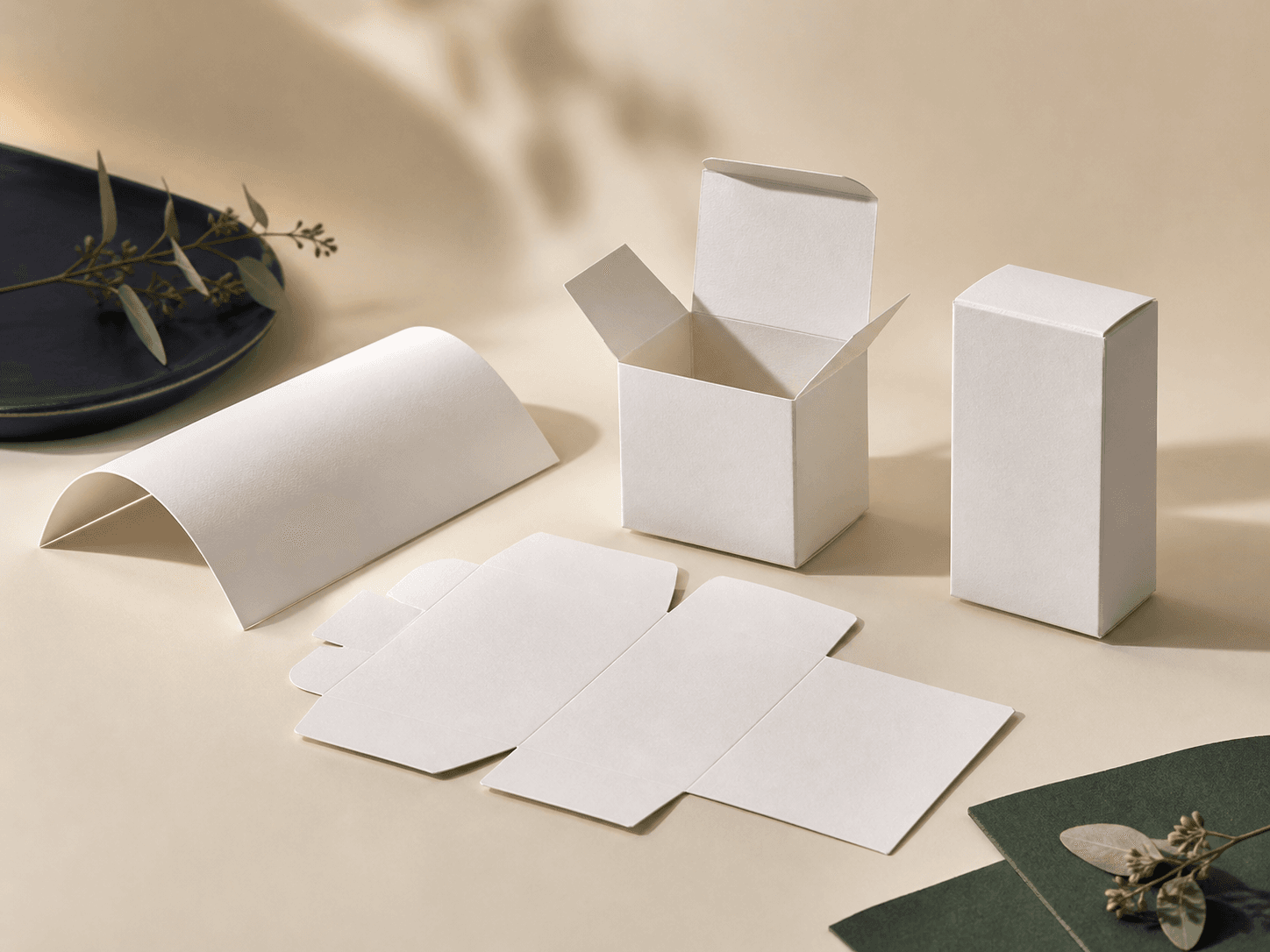
Smooth, foldable board for cartons, sleeves, product boxes and lightweight retail packaging.
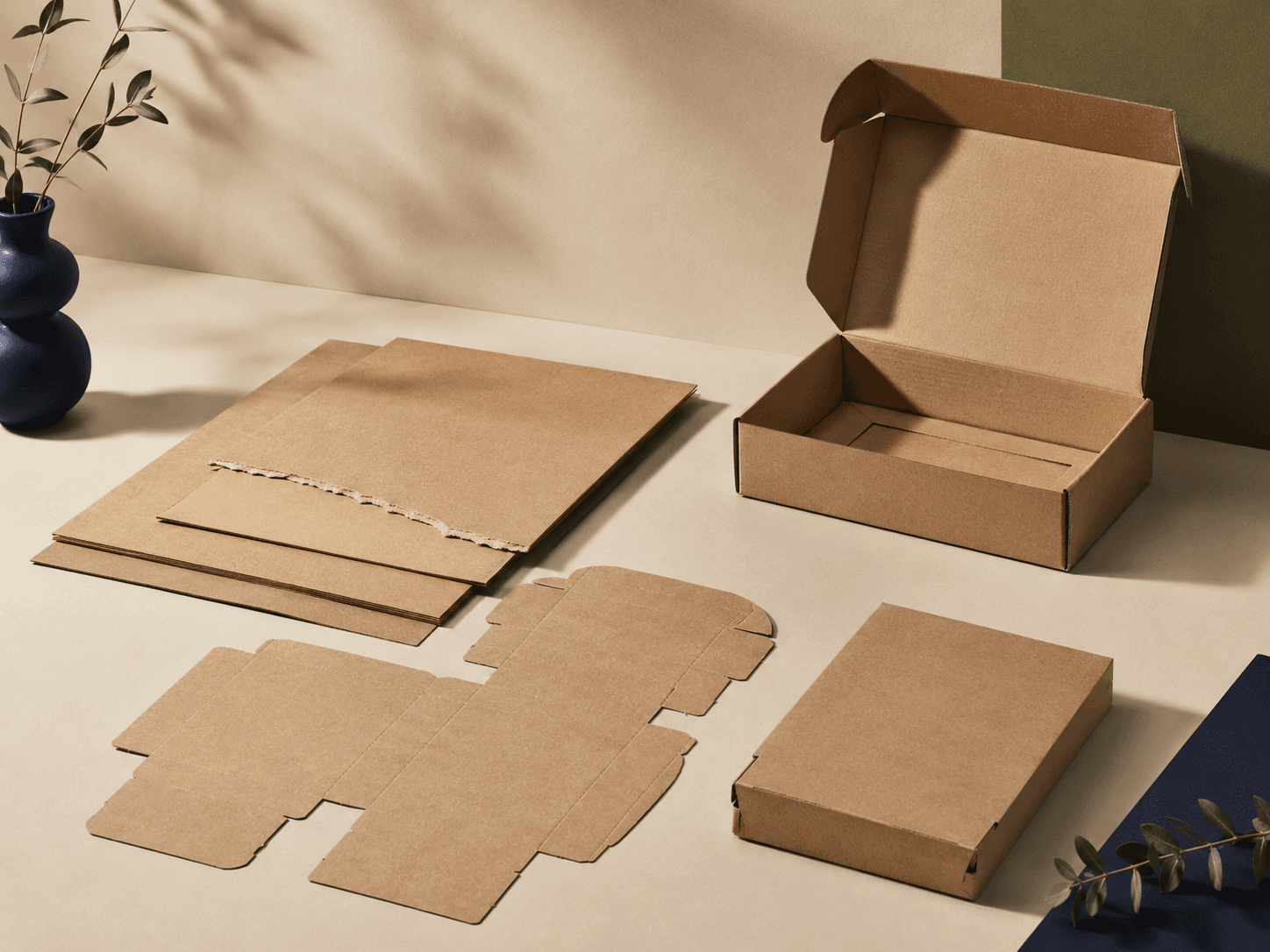
Natural brown stock for earthy, recyclable and understated packaging with a warmer surface tone.
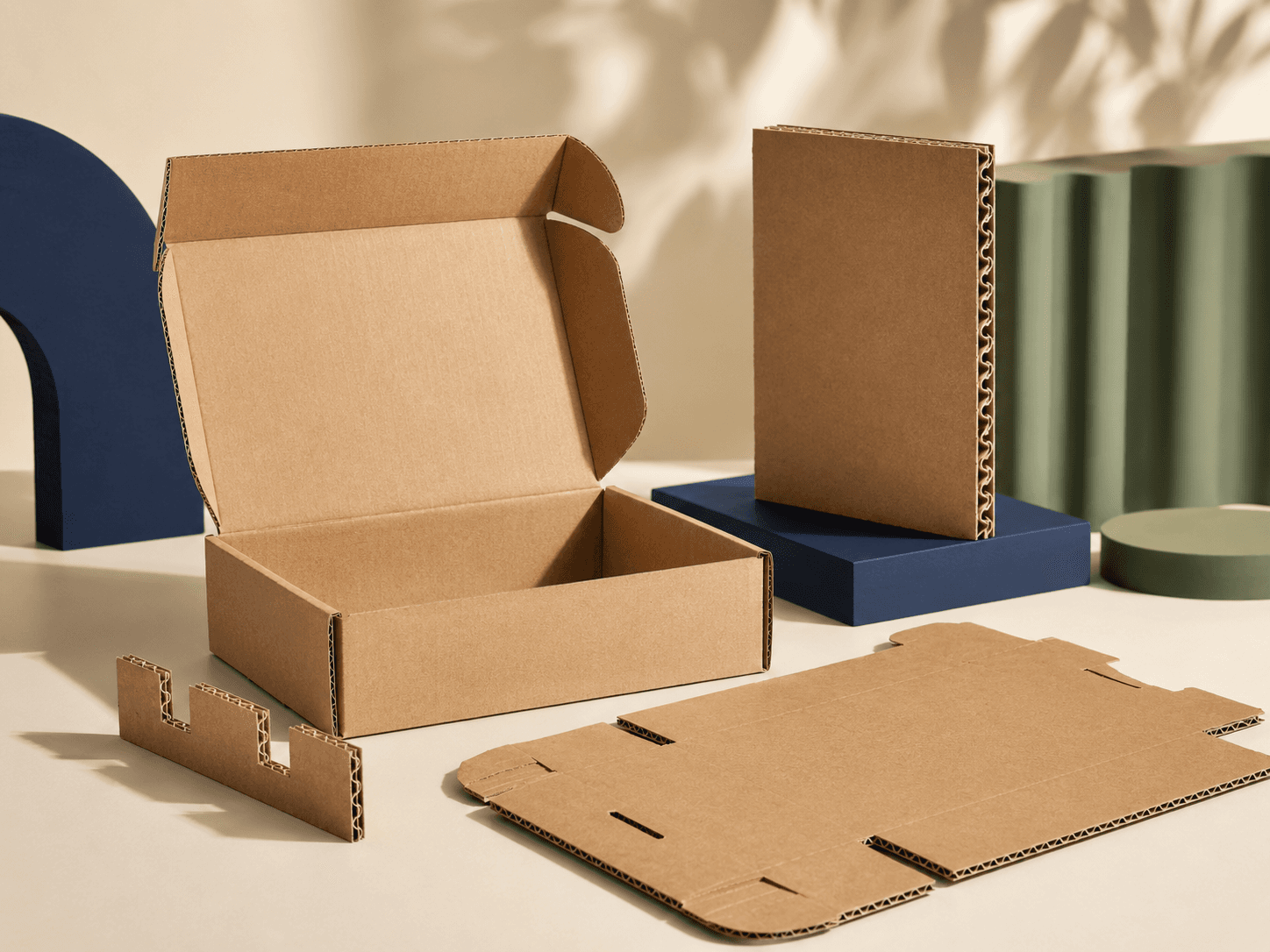
Fluted board for mailer boxes, postal boxes, shipping boxes and protective delivery packaging.
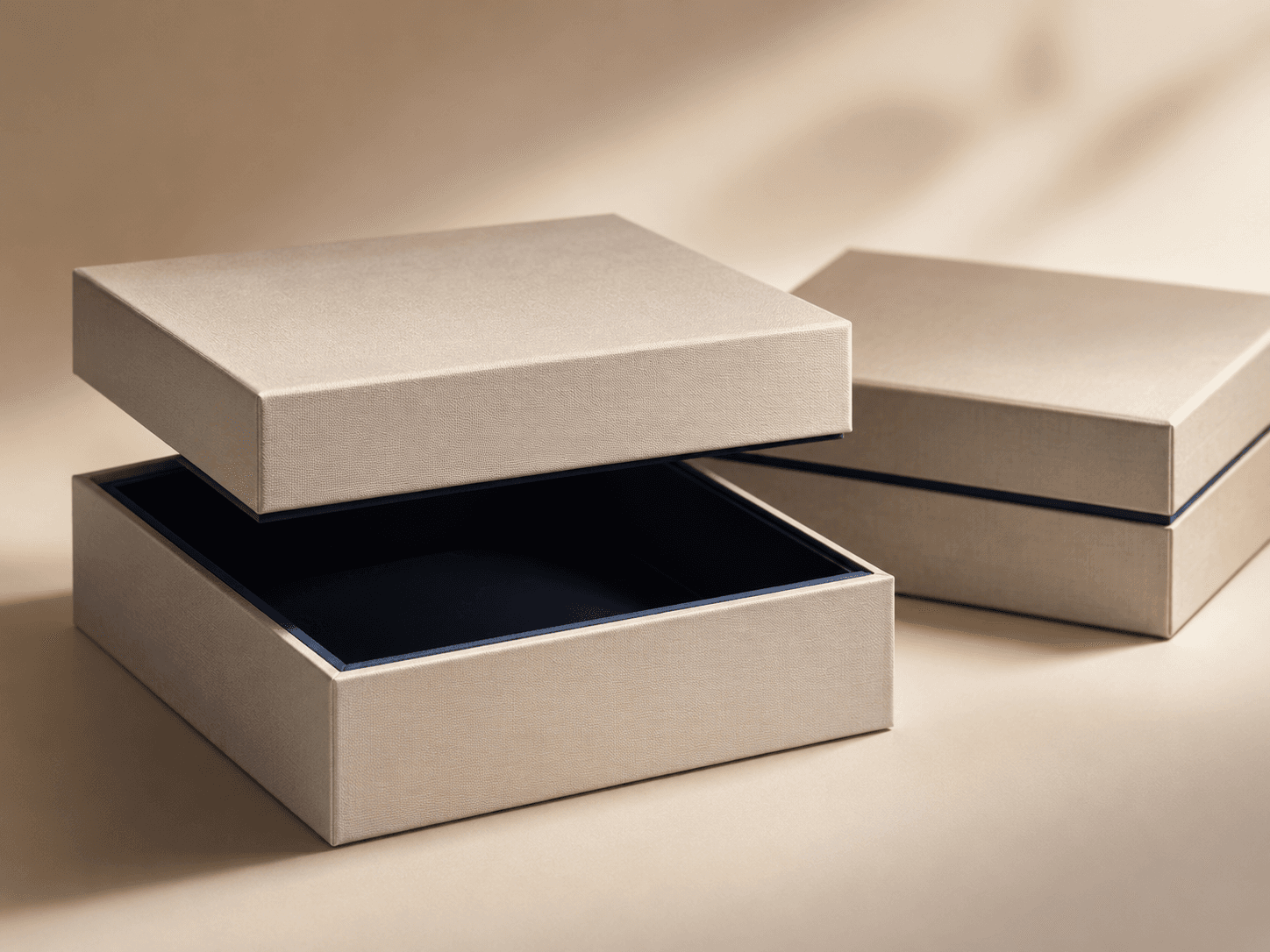
Thick board for premium presentation boxes, gift packaging and luxury product launches.
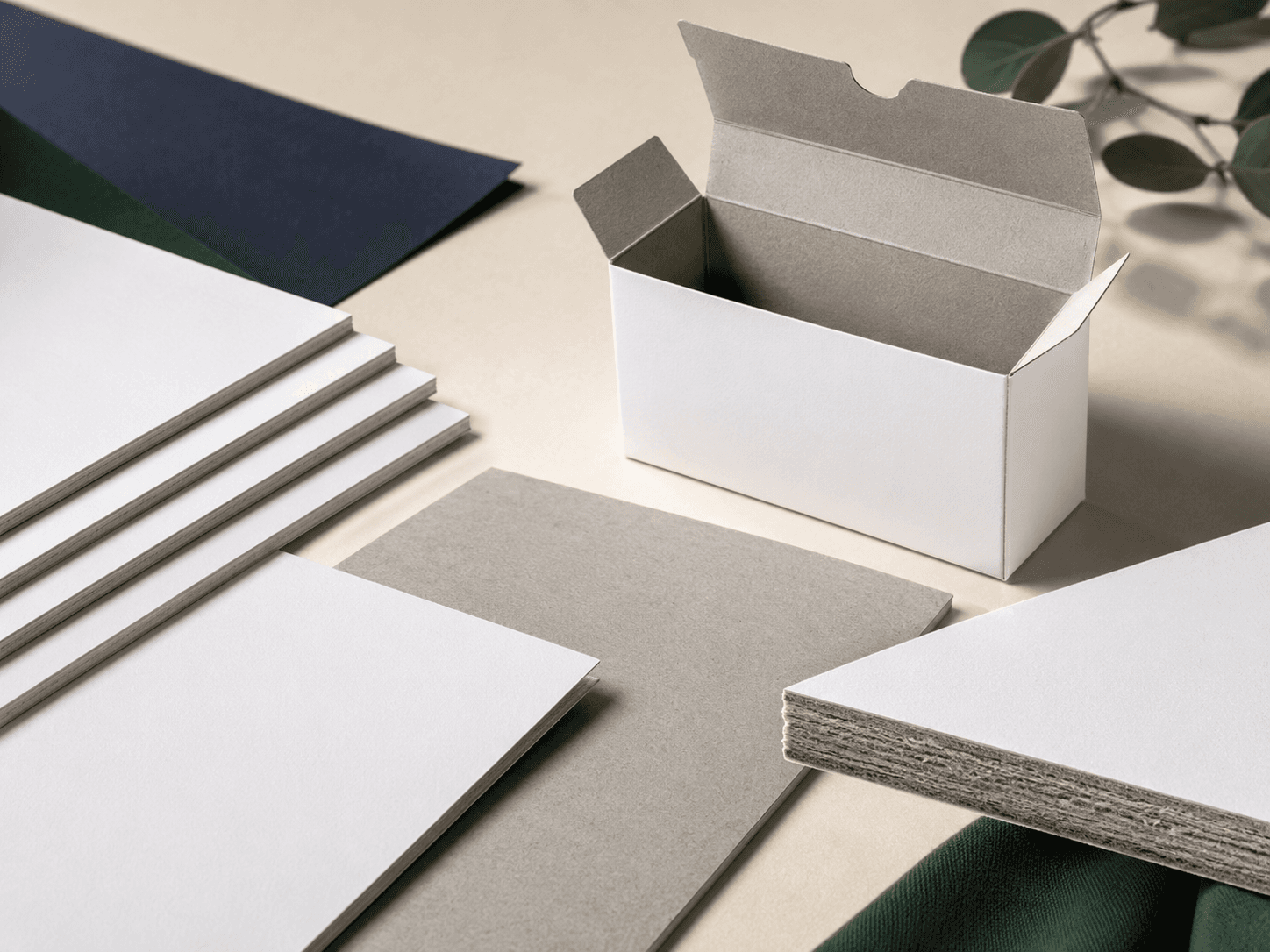
Practical board for printed cartons, retail boxes and cost-conscious paper-based packaging.
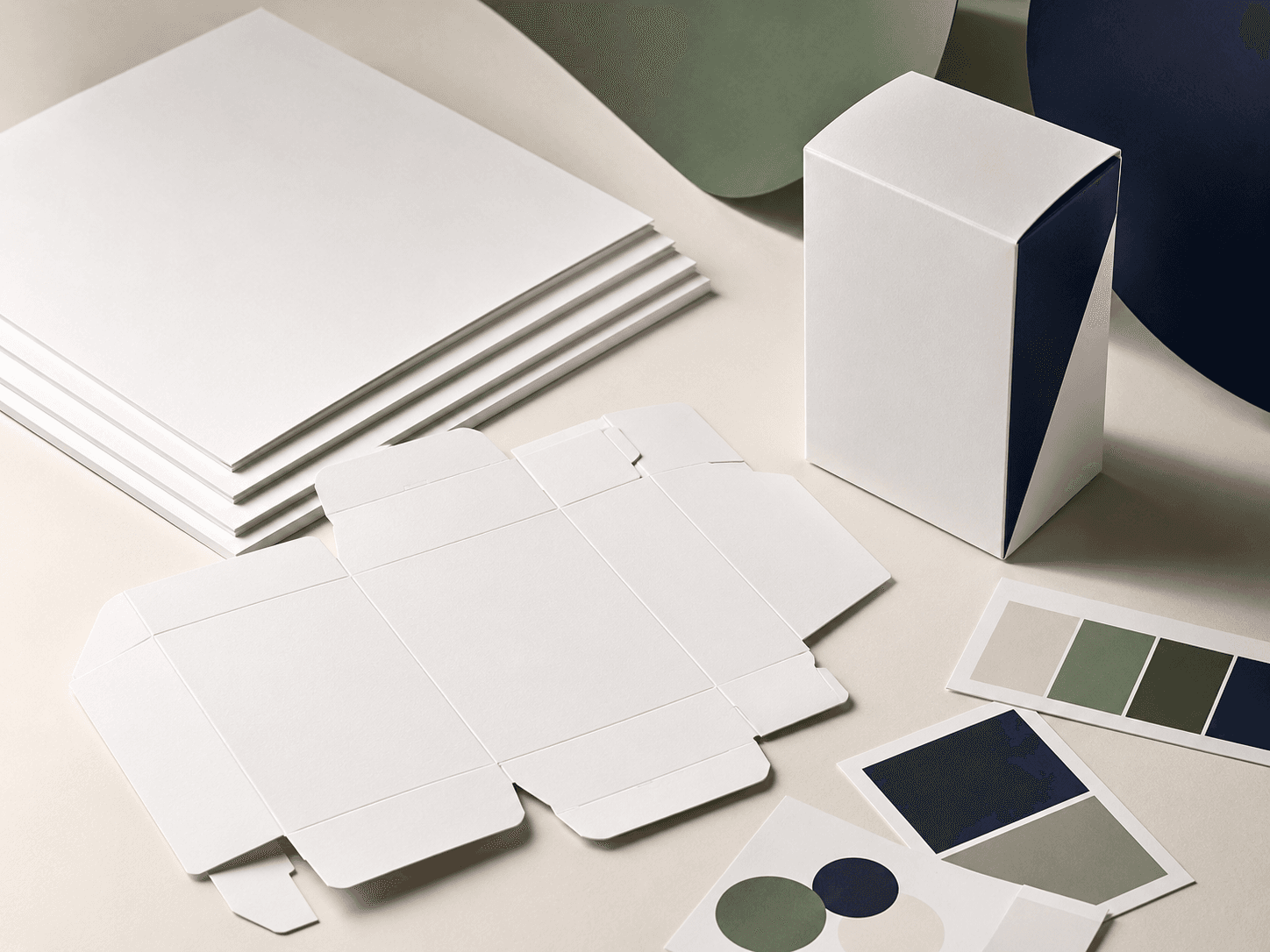
Clean white stock for crisp print, premium colour reproduction and refined carton presentation.
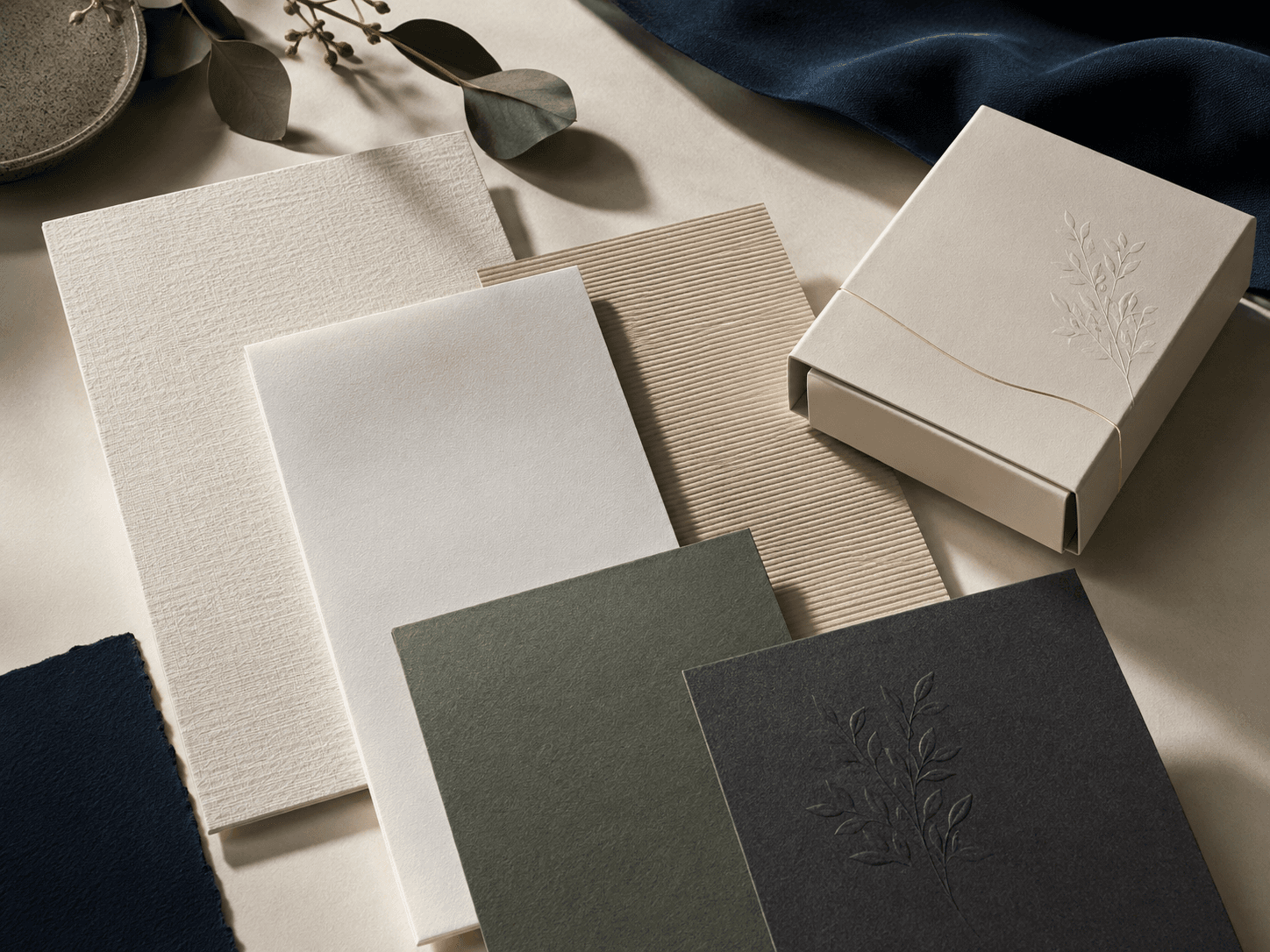
Distinctive surfaces for tactile packaging, luxury finishes and more memorable brand presentation.
Use the table as a starting comparison. Final board choice still depends on dimensions, product weight, structure, print coverage and handling conditions.
| Board Type | Best For | Feel or Strength | Common Uses |
|---|---|---|---|
| Paperboard | Retail cartons and sleeves | Smooth and lightweight | Product boxes, sleeves and folding cartons |
| Kraft board | Natural brand styles | Earthy and recyclable feel | Food sleeves, mailers and paper bags |
| Corrugated board | Transit and ecommerce | Stronger cushioning | Mailer boxes, shipping boxes and postal boxes |
| Rigid board | Premium presentation | Thick and sturdy | Rigid Boxes, gift boxes and jewellery boxes |
| Duplex cardboard | Practical printed boxes | Cost-effective and printable | Retail cartons and product boxes |
| SBS stock | High-quality colour work | Smooth and bright | Beauty, wellness and premium retail boxes |
| Textured stock | Tactile presentation | Distinct surface feel | Gift packaging, luxury sleeves and presentation boxes |
The right board should match the product’s weight, handling journey, print coverage and presentation level. For example, corrugated board is usually stronger for delivery while rigid board is better for high-value presentation.
Print method should follow the artwork, run characteristics and substrate rather than being selected as a quality label. Digital printing can suit shorter runs and artwork changes. Offset printing is useful where the project benefits from press setup, fine print control and repeat production. Flexographic printing is commonly used for corrugated and other applications where the artwork and run suit the process.
The practical differences between digital and offset printing for packaging are best judged against quantity, colour requirements, substrate and the artwork itself. Custom Packly also supports premium offset printing where it fits the job.
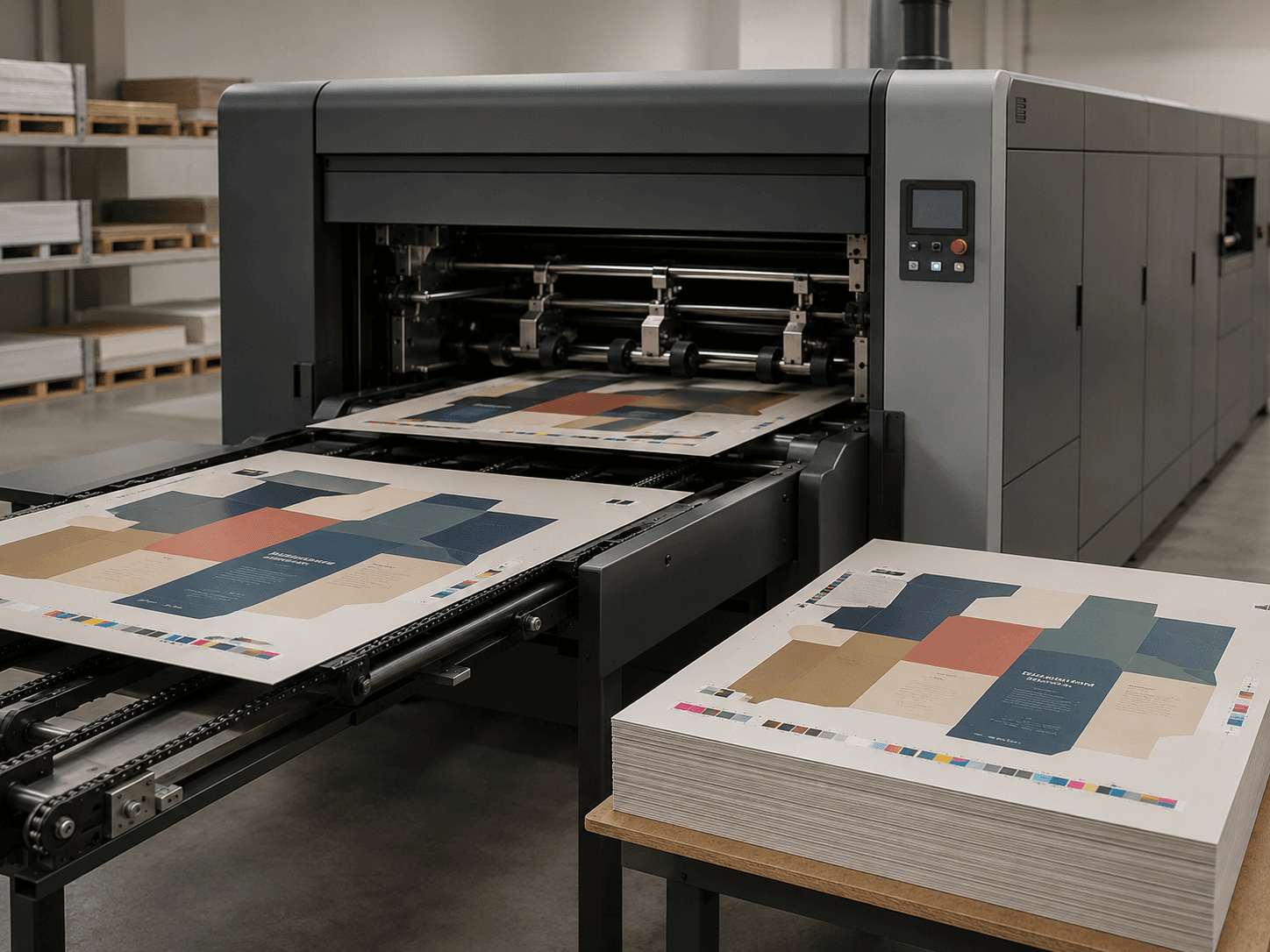
Flexible print choice for shorter runs, quick artwork changes and small batch packaging.
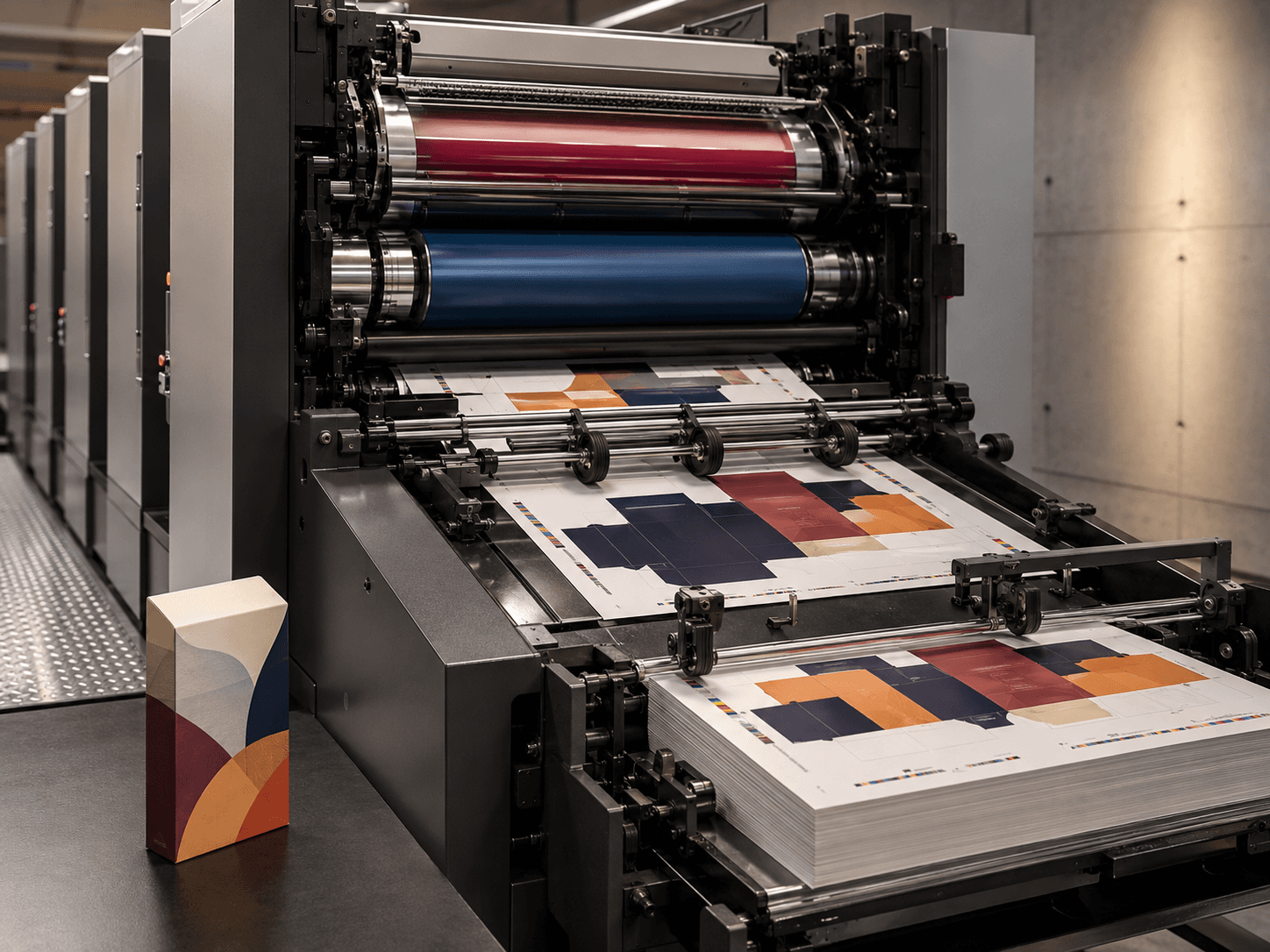
High-quality print method for sharper detail, smoother colour and larger production runs.
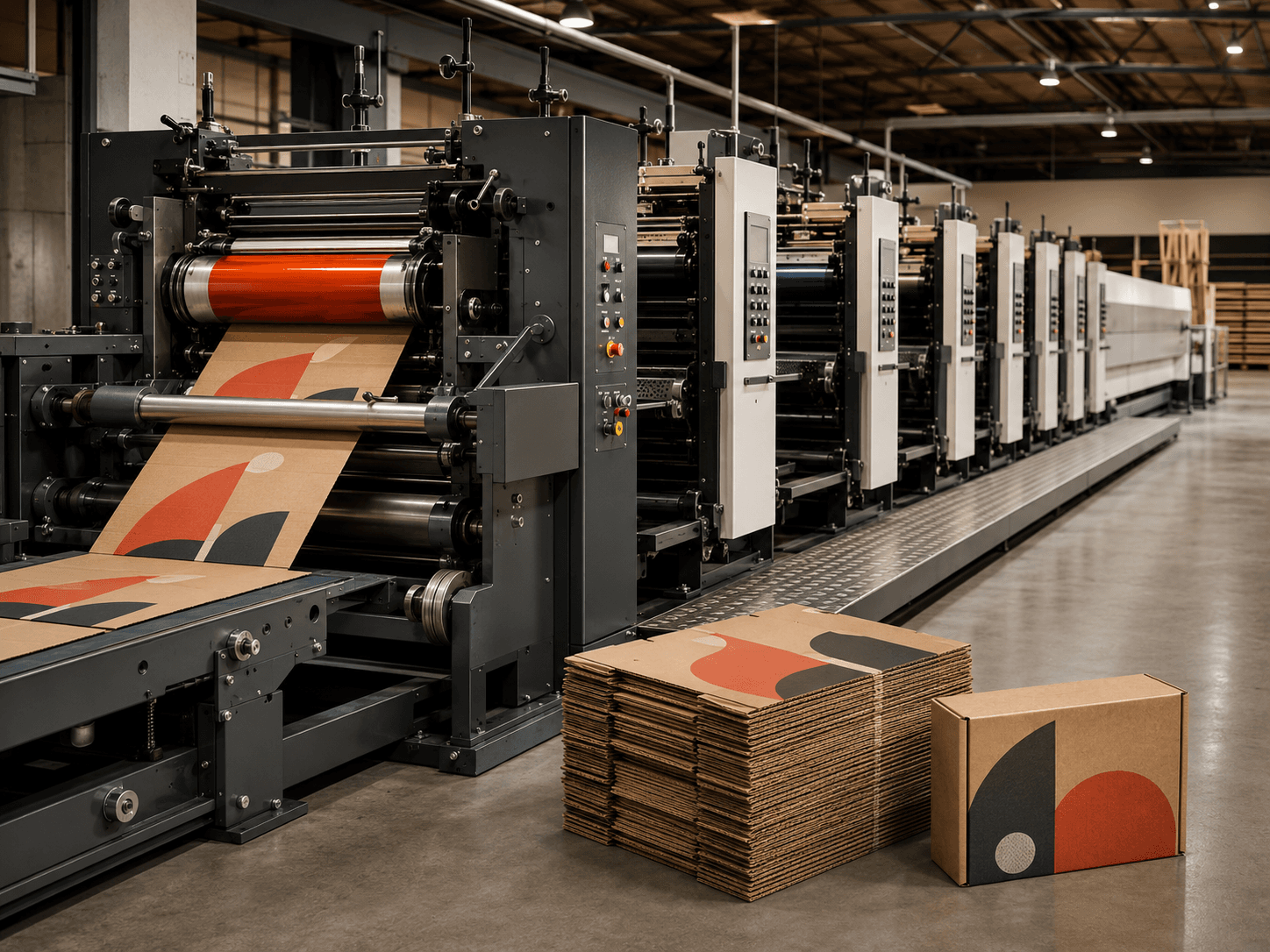
Efficient option for simpler graphics, corrugated packaging and repeat production requirements.
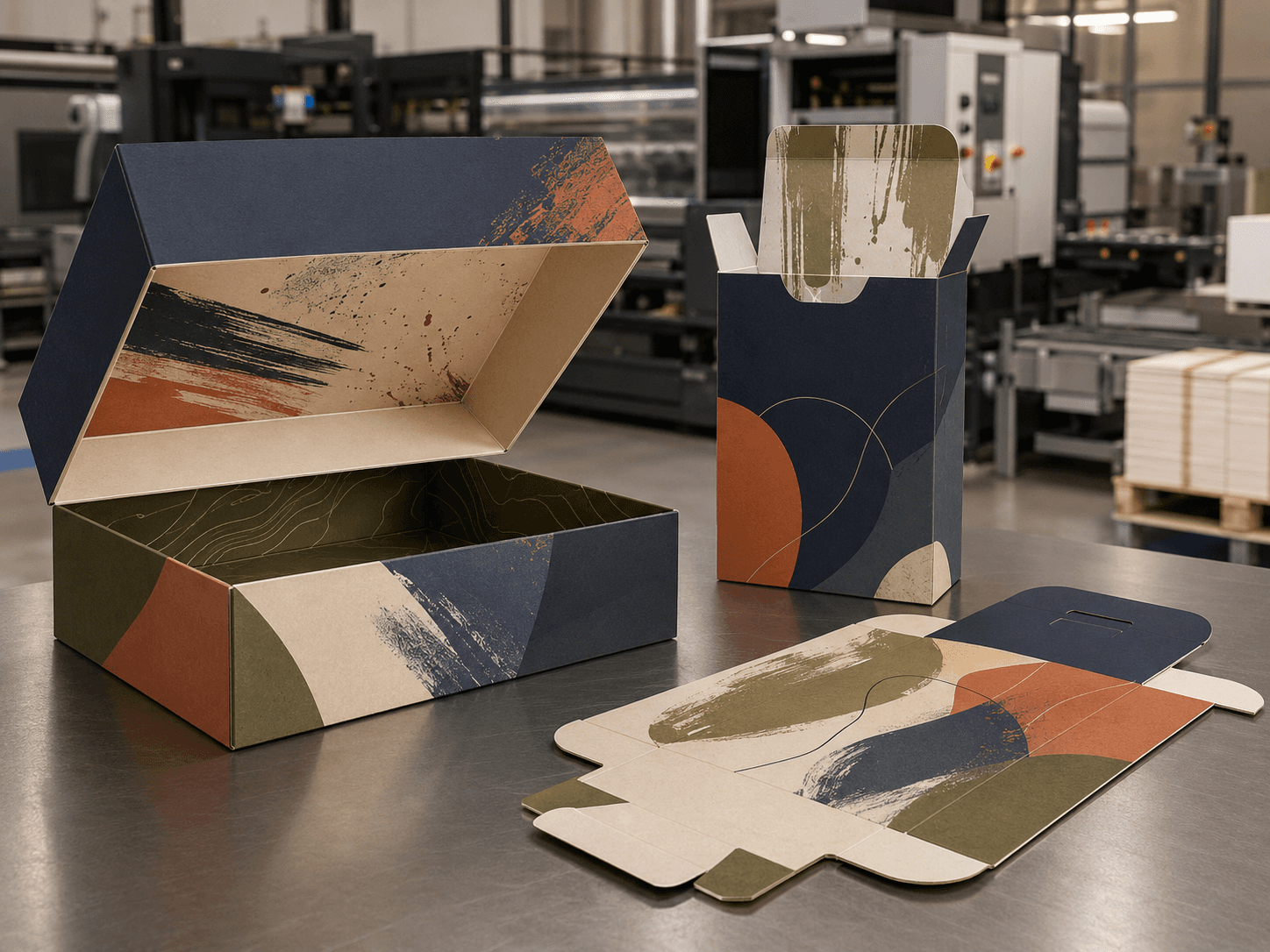
Add artwork inside the box, outside the box or across both surfaces for a fuller brand reveal.
Printing method affects colour quality, cost, production speed and how well artwork works on different board surfaces.
| Print Method | Best For | Main Strength | Consider Before Ordering |
|---|---|---|---|
| Digital printing | Short runs and launch batches | Fast and flexible | Best for smaller quantities |
| Offset printing | Premium printed packaging | Sharp detail and colour control | Stronger for larger runs |
| Flexographic printing | Corrugated and repeat production | Efficient for simpler artwork | Less suited to complex gradients |
A print choice should be made after the board and artwork direction are clear. Detailed artwork, heavy ink coverage, inside printing and premium finishes all need careful file preparation before production.
CMYK is a process-colour system suited to full-colour artwork, images and gradients. Pantone references are useful when a specific spot colour or repeat brand reference needs tighter control. The printed result also changes with the stock, coating and ink coverage, so a colour reference should be judged on the actual production surface where colour sensitivity is high.
Inside print, white ink on suitable stocks and dark or natural substrates can change the colour plan. Colour decisions should therefore be locked with the material and artwork rather than treated as a separate decorative step.
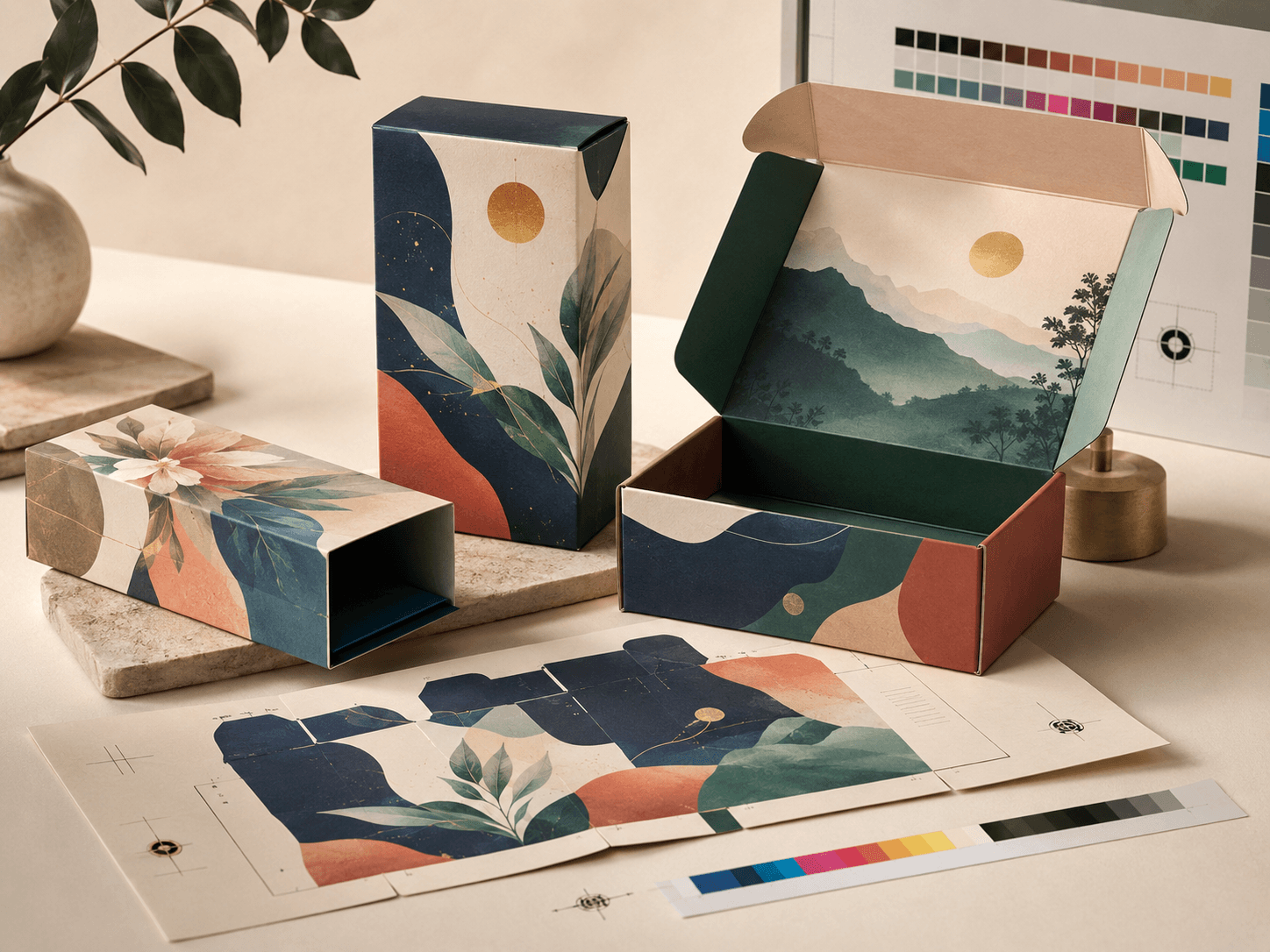
Full-colour printing for artwork, gradients, product illustrations and flexible packaging graphics.
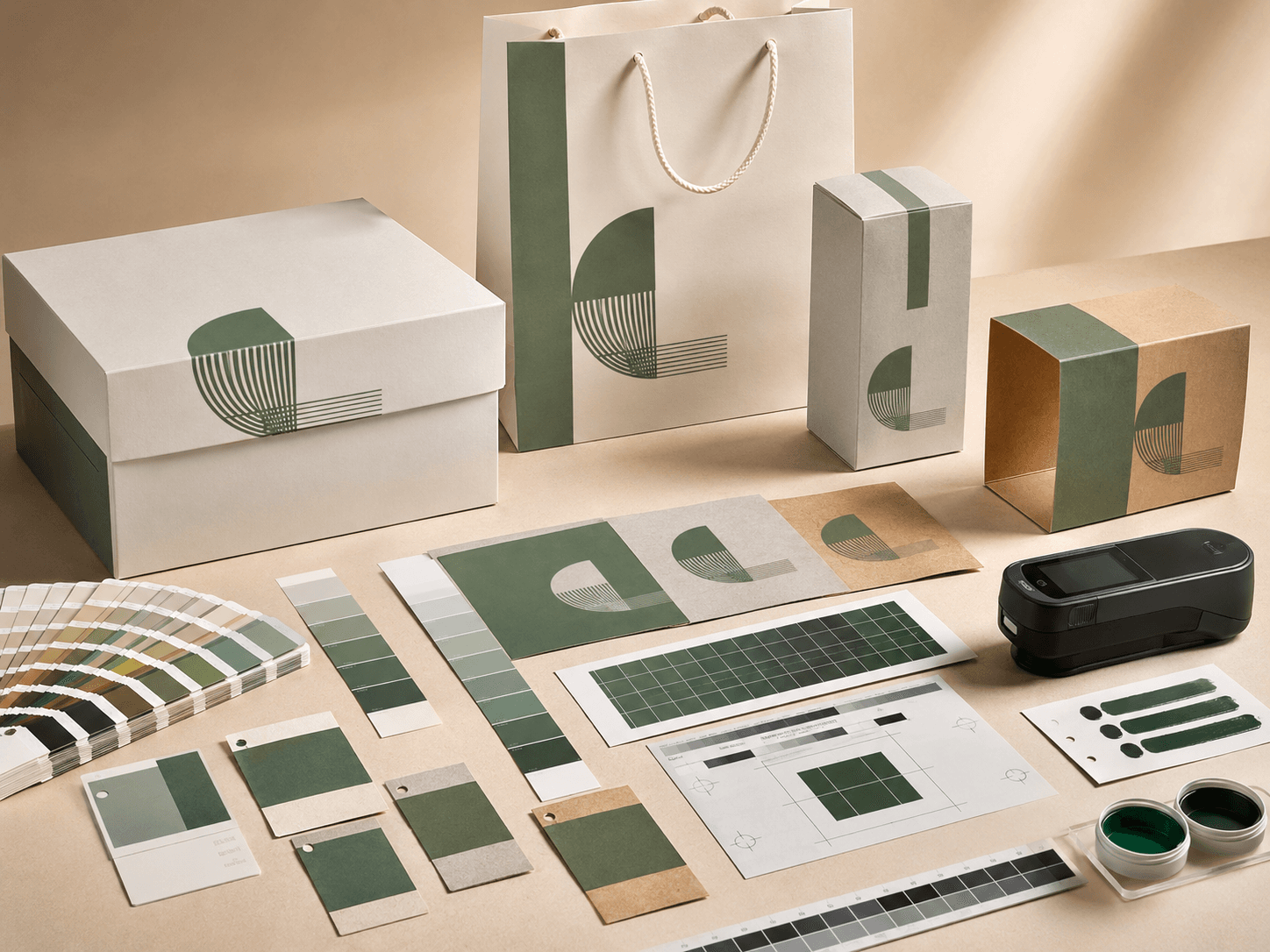
Better control for brand colours that need stronger consistency across production runs.
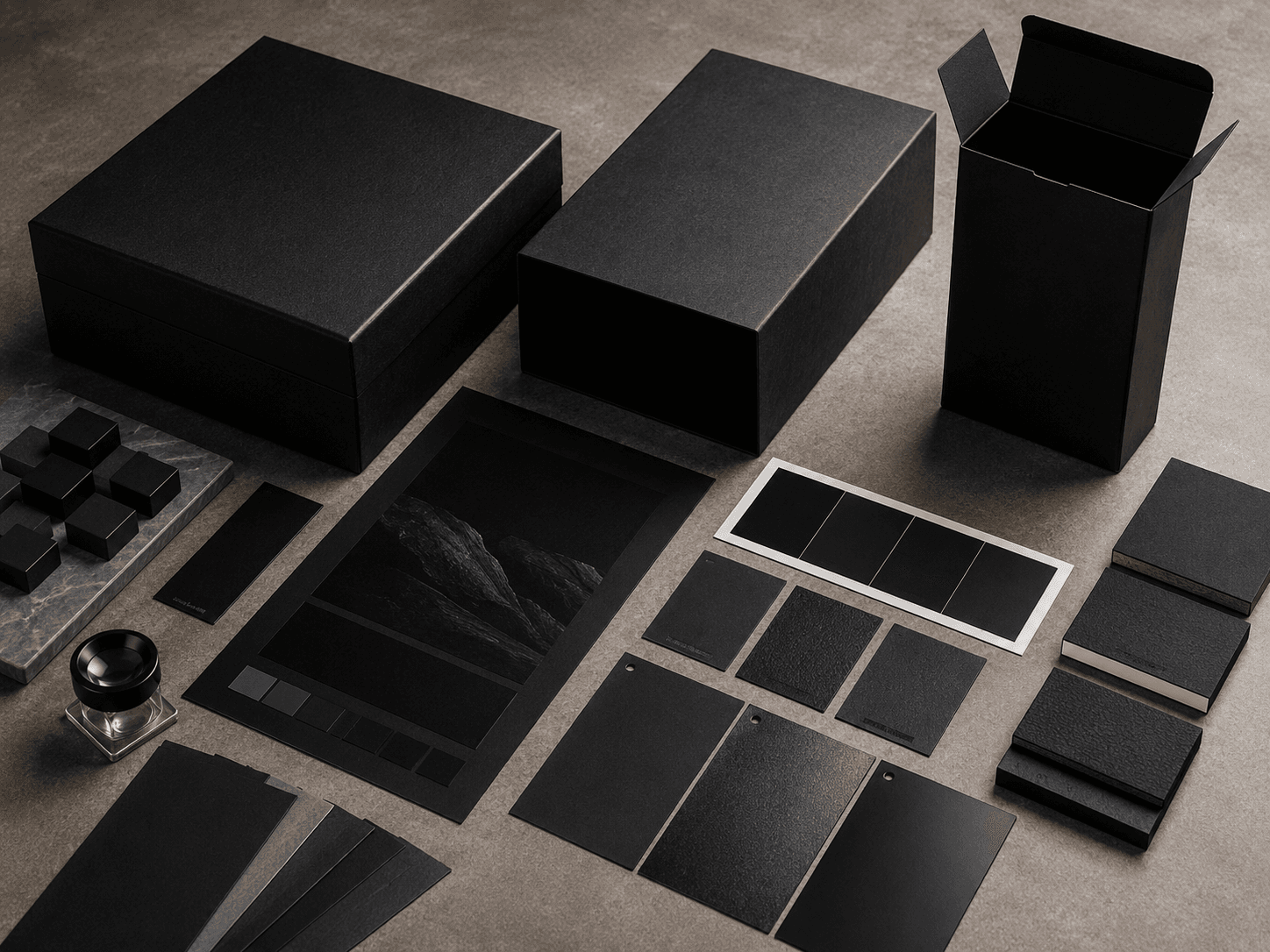
Useful for dark packaging, luxury designs and artwork that needs stronger colour depth.
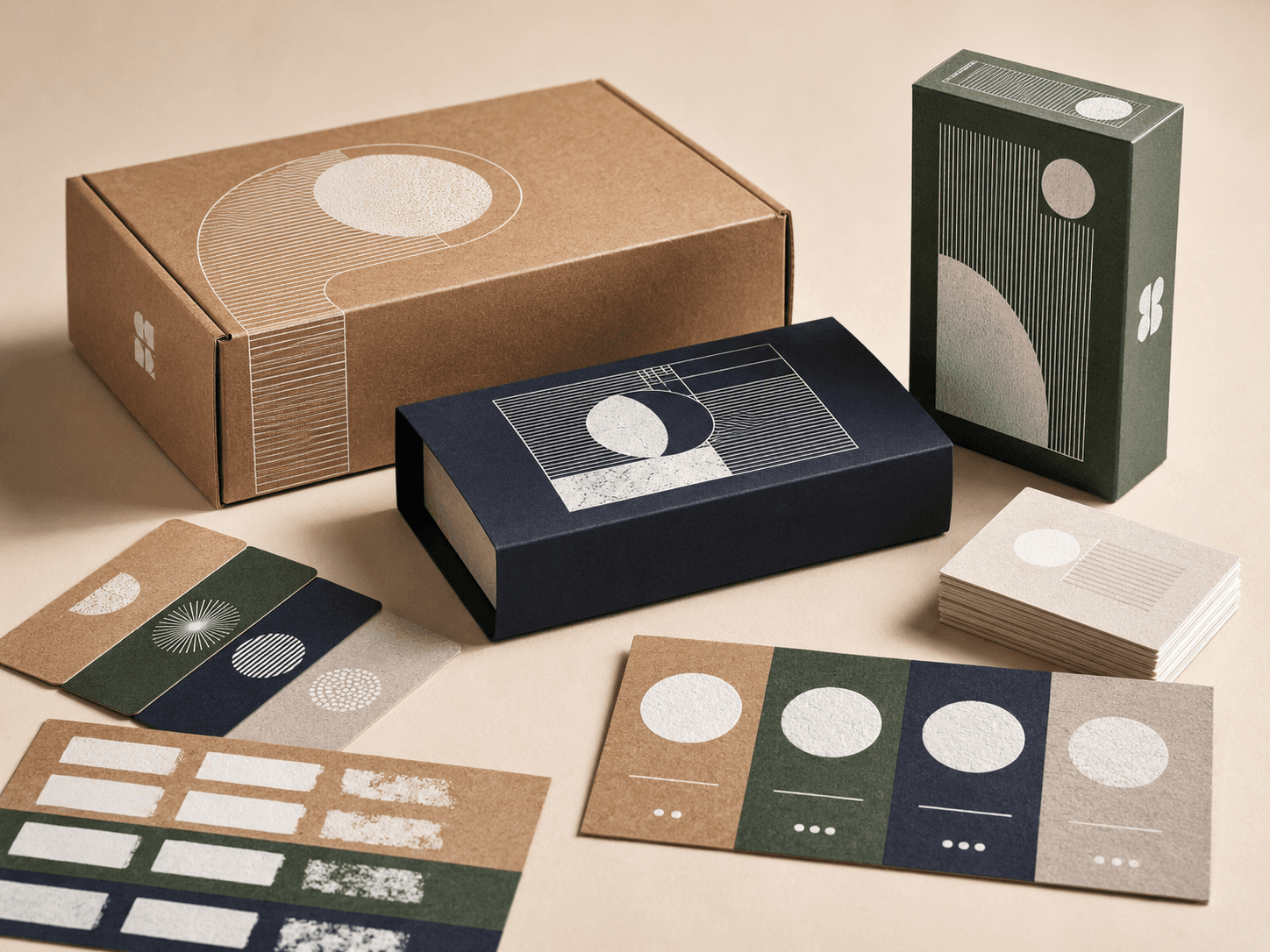
Helps artwork stand out on kraft, coloured or darker board surfaces.
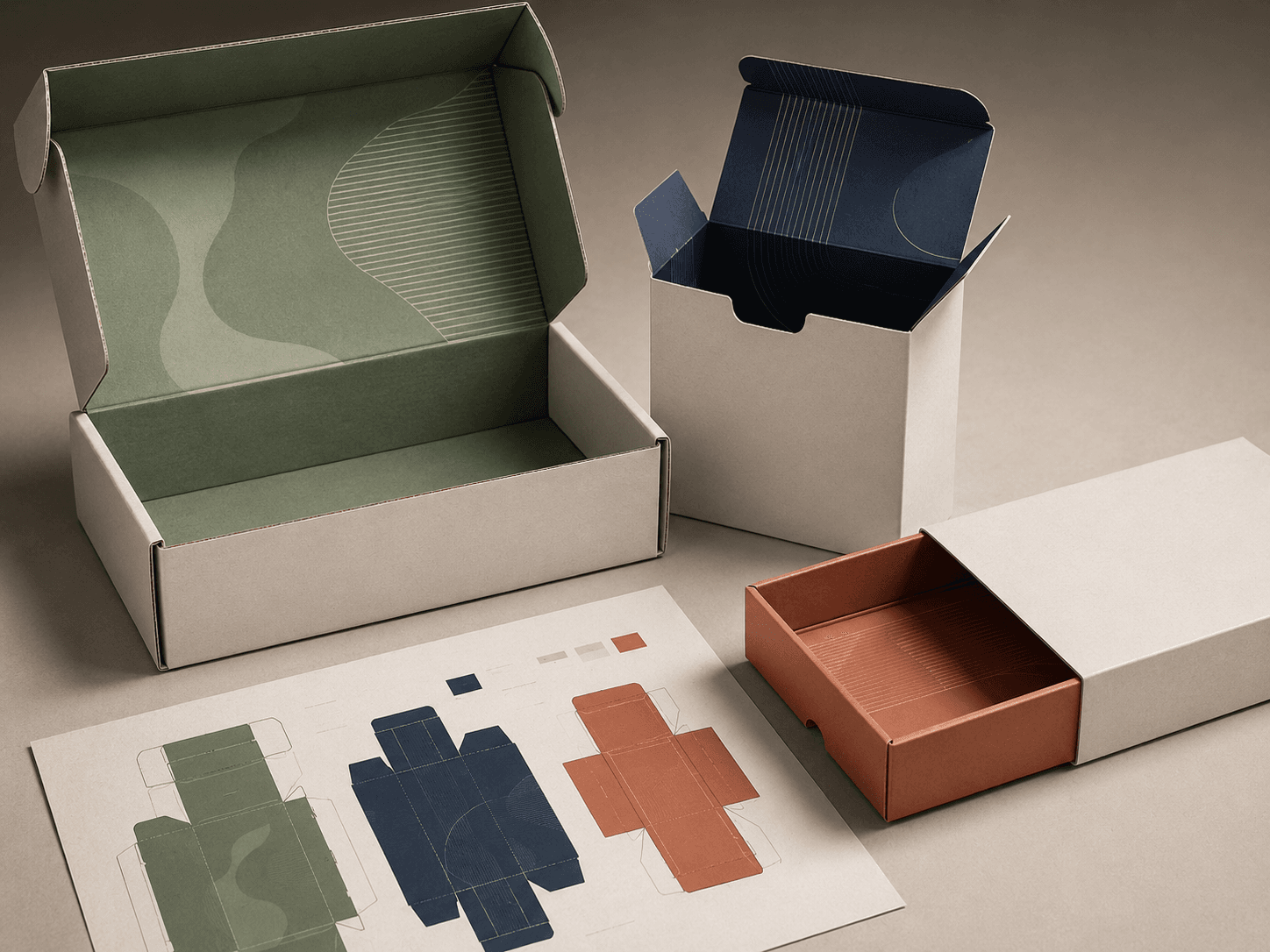
Adds colour inside mailers, rigid boxes or cartons for a more complete unboxing experience.
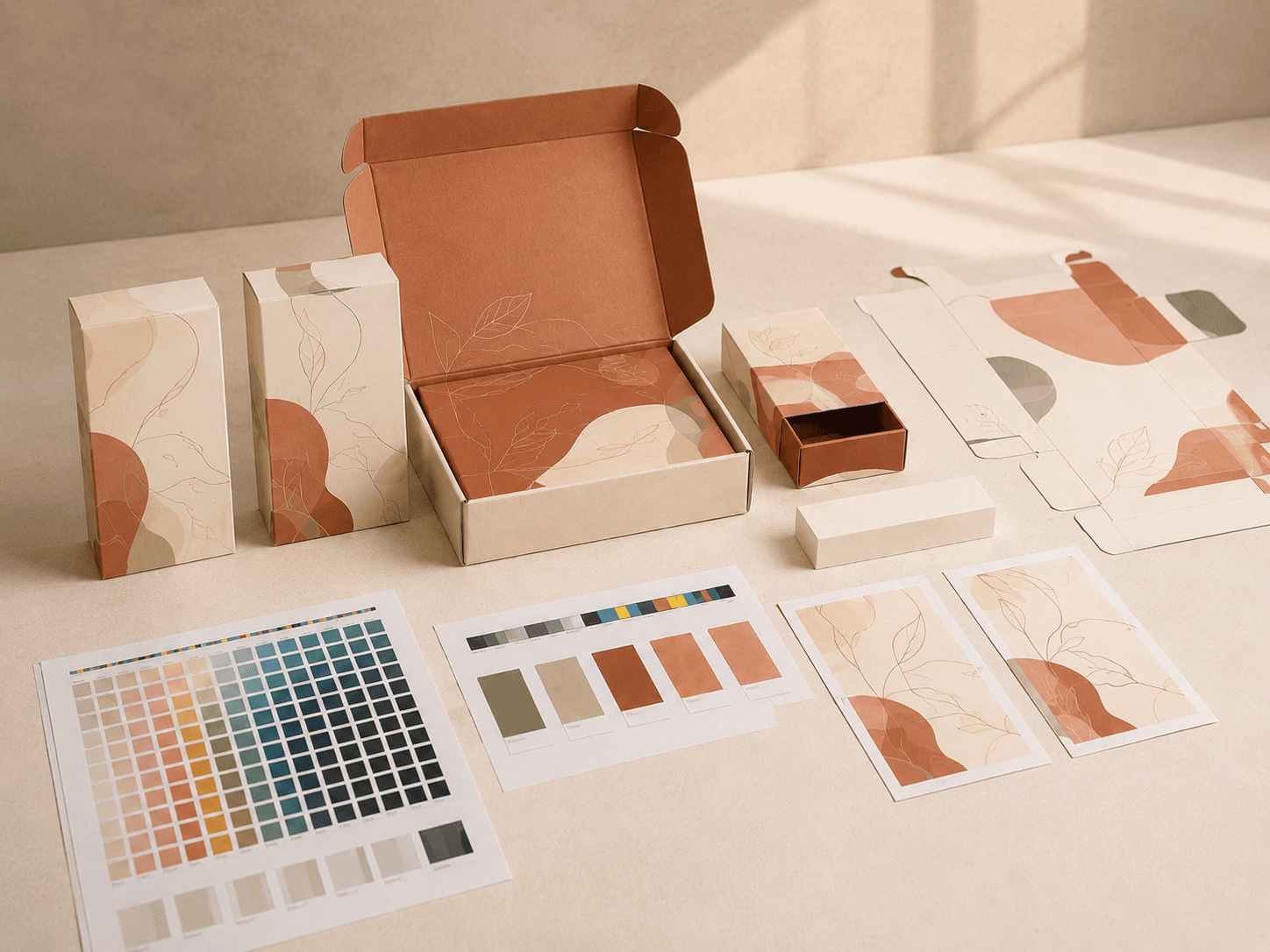
Review printed colour before production when brand accuracy or repeat orders matter.
Colour method should be chosen around brand accuracy, surface tone, artwork complexity and repeat order consistency.
| Colour Method | Best Use | Main Benefit | Practical Note |
|---|---|---|---|
| CMYK | Full-colour artwork | Flexible colour printing | Colours can shift by stock |
| Pantone | Brand colour matching | Stronger consistency | Best for defined brand colours |
| Rich black | Dark premium artwork | Deeper black appearance | Needs correct print specification |
| White ink | Kraft or coloured stocks | Better contrast | Not needed on every board |
| Inside colour | Unboxing moments | Adds a branded interior | Works well for mailers and rigid boxes |
| Colour proofing | Accuracy checks | Reduces print uncertainty | Recommended for critical colours |
Kraft, textured and uncoated stocks can make colour appear warmer or softer. A printed proof is useful when colour accuracy is important for brand consistency.
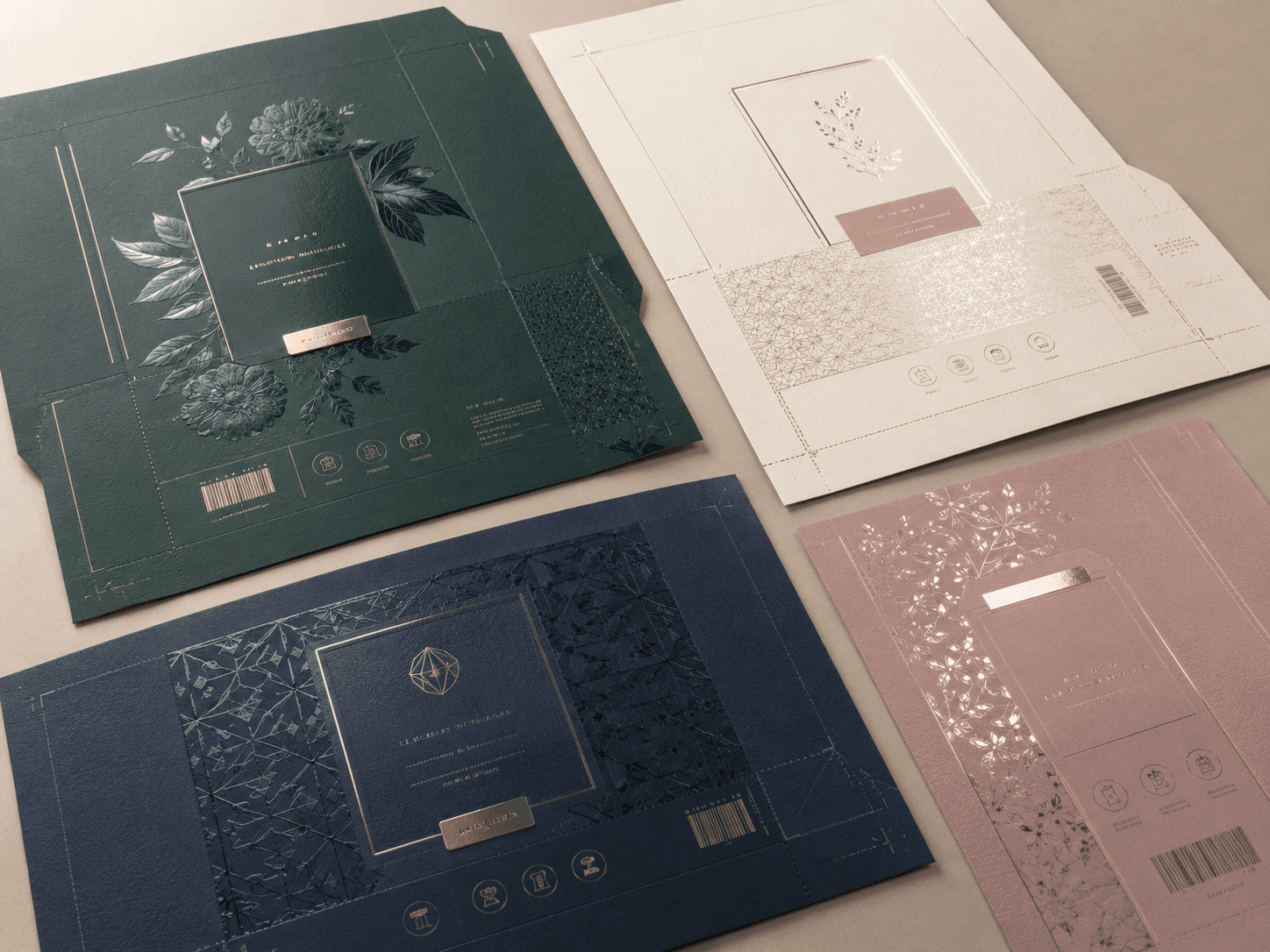
Finishes should solve a presentation or surface requirement. Matte or gloss lamination changes sheen and handling. Foil creates a metallic or coloured accent. Embossing and debossing create raised or recessed detail. Spot UV adds controlled gloss contrast to selected areas. Soft-touch finishes change surface feel, but should be chosen only where that tactile effect is worth the added specification.
Premium presentation can combine several of these choices, but the structure still comes first. Where opening movement, proportion and finished-surface protection dominate the project, custom luxury packaging is the more specific commercial route.
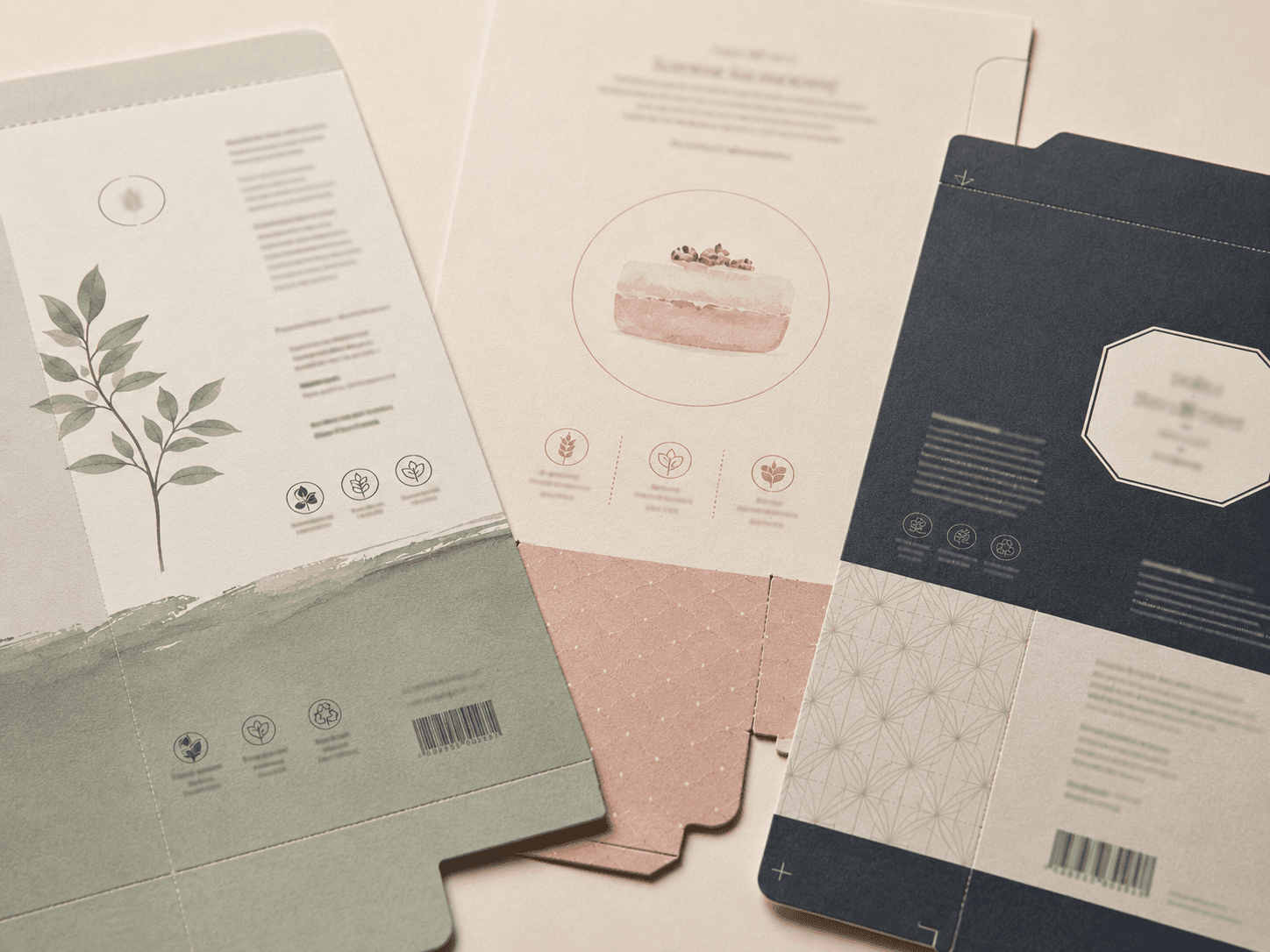
Soft, low-shine finish for refined packaging with a calm and premium surface.
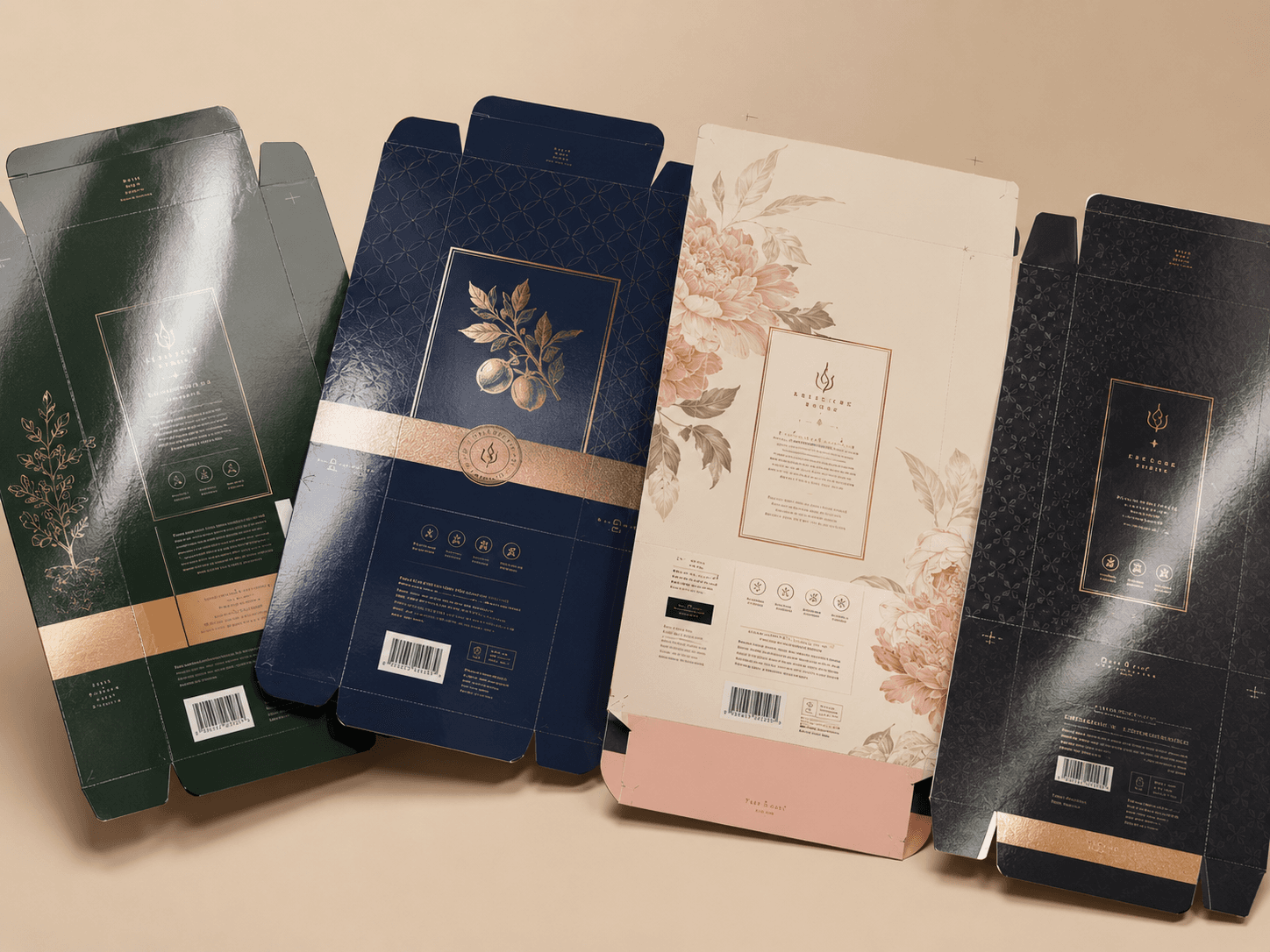
Reflective finish that brightens colours and gives printed packaging a polished look.
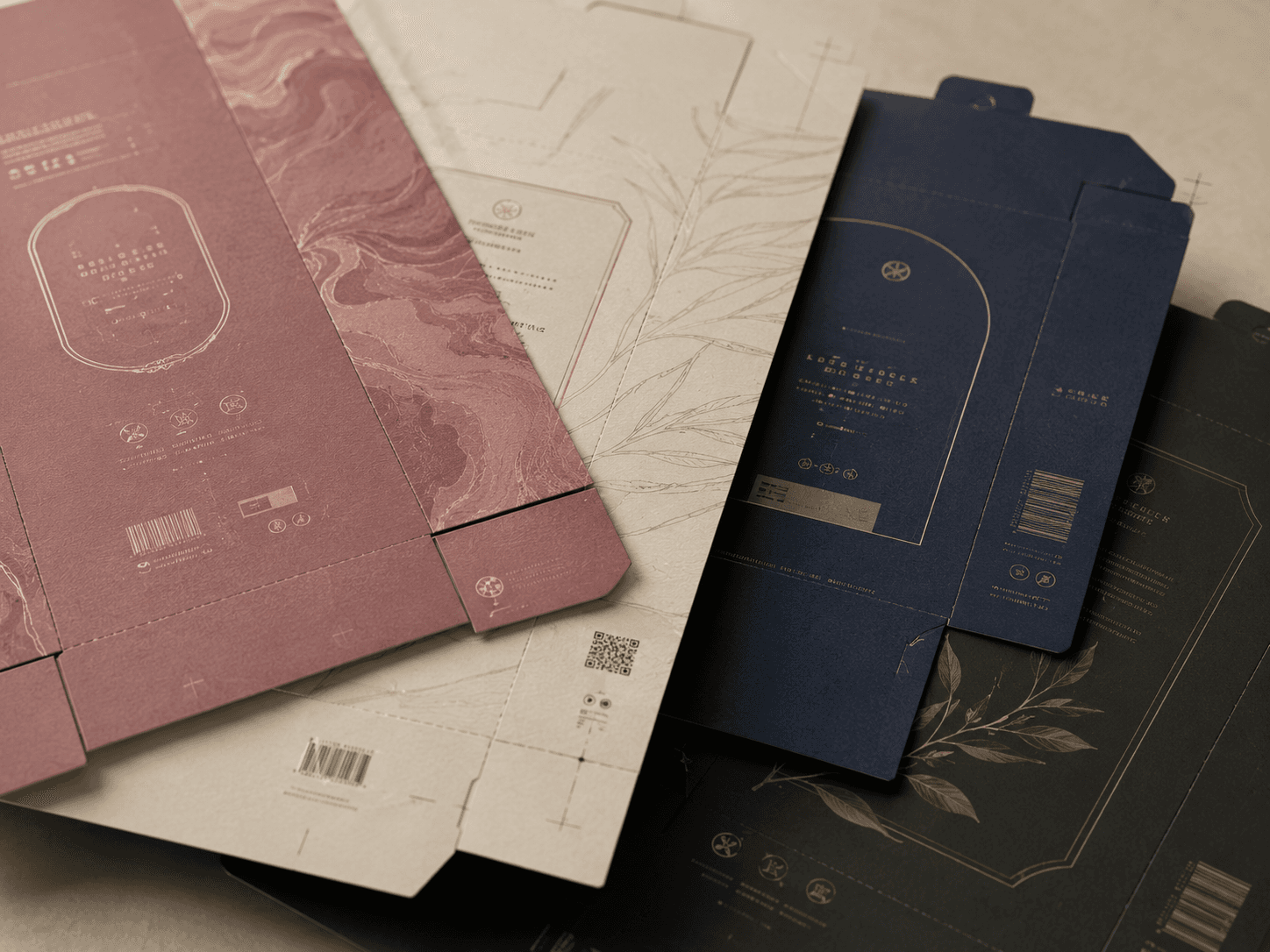
Smooth tactile coating for luxury packaging, gifting and high-end retail presentation.
Practical water-based coating for added surface protection on selected paper packaging.
Surface treatment that can enhance print areas with controlled sheen or protection.
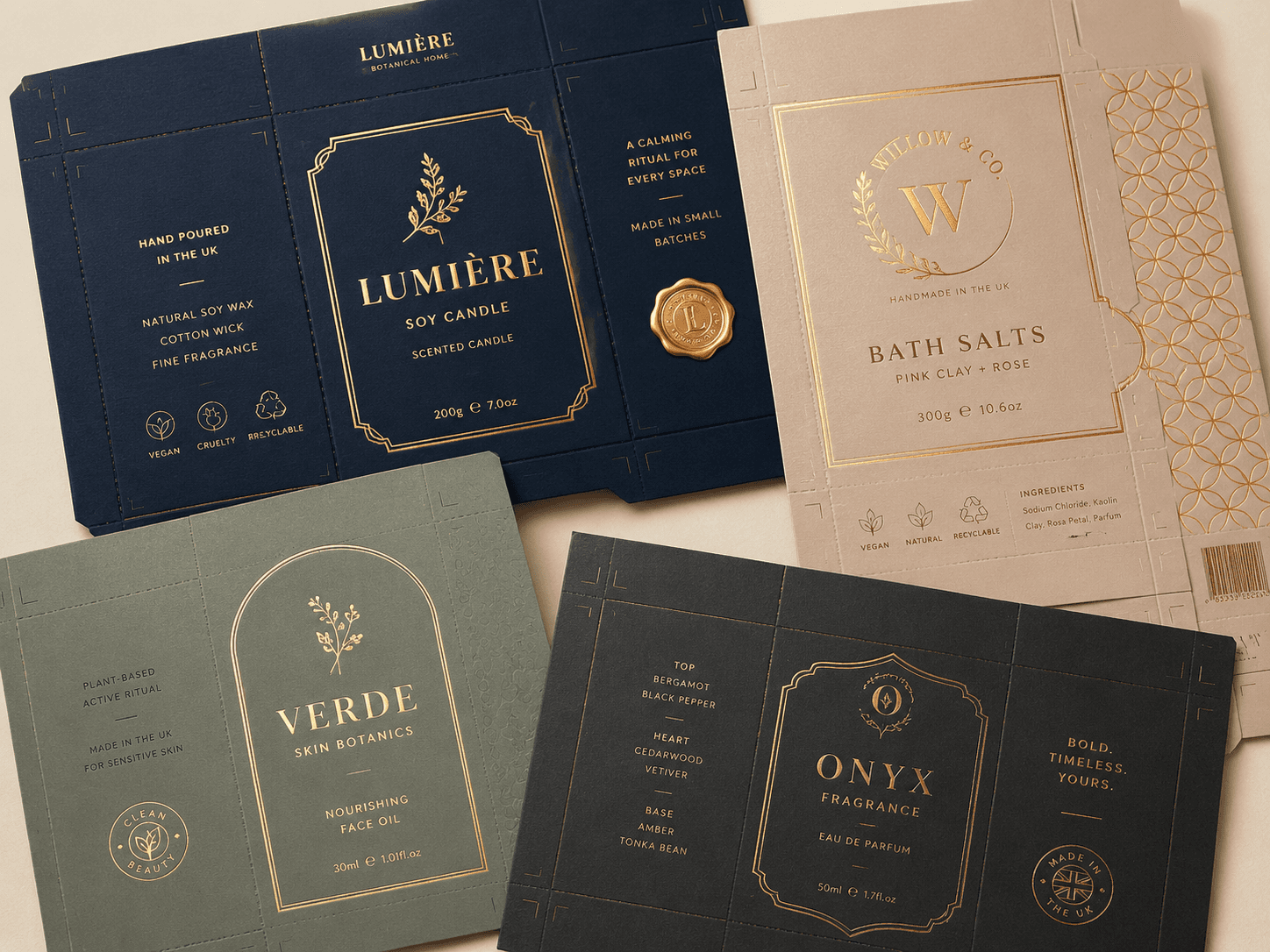
Metallic detail for logos, borders, patterns and premium product accents.
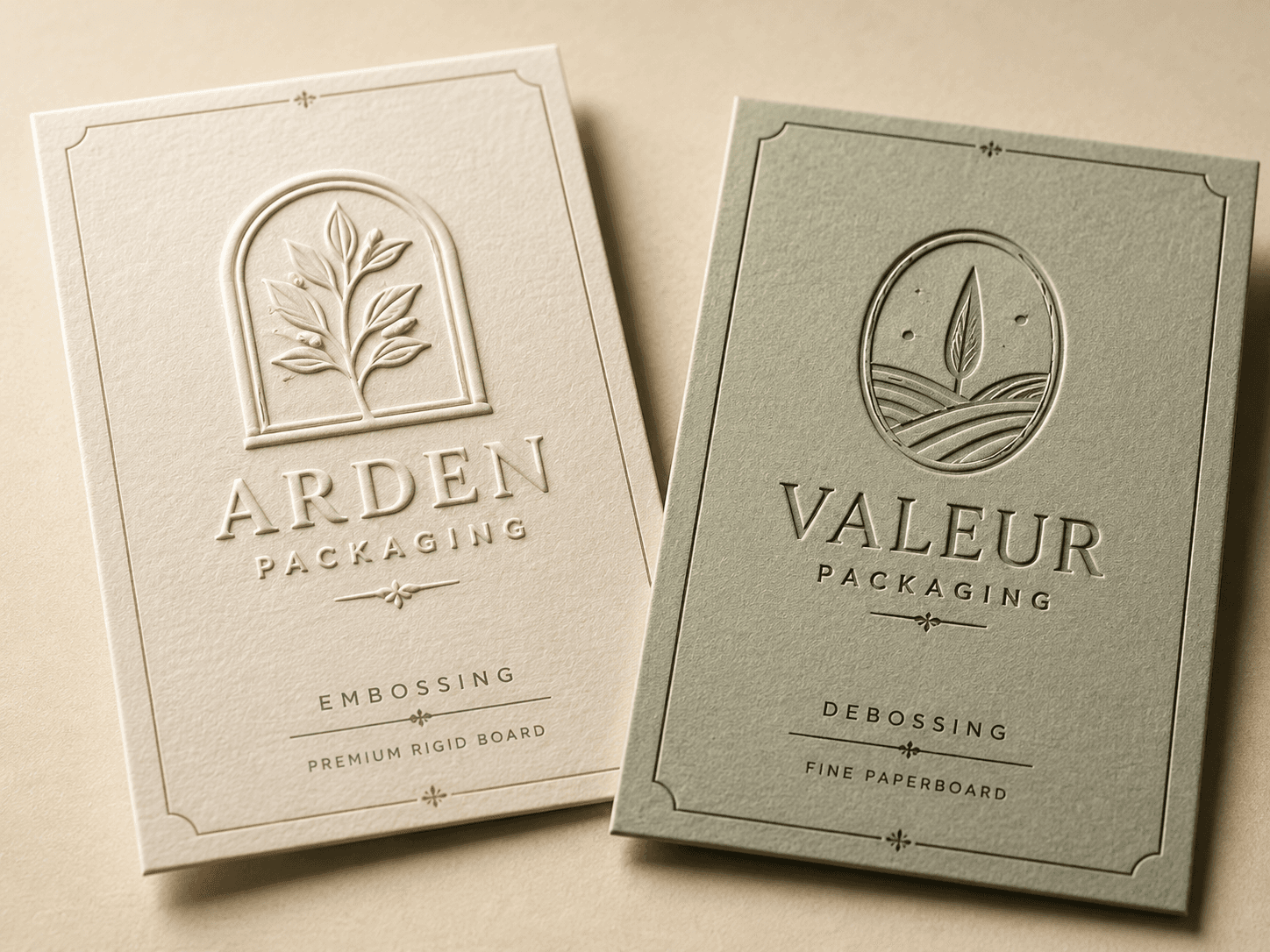
Raised or pressed details that add depth, texture and a more tactile brand mark.
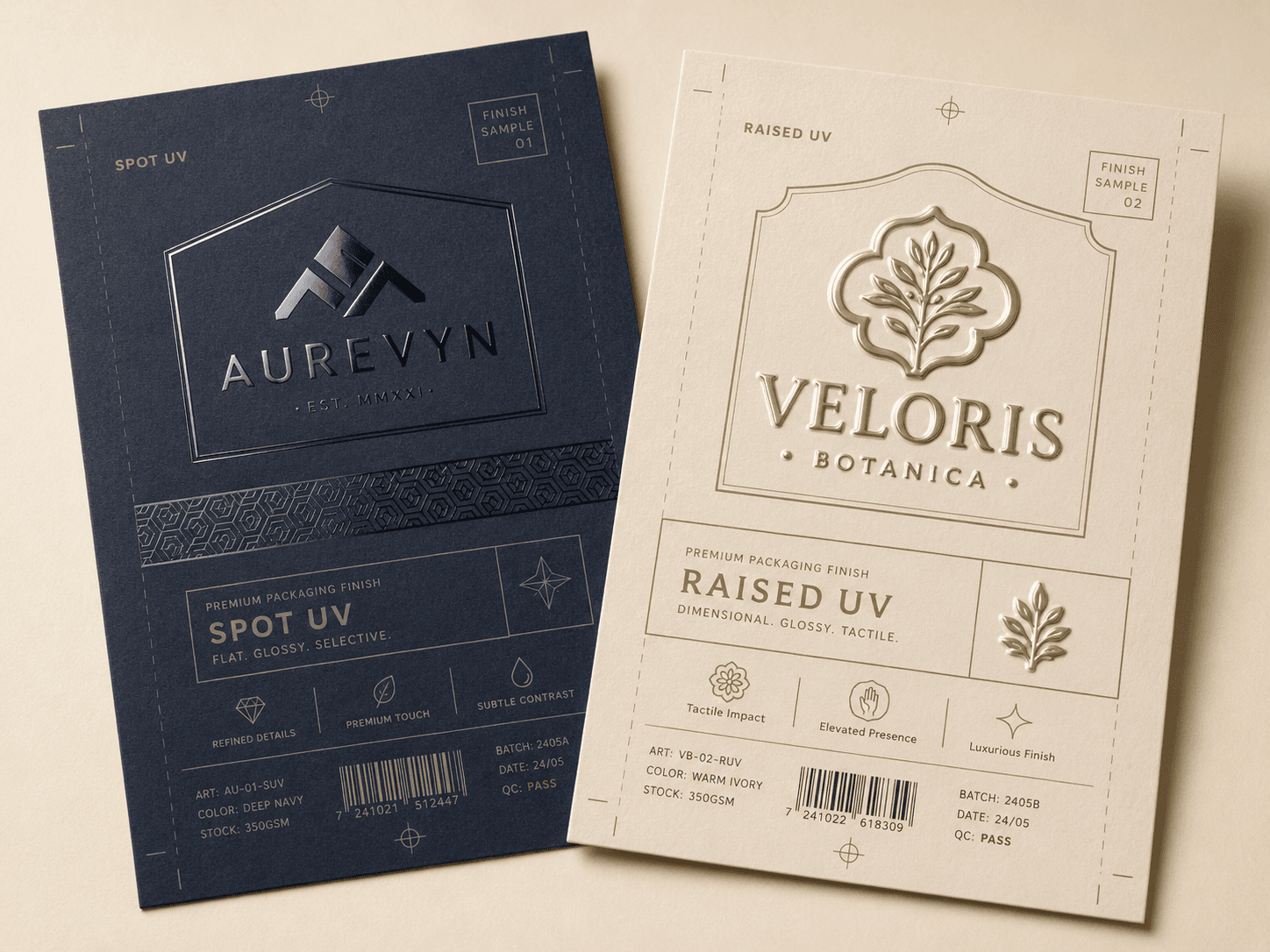
Gloss contrast on selected areas for logos, patterns, highlights and premium finishes.
Use finishes carefully. The best finish should support the product, artwork and board choice rather than overpowering the packaging.
| Finish | Visual Effect | Best For | Practical Note |
|---|---|---|---|
| Matte lamination | Smooth low shine | Luxury and minimalist packaging | Can soften colour intensity |
| Gloss lamination | Bright reflective surface | Bold colour and retail impact | Shows glare more clearly |
| Soft-touch | Velvety hand feel | Premium gifting and cosmetics | Works best on suitable stock |
| Aqueous coating | Light surface protection | Practical printed cartons | Less decorative than lamination |
| Varnish | Controlled sheen | Selected print enhancement | Can be subtle or glossy |
| Foil blocking | Metallic highlight | Logos and premium accents | Needs accurate placement |
| Embossing | Raised surface detail | Logos and tactile branding | Best on suitable board thickness |
| Debossing | Pressed surface detail | Minimal luxury effects | Works well with restrained artwork |
| Spot UV | Gloss contrast | Patterns and logo highlights | Strongest over matte surfaces |
Some finishes need smoother stock, enough board thickness or precise artwork placement. Confirm finish requirements early so the board, print method and dieline can support the final result.
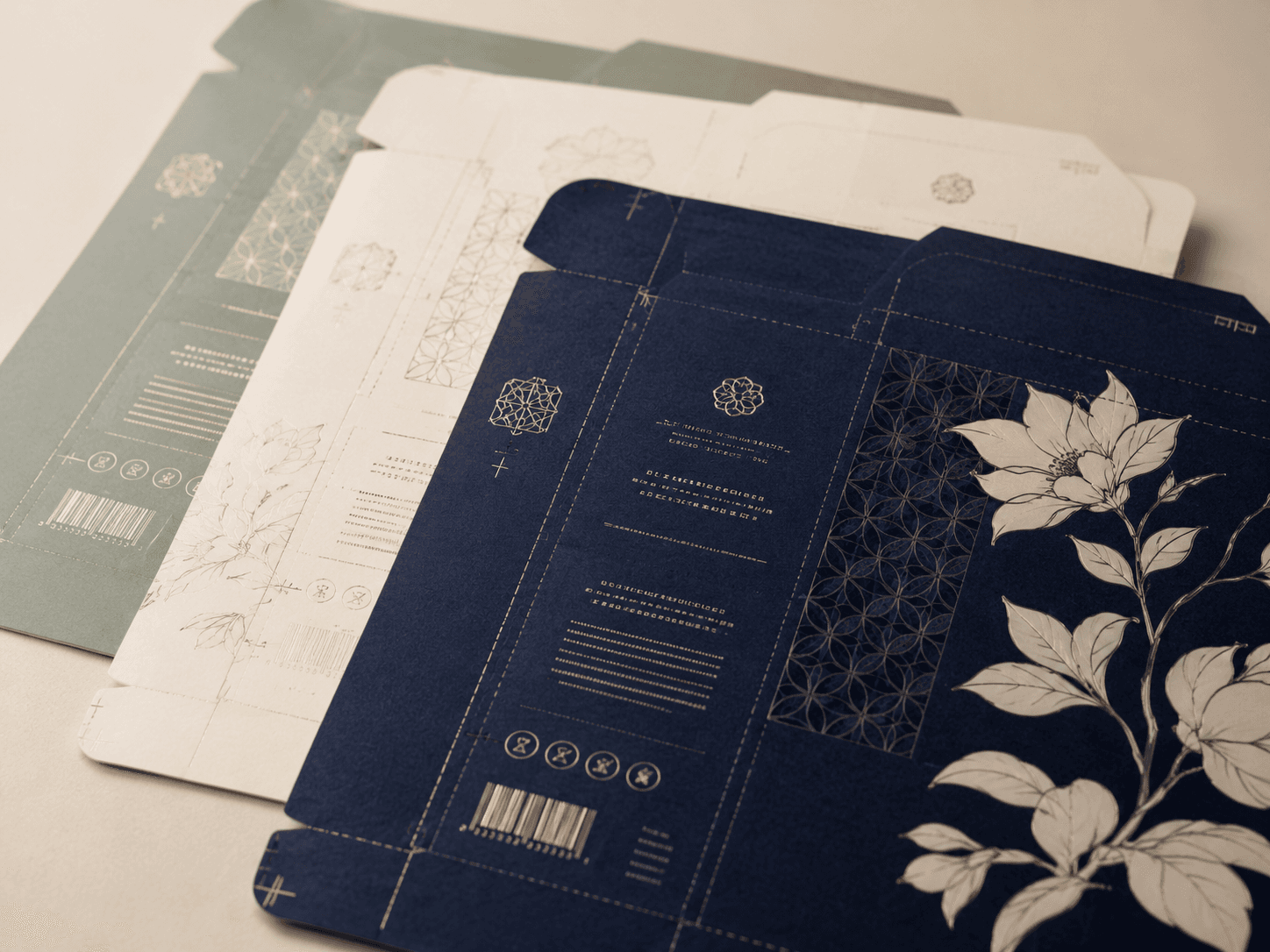
The dieline is the flat technical layout that connects the finished structure to the artwork. It shows panels, cut lines, crease lines and other production geometry so logos, text, barcodes and colour breaks do not land across the wrong fold or closure. Dimensions should be settled before final artwork placement whenever a structural change would alter the panel layout.
For supported box structures, the dieline generator can create a layout from your dimensions. If you need the artwork logic before using the tool, packaging dielines and artwork setup covers cut, crease, bleed and safe-area decisions in more depth.
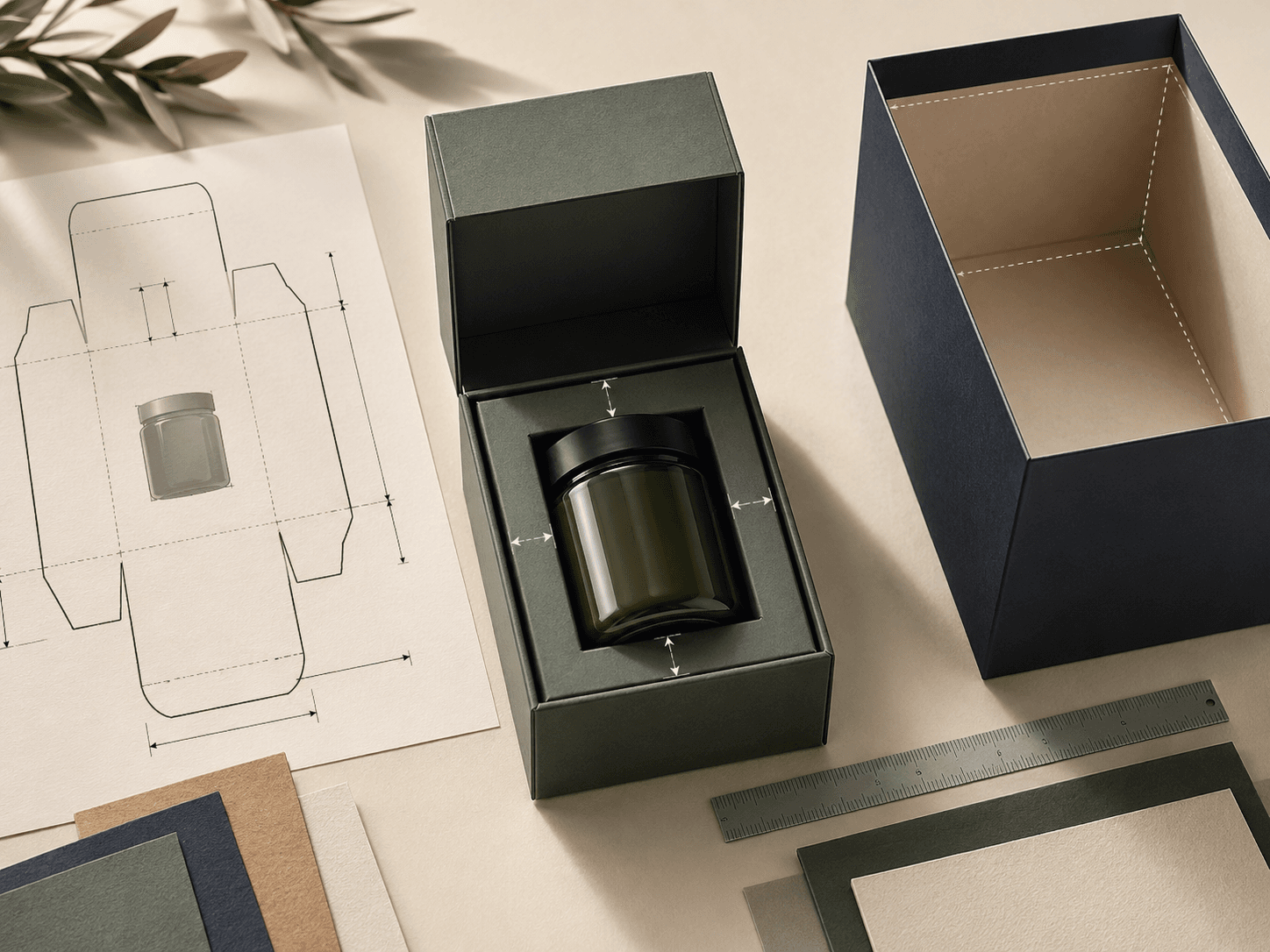
Set length, width and height around the product instead of forcing a standard box size.
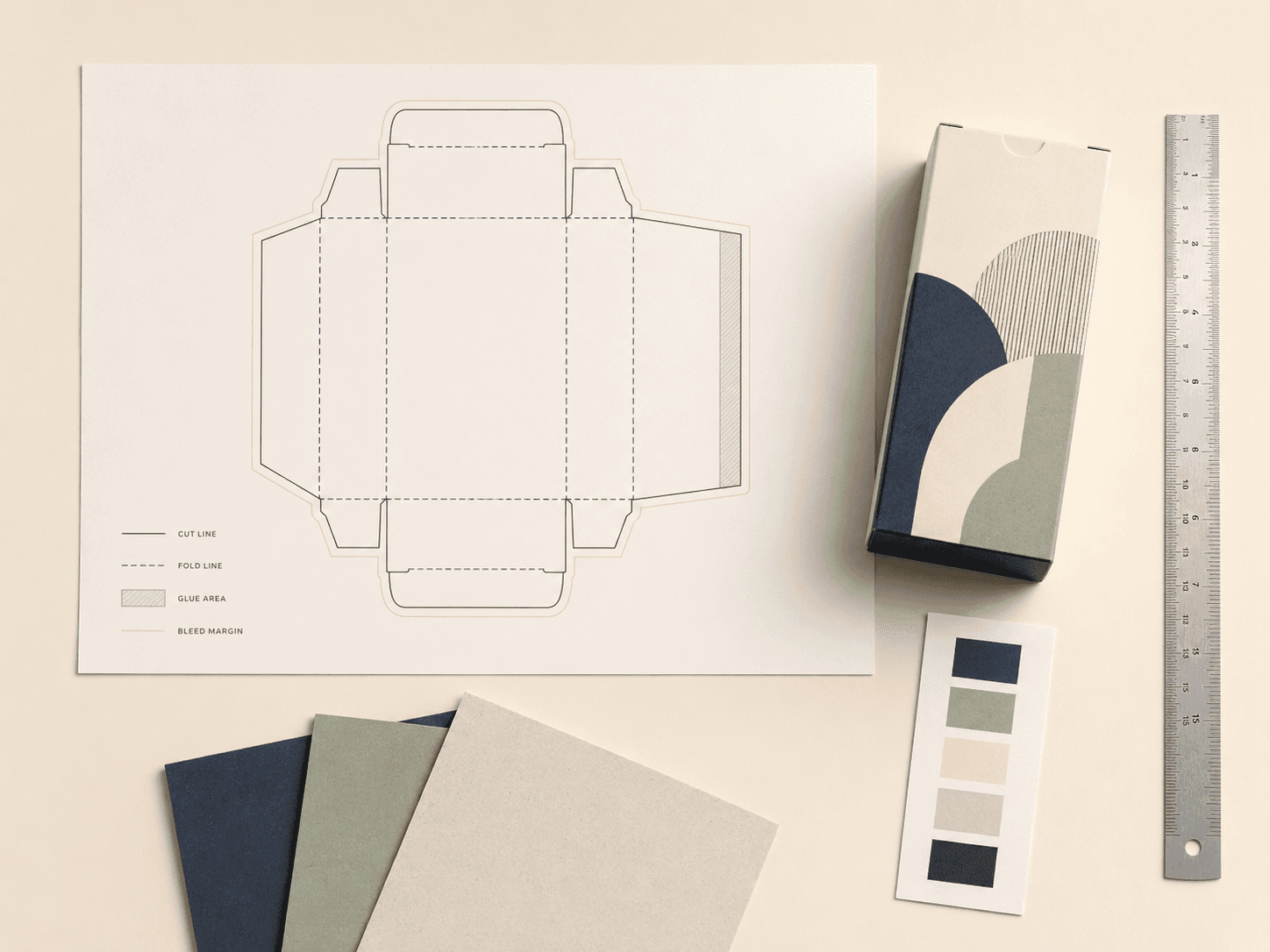
Create the flat artwork guide that shows panels, folds, cuts, glue areas and bleed.
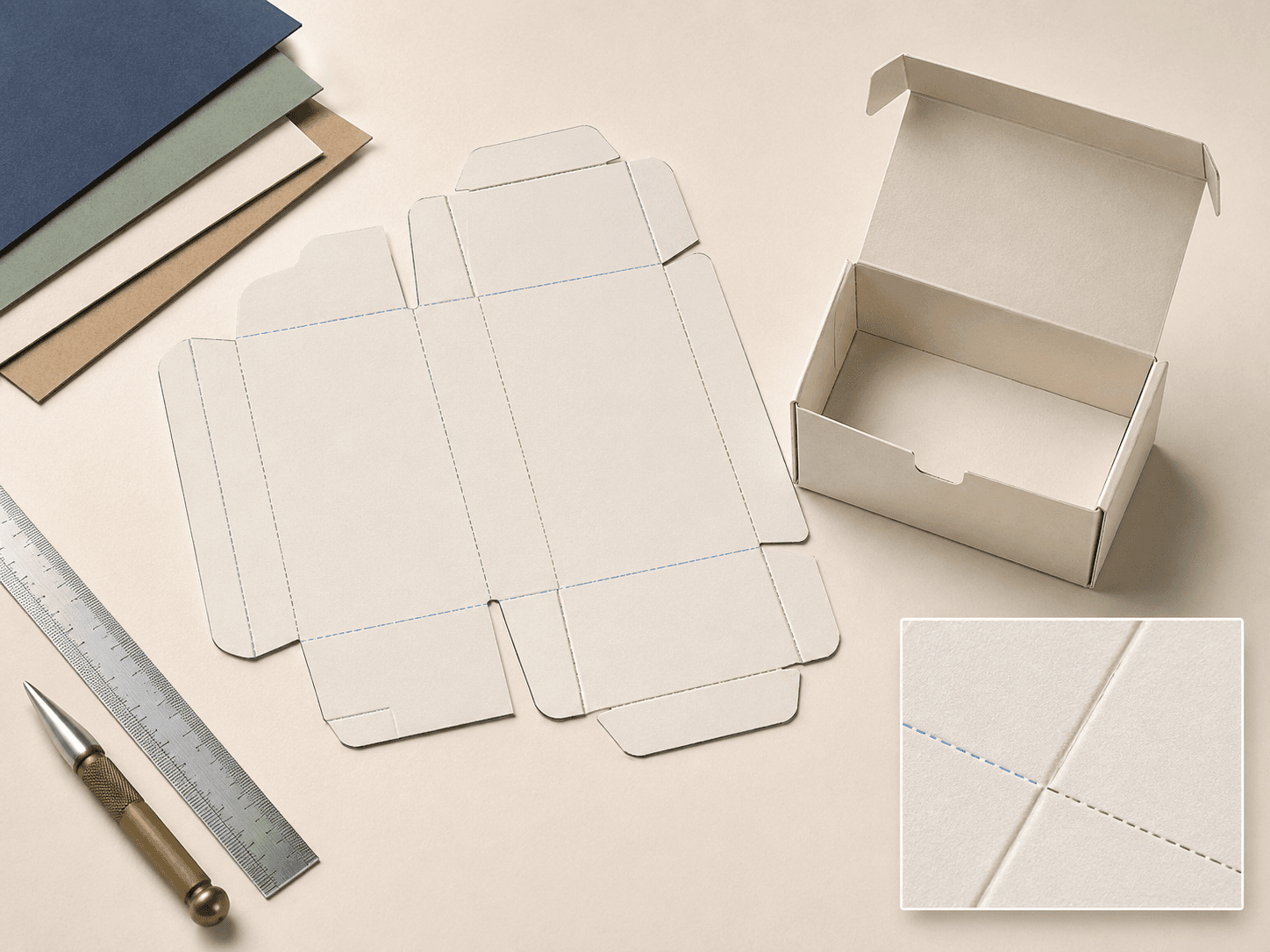
Plan crease positions so the packaging folds cleanly and holds its intended shape.
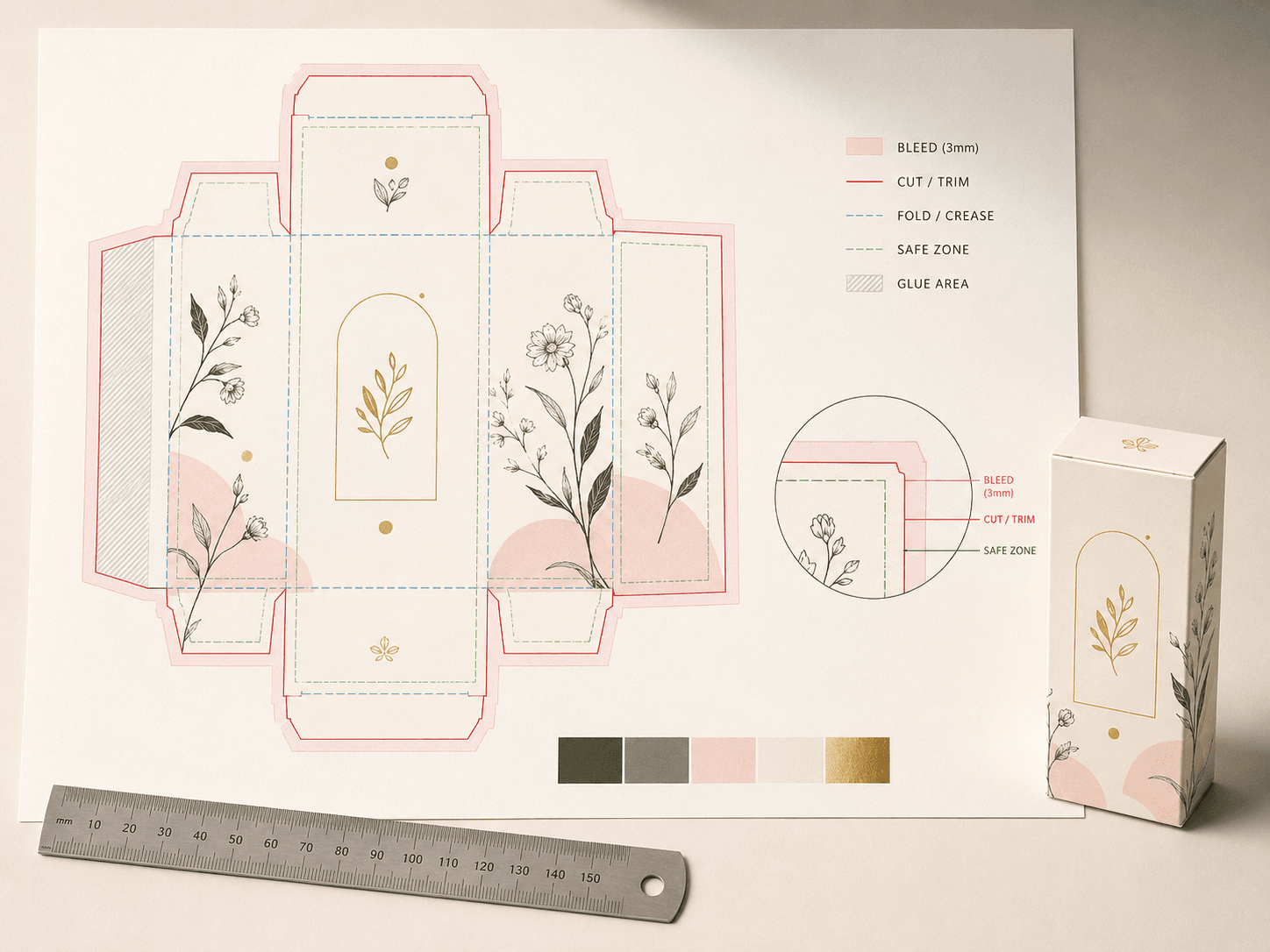
Keep artwork away from trim risks, fold edges and areas that may be glued or tucked.
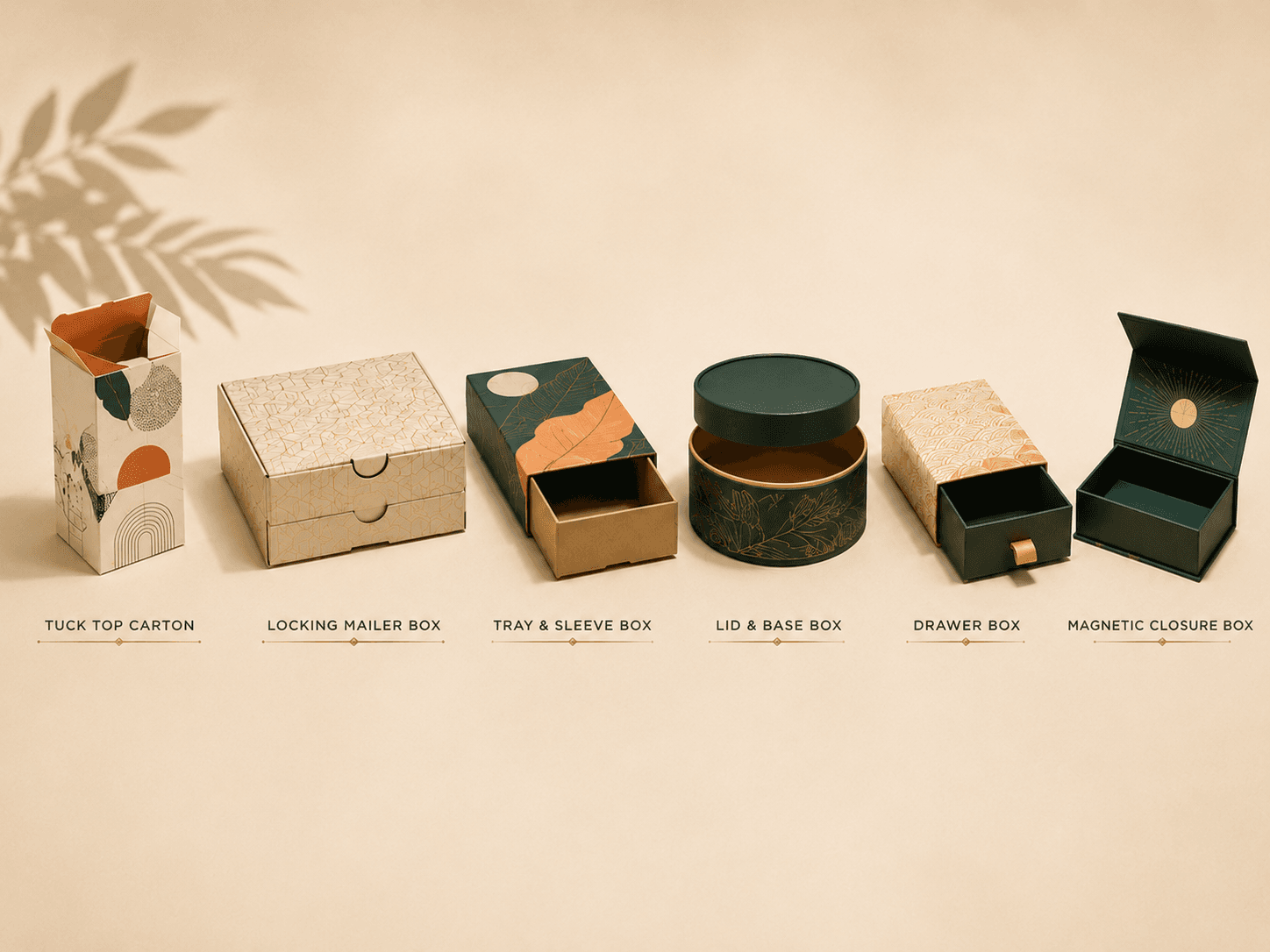
Choose tuck, lock, sleeve, lid, drawer or magnetic openings based on use and presentation.
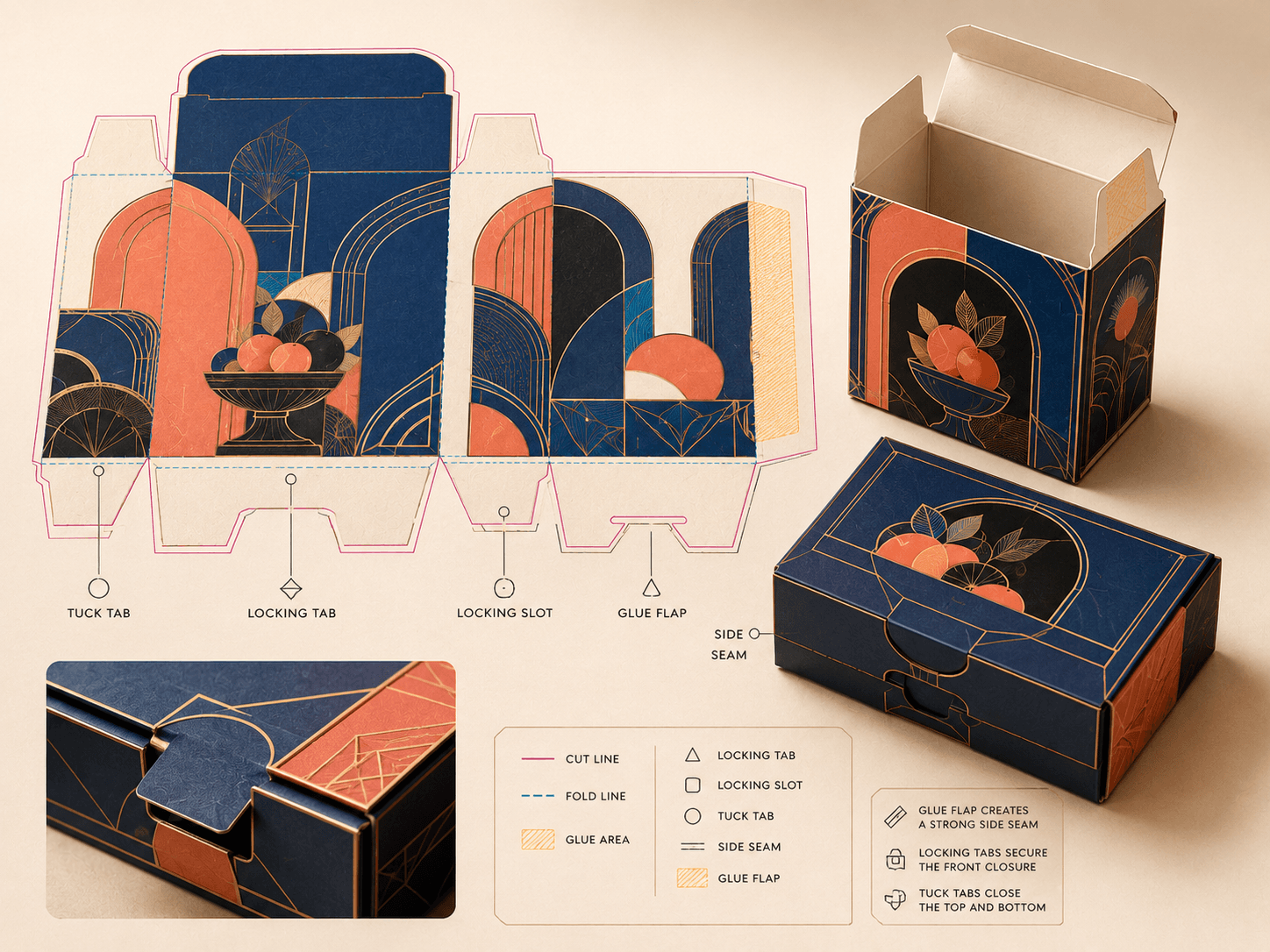
Plan structural connection points so the box assembles cleanly and stays secure.
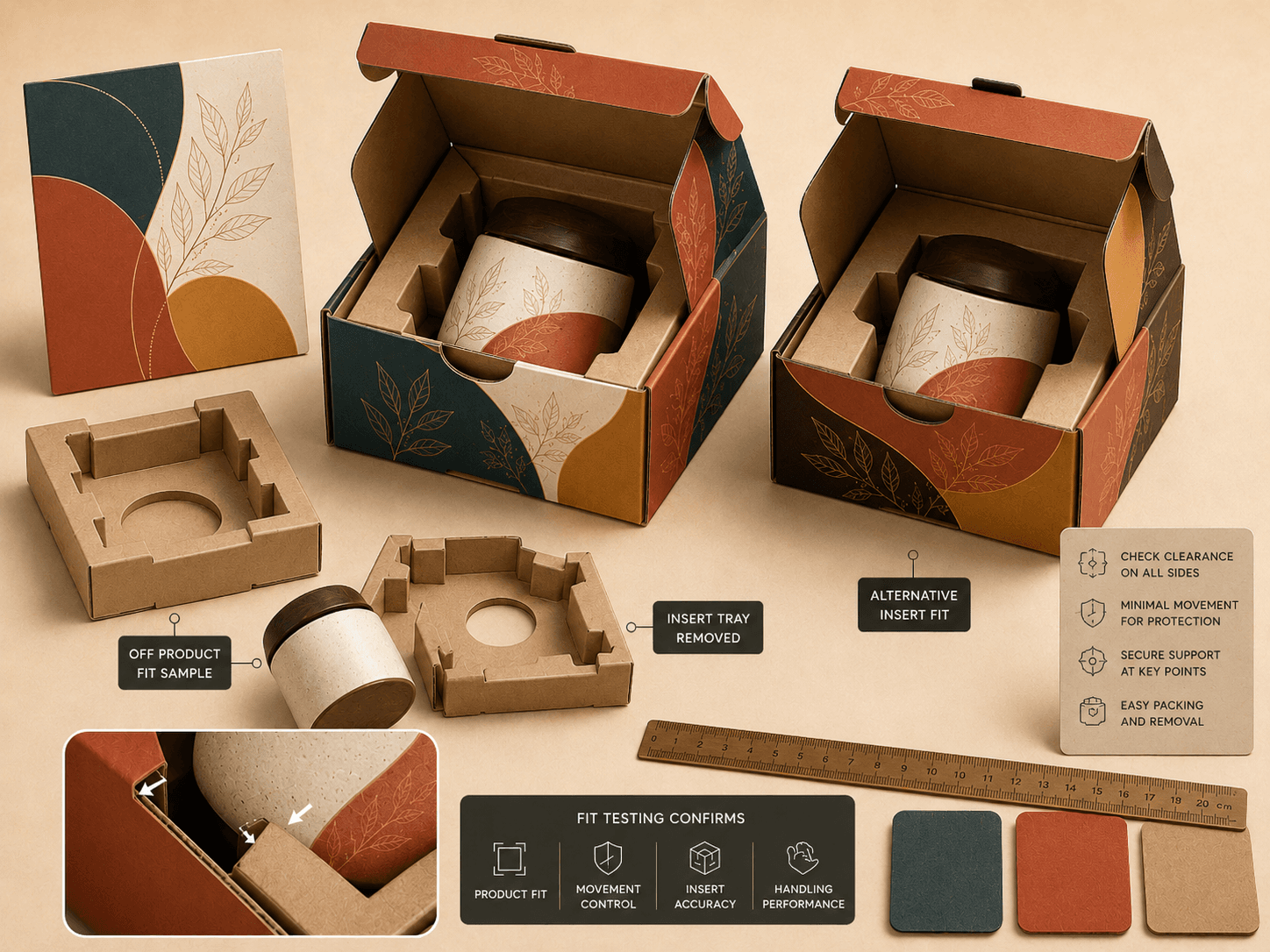
Check product fit, movement, insert spacing and handling before committing to full production.
An insert is justified when it improves retention, separation, protection, pack-out consistency or presentation. The cavity should be designed around the complete product and accessories, including protrusions and weak points, before the outer dimensions are treated as final.
Use inserts and dividers when internal retention is the main structural decision rather than a finishing detail.
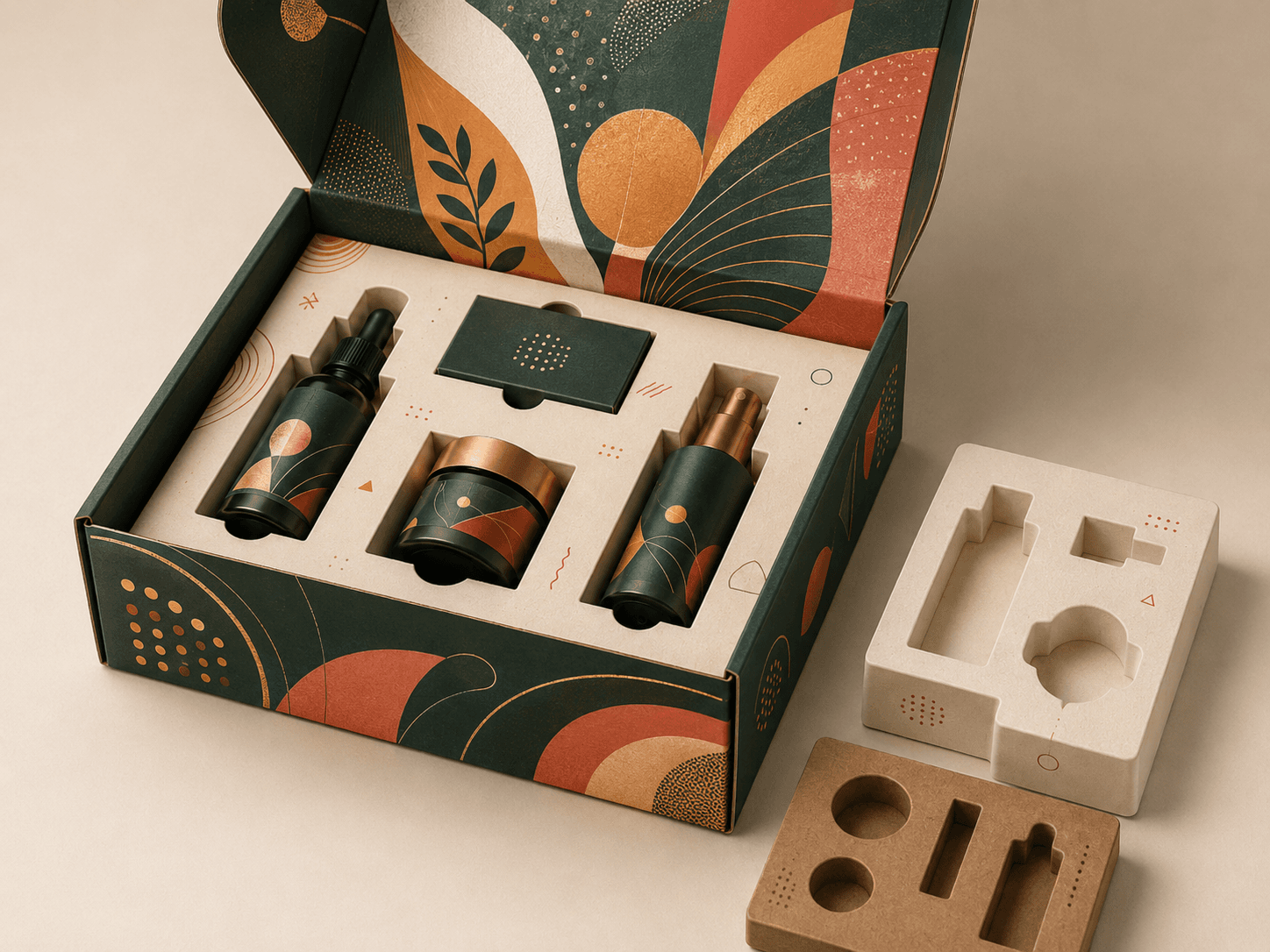
Paperboard inserts for product positioning, retail presentation and controlled unboxing.

Stronger internal support for heavier items, ecommerce delivery and fragile products.
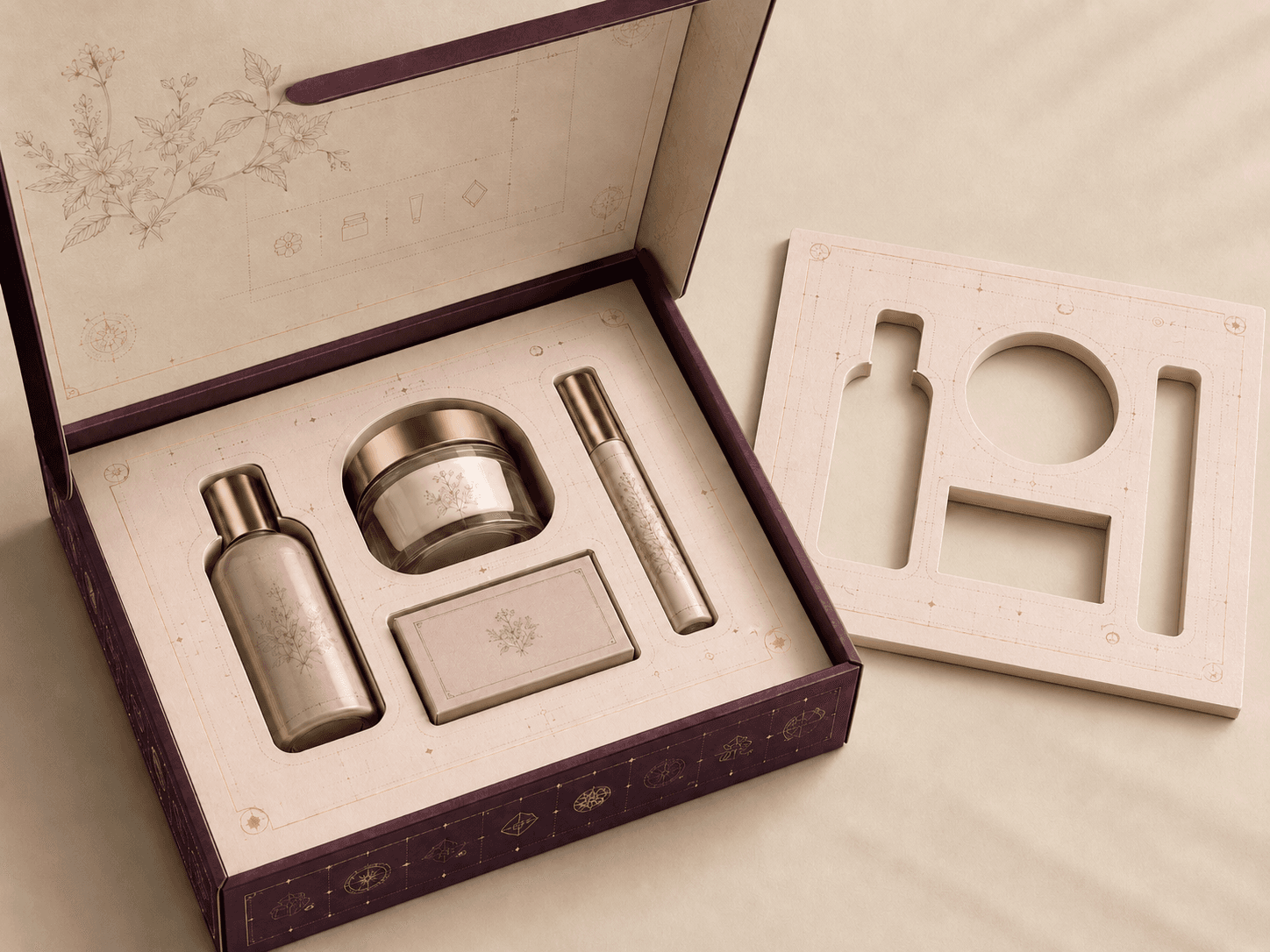
Precision-cut inserts shaped around bottles, jars, accessories, cosmetics or gift items.
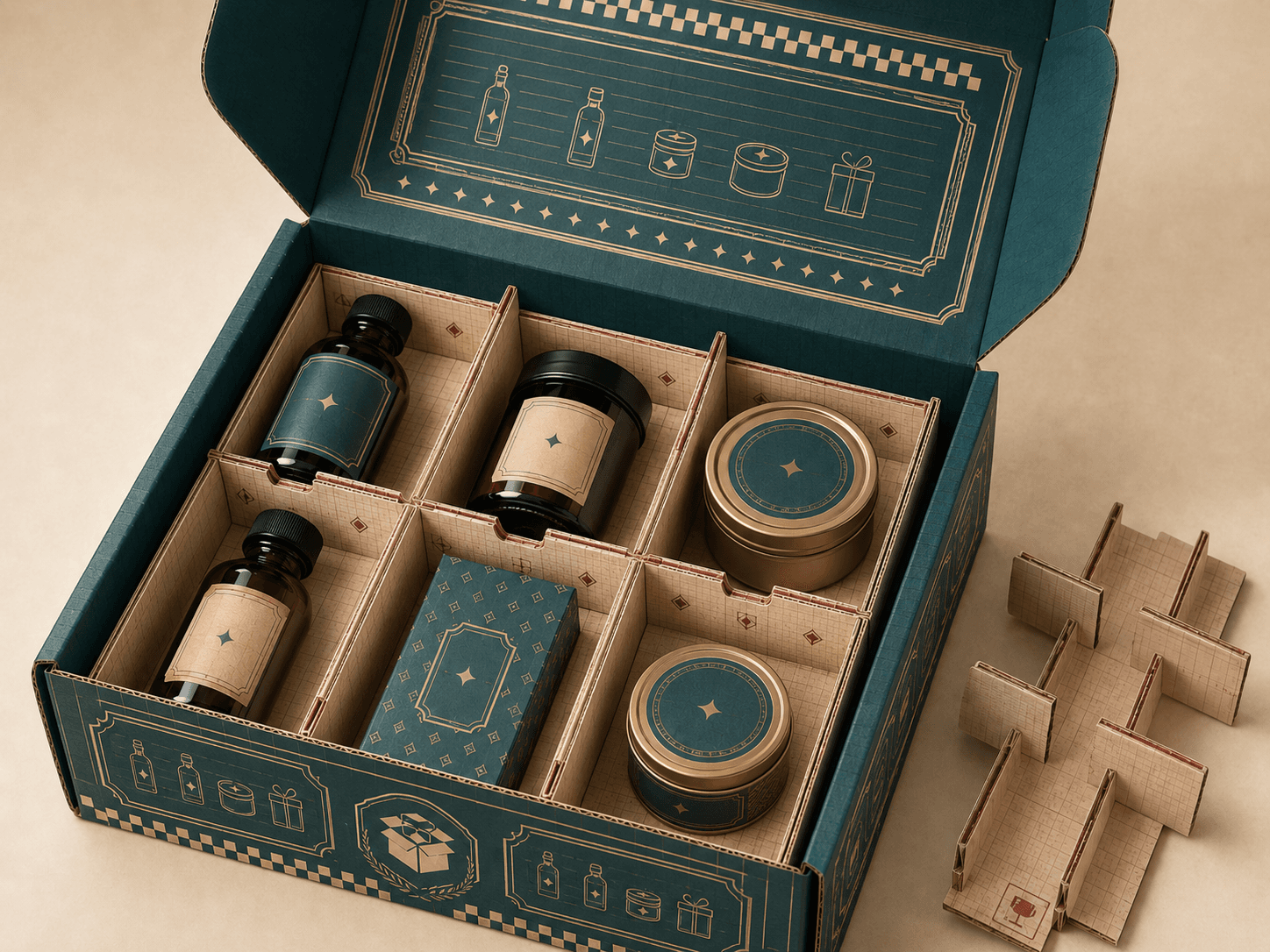
Internal dividers that separate products and stop items touching during handling.
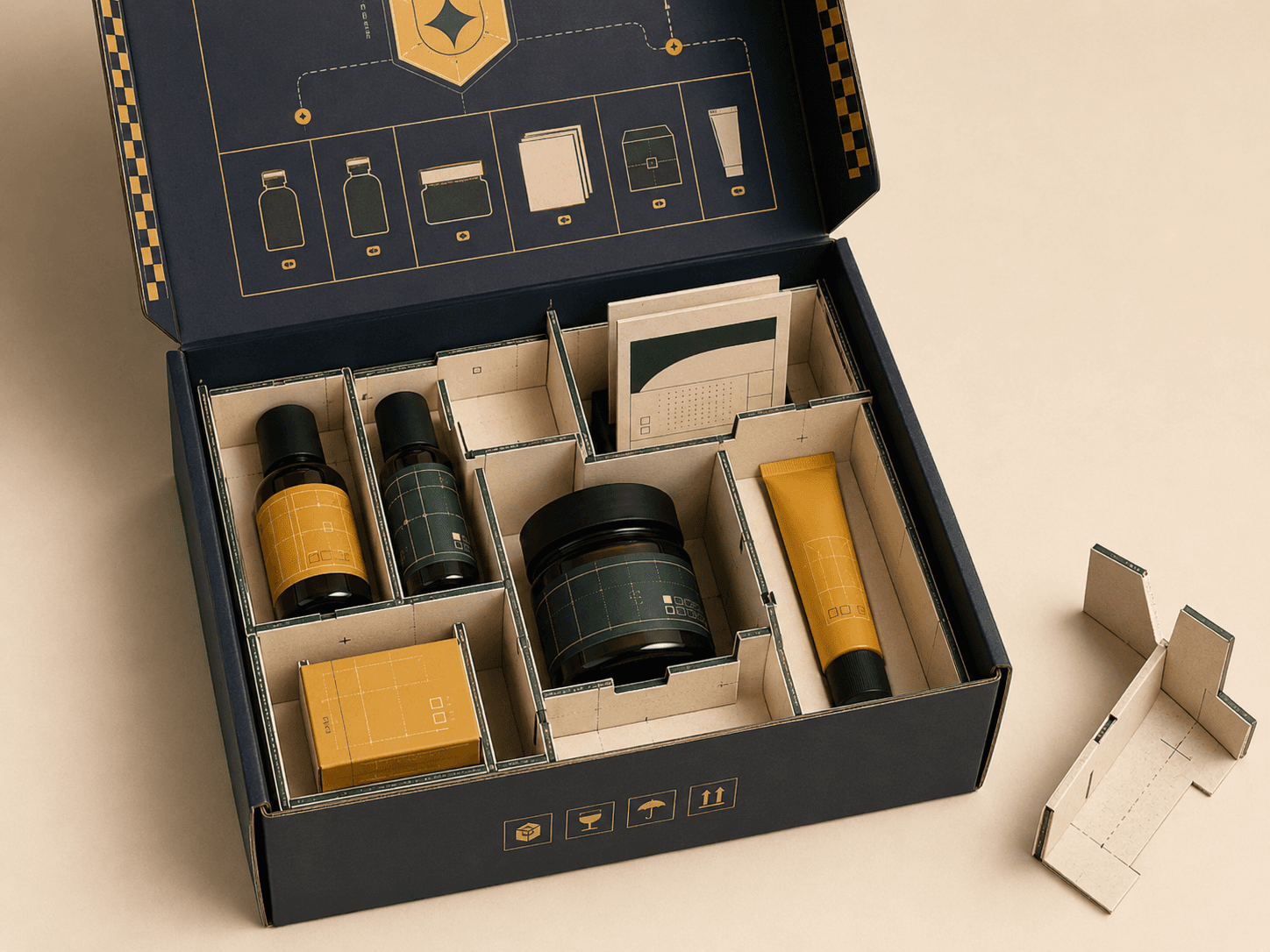
Multi-compartment layouts for organised packaging, product sets and grouped items.
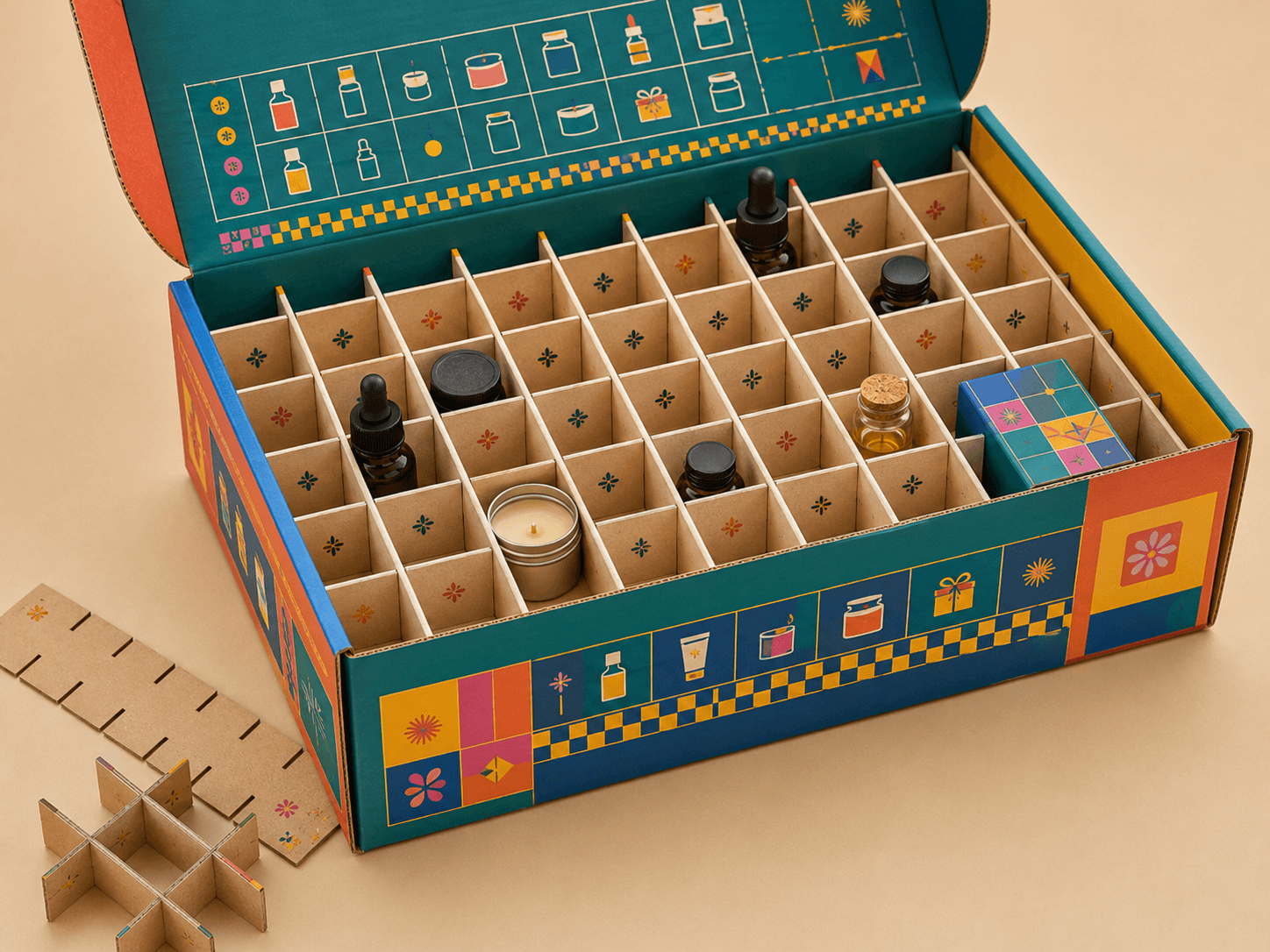
Grid-style divisions for small products, bottles, jars, samples or repeated units.
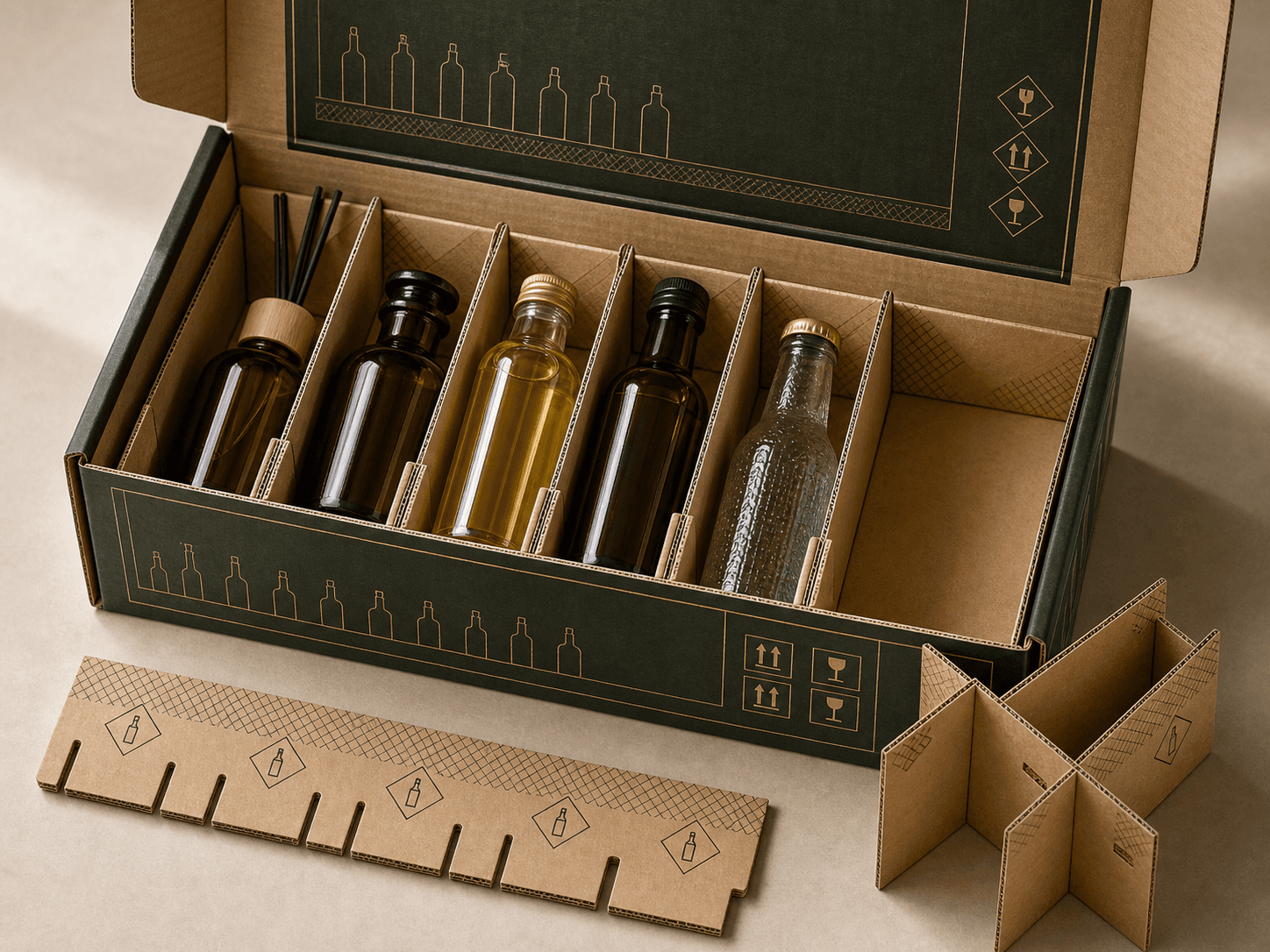
Protective dividers for glass bottles, diffuser bottles, drinks, oils or fragile containers.
Digital proofs and 3D mockups are useful for checking artwork placement and visual balance. Physical samples answer different questions: fit, opening action, board feel, insert retention and finish appearance. Use the lightest validation method that resolves the actual risk.
Free sample examples of previous work are available for reference. Fully custom physical samples made to an exact project specification are paid samples.
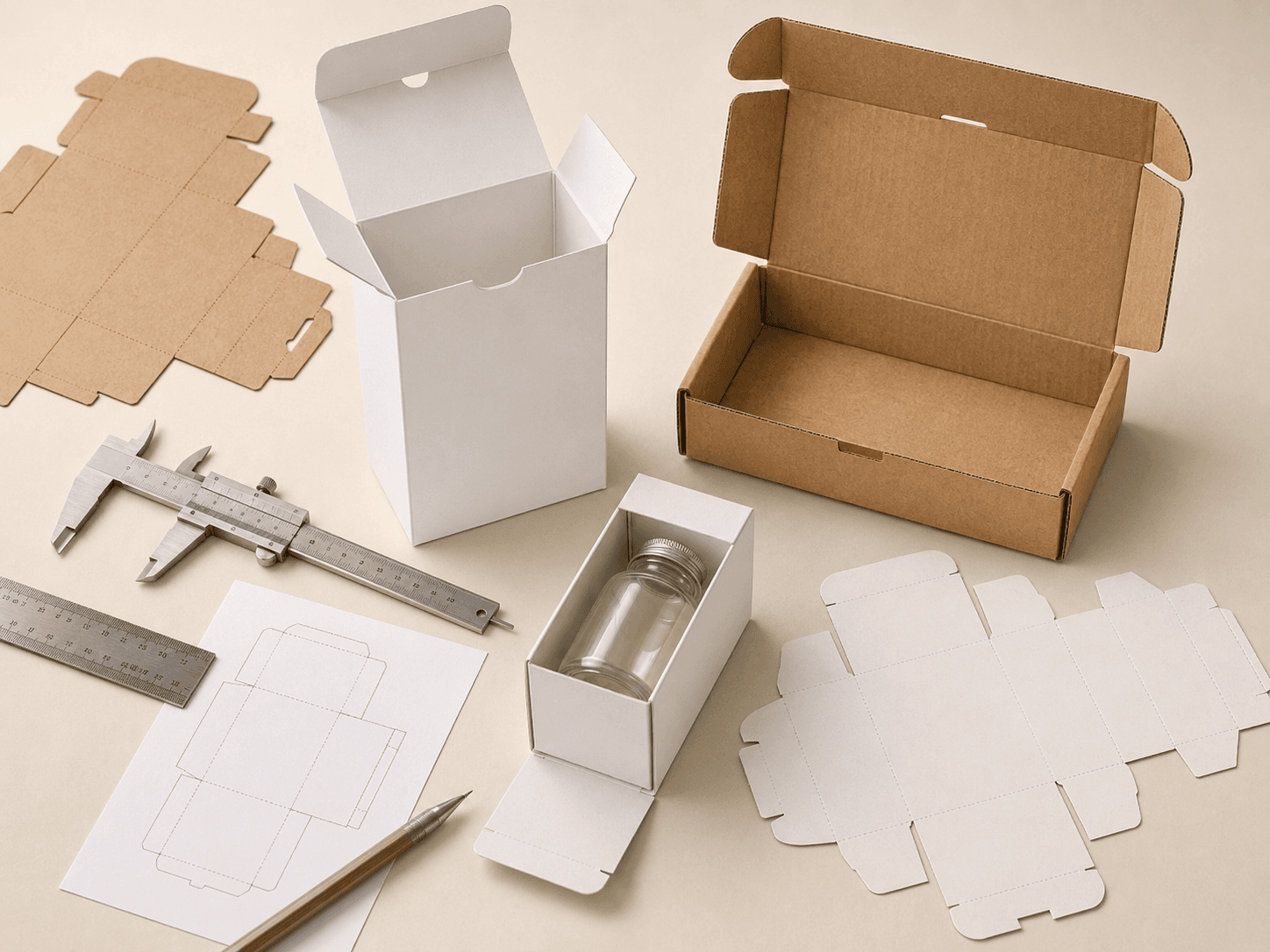
Check size, folding, closure and product fit before printing artwork.
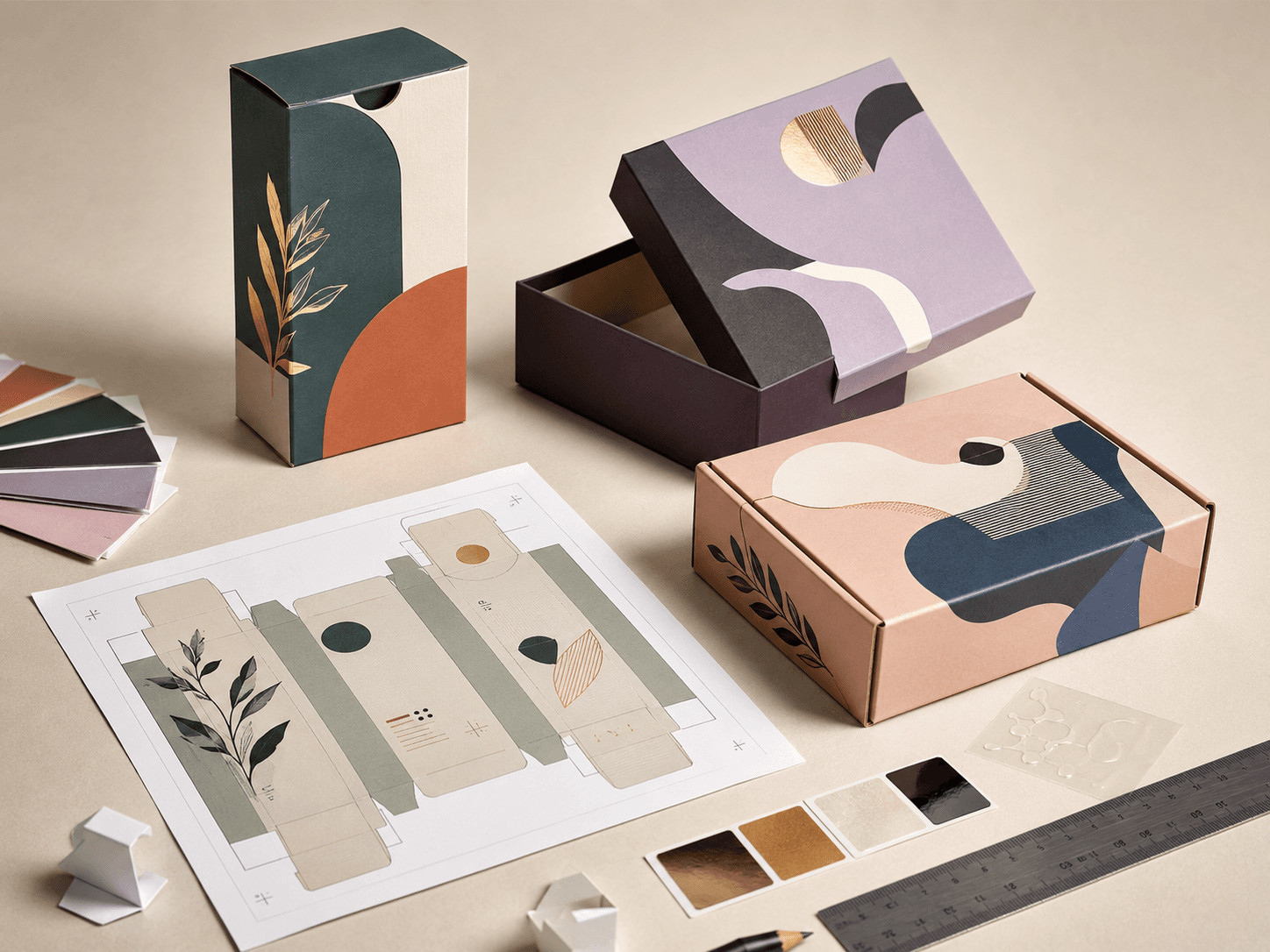
Review artwork placement, colour, finish and overall presentation before production.
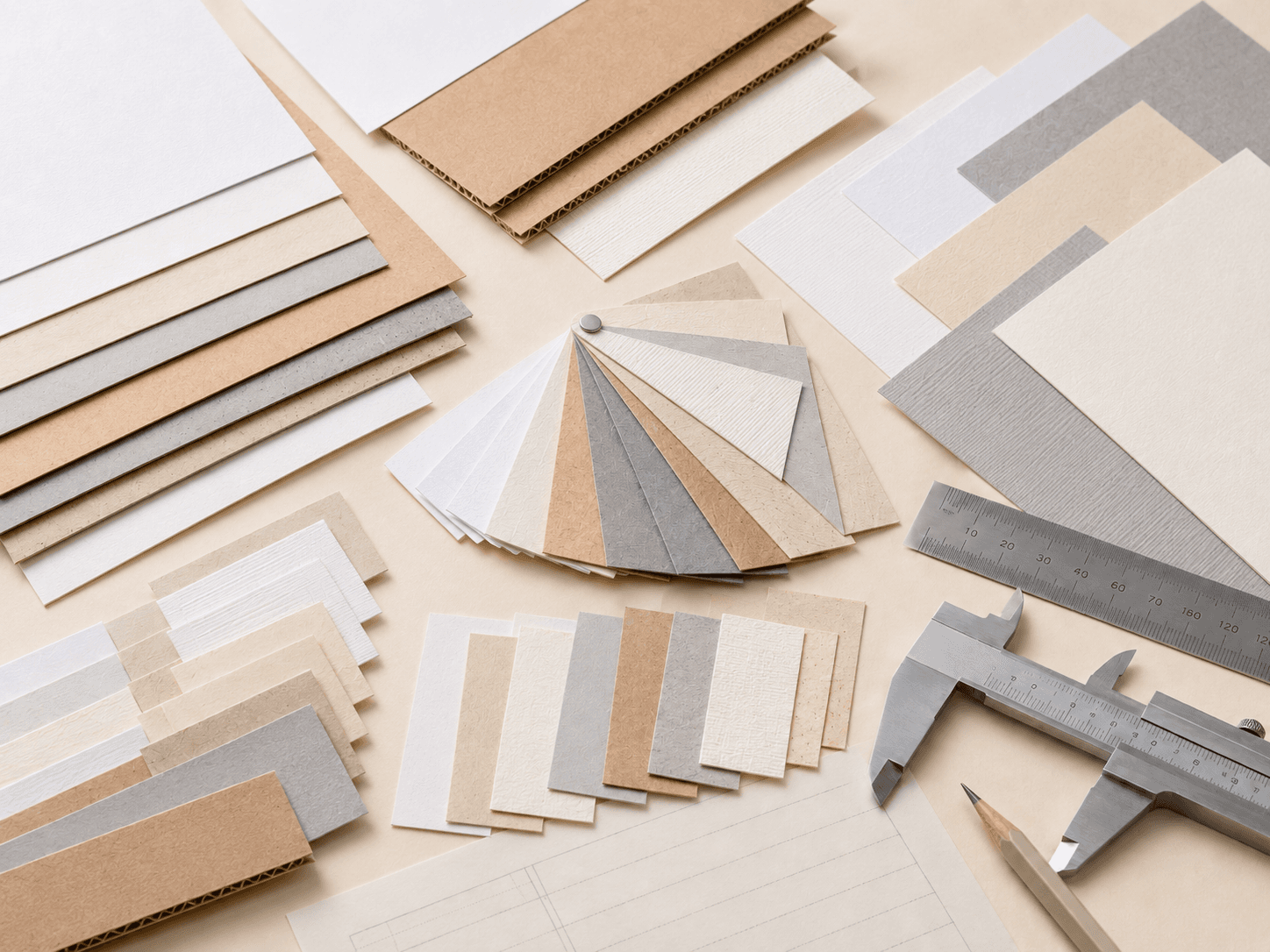
Compare thickness, texture, colour tone and surface feel across different board choices.
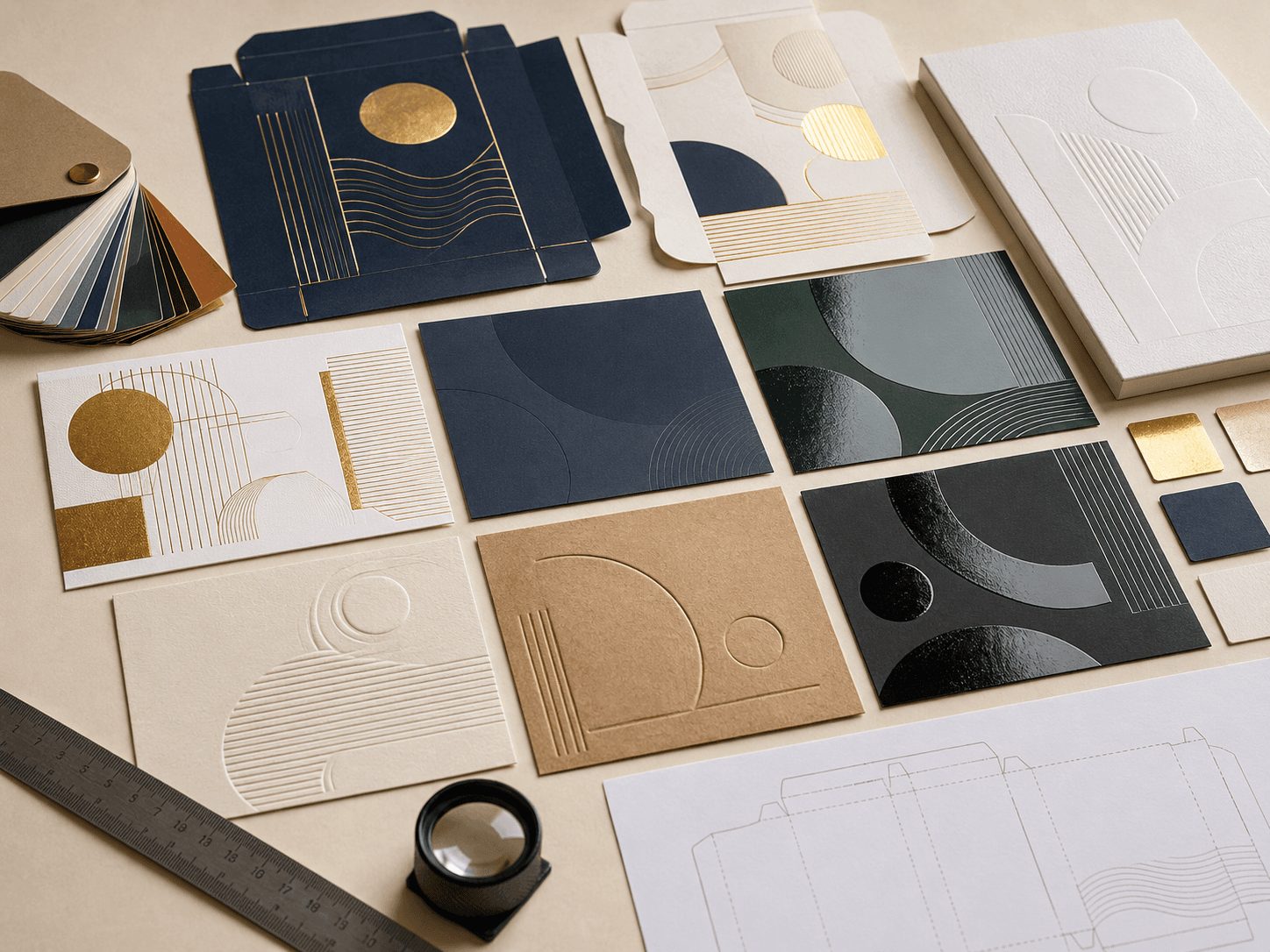
See how foil, lamination, embossing, debossing or spot UV looks on real stock.
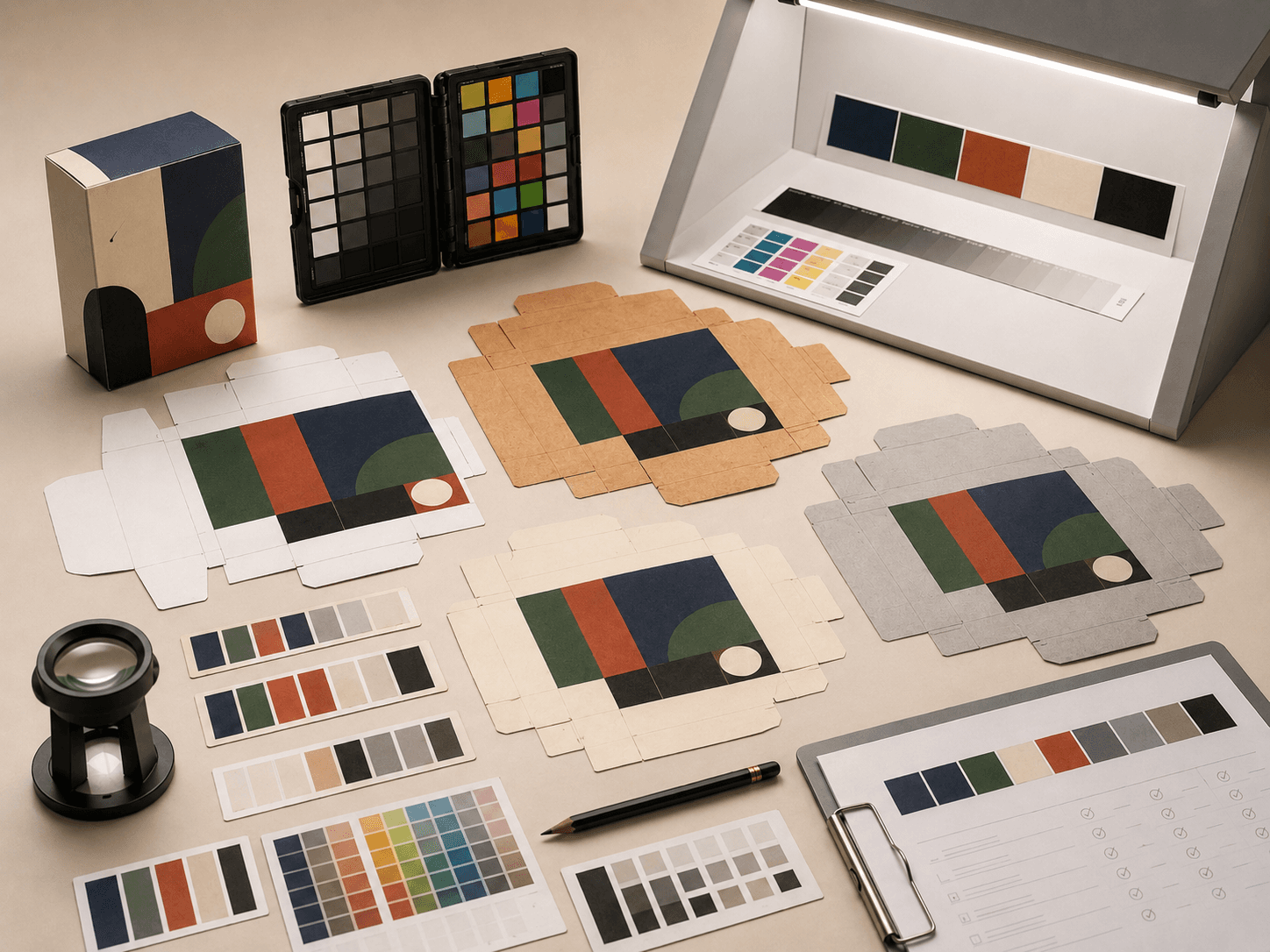
Review important colour areas before final approval when brand consistency matters.
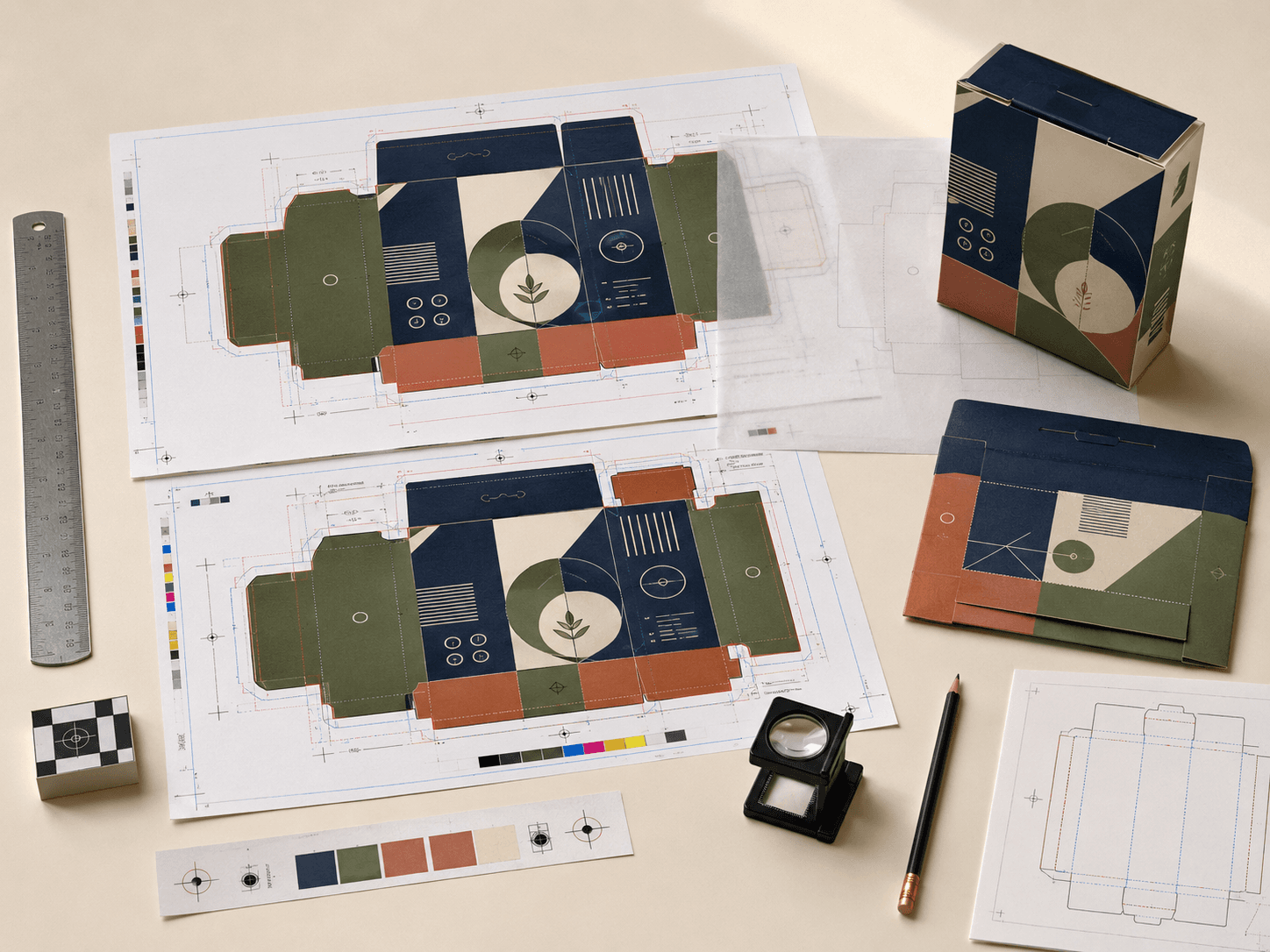
Check print-ready files, panel alignment, safe zones, bleed and dieline placement.
Material efficiency starts with specification: right-size the pack, remove unnecessary components, choose a paper-based route where it genuinely suits the product and avoid adding finishes that work against the intended recovery route. Recyclability or certification claims should match the exact material and supplier documentation for the order.
For projects where material reduction and defensible environmental choices are the main decision, eco-friendly custom packaging keeps that work separate from the broader capability list.
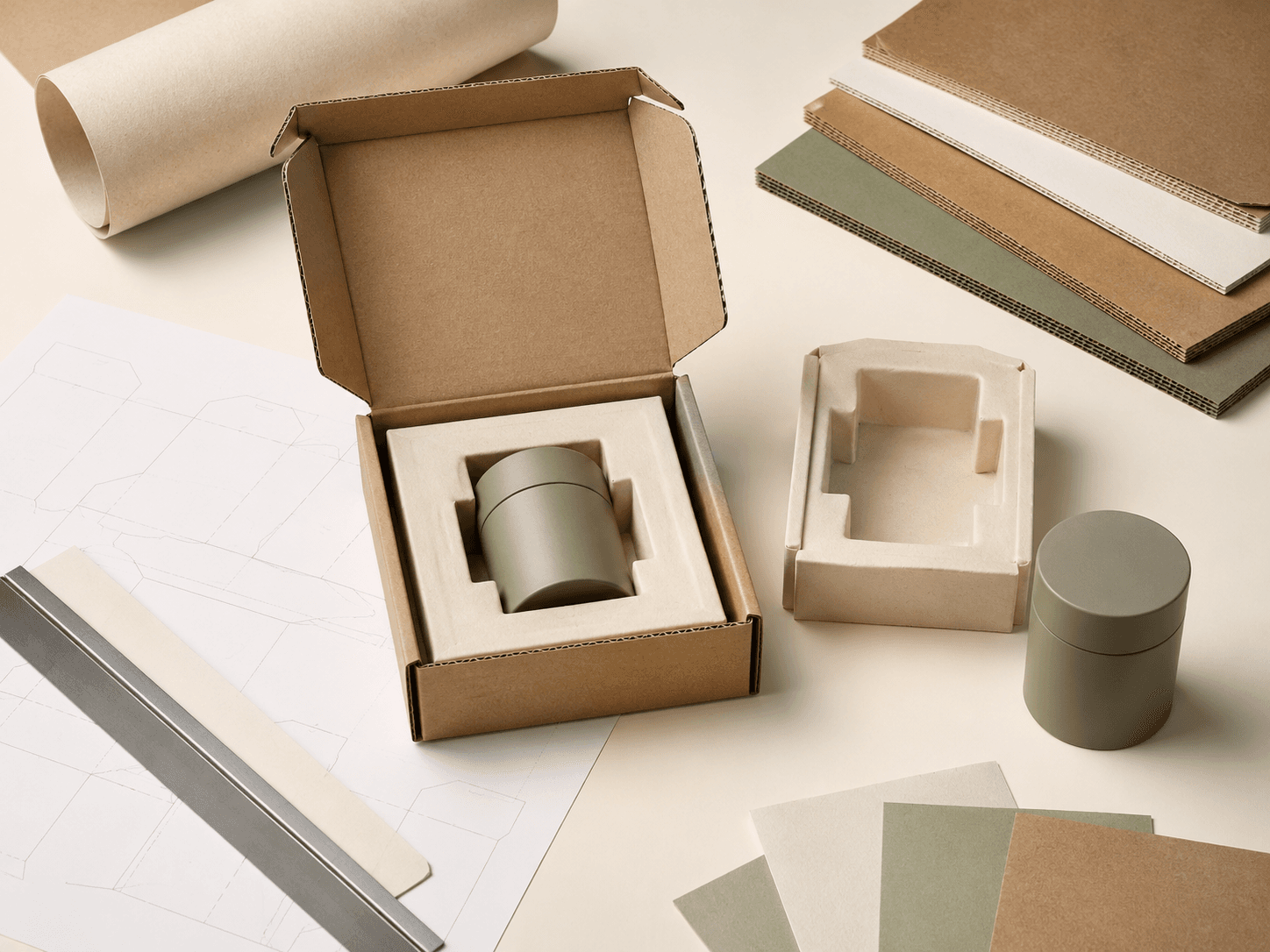
Reduce empty space by matching packaging dimensions more closely to the product.
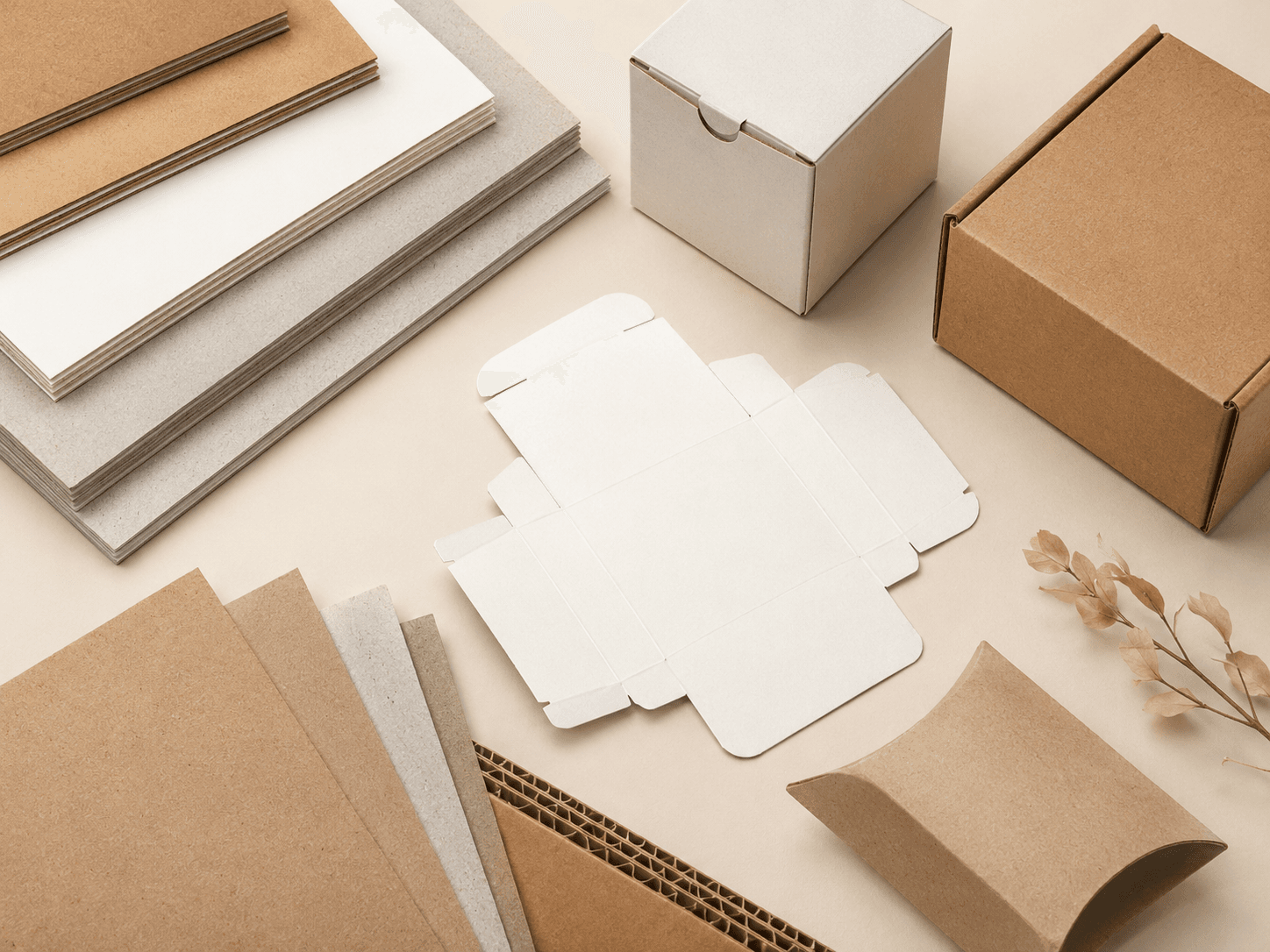
Use recyclable paper-based stocks where product needs and finish choices allow.
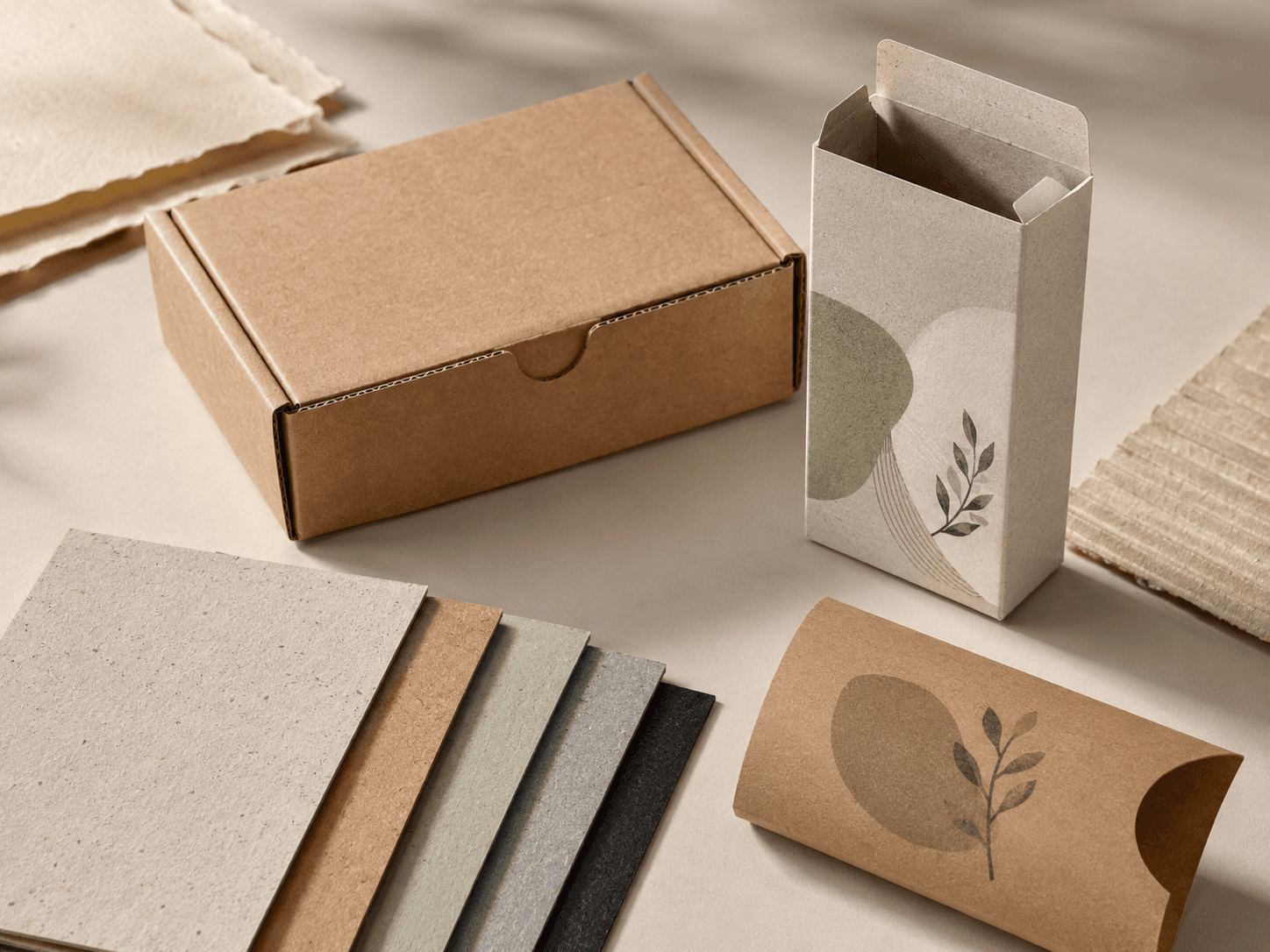
Choose natural or recycled paperboard options for a more understated material story.
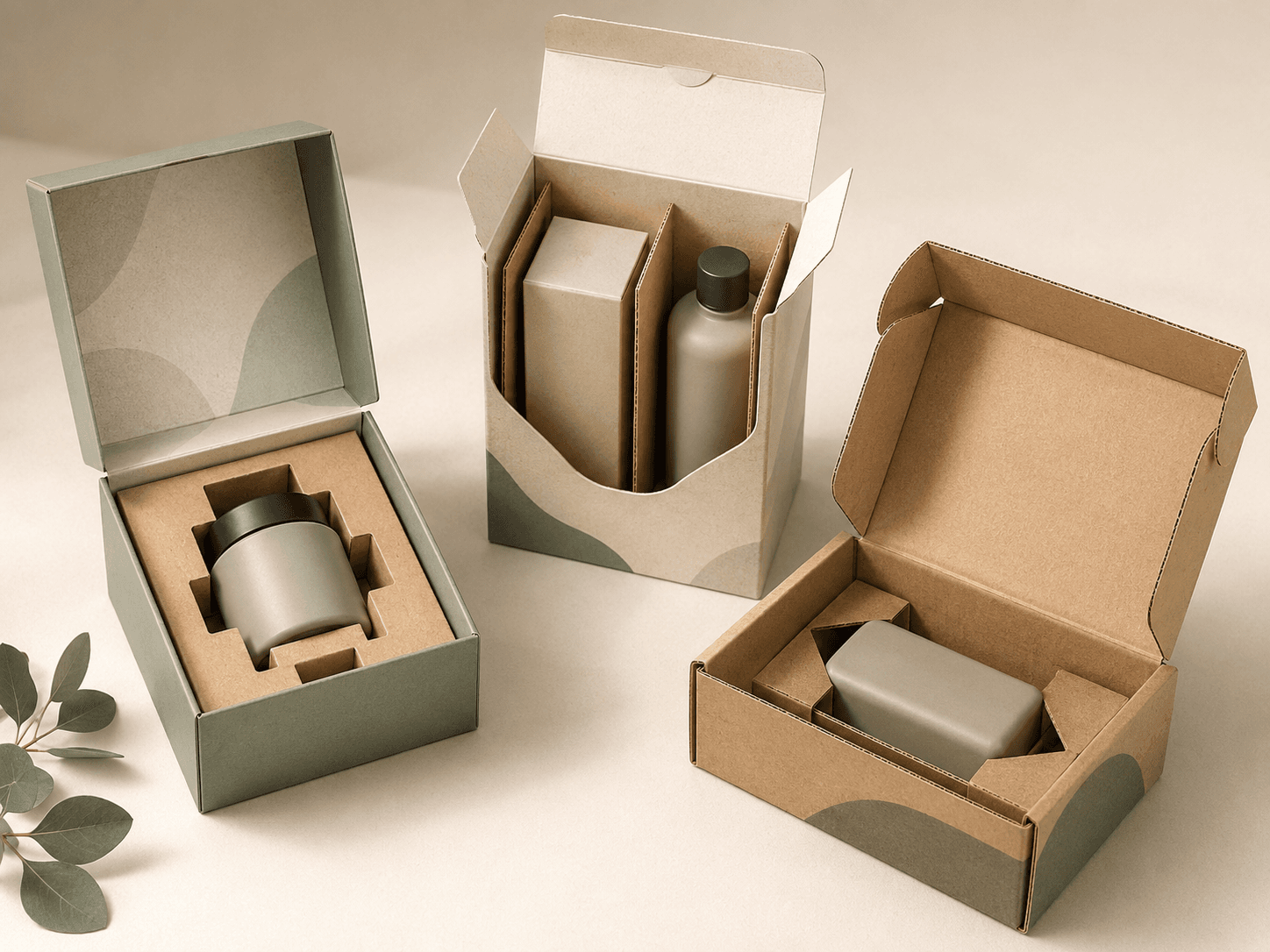
Support products with cardboard inserts, dividers and cradles where suitable.
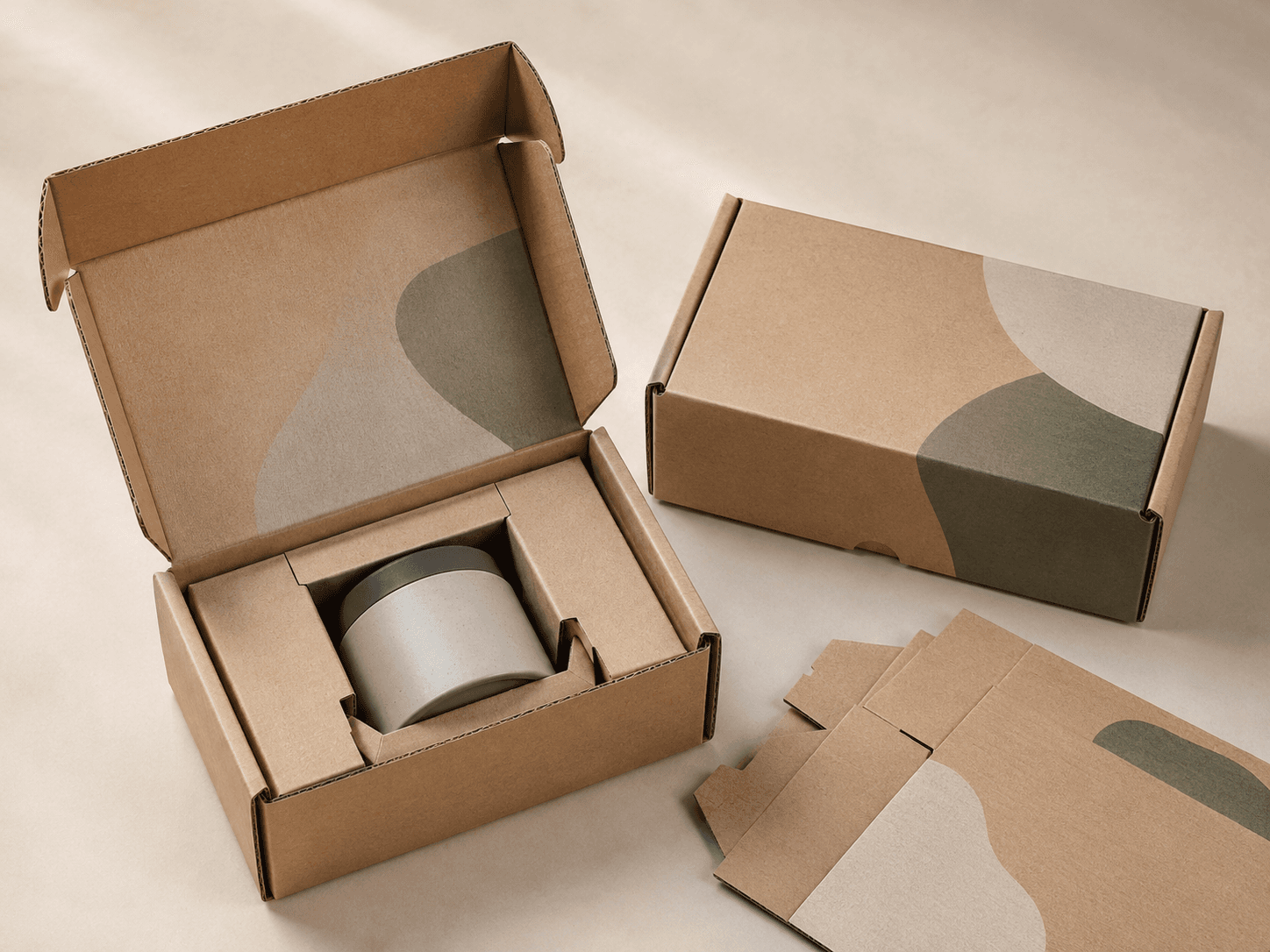
Improve product fit so less internal filling is needed during shipping.
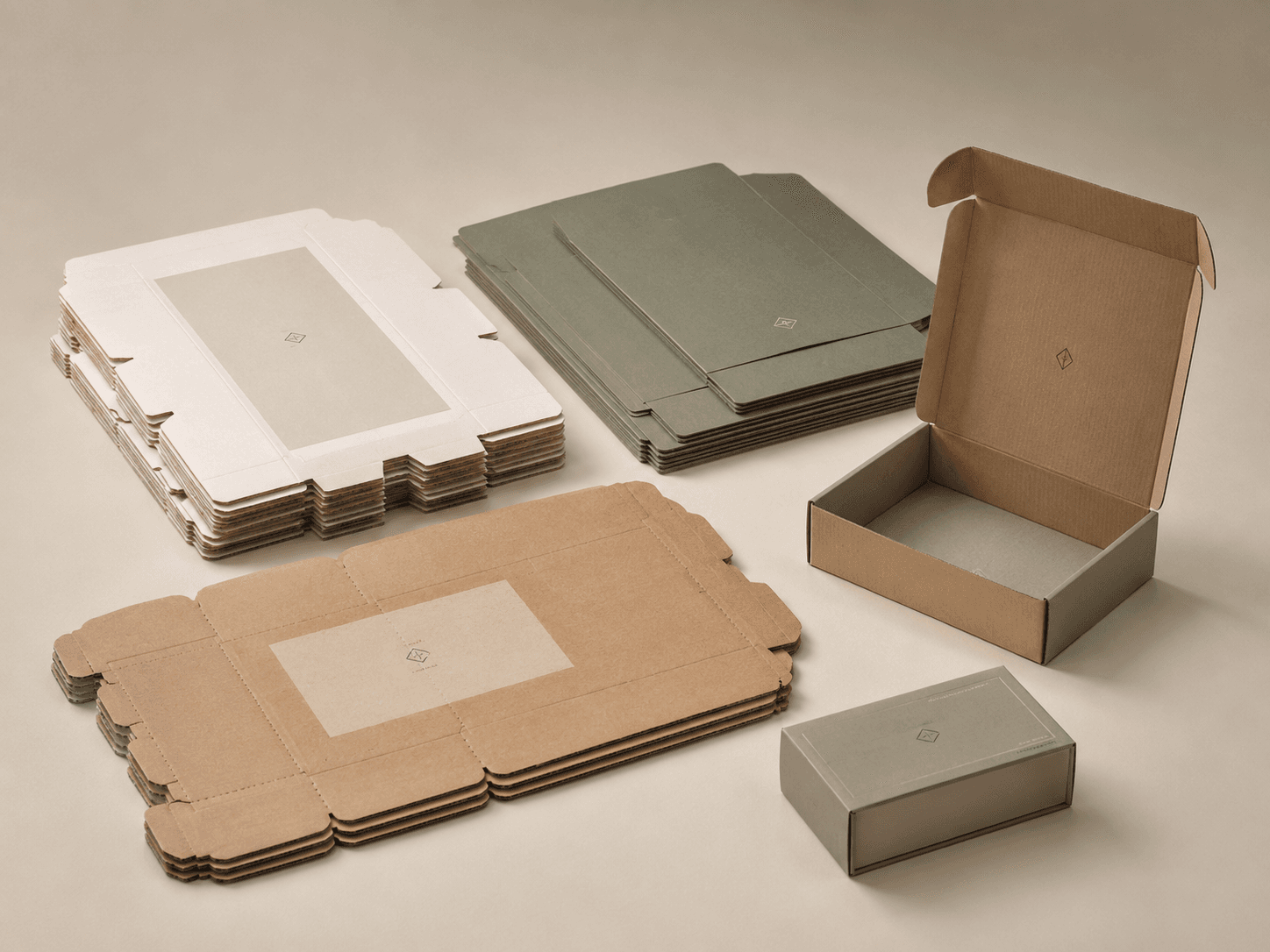
Use flat-packed cartons, sleeves or mailers where storage and assembly speed matter.
Skincare Boxes, Makeup Boxes and Cosmetic Box Inserts often need refined print, accurate colour and clean presentation.
Donut Boxes, Cake Boxes and Chocolate Boxes need practical board, food-aware presentation and reliable handling.
Ring Boxes, Necklace Boxes and Jewellery Box Inserts benefit from rigid board, soft finishes and accurate internal fit.
E-commerce Mailer Boxes, Subscription Mailer Boxes and Fragile Product Mailer Boxes need corrugated strength and clean branding.
Candle Boxes, Candle Tubes and Reed Diffuser Boxes often need protective inserts and premium finishes.
Mobile Accessory Boxes, Charger Boxes and Electronics Mailer Boxes need accurate sizing, inserts and transit support.
A useful production brief records the variables that change fit, manufacturing or approval. You do not need to know every answer before contacting the team.
Product dimensions, weight and any fragile or protruding areas
Required quantity, launch timing and likely repeat pattern
Preferred packaging style or a reference image if the structure is not final
Artwork files, logo assets and brand colour references
Board, print, finish and insert preferences where already known
Delivery, storage or fulfilment constraints
Any physical sample, prototype or colour-check requirement
If the structure is still open, use the Custom Packaging route to choose by product, channel and ordering need. If the structure and main technical variables are already known, request a packaging quote with the dimensions, quantity, artwork status and capability choices that affect production.