Size the Parcel, Not Just the Product
The right mailer box size is the smallest practical size that holds your complete packed product securely, leaves enough room for the protection it needs and closes without pressure. It is not simply the closest box to the product's bare measurements.
That distinction matters for online brands. A tight mailer can crush its contents or leave no space for cushioning. An oversized one can allow movement, add unnecessary packing material and make the unboxing feel careless. The aim is controlled space, not the least space possible.
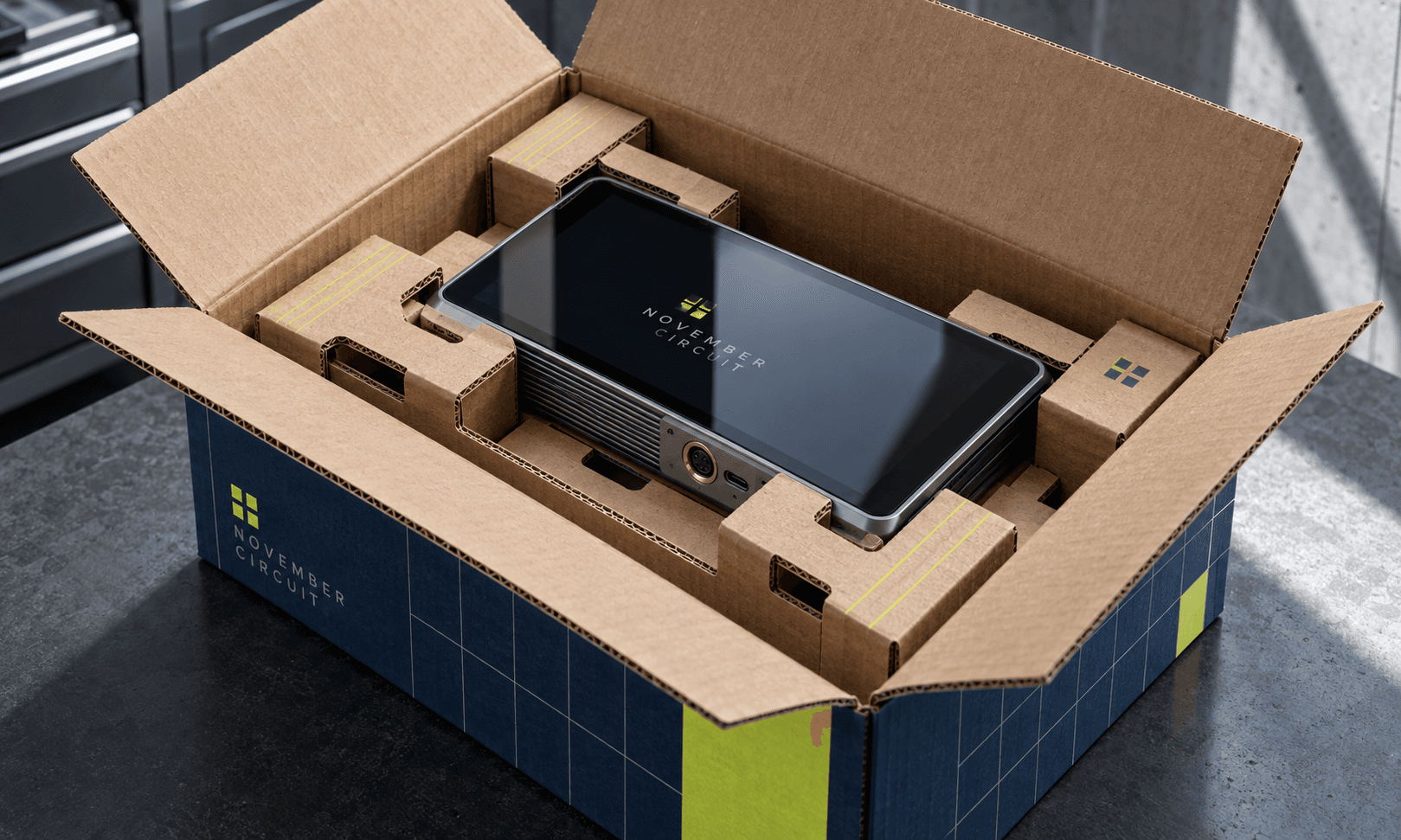
A snug fit isn't enough if the protective material has nowhere to sit. Custom mailer boxes should be sized around the way an order is actually packed and handled in delivery. The following example shows what can happen when that allowance is missed.
When a Close-Fitting Mailer Caused Damage
We worked with a customer who had been using mailer boxes that were too small for the way their products needed to be packed. The items fitted inside, but there was not enough room for cushioning. Both the products and the boxes were getting damaged.
The solution was not simply to specify stronger cardboard. We measured the products, considered the protection required around them and adjusted the available space accordingly. The revised size worked for the customer's packing needs and resolved the problem they had raised.

The lesson from that job is straightforward: a product fitting inside a mailer does not prove the packaging is suitable. Protective space must be designed in, not squeezed into whatever room is left.
If you are still establishing the basic measurements, our notes on internal and external box dimensions address that separate task. Here, the focus is on choosing the finished mailer size for a real order.
Decide What Goes Into Each Parcel Before Choosing Dimensions
A mailer should be designed around the contents as the packing team will actually place them inside. Start with the complete order, not a single product photograph or a supplier's list of stock box sizes.
Record:
A folded shirt behaves differently from a glass skincare bottle. A book needs edge and corner control. A subscription set may need separate spaces so its components cannot collide. Those are different sizing problems, even if the products appear to have similar overall dimensions.
Choose the Layout Before Measuring a Multi-Product Set
For two or more items, decide whether they sit side by side, one above another or in separate compartments. Place the real components in that arrangement and measure the complete packed footprint.
A small additional item can dictate the box depth if it sits on top of the main product. Putting it beside the product may require a wider footprint instead. Neither arrangement is automatically superior. The better choice protects the goods, is repeatable for the packing team and feels deliberate when opened.

This is particularly important in ecommerce and subscription packaging, where the same box may have to accommodate recurring orders or several product combinations.
Allow Protection Space That Suits the Product
There is no single cushioning allowance that works for every mailer. In our experience, the correct space depends on product fragility, shape, weight, insert design and expected handling.
The goal is not to add the same number of millimetres to every side. It is to make room for materials that perform a particular job, while stopping the product from moving freely.
Clothing and Soft Goods
A neatly folded T-shirt or soft accessory may need little protective cushioning, but the mailer must accommodate the intended fold, tissue and any printed card without pressing the lid upwards.
Avoid choosing the size around a garment compressed as tightly as possible by hand if staff will not pack every order that way. The finished dimensions should reflect a normal, repeatable packing process.
Glass, Candles and Cosmetic Bottles
Fragile items usually need more deliberate protection. The space may be occupied by a fitted cradle, wrap or cushioning that stops the product contacting the walls and corners of the mailer.
For bottles, pay attention to the widest cap, pump or shoulder, not just the diameter of the main body. For candles and jars, consider the weight and how the base and rim are supported. More empty space alone does not make a fragile product safer.
Fitted inserts and dividers can hold products in one position or keep separate items from colliding. When damage keeps recurring, determine whether the weakness is in box strength, product movement or internal support before adding bulk indiscriminately.

Books, Electronics and Accessories
Books and prints benefit from a mailer that limits sliding and protects vulnerable edges. Electronics may need a stable position for the main device and dedicated room for a charger, cable or accessory. Jewellery and other small items can disappear inside an oversized mailer unless their presentation pack or insert keeps them positioned.
For each of these products, design the protective arrangement first. The mailer dimensions should follow that arrangement.
Choose the Mailer Construction Before Locking the Outer Size
Two mailers with similar usable cavities can have different external measurements. Corrugated board thickness, rolled side panels, flaps and closure details all affect the finished package.
A deeper or heavier order may benefit from corrugated mailer boxes. However, corrugated board alone cannot compensate for a loose product. Board strength and internal fit have to work together.
Account for Board and Folded Panels
A dimension stated for the inside of a box is not necessarily its postal dimension. The walls add thickness, and some mailer designs incorporate folded or rolled panels that occupy space. Do not promise a courier-compatible external size from the internal measurements alone.
For a mailer with side wings or a front tuck, also allow for the path the panels follow when closing. A pack that looks fine while open may resist closure after tissue, cushioning or a card is added.

Check That the Lid Closes Naturally
A correct size should let the lid settle into place without forcing, bowing the side walls or placing pressure on the product. If the closure needs to be pushed down, the problem may be box depth, the arrangement of contents or excess cushioning in the wrong location.
It is better to correct that before ordering a production run than expect the packing team to force every box shut.
Check UK Delivery Limits Against the Finished Mailer
For UK ecommerce brands, postal dimensions can influence the final choice, especially when a product is close to a Large Letter or Small Parcel threshold.
For Royal Mail 1st and 2nd Class, the published Large Letter maximum is 353 × 250 × 25 mm and 750 g. The Small Parcel maximum is 450 × 350 × 160 mm and 2 kg. The applicable service, price and eligibility should always be checked before dispatch because not every Royal Mail service has identical limits.
Those figures concern the complete outside dimensions and packed weight, not the empty internal cavity. A product that fits a 25 mm-deep space before wrapping may exceed that limit once board thickness, protection and closure are included.

Do not reduce essential cushioning merely to fit a cheaper postal format. First establish a safe packing arrangement, then see which delivery service suits the resulting dimensions. It may be possible to refine an insert or choose a slimmer structure, but safety and closure still come first.
One Mailer Size for Every Product, or Several Sizes?
The answer depends on how the brand wants to fulfil its orders and present its products. We generally favour giving individual products their own considered presentation when the customer experience is important. Separate, well-fitted packaging can make each item feel more intentional and premium.
That preference does not mean every item must be shipped as a separate parcel. Individual presentation packs can sit together inside one suitable outer shipping box. The choice between separate parcels and one combined shipment also affects postage, material consumption and packing time.
A shared mailer size can make sense when products have similar dimensions, the insert can hold different items securely and the order mix is consistent. Several sizes become more useful when one standard box leaves large voids around smaller items or cannot protect larger, fragile products properly.
Before standardising, ask:

For repeat orders, a small set of carefully chosen mailer sizes is often more practical than either one universal size or a different box for every SKU. The right number depends on the actual orders being dispatched.
Validate the Size With a 3D Mockup or Physical Sample
Before approving a custom mailer, our preferred starting point is to compare the proposed dimensions against the actual measured product and packing arrangement. A 3D mockup is useful for reviewing proportions, product layout and the intended presentation.
A mockup cannot, on its own, prove how cushioning compresses, whether a heavy jar moves or whether a folded corrugated lid closes cleanly. Where the fit or protection is uncertain, a physical sample gives stronger evidence.
What to Check Before Production
For fragile or higher-risk shipments, a physical fit check is not a substitute for appropriate transit testing. The level of testing should match the product and delivery risks.

Once the size and construction are agreed, the dieline generator can help with supported box templates and artwork dimensions. Final artwork should follow the approved box structure, not determine the size before the product fit is settled.
Common Mailer Size Decisions That Lead to Problems
Most poor sizing choices come from solving only one part of the packaging problem.
There is also a commercial mistake: comparing quotations for mailers that have different internal space, board or inserts. Once the specification is clear, compare mailer box quotes on the same requirements so a cheaper unit price is not hiding a weaker packing solution.
Frequently Asked Questions About Mailer Box Sizes
Should a Mailer Box Fit the Product Tightly?
It should fit securely, not tightly enough to crush the item or prevent protective cushioning. The correct amount of clearance depends on how the product is restrained and how the box closes.
How Much Extra Space Should I Add for Cushioning?
There is no reliable universal allowance. Select the cushioning or insert first, assess the product's vulnerable points and size the internal cavity around the complete protected arrangement.
Can One Mailer Size Work for Several Products?
Yes, when the products have compatible packed dimensions and the same box can hold each securely. If small products require excessive filler or fragile items move around, separate sizes may work better.
Are Mailer Box Sizes Measured Internally or Externally?
Both matter. Internal dimensions determine whether the product and protection fit; external dimensions determine the finished parcel's footprint and postal eligibility. Always label which measurements you are supplying.
Is a 3D Mockup Enough to Confirm a Mailer Box Size?
A 3D mockup is useful for reviewing dimensions and presentation, but it does not physically test cushioning, material behaviour or closure. A production-equivalent sample is the stronger check when physical fit is critical.
Prove the Fit Before Fixing the Dimensions
A useful sizing brief includes the packed product's dimensions and weight, the protection that needs to surround it and the combinations most often sent in one order. If earlier mailers crushed corners, allowed movement or needed force to close, describe exactly where the failure occurred.
Those details are enough to assess a sensible internal size and closure before artwork is finalised. When the product, cushioning and finished parcel dimensions have been checked, request a custom packaging quote against the agreed packed specification, not an estimated bare-product measurement.
The most successful mailer is not the one with the least empty space. It is the one where every millimetre has a purpose: fitting the product, holding protection, allowing closure or improving the moment the customer opens the parcel.