Rings
Control the ring angle and slot tension so the piece presents upright without excessive pressure.
Packaging for rings, necklaces, earrings, bracelets, watches and accessories, built around item retention, display position, gifting and ecommerce protection.


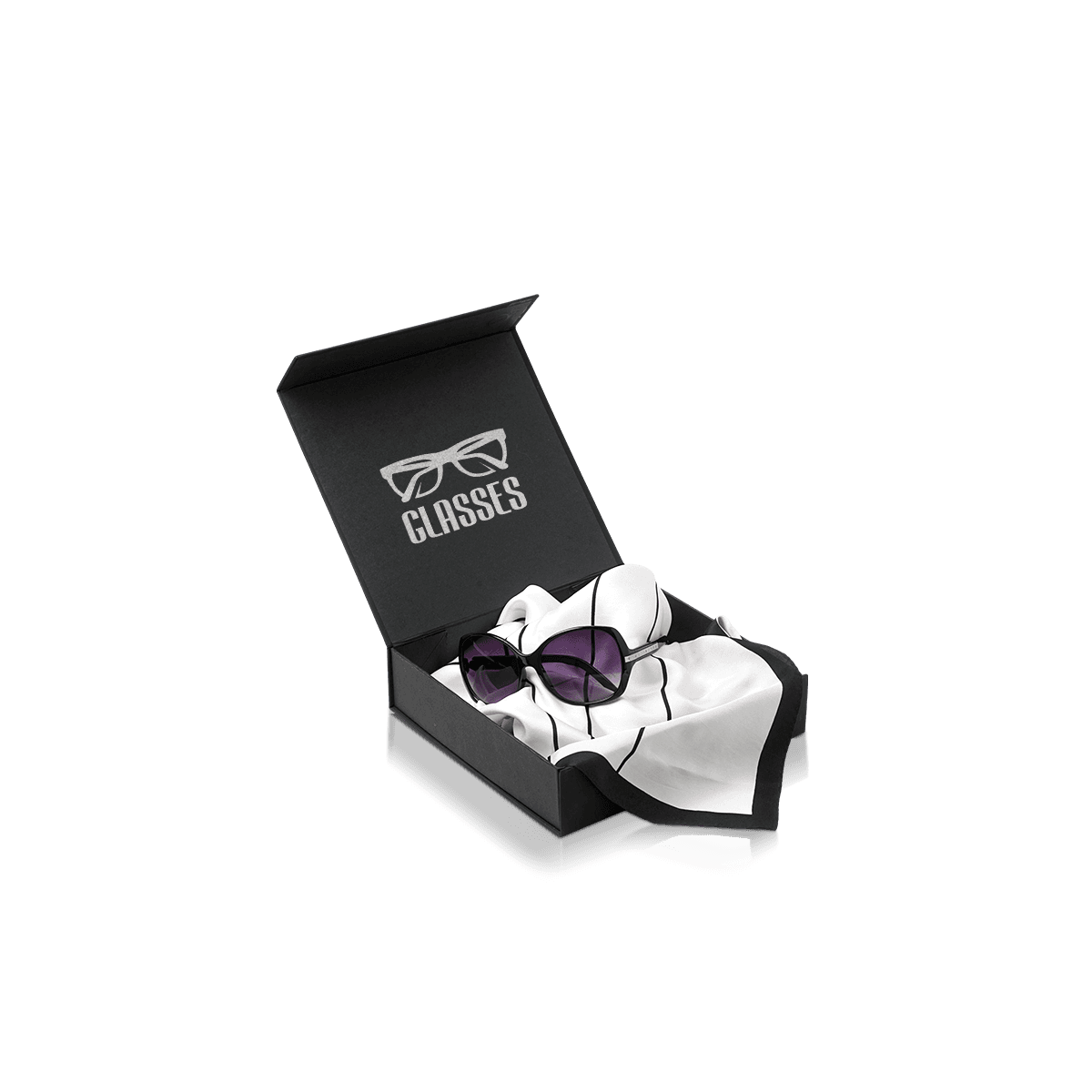


Your product shouldn’t have to fit an off-the-shelf box.
Share the shape, size, material, finish, or insert you have in mind. We’ll turn the details into a tailored packaging recommendation and a clear quote.
Custom sizes · materials · finishes · inserts
Jewellery packaging is small enough that a few millimetres of movement can change the whole opening. A ring that tilts, a necklace that slides under its card or a watch that rotates on its cushion can make a well-finished box feel poorly specified. The first decision is therefore how the item is held in its intended display position, not which foil or outer colour is applied.
For mixed collections, Jewellery Box Inserts are the natural route when the internal hold is the main problem. The outer box can then be selected around gifting, retail or delivery without asking the lid and walls to do the insert’s job.
Small items need different restraint. Cufflink Boxes need paired cavities that keep two pieces aligned, while Earring Boxes need secure post or hook control and Bracelet Boxes need enough diameter without letting the piece collapse into the centre.
Control the ring angle and slot tension so the piece presents upright without excessive pressure.
Keep the chain spread and supported so pendants do not migrate or tangle under the insert.
Hold matched pairs in a repeatable position with enough separation to avoid contact.
Support the curved form without forcing the clasp, crown or charms against hard edges.
Allow for the folded product profile, hinge points and case depth rather than using jewellery-box assumptions.
A compact box should feel intentional rather than oversized. Custom Ring Boxes can be built around a single focal reveal, while Custom Necklace Boxes need more internal length and better chain management. Trying to standardise those two formats around one empty cavity usually trades operational simplicity for a weaker presentation.
The same principle applies to earrings, bangles, bracelets and cufflinks. A shared outer size can work when the insert genuinely adapts the internal geometry, but the product should not be left to float simply to make the purchasing list shorter.
Jewellery damage risk is often local. Posts can press into liners, chains can rub against printed card and polished surfaces can mark if the item moves against a hard insert edge. Use soft-touch contact materials only where they are appropriate for the item, and shape card or board retention so metal parts are not forced into one another.
For watches and broader accessories, Custom Watch Boxes should own the watch-specific cushion and case decision. The parent should stay focused on the general rule: secure the item in the position in which it should be seen.
Choose the opening style around the value and gifting moment once the internal hold is solved.
Reserve enough finger access so the item can be removed without pulling against chains, clasps or inserts.
Keep decorative print and foil away from high-friction contact points that may scuff during repeated opening.
Use a separate transit layer when the presentation box is not designed for parcel handling.
Record insert material, cavity dimensions and item orientation as part of the repeat specification.
Rigid presentation formats are useful when the box itself is part of the gifting experience. The Custom Rigid Boxes area helps compare opening systems when the jewellery case is meant to feel substantial and reusable. Direct-to-customer orders create a different problem: the finished jewellery case may still need an outer Jewellery Mailer Box or another protective mailer for normal courier handling.
That inside-out design sequence is the same principle covered in how to design packaging for a product: define the physical product and its weak points before decoration starts driving dimensions.
A jewellery collection can share the same board colour, logo scale, typography, foil reference and opening language while using different internal holds. This is usually stronger than forcing rings, necklaces and watches into one universal cavity. The customer sees one brand system, while the packer still gets an insert that makes sense for each product.
Premium offset printing and controlled colour references are useful when the same visual identity has to repeat across several box sizes. Where the range is still small, MOQ starts from 100, so the first run does not need to combine every accessory into one structural compromise.
The same collection may also need Necklace Boxes for chain control, Watch Boxes for a heavier fitted object and Sunglasses Boxes where lens and frame protection become the main geometry.
A flat artwork proof cannot show whether a pendant hangs straight or whether a ring rotates in its slot. Use a physical fit check whenever the internal hold is difficult to judge from dimensions alone. Free sample examples of previous work can help with material and finish expectations; an exact fully custom sample should be treated as a paid custom sample.
The useful approval question is simple: when the box opens, is the jewellery already where the customer expects to see it, and can it be removed without fighting the insert?
For each SKU, record the jewellery type, maximum dimensions, clasp or post position, intended display angle, insert material, presentation-box style and whether an outer delivery pack is required. That is enough to route the project into the right specific box without turning the parent into a catalogue of every jewellery format.
Custom Packly can then apply free design and dieline support, free 3D mockups, UK production and free delivery to a specification that already has a clear physical job.
Start Your Bespoke Packaging Quote
Share your product details, dimensions, quantity and artwork needs. We’ll help choose the right packaging style and send a clear quote.