Eco-friendly custom mailer boxes are usually a little more expensive than conventional options in the UK orders and enquiries I have seen. Usually, though, the difference is modest rather than dramatic. Recycled-material requirements and certifications are the two reasons I encounter most often. A higher quote is not inevitable, and a brown-looking box is not proof of a better environmental specification.
My view from working on packaging at Custom Packly is that the useful question is not simply whether a box costs more. It is what the extra money pays for, whether the environmental claim is supportable and how to keep the total packaging cost sensible.
Are Eco-Friendly Custom Mailer Boxes Usually More Expensive?
In my experience, yes, typically slightly. When a brand requests a particular recycled stock or certified sourcing, its quote can come in above an otherwise comparable standard mailer. But there is no universal eco-friendly surcharge. The result depends on the board available for that run, its grade and the exact requirements attached to the order.
For recyclable mailer boxes, start by checking what the term means in the actual construction. A conventional corrugated mailer may already be recyclable in the appropriate collection system. Choosing a box with specified recycled content or documented material sourcing is a more particular purchasing decision, and that is where a price difference can emerge.
It is worth asking for two prices against the same dimensions, protection requirement and print specification. Otherwise a heavier board, a different closure or a more elaborate finish can create a gap that has little to do with environmental performance.
Where the Extra Cost Comes From
A specific recycled-fibre or recycled-content requirement
Corrugated board is already commonly made using recovered paper fibres. That means 'contains recycled material' does not, by itself, establish that one mailer is an unusual or premium option. What can change the quote is a specified recycled-content level, a particular paper grade or a sourcing requirement that narrows the suitable material choices.
Paper is not interchangeable simply because two sheets look similar. Liner strength, flute profile, finished thickness, stiffness and print surface still need to suit the parcel. If a proposed recycled-grade board needs to be heavier to meet the same performance requirement, the cost comparison should account for that change. Equally, a suitable recycled board may be competitively priced when it is readily available.
Certification and the evidence behind the claim
Certification is the second price factor customers raise in my experience. A requirement for an eligible certified stock, documented chain of custody or approved on-pack claim can limit the supply and production options. Depending on the job, that can affect procurement, administration or the available board choices. It does not mean every certificate carries the same fee.
Be precise about what is being requested. FSC chain-of-custody certification, for example, concerns the handling and sourcing of material in the certified supply chain; it is not automatically a claim that a box contains 100% recycled fibre. Ask for documentation matching the exact claim you intend to make, and confirm whether the finished packaging qualifies before printing any certification mark.
This is especially important in the UK, where broad terms such as 'eco-friendly' can be misleading without a clear basis. A specific, verifiable statement about the material is more useful to customers than an environmental slogan that the box cannot substantiate.

Kraft, Recycled and Recyclable Are Not the Same Thing
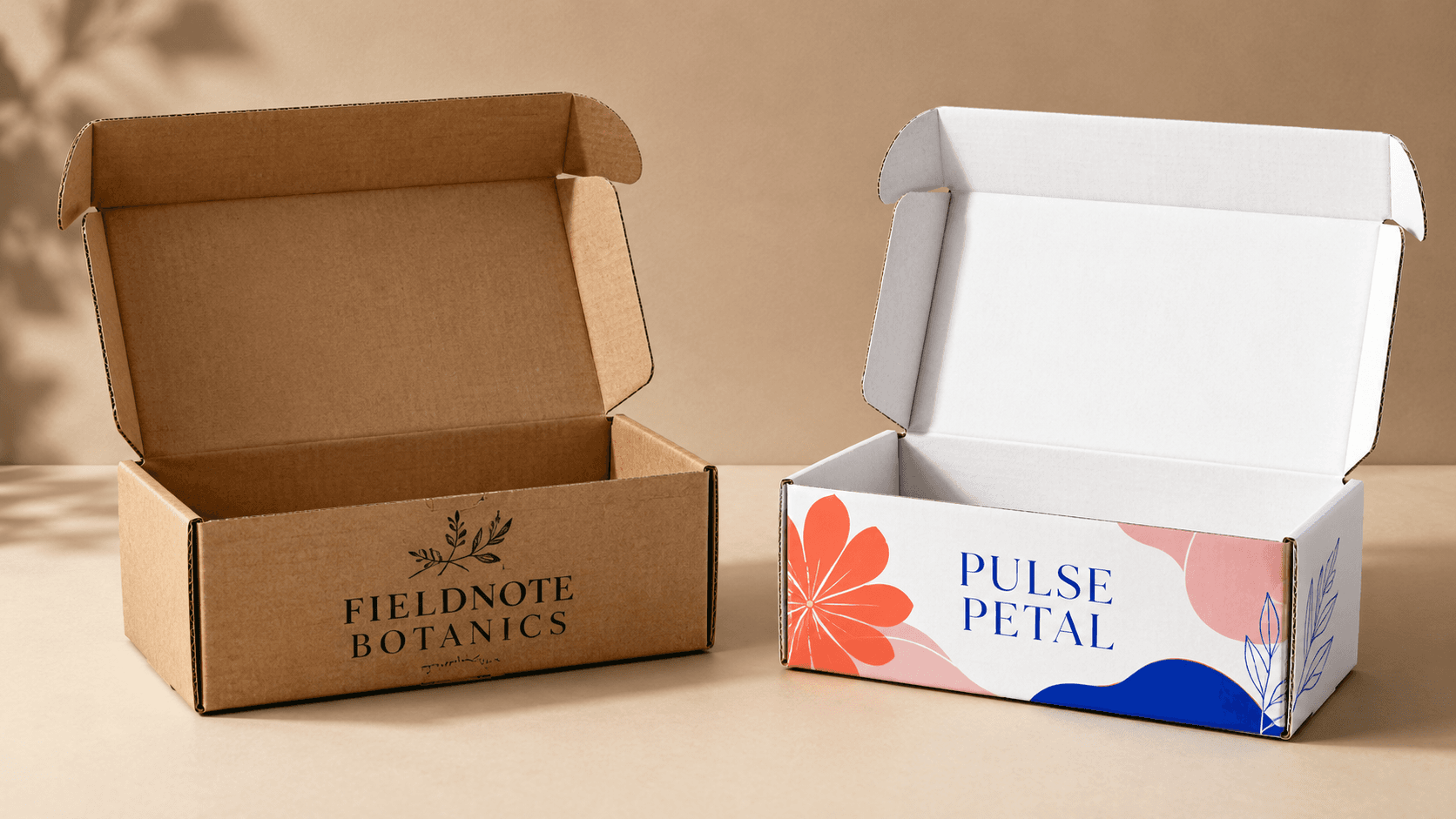
Natural-looking kraft mailer boxes can suit a brand that wants restrained printing and an uncoated appearance. But brown colour does not establish recycled content, and kraft stock is not automatically cheaper or more environmentally responsible than a white-lined board.
Likewise, 'recycled' describes material input, while 'recyclable' concerns whether the finished pack can be collected and processed in a real recycling system. Coatings, adhesives, plastic windows and mixed-material fittings can change that outcome. A paperboard insert may also change how the whole pack should be described.
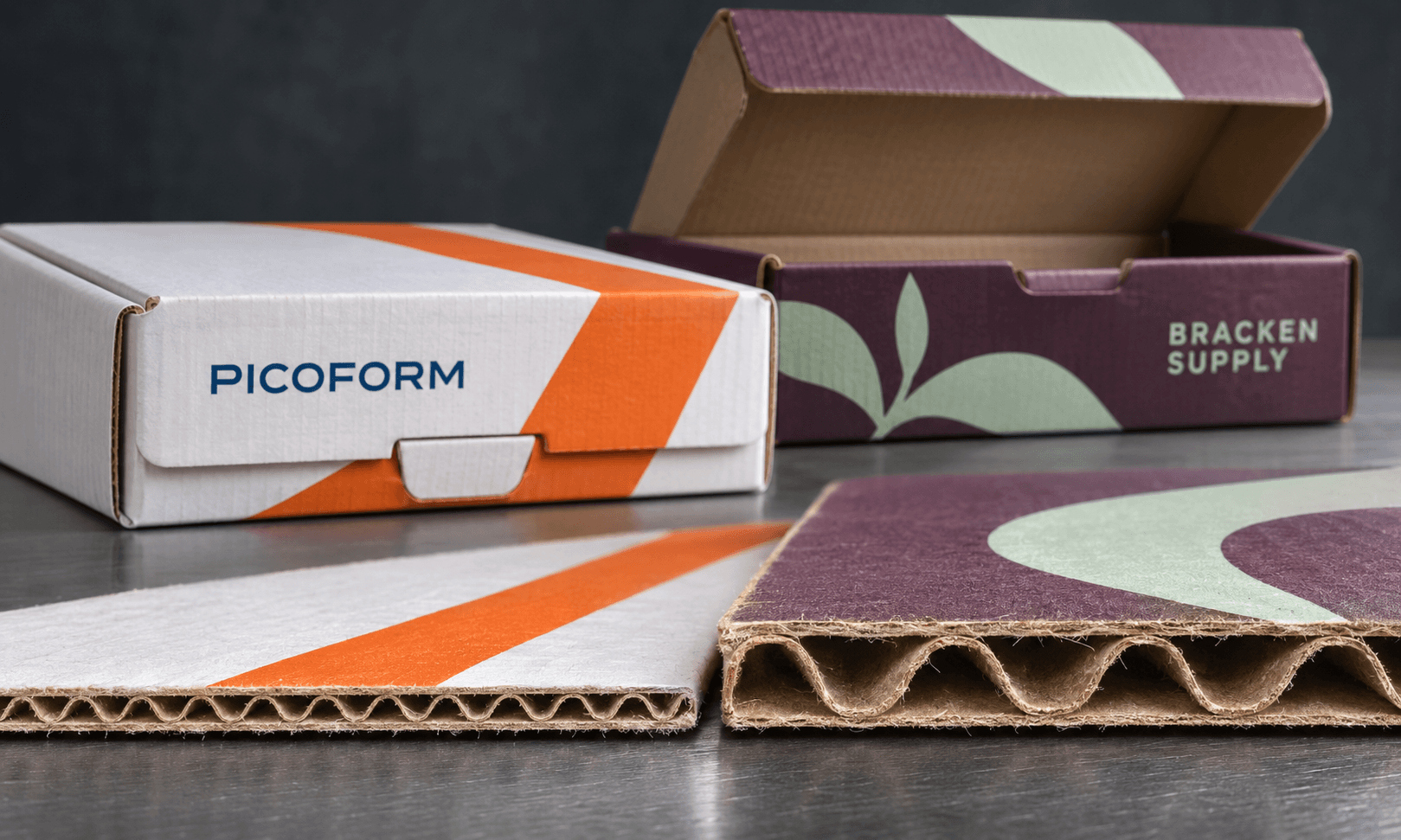
The distinction matters when comparing kraft mailer boxes versus corrugated boxes. Kraft can be a surface or paper specification, while corrugated describes a layered structure. A kraft-faced mailer can itself be corrugated. Treating the two terms as opposites leads to misleading price comparisons.

Compare Two Mailers with the Same Job to Do
To see the environmental premium clearly, ask the supplier to price a conventional option and the preferred environmental specification with all other essentials held as close as possible. Compare:

A lighter mailer is not automatically safer, just as a thicker one is not automatically more sustainable. The correct corrugated mailer box must protect the packed product during handling and delivery. If the cheaper quote relies on a weaker board or an oversized box, you have changed the product rather than isolated the material premium.
The cost calculation also extends beyond the price of an empty carton. Storage, packing time, filler, damaged goods and parcel dimensions can matter. Those wider custom packaging cost factors in the UK deserve consideration, but the environmental price difference should first be tested on a like-for-like specification.
How I Would Keep the Eco-Friendly Option Affordable
Remove finishes that do not improve the pack
My first recommendation to a buyer with a tight budget is to avoid unnecessary finishes. Foil, spot UV, elaborate laminations and multiple decorative treatments may add cost while doing little for the product or the environmental objective. Some additions can also complicate the recycling assessment.
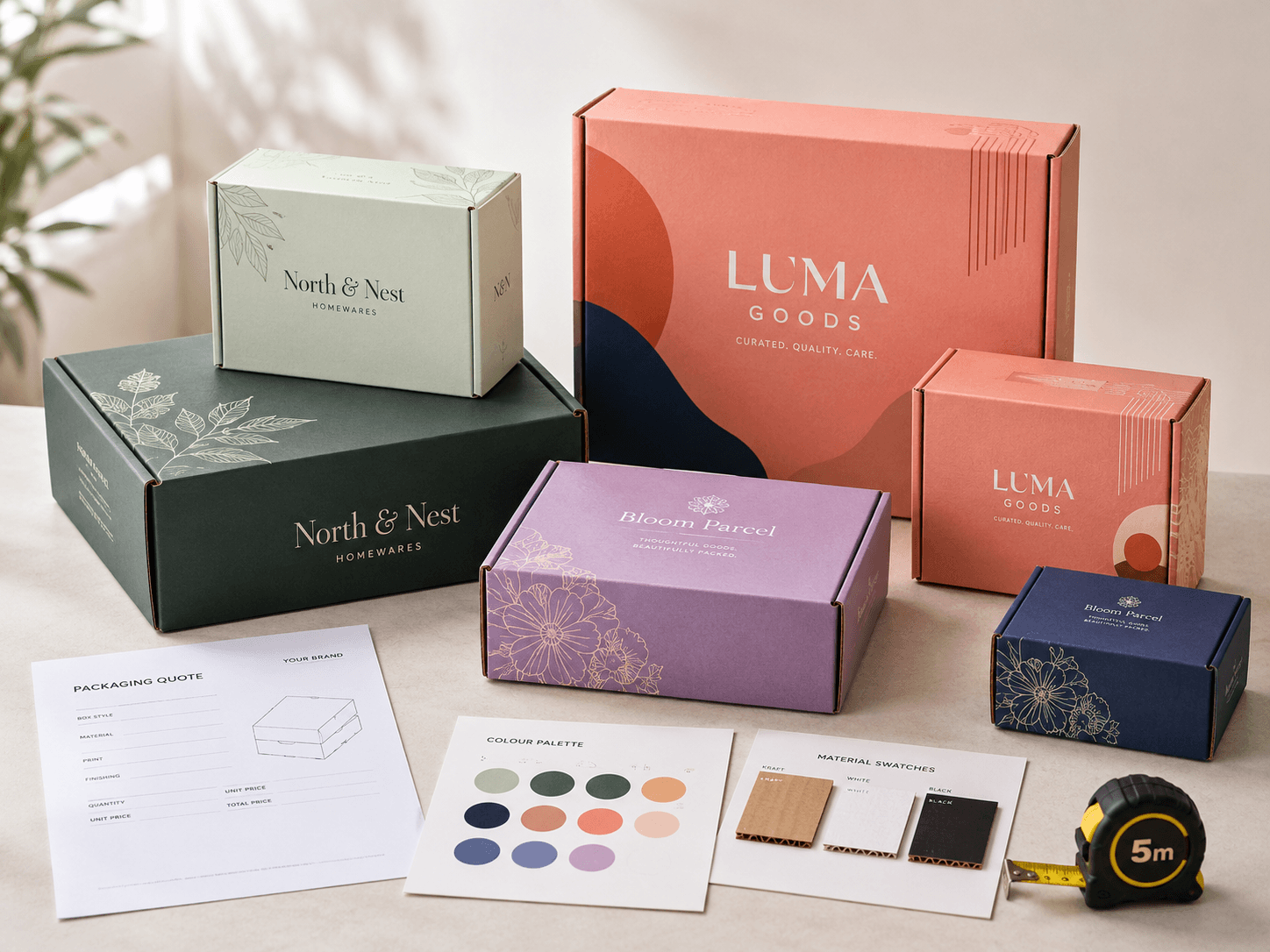
That does not mean a responsibly specified box has to be plain or poorly printed. A strong logo, clear colour contrast and thoughtful panel layout can look professional with a simpler production setup. Review the relevant printing, board and finishing capabilities before deciding which effects to keep. The material and process need to work together; even a simple finish should be assessed against the final recycling claim.

Increase quantities where the demand is real
My second recommendation is to examine order quantity. A larger run can spread setup and production costs across more boxes, lowering the price per unit even when the chosen material remains more expensive than a conventional alternative.
The condition is genuine demand. A reduced unit price is not much help if the business ties up cash in stock it cannot use, changes its artwork shortly afterwards or has insufficient storage. For established repeat demand, bulk custom boxes and planned deliveries may be worth evaluating instead of repeatedly placing small orders.
Reduce unnecessary board before weakening the box
There is a third opportunity I would check before reducing material quality: fit. An oversized mailer consumes more board and can require extra void fill. Measure the packed product, including tissue, inserts and anything that protrudes, then specify the clearance actually needed. A fragile glass item may still require more protection than a soft apparel item.
If the box style itself is not settled, compare custom mailer box structures against the product and delivery requirements. It can be better to eliminate an unnecessary component than to compromise the strength of the board carrying the parcel.
Keep the artwork purposeful
A one-colour logo or restrained exterior print may suit the brand better than full-coverage artwork. But do not assume one-colour print is cheaper for every process or order size. Request prices for the actual artwork options, especially where white ink, a separate printed liner or inside printing would be needed.
A UK Customer Who Chose the Higher-Cost Option
One UK customer we worked with had a straightforward choice: conventional mailers at a lower price or eco-friendly mailers that better matched the brand's environmental message. They did not switch away from the environmental specification when they saw the higher quote. For this business, that decision was connected to how it wanted to present itself to customers.
Instead, the customer increased the order quantity to bring down the per-box cost while retaining the preferred material direction. That is a useful commercial decision, but it does not establish a universal saving or mean larger orders always cancel the material premium.
What I take from that experience is that sustainability-led packaging should be approached as a commercial specification, not a decorative upgrade. The customer was prepared to pay somewhat more for the chosen objective and then used a sensible production lever to manage affordability.

When Is the Extra Price Worth Paying?
For a business that publicly presents itself as environmentally responsible, I believe the packaging should be consistent with that promise. It is difficult to build trust around responsible sourcing while treating the parcel as an afterthought. Where a specified material or verified claim matters to the brand and its buyers, a modest premium can be justified.
That is not an instruction for every business to buy the most expensive certified board. A new ecommerce brand with uncertain sales should not stretch its budget for a claim it cannot clearly describe. And a brand that already uses a suitable recyclable corrugated mailer may gain more by removing needless plastic components than by paying for a label that changes little.
I would approve the extra expense when three things are true:
The decision should be made on the total pack, not simply on whether the word 'eco' appears in a quote.

What to Ask Your Supplier Before Approving a Price
Begin with a material objective rather than a vague label. For example, request recycled-content evidence, an eligible certification claim, a recyclable paper-based construction or a reduction in material use. These are different goals, and the right eco-friendly custom packaging choice depends on which matters most.
Then send a brief that includes:
Ask for the conventional and preferred environmental options against that same brief. A consistent process for comparing custom mailer box quotes makes omissions easier to spot: one supplier may include sampling and delivery while another may not.
Custom Packly's UK minimum order starts from 100 boxes, although the suitability and availability of a particular certified stock must be checked against the specific job. If the size, quantity and environmental requirements are ready, request a custom mailer box quote that identifies the material and evidence being priced, rather than a single figure labelled 'green'.
Pay for a Documented Improvement, Not a Green Appearance
My answer remains that eco-friendly custom mailer boxes are generally slightly dearer in the comparisons I have handled, largely because of recycled-material choices and certification requirements. The gap is often manageable, particularly when unnecessary finishes are removed and repeat demand supports a larger production run.
I would rather see a brand use one appropriately specified, protective mailer with an honest material claim than spend more on decorative cues that merely look sustainable. For an environmentally led brand, the strongest box is one whose appearance, construction, evidence and cost all tell the same story.