Skip to content
Details

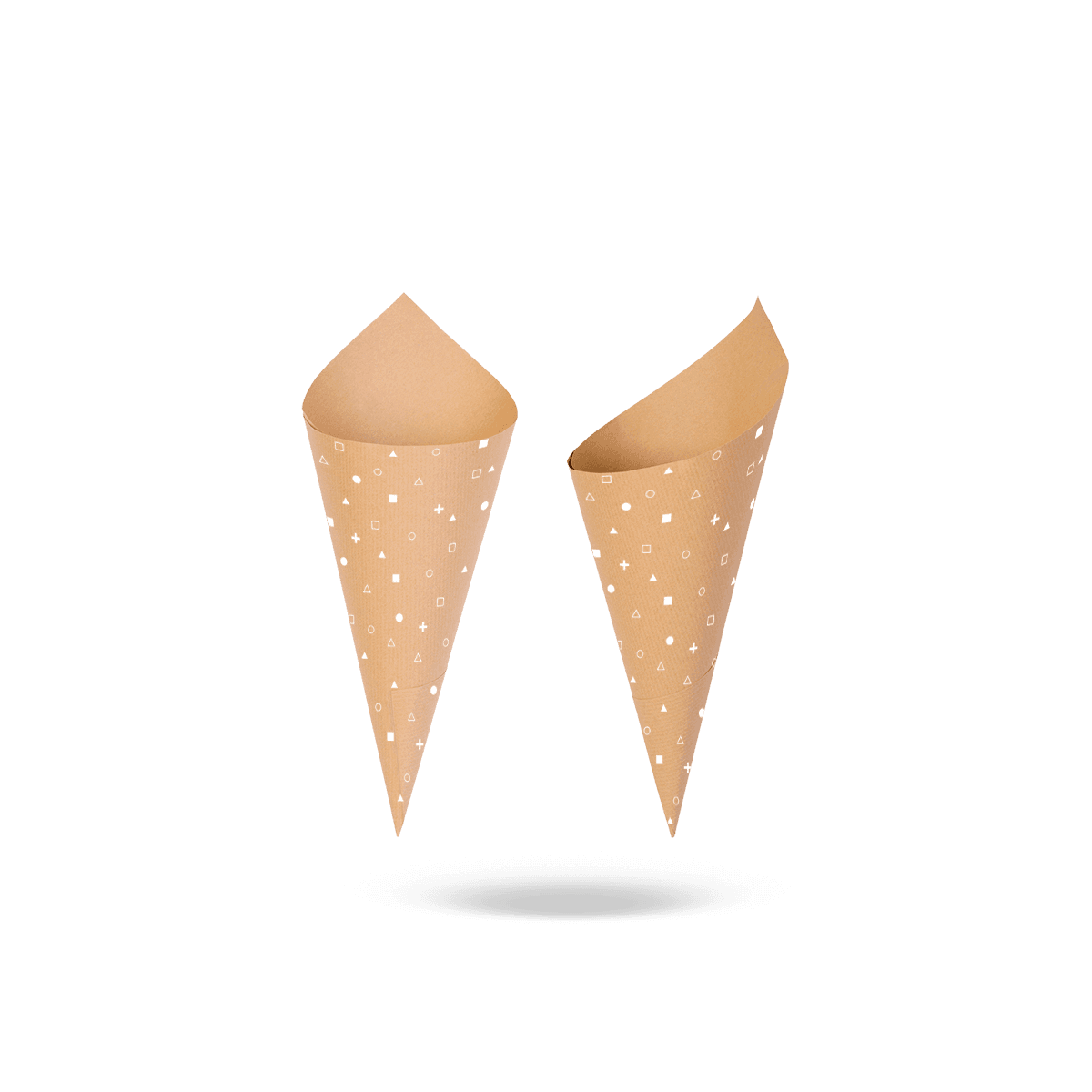
Custom Ice Cream Cone Sleeves

Printed sleeves for standard wafer and sugar cones, planned around quick application, secure grip and everyday soft-serve or scoop service.

Make Standard Cones Easier to Hold

Standard wafer and sugar cones need a sleeve that goes on quickly, stops at the right height and stays comfortable as the ice cream melts. Custom Ice Cream Cone Sleeves should solve that everyday service job without the extra coverage needed for larger waffle desserts.

The sleeve should give customers a clean grip area while leaving enough edible cone exposed. If it rises too high, it gets in the way as the customer eats. If it sits too low, it adds branding but contributes very little to handling.

Keep Coverage Practical

Most standard cones do not need a large wrap.

The upper edge should normally sit around the natural grip area, below the main eating zone but high enough to remain useful as the customer works down the cone.

More paper is not automatically more protection. The right amount of coverage is the amount the customer actually holds.

Protect Brittle Cones

Wafer and sugar cones can crack when a sleeve grips too aggressively.

A good fit should move onto the cone smoothly and settle into position without staff having to force it. If the cone feels squeezed during application, the sleeve profile needs adjustment rather than extra pressure from the person serving it.


Keep Counter Service Fast

Ice cream sleeves are applied repeatedly during busy service, often while staff are also scooping, topping, taking payments and handling several orders at once.

A sleeve that needs careful positioning every time can become an unnecessary bottleneck.

Make Application One Motion

Staff should be able to pick up the sleeve, slide it onto the cone and continue serving.

There should be no repeated twisting, squeezing or checking to find the correct stopping point. The taper should guide the sleeve naturally into position.

Test this during the busiest realistic service rather than judging one carefully fitted sample.

Keep the Front Obvious

If the artwork has a clear front face, staff should be able to recognise it immediately.

The sleeve should not require someone to rotate it several times before finding the logo. A simple visual cue in the artwork or supply orientation can make repeated serving more consistent.

Store the Core Size Within Reach

The sleeve used most often deserves the easiest counter position.

Secondary sizes or campaign versions can sit elsewhere, but the everyday sleeve should be easy to remove individually without several pieces sticking together or becoming tangled.

Within Custom Food Packaging for Restaurants & Takeaways, this repeated hand-held service is what makes the cone sleeve different from trays, cartons and outer carriers.

Fit the Standard Cone Family

An ice cream business may use several cones that look similar without sharing exactly the same taper.

The aim should be to use as few sleeve specifications as practical without creating obviously poor fit.

Start With the Busiest Cone

Choose the wafer or sugar cone used for the highest volume of everyday orders.

Record its overall height, upper diameter and the approximate area where customers naturally grip it. That cone becomes the core reference for the sleeve programme.

Do not start with the unusual jumbo or children's size unless it actually accounts for most sales.

Compare the Other Profiles

Place the other standard cones beside the reference cone.

If the tapers are similar around the grip zone, one sleeve may work across more than one product. Test each cone physically rather than assuming that neighbouring ounce or size labels mean the profiles are compatible.

A sleeve that sits slightly higher on one cone can still be acceptable. A sleeve that pinches one cone or falls noticeably lower on another is not a successful shared fit.

Split Only When Fit Changes

Another sleeve size is justified when the customer experience changes materially.

Examples include:

  • the sleeve becoming loose enough to slide
  • the sleeve covering too much of a smaller cone
  • a larger cone pinching or cracking during application
  • branding sitting in a visibly poor position
  • staff needing to force the sleeve onto one size

This keeps the sleeve range operationally simple instead of creating a separate SKU for every small dimensional difference.

Manage Melt Without Overbuilding

Standard ice cream cones usually need light, practical protection rather than heavy packaging.

The key question is what reaches the sleeve during the normal eating period.

Soft Serve Creates Downward Melt

Soft serve can melt towards the hand as the customer eats, especially outdoors or during warm-weather service.

Test where that moisture typically reaches the sleeve and whether it affects grip or appearance during the expected holding time.

The paper choice should respond to that real exposure rather than being specified from appearance alone.

Scoops Melt Less Predictably

Scooped ice cream often creates local drips around the top edge rather than one continuous melt path.

The sleeve should remain comfortable to hold when light moisture reaches it, but it does not need to act like a sealed container.

Where the menu regularly creates more demanding grease or moisture contact, Greaseproof Cone Sleeves may be a more relevant specification route.

Confirm Food-Contact Needs

If the sleeve touches the cone directly, the final paper, inks and any treatments should be confirmed for the intended contact conditions.

Do not assume a stock is suitable simply because it is commonly used for food packaging. The actual contact, moisture level and service period still matter.

Build Brand Recognition Small

A cone sleeve may be the only printed packaging attached to an individual ice cream serving.

That gives it commercial value, but the printable area remains limited.

Lead With One Brand Element

Choose the element that should be recognised first.

For most parlours, that will be the logo, name or strongest brand colour. Secondary graphics can support it without competing for the same small curved surface.

A sleeve does not need a paragraph of promotional copy to work hard for the brand.

Keep Small Artwork Legible

Fine type, QR codes and intricate illustration can lose clarity on a narrow tapered surface.

Use readable text sizes, sufficient contrast and enough quiet space around important elements. If a QR code is required, test it on the formed sleeve at the intended printed size rather than trusting the flat artwork alone.

Review the Formed Sleeve

Cone-sleeve artwork is created on a curved flat profile, so visual balance changes once the piece wraps around the cone.

The Custom Printed Cone Sleeves page is useful where tapered artwork and production detail are the main concern, while Custom Packly's packaging customisation support can help with artwork preparation, colour and final print setup.

Simplify Sleeve Variants

The physical sleeve and the printed artwork do not always need to change together.

A parlour may use one proven cone profile throughout the year while changing its branding for summer, events or limited flavours.

Keep the Core Dieline Stable

Once a sleeve fits the main cone properly, preserve that physical specification.

Artwork can then change without reopening the fit decision every time a campaign launches.

This is particularly useful where several branches use the same cones but require different promotional graphics.

Separate Artwork From Size

Do not create another sleeve size merely because the design changes.

Record physical sleeve specification and artwork version as separate information. A summer campaign and the permanent parlour design can use the same approved profile while remaining separate printed SKUs.

Limit Variants to Real Demand

Every additional artwork version divides the production quantity.

That matters because five designs of 1,000 sleeves are commercially different from one stable design of 5,000 sleeves.

Where multiple seasonal designs are being considered, the wider Sleeve Packaging family provides useful structural context, while the dedicated cost article is more useful for deciding how quantity affects the cone-sleeve budget.

Know When to Size Up

A standard ice cream sleeve should stay focused on regular cone service.

Once the cone becomes substantially wider, heavier or more elaborate, stretching the standard sleeve specification further can create poor grip and too little useful coverage.

Standard Cones Need Less Coverage

Wafer cones, sugar cones and regular scoop or soft-serve servings usually need a relatively light sleeve.

The main jobs are quick application, cleaner handling, simple branding and enough grip for the normal eating period.

Keeping the sleeve compact also helps reduce counter storage and makes repeated application easier.

Larger Builds Need Waffle Fit

A broad cone carrying several scoops, sauce, chocolate, fruit or other heavy toppings behaves differently in the hand.

The customer has to control more weight above the grip point, and the wider cone profile changes where the sleeve naturally stops.

That is where Custom Waffle Cone Sleeves become the better route rather than forcing an everyday sleeve onto a substantially larger dessert.

Price the Core Cone Run

The most useful commercial starting point is the standard cone sold most often, not every cone and campaign the business might eventually use.

Establish that core requirement first, then add variants only where usage or fit justifies them.

Use the Highest-Volume Cone

For the main everyday cone, provide:

  • the cone supplier or reference where available
  • approximate cone height and upper diameter
  • expected sleeve quantity
  • whether the serving is mainly soft serve or scooped ice cream
  • the number of permanent artwork versions
  • whether the same sleeve is expected to fit another standard cone

If an existing sleeve already fits well, a flattened sample or accurate photographs can also help confirm the profile.

The Custom Packly article on custom cone sleeve costs shows why quantity and accurate cone measurements normally affect commercial decisions more than simply removing colours from the artwork.

Separate Core and Campaign Quantities

Permanent parlour artwork and a three-week summer promotion should not automatically be ordered at the same volume.

Estimate the core sleeve from normal usage, then price seasonal or event artwork around its actual campaign period. That reduces the risk of holding printed stock that can no longer be used once the promotion ends.

If the same physical sleeve supports both designs, keep the dieline fixed and split the requirement by artwork rather than creating unnecessary structural variants.

Send the cone reference, quantity split and artwork through the custom packaging quote. Instant pricing can then start from the business's real everyday cone programme rather than a generic request for small, medium and large sleeves.

FAQs

Sleeves work especially well with standard cones and waffle cones that are served for immediate takeaway. They are most useful when the serving needs extra grip, cleaner handling or a branded finish. Very small cones may only need a light sleeve, while larger waffle cones often benefit from a more structured fit that supports the base more neatly.

Start with the actual cone dimensions, not only a standard product label. Diameter at the grip point, cone height and how much of the cone should remain exposed all matter. A sleeve that is too loose can slide during use, while one that is too tight can slow service. It helps to test the sleeve against the filled cone, not just the empty shell.

Often, yes. Even though the sleeve is not holding the ice cream directly, it still sits close to a product that can soften, drip or create surface moisture during use. A suitable food-safe paper stock helps the sleeve keep its shape and feel clean in hand. The right board depends on serving temperature, melt speed and how long the cone is likely to be carried before eating.

An ice cream cone sleeve is usually the better route when the product needs a tapered fit, lighter hold and a more natural eating position. Broader food sleeves can feel oversized or awkward on a cone because they are designed for different product shapes. A cone-specific sleeve gives cleaner proportion, better grip placement and a more polished serving result.

Confirm cone size, sleeve height, paper stock, print coverage and whether the same design needs to work across several cone formats. It also helps to check peak-season service speed, storage method and whether the sleeve must suit both standard and waffle cones. At Custom Packly, those points usually shape the final fit and usability more than artwork alone.

Process

How it works

Your Packaging Journey, From Idea to Production and Delivery

01

Tell Us Your Specs

Custom packaging boxes

Tell Us Your Specs

Provide size, quantity, printing, and finishes.

02

Get a Fast Quote

Custom packaging boxes

Get a Fast Quote

Instant transparent pricing, no hidden fees.

03

Design and Approval

Custom packaging boxes

Design and Approval

Artwork checks, revisions, and final sign-off.

04

Produce

Custom packaging boxes

Produce

Expert manufacturing to meet deadlines.

05

Ship to Your Door

Custom packaging boxes

Ship to Your Door

Hassle-free, flexible delivery options.

Get Your Quote for Custom Ice Cream Cone Sleeves

Share your product details, dimensions, quantity and artwork needs. We’ll help choose the right packaging style and send a clear quote.