Skip to content
Details

Custom Waffle Cone Sleeves

Tapered printed sleeves for broad waffle cones carrying larger scoops, sauces and toppings, planned around grip height, cone variation and busy dessert-counter service.

Fit the Wider Cone

A broad waffle cone becomes harder to handle as scoop count, sauce and toppings increase. Custom Waffle Cone Sleeves should therefore be set around the real grip zone and loaded dessert, not a generic cone size.

A sleeve that works on a narrow sugar cone can sit too low, cover too little of the grip area or look visibly undersized once moved onto a larger waffle cone.

Measure the Grip Band

Do not size the sleeve from the cone mouth alone.

Choose where the upper edge of the sleeve should sit, then measure the cone around that area. The diameter or circumference at the intended grip point tells you far more about the required sleeve than the widest opening at the top.

The full cone height still matters, but the grip band determines where the paper actually needs to hold.

Leave the Cone Visible

More coverage is not automatically better.

A large waffle cone already has strong visual presence. If the sleeve extends too high, the serving can look buried under board and customers may have to work around the packaging while eating.

The sleeve should cover enough of the cone for a confident grip while leaving the upper waffle texture and dessert clearly visible.


Plan for Heavy Servings

A waffle cone carrying one scoop behaves differently from the same cone carrying three scoops, sauce and toppings.

The cone itself remains the food container, but the customer's hand has to control a much more top-heavy serving. That makes sleeve position and grip more important.

Grip Below the Weight

The sleeve should sit where the customer can naturally control the cone without having to hold it immediately beneath the widest dessert area.

Too low and the sleeve contributes little. Too high and it can crowd the eating area.

Test where people instinctively hold the finished cone, then use that position to guide the sleeve height.

Test It Fully Loaded

An empty waffle cone is a poor approval sample.

Prepare the heaviest normal serving expected to use the sleeve. Add the normal number of scoops and representative toppings, then hand the cone to someone as it would leave the counter.

Check whether the sleeve twists, slips downward or feels too small once the centre of gravity moves upwards.

This is one of the clearest differences between this page and standard Ice Cream Cone Sleeves, where lighter and narrower everyday cone service should remain the main intent.

Allow for Cone Variation

Waffle cones are not always as dimensionally consistent as a rigid manufactured container.

Small changes in opening width, taper or wall thickness can affect a close-fitting paper sleeve, particularly where cones are handmade or sourced from more than one supplier.

Measure More Than One Cone

Do not approve the fit from the neatest cone in the box.

Measure and test several examples from normal stock. The aim is not to make the sleeve loose enough for every extreme variation. It is to find a fit that works across the realistic manufacturing tolerance of the cones being served.

Check Supplier Changes

If a dessert business changes cone supplier, the existing sleeve should be tested again.

Two products both sold as large waffle cones may not share the same taper. A small dimensional change can move the sleeve higher or lower and alter how firmly it grips.

Keep the approved cone reference alongside the packaging specification rather than recording only the sleeve dimensions.

Handle Melt and Toppings

Waffle-cone sleeves can face more marking than a simple dry cone wrap.

Melting ice cream, chocolate coatings, sauces, toppings and warm hands can all reach the paper during service. The right response depends on what actually touches the sleeve and for how long.

Separate Melt From Grease

Water-based melt and oily or fatty toppings do not affect paper in exactly the same way.

A sleeve that only encounters light condensation has a different job from one regularly touched by chocolate, nut spreads or oily toppings.

Test the messiest regular menu item rather than specifying the stock around a plain vanilla cone.

Choose the Barrier for the Menu

Do not add a coated or grease-resistant surface simply because it sounds more protective.

Where marking is a real problem, Greaseproof Cone Sleeves provide the more relevant structural direction. If direct food contact applies, the final paper, inks and treatments should be confirmed as appropriate for the intended use.

Where exposure is light, a simpler paper build may provide the grip and print result required without adding unnecessary treatment.

For a more natural visual direction, Kraft Cone Sleeves can suit restrained artwork and artisan dessert presentation.

Keep Service Fast

The sleeve has only seconds to do its job at a busy dessert counter.

Staff should be able to pick it up, apply it to the cone and move straight into serving without adjusting the paper repeatedly.

Set One Clear Position

Staff should not need to decide how far up the cone each sleeve goes.

A well-resolved fit naturally stops at the intended grip area. That creates more consistent branding and prevents different team members from serving the same cone with noticeably different sleeve positions.

Test the Rush Setup

Consider where sleeves are stored and how they are picked during peak service.

If several sleeve sizes or artwork versions are used, they need to be easy to distinguish without slowing the queue. The physical packaging decision should support the service sequence already used by the dessert counter.

The wider Custom Food Packaging for Restaurants & Takeaways category can then coordinate the cone sleeve with cups, trays and carriers used elsewhere in the same order.

Print Around the Taper

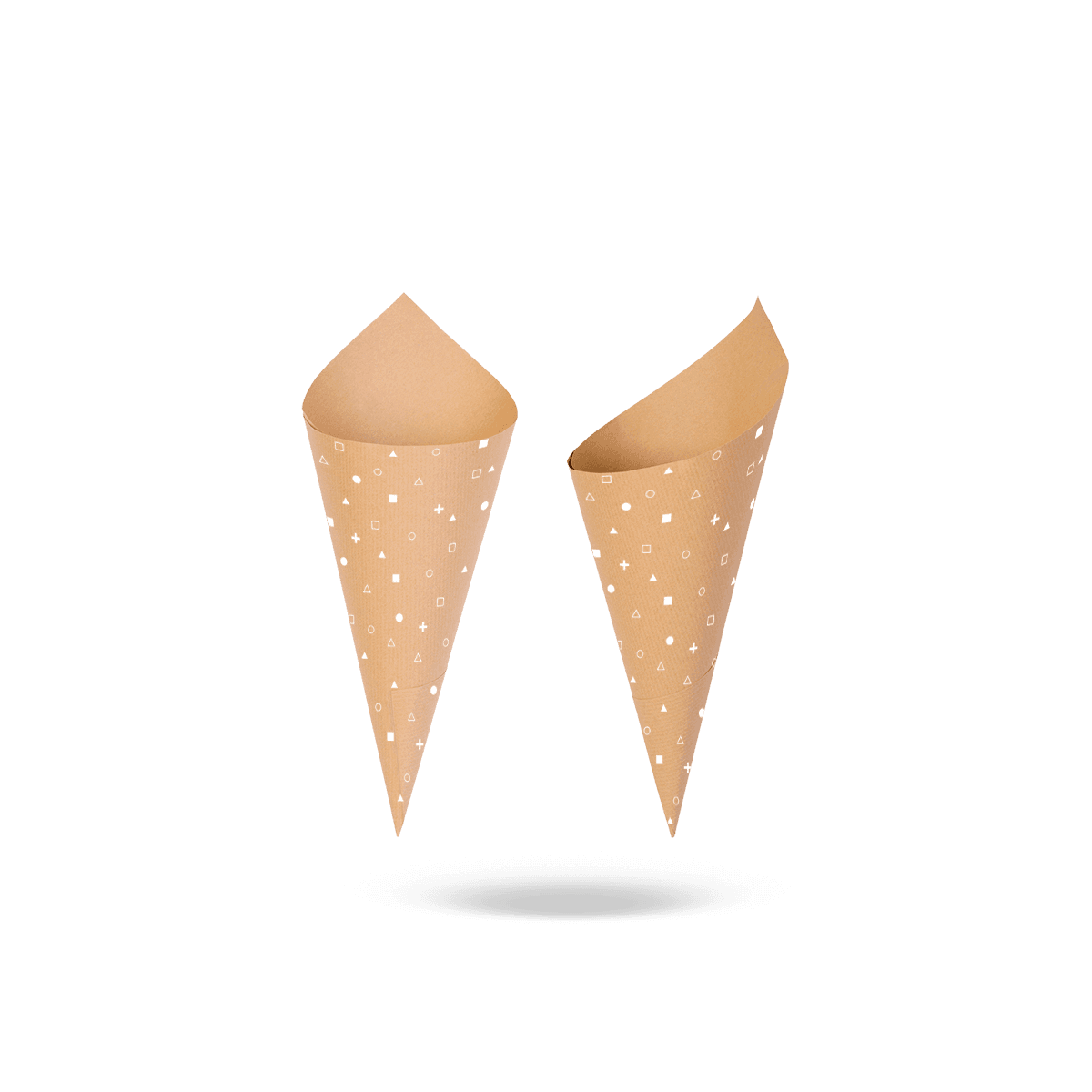
A waffle cone sleeve is cut as a curved, tapered shape rather than a rectangular label.

Artwork therefore changes once the flat piece wraps around the cone. The main logo, type and patterns need to be judged on the formed sleeve.

Place the Logo After Forming

Do not centre the main brand mark by looking only at the flat artwork file.

The overlap and taper can shift the apparent front once the sleeve is wrapped. Place the strongest branding where customers actually see it while holding the finished cone.

Custom Packly's packaging customisation support can help prepare artwork and review print, colour and finish choices. A free 3D mockup can help assess the visual result, although physical cone fit should still be checked separately.

Give the Dessert Visual Priority

Large waffle-cone desserts already contain plenty of colour and detail.

Busy graphics competing with sauces, sprinkles, fruit and toppings can make the whole serving feel cluttered. Strong typography, clear colour blocks or a recognisable logo can often do more on the small curved surface than a dense design.

Split Flavours Intelligently

A dessert range may use one sleeve shape with several flavour or campaign designs.

Before dividing one order into many artwork versions, consider how quantities and print setup change. The comparison of digital and offset printing for packaging is useful where seasonal designs, multiple SKUs or stable high-volume artwork affect the production route.

Choose Waffle Sleeves for Bigger Builds

A waffle cone sleeve should be chosen because the serving is genuinely broader or more substantial, not simply because “waffle” sounds more premium.

Using the narrowest accurate product definition helps avoid ordering an oversized sleeve where a simpler cone wrap would work better.

Narrow Cones Need Less Coverage

For sugar cones, wafer cones and lighter everyday ice cream servings, the narrower Ice Cream Cone Sleeves route is usually more relevant.

That should focus on regular cone service, quick handoff and standard portion sizes rather than the larger dessert builds covered here.

Choose Material After Fit

Where the main question is printing rather than the dessert itself, Custom Printed Cone Sleeves gives deeper guidance on tapered artwork, paper stock, print methods and production.

The wider Sleeve Packaging section also covers straight and tapered sleeve structures beyond waffle-cone service.

This separation keeps this focused on what changes when the cone becomes wider, heavier and more elaborate.

Spend on the Right Variables

Cone-sleeve cost is affected by more than artwork.

Dimensions, material, die cutting, surface treatment, quantity and the number of printed versions can all change the commercial result. A larger waffle sleeve also uses more material than a smaller cone wrap.

Fix Fit Before Unit Price

Reducing the sleeve by a small amount is not a saving if the resulting grip becomes poor.

The first commercial priority should be a repeatable fit around the real cone. Once that is resolved, quantity, stock and print choices can be compared on equal terms.

Custom Packly's detailed breakdown of custom cone sleeve costs includes two completed production examples and explains how quantity, size, materials, coatings and die cutting affect pricing.

Make Finishes Earn Their Cost

A waffle cone already creates a premium visual through its texture and dessert presentation.

Foil, embossing or other decorative effects should therefore have a clear branding reason. They should not be added simply to make a disposable serving item feel expensive.

For many dessert counters, good colour, accurate fit and clear print will contribute more than stacking several finishes onto a small curved area.

Approve the Signature Cone

The strongest way to brief Custom Waffle Cone Sleeves is to build the dessert customers actually buy most often and approve the sleeve around that serving.

This reverses the usual process of picking an arbitrary sleeve size first and forcing the menu to fit it.

Build the Heaviest Normal Serving

Prepare the signature waffle cone with its normal scoops and toppings.

Photograph it from the front and side while someone holds it naturally. Mark approximately where the upper edge of the sleeve should sit and measure the cone at that grip position.

If another waffle-cone size also needs to share the sleeve, repeat the same test rather than assuming the first dieline will transfer.

Use the Cone as the Reference

Where practical, provide the actual cone, a supplier drawing or accurate measurements alongside the artwork and required quantity.

That gives Custom Packly a real profile to work from instead of a generic description such as “large waffle cone”.

Send the reference through the custom packaging quote. The objective is to approve the sleeve against the finished dessert first, then price and print a specification that already makes sense in the customer's hand.

FAQs

Waffle cone sleeves are usually designed for a broader and more substantial cone shape. They often need more wrap coverage and a grip area that matches the wider base comfortably. A sleeve made for a narrow cone can look undersized and feel less secure on a waffle cone. The right fit should reflect the real cone profile, not just the serving category.

Food-safe paper stock with enough stiffness to hold shape is usually the best starting point. The ideal choice depends on cone width, melt rate and whether toppings or sauces are likely to reach the grip area. For heavier dessert-style servings, a stronger paperboard often gives a neater result than a lighter sleeve that softens too quickly during use.

A waffle cone sleeve is usually the better choice when the cone is broader, more premium in presentation or sold with heavier toppings. It gives cleaner proportion and a more controlled hold than a generic narrow wrap. That difference becomes more noticeable in dessert parlours and event settings where the cone stays visible and the serving needs to feel finished as well as functional.

Yes, and they are often a strong place to do it. The sleeve stays visible throughout the eating experience, so it can carry seasonal graphics, flavour-led branding or campaign messages without covering the dessert itself. Clean, bold print usually works better than crowded artwork because the cone and toppings already add visual detail to the serving.

Confirm the cone diameter at the grip point, sleeve height, stock choice, print coverage and whether the same sleeve must fit more than one waffle cone format. It also helps to review toppings, likely melt behaviour and how quickly the sleeves need to be applied during service. At Custom Packly, those details usually shape the final fit more accurately than artwork alone.

Process

How it works

Your Packaging Journey, From Idea to Production and Delivery

01

Tell Us Your Specs

Custom packaging boxes

Tell Us Your Specs

Provide size, quantity, printing, and finishes.

02

Get a Fast Quote

Custom packaging boxes

Get a Fast Quote

Instant transparent pricing, no hidden fees.

03

Design and Approval

Custom packaging boxes

Design and Approval

Artwork checks, revisions, and final sign-off.

04

Produce

Custom packaging boxes

Produce

Expert manufacturing to meet deadlines.

05

Ship to Your Door

Custom packaging boxes

Ship to Your Door

Hassle-free, flexible delivery options.

Get Your Quote for Custom Waffle Cone Sleeves

Share your product details, dimensions, quantity and artwork needs. We’ll help choose the right packaging style and send a clear quote.