For Royal Mail UK deliveries, a Small Parcel can measure up to 450 × 350 × 160 mm and weigh no more than 2 kg. A Medium Parcel can measure up to 610 × 460 × 460 mm and weigh up to 20 kg, subject to the chosen service. Those limits apply to the complete sealed package, not the dimensions printed on a box supplier's quotation.
The key decision is often made before anyone prints a postage label. An unnecessarily deep or long box can move an otherwise lightweight order into Medium Parcel pricing. However, cutting the box down until a product has no protection is equally poor packaging practice. The aim is the smallest safe, repeatable pack that meets the right postal limits.
Royal Mail Small Parcel vs Medium Parcel Size and Weight Limits
Royal Mail uses three maximum external measurements for each parcel format. The finished parcel must meet every applicable dimension and the packed-weight limit.
The Medium Parcel allowance is not an invitation to use a larger box. It is there for orders that cannot reasonably be packed within the Small Parcel limits because of the contents, protective space or total weight.
A parcel measuring 400 × 300 × 150 mm and weighing 1.5 kg fits the Small Parcel size and weight limits. A box measuring 400 × 300 × 170 mm does not: that 170 mm depth exceeds the Small Parcel limit, even though its other sides are well inside it. Equally, a 470 × 280 × 100 mm package misses the Small Parcel length limit.
Weight is a separate test. An otherwise compact parcel weighing 2.1 kg cannot be sent as a standard Small Parcel simply because its dimensions fit. Check your selected Royal Mail service before relying on the upper Medium Parcel allowance.

The measurement that matters is the closed package
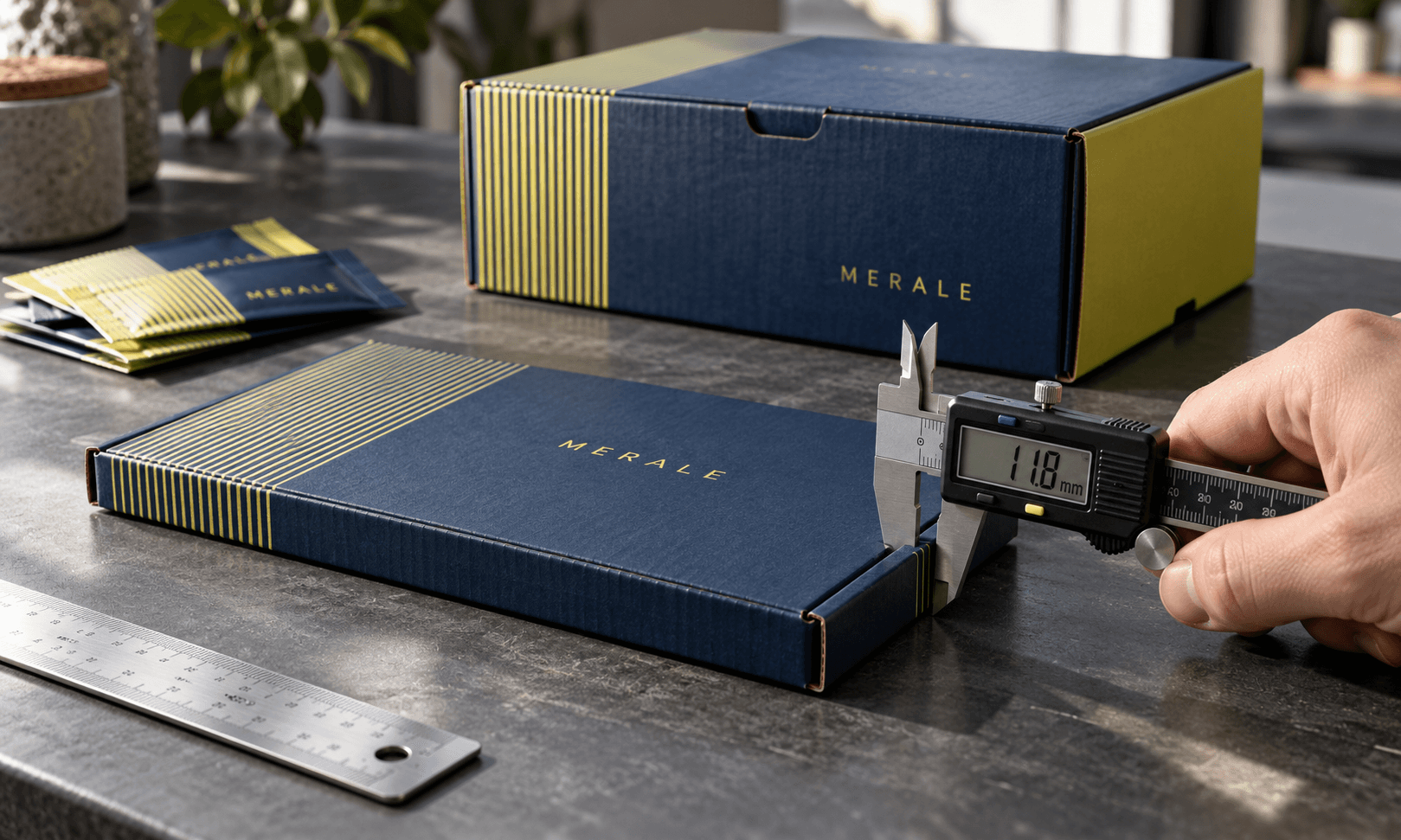
Use the outside of the assembled box, after the actual products, inserts, paperwork and protective materials have been fitted. Measure the longest points of the sealed package, including protruding flaps, bulging panels and closure materials where they affect the external dimensions.
For ecommerce dispatch, postal boxes need to be specified by their finished external size as well as their usable internal space. A nominal internal dimension does not prove a box will stay within Royal Mail's 160 mm depth limit.
For the separate 25 mm Large Letter boundary, see the Royal Mail Large Letter vs Small Parcel comparison. This post deals with the next decision: whether an order can remain a Small Parcel or must travel as a Medium Parcel.
How Much Does Small Parcel Postage Cost Compared With Medium Parcel?
Using Royal Mail's online retail rates effective 5 October 2026, the size difference is significant even when both parcels weigh no more than 2 kg.
These examples compare the same service, purchase channel and weight band. They do not mix Tracked prices with 2nd Class prices, or online rates with Post Office counter rates. Other services, heavier Medium Parcel bands, signature options and collection arrangements can cost more. Tracked prices include VAT; standard 2nd Class prices are VAT-exempt.
Postage prices change. Check Royal Mail's published UK tariffs and the exact service terms before buying labels. Business-account and marketplace rates can differ from these public retail examples, and contractual surcharges may apply.
For the dated tariff examples and subsequent changes, use Royal Mail’s published price guides and select the relevant online or branch rate for your service.
What the difference means over repeat orders
Suppose a retailer sends 500 qualifying parcels at or below 2 kg. At the online 2nd Class rates above, the difference between Small and Medium Parcel postage is 500 × £2.60, or £1,300. This is a simple illustration based on the published tariffs, not a measured Custom Packly customer saving.
That figure is not automatically the final saving from resizing. Subtract any higher custom box cost, inserts, labour changes and damage-related expense. If an alternative pack needs substantially more expensive cushioning or causes breakages, the cheaper postal category may not be the better business decision.

For brands dispatching the same product combinations regularly, the cost per packed and delivered order matters more than the cost of an empty carton. This is especially relevant to ecommerce and subscription packaging, where a size decision is repeated across many orders.
A Cosmetics Customer Who Was Paying More Than Necessary
We worked with a UK cosmetics business that had been shipping its products in a standard large box. The packaging was larger than the products needed, so we advised moving to a custom size suited to the actual contents. After that change, the customer's shipping costs came down.
The cost reduction was real, but we do not have verified figures for the original dimensions, the revised dimensions or the exact saving. We therefore cannot claim a specific percentage reduction or say that the order definitely moved between Royal Mail parcel bands.
The useful lesson is that standard stock packaging should not be treated as the correct size merely because the product fits. Cosmetics can include cartons, bottles, jars, caps and inserts that create very different packing requirements. A made-to-measure cosmetic mailer box should account for those real shapes rather than the empty space left by a convenient stock carton.

In our experience, oversized boxes are one of the easiest packaging mistakes to overlook. They may seem safer because there is more room for filling, but the extra space can invite movement, increase material use and affect postage if it pushes the parcel across a size threshold.
Which Box Dimensions Work Best for a Royal Mail Small Parcel?
There is no single standard mailer size that suits all Small Parcel orders. Any finished box within 450 × 350 × 160 mm and the 2 kg packed-weight limit may be eligible for that format, provided it meets the chosen service's other conditions.
Consider three illustrative finished external sizes:
These are dimensional examples, not Royal Mail-approved products or guaranteed sizes for specific goods. Their suitability depends on product weight, orientation, cushioning, board construction and the way the box closes.
I prefer to leave a sensible tolerance below a hard carrier threshold rather than manufacture a box that only qualifies on paper. The amount of tolerance should be established from a real sample and normal packing variation, not from an arbitrary universal allowance.
The practical starting point for custom mailer boxes is the complete packed product. Determine the final internal fit, select an appropriate structure and material, then confirm the resulting external dimensions. When measuring is the sticking point, the distinction between internal and external box measurements is worth resolving before approving a dieline.
How to Keep a Parcel Compact Without Sacrificing Protection
My recommendation is not to chase the smallest possible box at any cost. It is to reduce unnecessary space while retaining the protection a product needs. Both requirements belong in the same design decision.
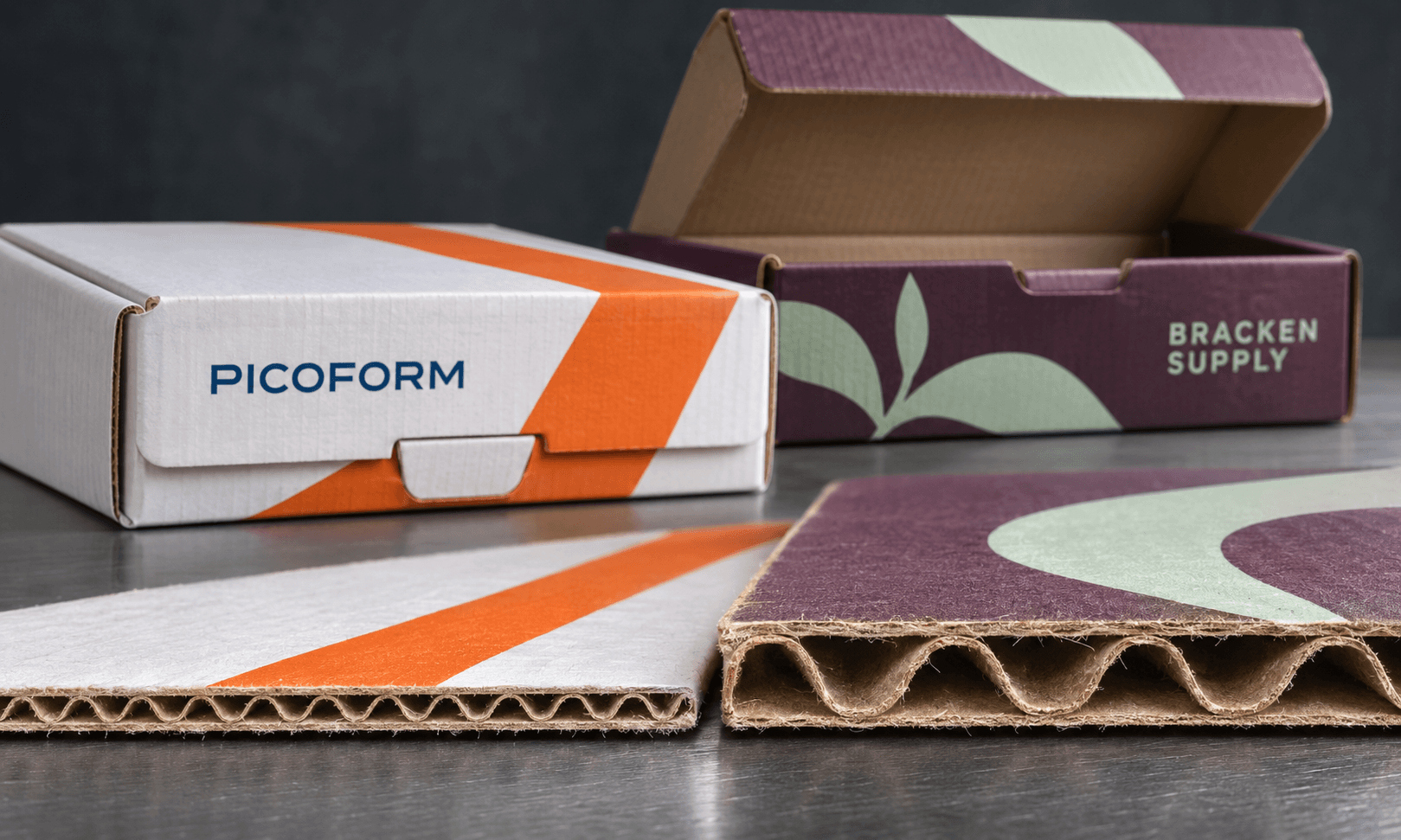
For many lightweight ecommerce orders, I favour lightweight single-wall corrugated mailers. Their fold-over structure can create a tidy, secure pack without requiring the generous empty space often found in a general-purpose shipping carton. But 'lightweight' must still mean fit for the product and journey, not simply the thinnest board offered.
The flute, liner grades, overall structure and internal supports all affect performance. E-flute can be useful where a relatively slim, crisp-folding mailer works; a different corrugated specification may suit heavier or more vulnerable contents. The trade-offs between E-flute and B-flute mailer boxes become particularly important when the board thickness itself could affect the sealed parcel depth.
Keep space where it performs a job

A product-fit packaging specification should start with those constraints. It is easier to remove truly empty space once the protection is settled than to discover after production that a compact box cannot safely hold the order.
For a heavier or especially fragile shipment, a suitable corrugated shipping box may be preferable to a very light mailer. The structure has to do its transit job first. A Small Parcel tariff is not a reason to ship a vulnerable item inadequately protected.
When a Medium Parcel Is the Right Decision
A Medium Parcel is the correct format when the packed item exceeds any Small Parcel dimension or weighs more than 2 kg while remaining within the applicable Medium Parcel limits. It is also often the sensible outcome when adequate cushioning, bracing or a safer product arrangement will not fit under 160 mm deep.
This commonly arises with bulky gift sets, multiple retail units in one dispatch, tall containers, fragile assemblies and heavier equipment. A 170 mm-deep package should not be compressed to 160 mm if doing so loads pressure onto a glass lid or forces a protective insert out of position.

One useful comparison is to examine two different pack layouts before deciding the size. A wide side-by-side arrangement can sometimes reduce height; stacking products can save footprint but increase depth. Neither is automatically cheaper, and changing orientation may alter how well an item survives handling.
For a growing business, a dedicated Small Parcel pack for its common single-item dispatches and a Medium Parcel pack for larger bundles can be more rational than sending every order in the same large box. Whether two sizes make commercial sense depends on order mix, storage, purchasing volumes and packing efficiency.
Approve the Box From a Packed Sample, Not Only a Dieline
The last check before production should reproduce a normal fulfilment shift, not an unusually careful one-off pack. A design can fit at a desk and still bulge when staff are filling cartons quickly.
Use this practical sequence:

The box dieline generator is useful for moving from selected dimensions to the flat cut-and-crease layout for supported structures. A dieline helps control geometry, but it does not replace a physical packed sample.
Be particularly careful with cosmetics that contain perfumes, nail varnish, aerosols or other restricted substances. Product eligibility and any packaging or labelling requirements must be checked separately against Royal Mail's prohibited and restricted items rules. Fitting a size band does not make restricted contents acceptable.
Decide the Postage Band Before You Order the Boxes
The most important advice I give UK sellers is to check Royal Mail's size limits before finalising custom box dimensions. Once several hundred or several thousand boxes have been produced, correcting an avoidable size mismatch is far more expensive than checking it during design.
Bring the supplier the packed product dimensions, weight, likely order combinations, protection needs, estimated quantity and the Royal Mail service you intend to use. If the goal is to remain within Small Parcel, say so clearly, but allow the structural recommendation to challenge that goal when protection requires more room.
For a repeat-ready specification, Custom Packly can help assess a suitable custom format and provide a 3D mockup before the design is signed off. If you already know the packed dimensions, expected quantity and artwork status, an instant custom packaging quote is the next practical step. Choose the carton for the full cost and safety of the delivered order, not the appeal of the smallest number on a postage label.