Skip to content
Details

Custom Cupcake Boxes

Tall frosting, delicate decoration and multi-count presentation make cupcake packaging a depth-and-stability job first. The right carton depends on insert design, lid clearance, carrying method and whether the order is headed to a counter, a celebration table or a delivery run.

Stop Cupcakes Tilting

A cupcake box succeeds or fails when the carton is lifted, turned or carried, not when it is sitting flat on a worktop. Custom Cupcake Boxes need to hold each cake upright without squeezing the paper case or letting the frosting become the point that absorbs movement.

That makes the insert opening the first structural decision. If it is too loose, the cupcake can lean and the frosting may touch a neighbour or side wall. If it is too tight, staff have to force the cake into place and can crease the liner before the order has even left the bakery.

Size the Insert Opening

Measure the finished cupcake case at the level where it will sit in the insert. Do not rely only on a nominal “standard cupcake” size because baking cases, tulip liners and jumbo liners can differ in width and shape.

A small amount of practical tolerance helps staff load quickly, but the insert still needs to catch the case securely enough to resist sideways movement. Cardboard box inserts can be cut around the actual liner dimensions instead of forcing every order into a stock hole size.

Hold the Case, Not the Sponge

The insert should support the cupcake through the liner or case rather than pressing into the sponge or decoration. That sounds obvious, yet it is easy to overlook when the cut-out is planned from the overall cake diameter instead of the point where the insert will actually make contact.

For tall or top-heavy cupcakes, a secure base becomes even more important because the centre of mass sits higher. The taller the decoration, the less movement it takes to turn a slight lean into frosting contact.

Protect the Highest Swirl

Box depth should be set by the tallest finished cupcake that will regularly use the carton. Sponge height alone is almost irrelevant once buttercream, piped roses, chocolate shards, toppers or fondant details are added.

Use the Tallest Finished Style

Measure from the base of the liner to the highest finished point. If several designs share one box, use the tallest recurring design rather than the simplest cupcake in the range.

Leave enough clearance for the lid to close without brushing the decoration and enough working room for staff to lower the cake into position without scraping the top edge. The packaging sizing process explains why finished product dimensions and internal clearance matter more than bare product measurements.

Allow for Topper Lean

A topper may stand straight when inserted but lean slightly during carrying. Acrylic picks, paper flags and tall decorative pieces can therefore need more usable space than their static height suggests.

The answer is not to make every box excessively deep. It is to check how the tallest recurring topper behaves inside the closed carton, then keep enough clear space above and around it for realistic handling.

Let Count Change the Structure

One, two, four, six and twelve cupcakes do not create the same packaging problem. As the count rises, the footprint becomes wider, the filled box gets heavier and the base is more likely to flex when someone lifts it from one side.

A single or double carton can rely on a compact footprint and short insert span. A larger count needs more attention to base stiffness, insert support and how the box is carried from the counter to a vehicle or event table.

This is where cupcake packaging separates clearly from Donut Boxes. Donut cartons usually manage a wider, shallower arrangement with lower centres of gravity. Cupcakes need each piece to stay upright while preserving much more vertical clearance.

MOQ starts from 100 boxes, so a bakery does not always need to force every order into one universal size. If four- and six-count orders dominate, those can be prioritised first instead of carrying unnecessary empty space for occasional larger orders.

Set the Insert Height Carefully

The diameter of the cut-out gets most of the attention, but the height of the insert inside the carton also changes how the cupcake behaves.

If the insert sits too low, the cupcake can feel buried and become harder to lift without touching the frosting. If it sits too high, the cake may have less effective lid clearance and the insert itself can flex more under movement.

Support the Liner Below the Rim

The insert should leave enough of the liner below the support point for the cupcake to sit naturally rather than perch above the carton base. The exact relationship depends on liner shape and cake size, which is why a real product sample is more useful than a generic cavity drawing.

Leave a Clean Lift

Customers and bakery staff need to remove a cupcake without pressing fingers into buttercream or crushing the paper case. A little space around the upper liner can make removal easier while the lower part remains supported.

This is a different problem from Custom Cake Boxes, where one cake normally relies on cake-board fit, base rigidity and wall clearance rather than individual cavity control.

Choose Board by Journey

Paperboard works well for many bakery counter, collection and event orders because it stores flat, prints cleanly and keeps the carton relatively light. Stronger corrugated material becomes more useful as the footprint grows, the filled order gets heavier or the journey becomes rougher.

The practical question is not which material sounds more premium. It is whether the filled base stays flat and the side walls remain square when the box is lifted and carried. The differences between paperboard and corrugated packaging are easier to judge once the actual handling route is clear.

A twelve-count box going straight from a bakery counter to a customer’s hands may not need the same material as a large order being loaded into a vehicle, stacked with other boxes and carried into a venue.

Any material or liner that will directly contact unwrapped food should be confirmed for the intended food-contact conditions rather than assumed suitable from appearance alone.

Place Windows Without Weakening the Lid

A top window can help sell decorated cupcakes because the customer sees colour, piping and toppings without opening the box. The window still has to work around the lid, insert and carry behaviour.

An oversized cut-out removes paperboard from the area that keeps a broad lid flat. It can also reduce the space available for branding or product information. A smaller viewing area often shows enough of the cakes while keeping more material around the edges.

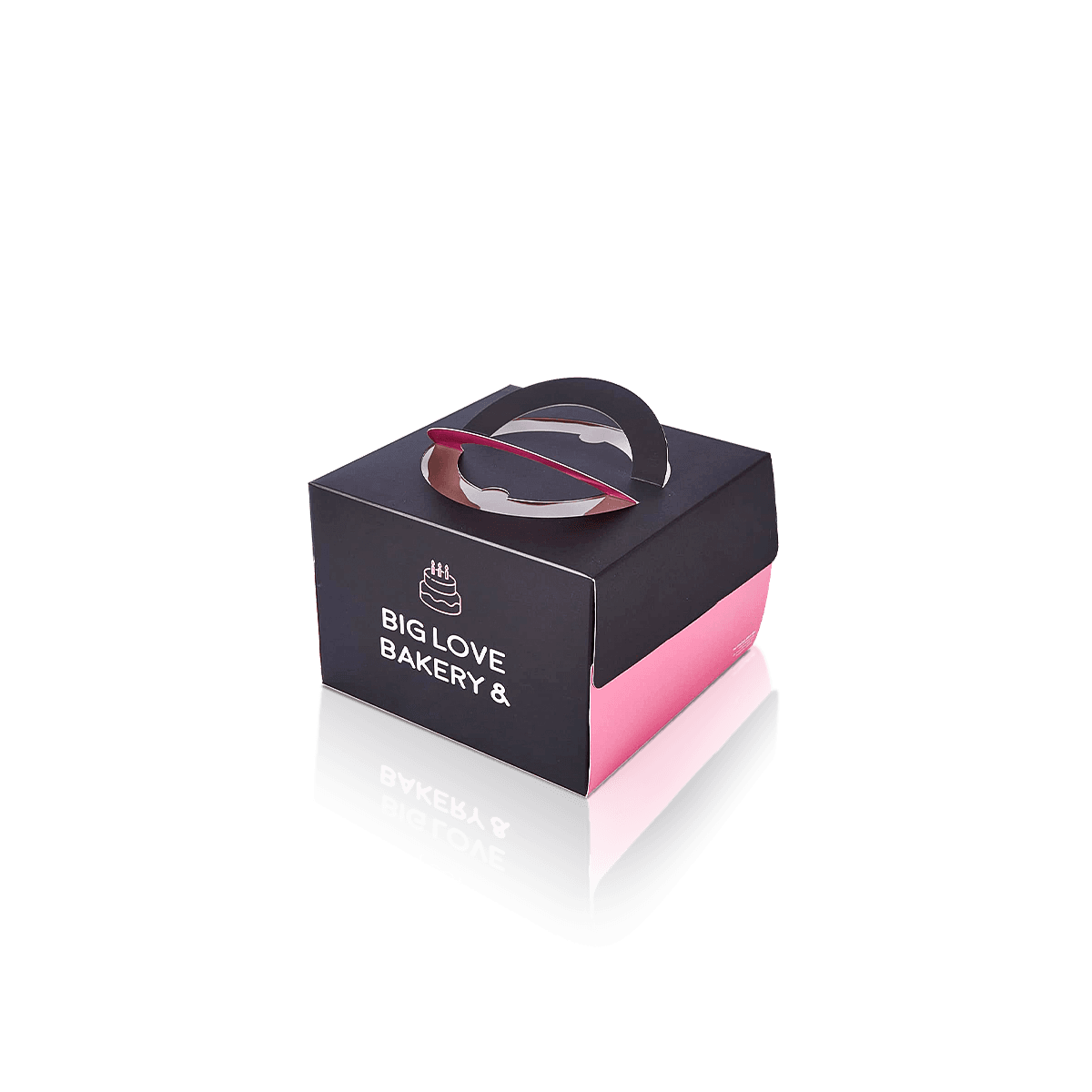
The carton style should therefore be chosen before the artwork is finalised. Tuck top boxes can provide a clean opening and useful lid area, while the wider custom box styles and shapes help when a handle, window or different closure genuinely improves handoff.

Make the Packing Bench Faster

Good cupcake packaging should reduce careful handling rather than demand more of it. Staff should be able to open the carton, position the insert, load the cakes and close the lid without repeatedly adjusting liners or checking whether frosting will catch.

Flat-packed cartons can help bakeries with limited storage, but assembly time still matters. A style that saves a few pence yet adds awkward folding to every order can become expensive during busy periods. The same applies to inserts that have to be reshaped by hand before every use.

The cost impact of packing labour, oversized boxes and unnecessary complexity is covered in common custom packaging cost mistakes. For cupcake orders, the simplest workable structure often beats a more elaborate one if it improves loading speed and keeps the cakes upright.

Custom Packly’s long-standing packaging experience is most useful when the insert, carton depth and loading routine all affect one another. The specification can move beyond stock cupcake sizes, so liner fit and box geometry can be adjusted together instead of treated as separate choices. If an insert or artwork decision is slowing a launch, packaging specialists are available 24/7.

Use the Lid Border Wisely

On a windowed cupcake box, the remaining lid border has to carry more of the visual identity. Keep logos, flavour names and important copy clear of the aperture, folds and areas that disappear when the lid closes.

Premium offset printing suits detailed artwork and controlled repeat colour, while simpler branding may only need a restrained logo, one strong colour and clear product information. The right choice depends on the artwork and run, not on adding as many finishes as possible.

A free 3D mockup can help check whether the viewing area, remaining lid border and printed elements still feel balanced before production. The wider customisation options can then be narrowed to finishes that actually earn their place.

If the artwork is being developed from scratch, the workflow for designing packaging from dieline to production helps keep structural decisions ahead of graphic layout.

Check Stability Away From the Bench

A sample should be judged with real cupcakes inside it. Load the normal count, close the lid and carry the box the way staff and customers actually will.

Lift it from the middle, then from one side. Walk with it. Set it down. Open it again and check whether any cupcake has leaned, whether the insert has bowed and whether the tallest decoration stayed clear of the lid.

Free sample examples can help compare materials and print. When exact insert fit or physical carrying behaviour needs approval, a fully custom pre-production sample can be arranged for the specific specification.

The free dieline generator is useful once the internal dimensions are known, but the insert and outer carton still need to be considered together. A correct outer dieline cannot rescue a cavity that grips the wrong part of the cupcake case.

Limit the Size Library

A bakery selling cupcakes alongside cakes, brownies and donuts can easily accumulate too many similar box sizes. That creates storage problems, ordering complexity and confusion at the packing bench.

The better approach is to standardise only where the product behaviour genuinely matches. Cupcake packaging should stay tied to liner diameter, decoration height and upright support. Other bakery products can use their own structure where their handling problem is different.

The Bakery and Confectionery area separates those needs by product instead of treating every baked item as the same carton problem. Smaller businesses planning their first branded sizes can also use custom packaging for small business to keep early runs practical.

For repeat cupcake sizes, keeping the insert and carton geometry stable can make replenishment simpler because only artwork or quantity may need to change.

Choose the Insert Standard

Before creating several cupcake counts, settle the liner-to-insert relationship used most often. Use the liner diameter at the support point and the tallest recurring finished style to establish the cavity opening and insert height.

Once that unit works, two-, four-, six- and twelve-cupcake cartons can scale from the same support logic instead of every count becoming a separate experiment. Request an instant packaging quote with that liner size and the highest-volume count first.

The result should be a repeatable insert standard that stays consistent even when the outer dimensions or artwork change.

FAQs

Start with the tallest finished cupcake in the range, not the sponge case. Buttercream height, decorative picks and topper cards all need extra lid space so the finish stays intact after closing. It also helps to allow some packing tolerance during busy service. If the product line changes seasonally, size the box around the tallest recurring design.

No, but they become much more valuable once count increases or decoration becomes more delicate. A snug single or double carton may work without one, while six-count and larger orders usually benefit from cavity support. Inserts reduce tipping, keep spacing tidy and help the contents look more controlled when the box is opened.

That depends on pack count, travel conditions and how the box is carried. Standard paperboard often works for lighter counter and collection use, while corrugated options are stronger for larger orders, stacked loads or rougher handling. The useful test is whether the base stays flat and the lid stays square once the filled box is lifted.

Usually yes when the order contains individual cupcakes. A cake box suits one larger bake, but cupcake cartons offer separation and position control that cakes do not need. That makes them a better fit for frosted assortments and mixed flavours. If the pack includes cupcakes with cookies or mini cakes, a divided presentation box may work better.

Confirm cupcake diameter, maximum frosting height, insert requirement, topper use, box count and whether a window is needed. It also helps to check packing temperature, transport method and how long the order remains boxed before handoff. Those points affect depth, insert shape, board grade and closure choice before print artwork is approved.

Related Industry Packaging

Process

How it works

Your Packaging Journey, From Idea to Production and Delivery

01

Tell Us Your Specs

Custom packaging boxes

Tell Us Your Specs

Provide size, quantity, printing, and finishes.

02

Get a Fast Quote

Custom packaging boxes

Get a Fast Quote

Instant transparent pricing, no hidden fees.

03

Design and Approval

Custom packaging boxes

Design and Approval

Artwork checks, revisions, and final sign-off.

04

Produce

Custom packaging boxes

Produce

Expert manufacturing to meet deadlines.

05

Ship to Your Door

Custom packaging boxes

Ship to Your Door

Hassle-free, flexible delivery options.

Get Your Quote for Custom Cupcake Boxes

Share your product details, dimensions, quantity and artwork needs. We’ll help choose the right packaging style and send a clear quote.