Skip to content
Details

Custom Gift Set Boxes

Gift set boxes bring multiple items into one well-planned presentation, making branded collections, hospitality gifts and promotional sets easier to display, organise and hand over without the loose feel that comes from separate products packed together at the last minute.

Start With the Whole Collection

Gift sets fail when the outer box is chosen before the products are arranged. Start with the complete collection in plan view, then let the footprint, insert depth and opening style follow that arrangement.

Lay every final packed item out in the order you want the recipient to see it. Include caps, pumps, sleeves, secondary cartons, cards and anything else that changes the real footprint or height.

If the main decision is instead about client tiers, employee recognition or recurring business gifting, corporate gift boxes should carry that commercial planning. Gift Set Boxes should stay focused on how several products physically become one coherent set.

Plan the Footprint First

A good gift set layout starts in plan view. Decide what the recipient should see from above, then size the internal space around that arrangement.

Place the Anchor Item

Most sets have one item that controls the layout because it is the largest, heaviest or most visually important. Place that item first, then arrange the supporting pieces around it rather than trying to distribute everything evenly.

The anchor item does not always belong in the centre. A heavy glass bottle may sit closer to a supported edge while lighter items occupy the remaining area. A wide candle jar may work as the visual centre, while narrow accessories sit beside it. The correct position depends on weight as well as appearance.

Then Solve the Height

Products that look balanced from above can still create a poor box when their heights differ sharply. A tall bottle beside a shallow tin may force a deeper lid and leave the smaller item looking buried.

The insert can correct that difference by raising shorter products to a common visual level or supporting taller items lower where safe. Lid clearance still needs to allow for caps, pumps, ribbons and printed cards without pressing on them.

This is one reason the outer box should not be finalised before the internal layout. The set needs to work in three dimensions.

Make Removal Part of the Fit

A cavity is not successful merely because the product fits inside it. The recipient also needs to remove the item without tipping the box, digging at the edges or damaging a label.

Give Fingers Somewhere to Go

Finger notches, side access or enough exposed product height can make a fitted set feel precise rather than frustrating. Very tight cavities can look clean in a render but become awkward once real products, labels and normal production tolerances are involved.

The inserts and dividers should therefore control movement while leaving deliberate removal space. This matters particularly for jars, bottles, candles and smooth cylindrical products that are difficult to grip from a deep recess.

Protect Delicate Surfaces

Glass, lacquered caps, printed cartons and metallic finishes should not rub against neighbouring items. If two products can touch when the box is tilted, add separation rather than assuming the outer box will keep them still.

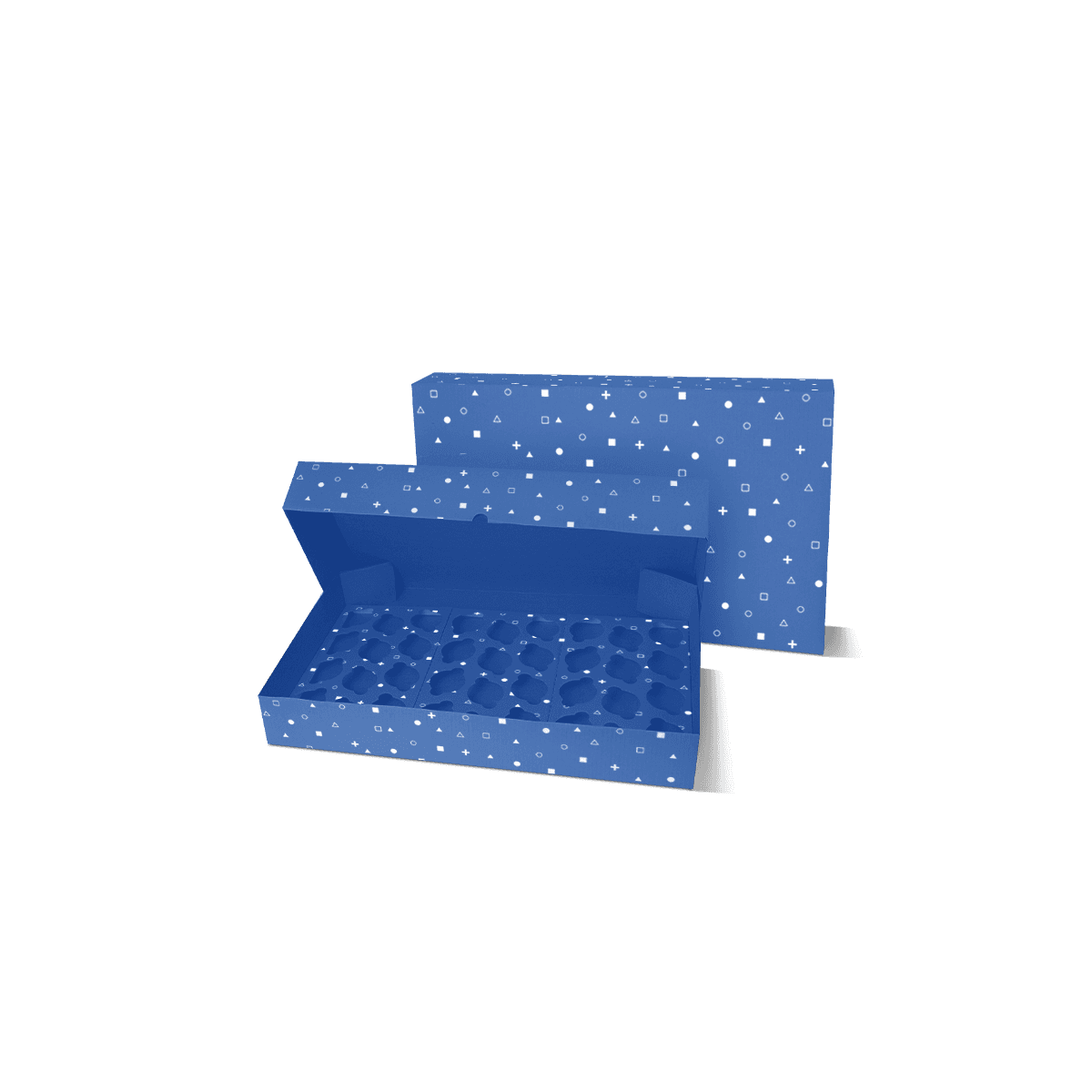
Repeated products of similar size can sometimes use partition inserts, while mixed shapes usually need more individual support. The choice should follow the item geometry, not simply the number of compartments.

Decide Between One Level and Layers

Showing every item at once is not always the best use of space. Some gift sets work better on one plane, while others can use two levels to reduce the footprint or create a deliberate second reveal.

One-Level Sets

A single-level layout is usually strongest when quick visual understanding matters. Beauty sets, candles with accessories, food pairings and wellness collections can feel more complete when every item is visible as soon as the lid opens.

The trade-off is footprint. A wide set can consume more material, shelf space and storage volume even if the individual products are small.

Layered Sets

Layers can make a compact box possible when flat items sit beneath deeper products or when the set intentionally reveals a second group after the first is removed.

Use this carefully. A second layer should feel intentional, not like overflow storage. If an important product disappears under a tray or the recipient has to dismantle the presentation to understand what is included, the layout is doing too much.

Layering also adds packing steps. For high-volume seasonal sets, an elegant two-level idea can become expensive if every unit needs several manual placement stages.

Let Weight Decide the Insert

Insert material should follow the behaviour of the contents. A light skincare trio and a set containing a glass candle, ceramic cup and metal accessory do not place the same loads on the internal support.

Light Mixed Products

Paperboard inserts can work well for lighter products where clean presentation is the main need. They can be die-cut to create shaped openings, folded to raise products and printed where the insert remains visible.

The key is not to make the tray deeper than necessary. An item pushed too far below the top plane can look undersized even when the fit is secure.

Heavy or Fragile Sets

Heavier pieces need support under the cavity, not only around its edge. A tray can flex if a dense item sits between weak support points, especially when most of the weight is concentrated on one side.

Corrugated supports or stronger internal divisions may be more suitable where weight and transport matter. The practical differences between paperboard, corrugated and rigid packaging are useful here because the strongest-looking material is not automatically the right one for every layer of the set.

Right-Size the Outer Box

The internal arrangement should decide how substantial the outer box needs to be. Gift packaging becomes wasteful when the box is made heavier simply to signal value.

When Rigid Earns Its Space

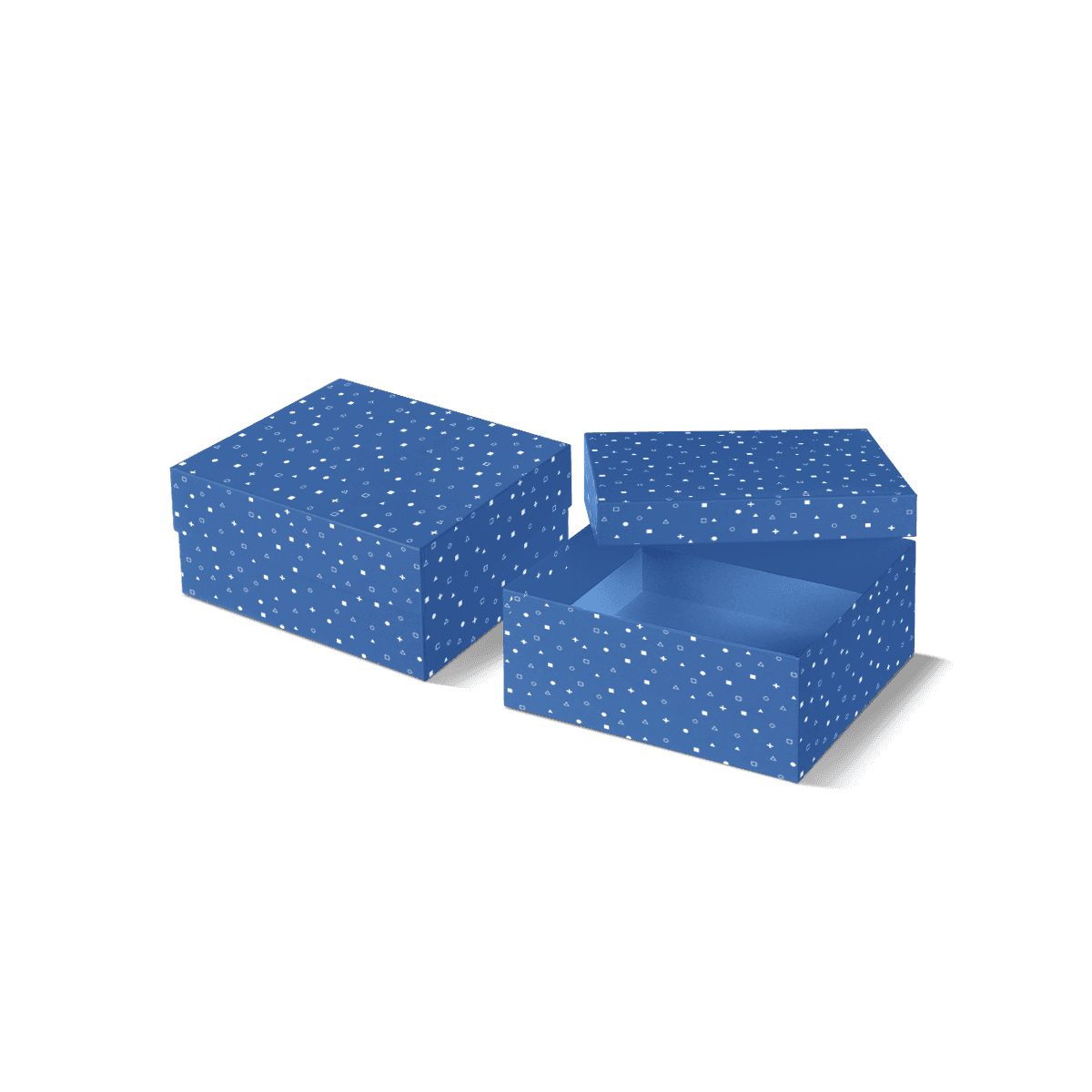
A rigid lid and base box can work well when the set itself is a premium product, the box is likely to be kept or the opening experience carries real value. It also gives a broad open base that makes a multi-item insert easy to load.

For higher-value collections, custom luxury packaging can add wrapped papers, refined surfaces and controlled finishing without changing the basic rule: the structure still needs to earn the extra material and storage volume.

When Delivery Changes the Answer

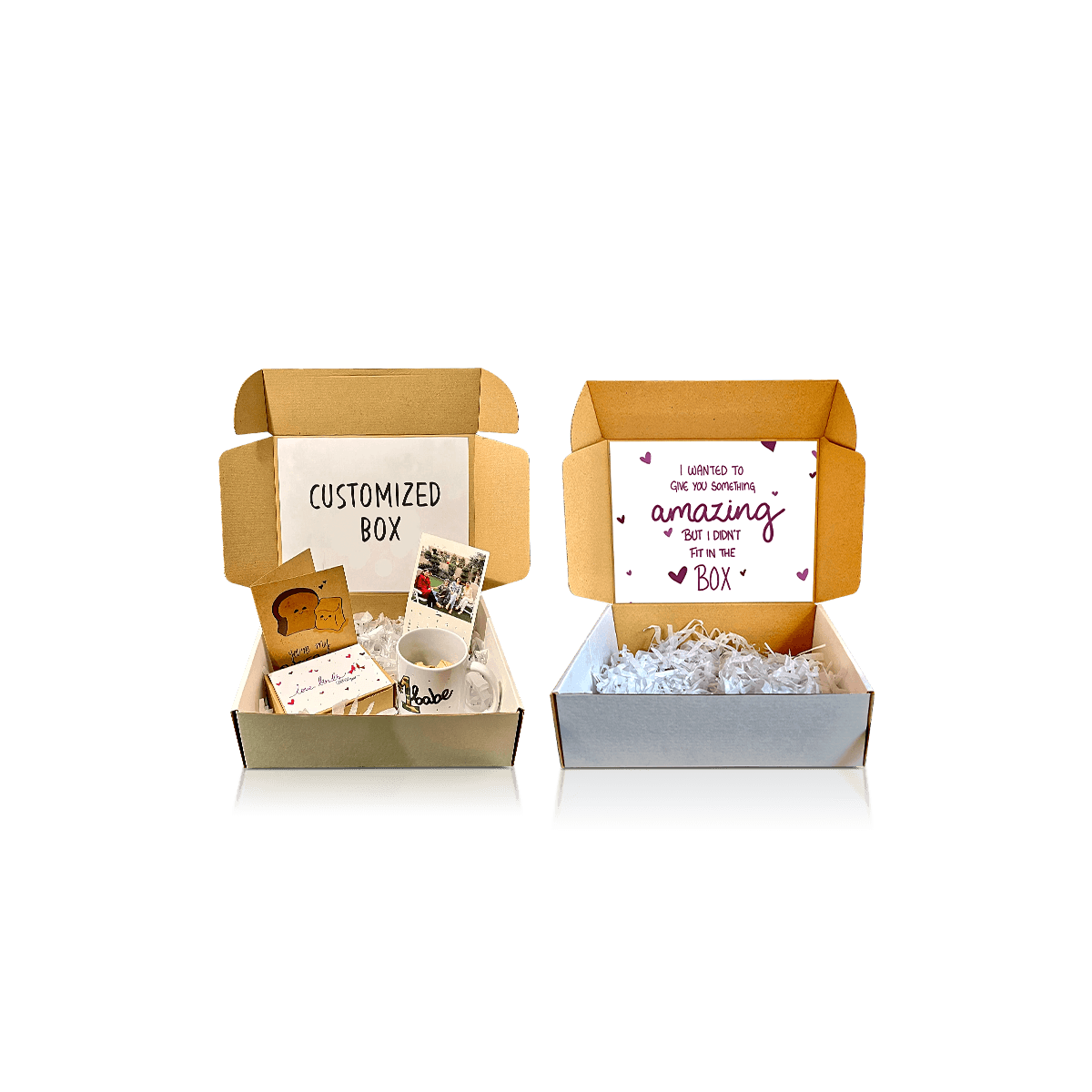
If the set is going straight through a courier network, the presentation box should not automatically be expected to do the transit job alone. Premium rigid packaging may need an outer shipper, while a well-specified custom mailer box can combine delivery strength and a clean opening in one structure for some sets.

Do not add a second box after the gift set is finished and hope the dimensions still make sense. Plan the delivery layer while the set dimensions are being fixed.

Standardise Only What Repeats

Seasonal and retail gift programmes often contain several versions of the same set. The useful question is not whether every version can use an identical box. It is which parts of the specification can genuinely stay common.

Carrying unnecessary outer sizes also creates storage and reorder complexity. The same problem appears among the packaging cost mistakes that raise total spend, especially when businesses create more packaging versions than the product actually needs.

Hold the Outer Footprint

If three gift sets use products with similar dimensions, one outer size may support different inserts or artwork versions. That can simplify storage and keep the collection visually consistent.

This only works when the internal changes are modest. A common outer box should not force one version to carry a large empty area just because another version contains a taller or wider product.

Separate Artwork From Geometry

A colourway, fragrance or seasonal message may change without requiring a new structure. This matters when several artwork files sit within one total order quantity. The decision between digital and offset printing should be made from the quantity per artwork, colour requirements and likelihood of future changes, not from the combined quantity alone.

Standardise what is genuinely stable. Keep product-specific fit where the products actually differ.

Let the Contents Lead the Design

The strongest gift set artwork creates hierarchy around the products rather than competing with them.

Show What Matters First

If one product carries most of the value, give it the clearest position and let smaller pieces support it. If the set is intentionally democratic, use spacing and consistent product height so no item appears accidental.

Inside print can help connect several products, but it should not make the insert harder to read. Product names, short messages or colour fields can work where they clarify the set. Dense graphics directly under several colourful products can make the interior feel busier than the collection itself.

The principles in packaging design that actually works are particularly relevant to gift sets because proportion, material and product position often create more perceived value than an extra finish.

Use Finishes Where the Eye Lands

Foil, embossing, debossing, soft-touch or spot UV can add value, but they do not need to appear on every surface. One controlled detail on the lid or sleeve can be stronger than repeating premium finishes across the outer box, tray and insert.

The recipient should notice the collection first. The packaging should make that collection feel intentional.

Proof the Set, Not Just the Artwork

Gift set packaging has more physical variables than a single-product carton, so approval should include the relationship between every item and the insert.

Use the 3D Mockup for Composition

A free 3D mockup is useful for reviewing overall proportions, branding, opening direction and the visual arrangement before production. It can reveal an awkward layout early, especially when one product dominates the set or artwork becomes crowded around the opening.

A screen preview cannot prove real friction, insertion force, lid pressure or removal comfort. Those are physical behaviours.

Sample Complex Fit Physically

A paid custom sample is worth considering when several fragile products share one insert, clearances are tight, surfaces are easy to scuff or the set uses layered presentation. Test the actual products rather than substitute objects wherever possible.

The workflow for designing packaging from dieline to production also helps separate artwork approval from structural approval. Both need to be right before a multi-item set is ready for repeat production.

Send an Item Map, Not a Box Size

The most useful starting brief for custom gift set boxes is a simple item map showing how the products should sit together. A rough top-view sketch or labelled photograph is enough to establish the intended relationship before the outer dimensions are fixed.

Include:

  • the maximum length, width and height of every item, including caps, pumps, lids and sleeves
  • the weight of each item and the combined set
  • which faces or labels should be visible when opened
  • any glass, polished, printed or scuff-sensitive surfaces that must stay separated
  • whether every item should appear on one level or whether layers are acceptable
  • the quantity required for each set variant, not only the combined quantity

With that information, Custom Packly can price the outer box and internal fit as one specification rather than estimating from a single overall dimension. Request an instant packaging quote with the item map and artwork status, then use the 3D mockup to review the proposed composition before production.

FAQs

That depends on the number of items, their weight and the level of presentation required. Rigid constructions work well for premium gifting and reusable keepsake value, while lighter multi-item sets may suit strong carton-based formats. The best route starts with the full contents list, because the box has to support the collection as a whole rather than just one product.

In most cases, yes. Inserts help keep products separated, visible and stable, especially when the set includes different heights, shapes or materials. They also make the gift look more intentional when opened. A simple open cavity can work for soft or uniform products, but mixed sets nearly always benefit from some form of internal support.

Gift set boxes are the stronger choice when the focus is the curated collection itself and how several items sit together inside one box. Corporate gift boxes often serve a broader branded business purpose and may prioritise distribution or campaign use. Gift set boxes usually lean more heavily on internal arrangement, product grouping and presentation flow.

Branding should support the collection rather than compete with it. A clear logo position, coordinated palette and selective inside messaging usually work better than covering every surface with graphics. The right balance depends on the audience. Retail gifting may allow more expressive print, while hospitality or executive gifting often benefits from a quieter finish.

Start with the exact contents, including sizes, weights and the order in which they should appear when opened. Then confirm whether inserts are needed, how the set will be packed and whether the box will be hand-delivered, displayed or shipped. It also helps to check lid depth, closure choice and whether any finishes need extra protection during handling.

Process

How it works

Your Packaging Journey, From Idea to Production and Delivery

01

Tell Us Your Specs

Custom packaging boxes

Tell Us Your Specs

Provide size, quantity, printing, and finishes.

02

Get a Fast Quote

Custom packaging boxes

Get a Fast Quote

Instant transparent pricing, no hidden fees.

03

Design and Approval

Custom packaging boxes

Design and Approval

Artwork checks, revisions, and final sign-off.

04

Produce

Custom packaging boxes

Produce

Expert manufacturing to meet deadlines.

05

Ship to Your Door

Custom packaging boxes

Ship to Your Door

Hassle-free, flexible delivery options.

Get Your Quote for Custom Gift Set Boxes

Share your product details, dimensions, quantity and artwork needs. We’ll help choose the right packaging style and send a clear quote.