Skip to content
Details

Custom Partition Inserts

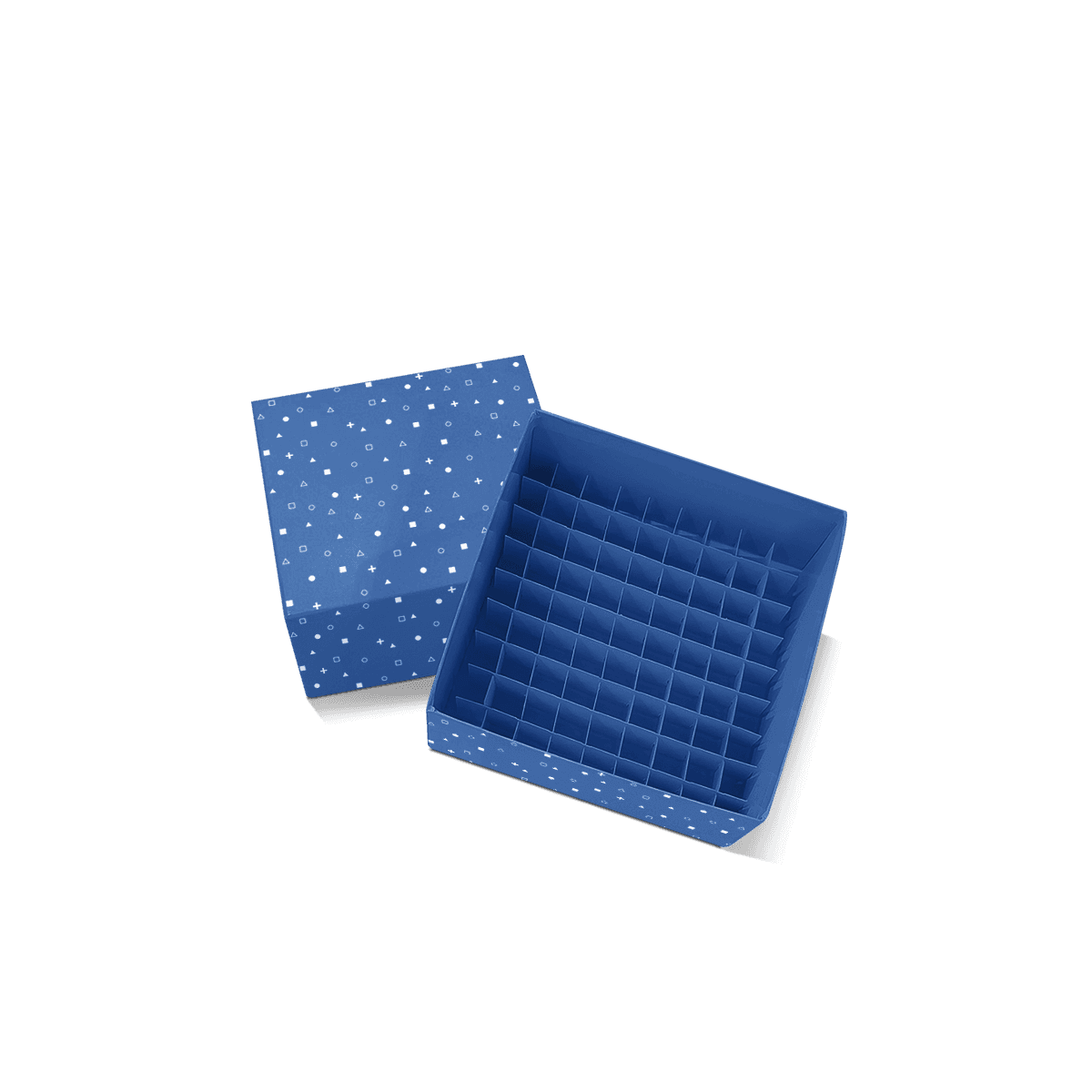
Partition inserts create a stronger internal grid for grouped products that need firm separation inside one carton. They suit bottles, jars and multi-item shipments where cleaner spacing and steadier transit control matter more than decorative presentation.

One Large Compartment Changes the Framework

A partition layout becomes difficult when one product needs substantially more space than the items around it. Moving one wall to create that larger compartment lengthens another span, changes neighbouring spaces and can make a once-regular framework asymmetric.

Custom Partition Inserts suit fixed grouped layouts where compartment sizes, wall positions and cross-members are deliberately different. They are useful for mixed jars, candles, cosmetics, accessories and components that need a defined internal framework but do not belong in identical repeated cells.

The framework should follow the grouped load rather than force unequal products into a symmetrical grid.
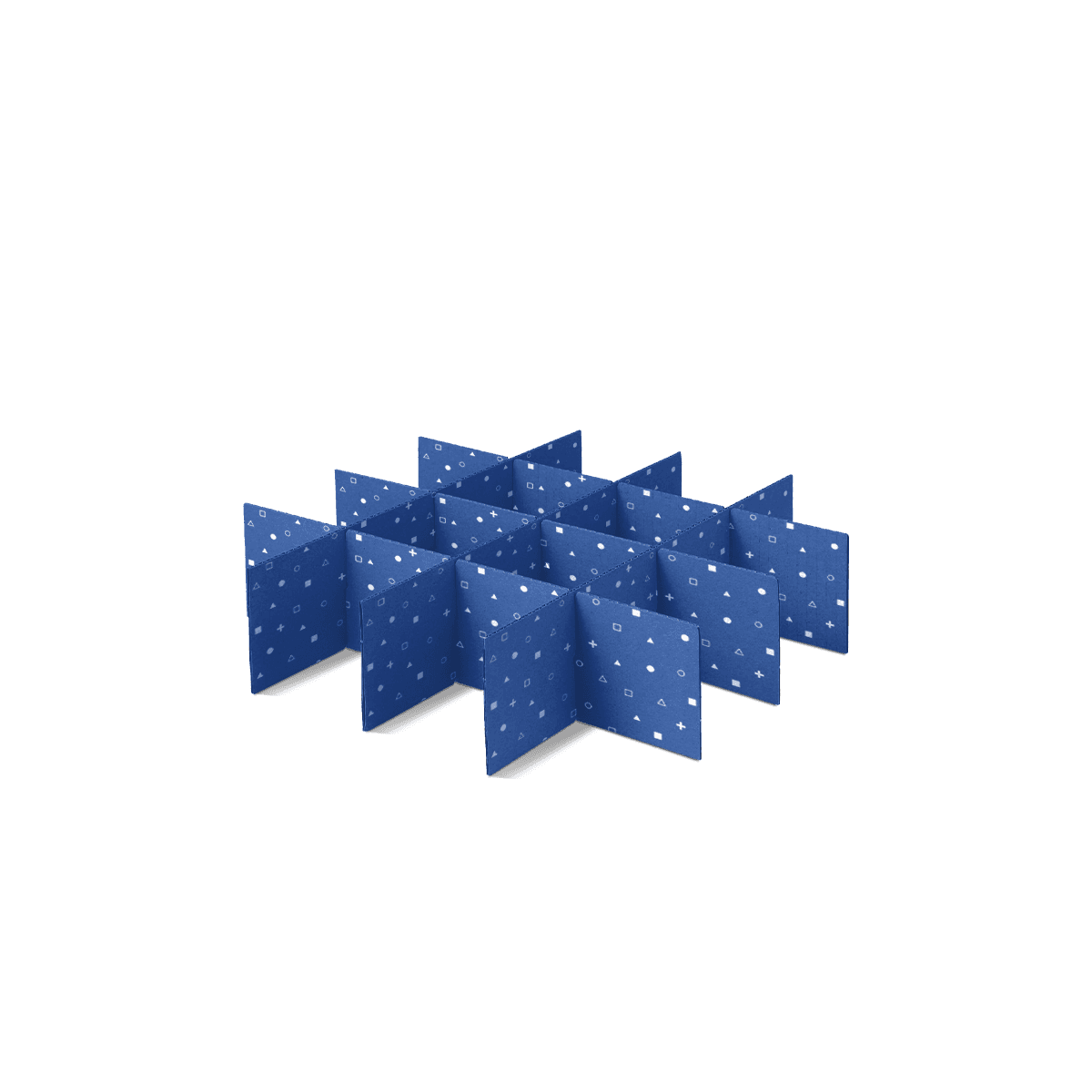
Make the Intersections Work

The crossing points determine whether separate partition strips behave like one framework or like loose pieces sitting next to each other.

Match Slots to Material

A slot that is too narrow can crush edges, distort the material or make assembly unnecessarily difficult. One that is too loose can leave enough play for the walls to rock after the products are loaded.

Slot width therefore needs to reflect the actual material thickness and the intended engagement between crossing pieces.

This is especially important with corrugated material because the substrate is thicker and behaves differently from slim paperboard when pushed into a tight opening.

Seat the Crossings Fully

Intersecting pieces need enough engagement to meet at the intended height and stay aligned.

If one component sits higher than another, the finished grid can become uneven. Products may then sit against sloping walls or one partition may carry pressure that should have been distributed through several intersections.

Accurate cutting matters, but assembly behaviour matters just as much.

Keep the Framework Square

The complete partition insert should sit inside the carton without rattling as one loose unit or forcing the box walls outward.

Fit the Internal Carton Size

Use the assembled carton’s internal dimensions, not its external measurements.

The partition framework consumes space according to the thickness of every strip and the position of each intersection. Even a small difference across several compartments can shift the final outer dimension of the grid.

If the box is still being specified, Custom Product Packaging allows the internal framework and outer dimensions to be resolved around the products together.

Avoid Compression Fit

A partition should not need the carton walls to bend in order to hold it still.

Forcing an oversized framework into place can bow the outer box, distort compartment dimensions and create pressure on the products before handling even begins.

The correct fit should keep the framework located without turning the carton itself into a clamp.

Unequal Compartments Change the Grid

Partition Inserts are especially useful when grouped products need a fixed framework but do not all share the same footprint.

A candle with a boxed accessory, for example, may need one large compartment next to two smaller spaces. That uneven layout changes how the crossing strips behave.

Watch the Long Span

A large compartment creates a longer unsupported wall between intersections.

That wall may flex more than the shorter walls elsewhere in the grid. Depending on the product weight and material, the solution may be another cross-member, a change in orientation or a stronger substrate.

Simply making every wall thicker can add cost and consume usable internal space without correcting the weak span.

Place Cross-Members Where Needed

Cross-members should follow the physical arrangement rather than an assumption that every grid has to look symmetrical.

An asymmetric framework can be the right answer when the contents are asymmetric. The goal is stable product separation, not visual symmetry when the box is empty.

For mixed product groups needing simpler, more adaptable spaces rather than a fixed intersecting framework, Box Dividers can be the less complicated choice.

Wall Height Controls Contact

The partition only separates the parts of the products that its walls actually reach.

Use Full Height With Purpose

Taller walls make sense when products could lean towards one another across much of their height or when vulnerable upper surfaces need separation.

They can also make the framework more visible and consume more material, so full carton depth should not be treated as the automatic specification.

Partial Height Can Be Enough

Shorter walls may work when the important contact risk sits lower on the product.

A stable jar or boxed component may only need separation around its main body. Leaving the upper area open can improve access and reduce unnecessary material.

The decision should follow the real collision point rather than the total product height.

Fixed Framework or Repeated Grid

Several insert styles can create compartments, but they should not all solve the same problem.

Cell Dividers are the cleaner choice when the same or very similar products repeat across equal or near-equal cells.

Partition Inserts become more useful when the framework itself needs deliberate cross-members, different compartment dimensions or a more structured arrangement of grouped contents.

Punch Partition Inserts should be considered when punched engagement and a firmer locked assembly are central to the requirement, particularly for repeated unit counts that need disciplined positioning from one carton to the next.

The distinction should come from the physical job, not from using three different names for essentially the same grid.

Material Changes the Framework

Paperboard and corrugated material create different partition behaviour.

Paperboard Saves Internal Space

Slim solid card can suit lighter grouped products where the main requirement is clean separation and organised presentation.

Because the walls are thinner, more of the carton’s internal dimensions remain available to the products. That can matter in compact retail or gift packaging.

Corrugated Adds Stiffness

Fluted material becomes more useful as product weight, carton depth or transit pressure increases.

For heavier products where the internal structure also needs to carry meaningful load, Corrugated Box Inserts can move beyond vertical separation and provide more deliberate support beneath or around the product.

The choice should reflect the job each internal component performs rather than specifying corrugated material purely because it looks stronger.

Frameworks Do Not Stop Lift

A multi-compartment partition can control side contact very well while leaving substantial vertical movement.

A product may sit perfectly between four walls and still rise towards the top panel if the box is turned upside down. Tall jars can also lean above a low partition even though their bases remain separated.

The fragile product packaging decision is useful when damage continues despite a neat internal grid. It separates side restraint, vertical movement, external carton strength and actual cushioning rather than treating them as one problem.

Where horizontal layers are stacked on top of each other, Layer Pads can manage separation between tiers while the partitions organise products within each level.

Packing Order Affects Stability

An empty partition framework may sit square, then distort once products are loaded in an awkward sequence.

Load Against the Framework

Products should enter without forcing the walls away from their intersections.

If one heavy item has to be pushed sideways through a narrow space, the operator can distort neighbouring cells before the rest of the carton is filled.

The layout should let products drop or slide into place in an obvious sequence.

Avoid Temporary Weak States

Some frameworks become more stable only after several products have been inserted. That can be inconvenient on a busy packing bench if the first item causes the grid to lean while the operator reaches for the second.

Assembly and loading should therefore be tested as a process rather than judging only the final filled carton.

Custom Packly’s free 3D mockups can help review the planned arrangement before production, while physical fit should be checked where product weight and partition behaviour are difficult to judge on screen.

Flat Storage Needs Fast Assembly

One advantage of partition systems is that the components can often be stored flat before use.

That saves space, but excessive assembly time can erase part of the benefit during fulfilment.

A good framework should have an obvious assembly order. Similar-looking strips need to be easy to distinguish, intersections should engage without excessive force and the finished grid should sit square without staff repeatedly correcting it by hand.

For recurring production, the best structure is usually the one that different operators can assemble consistently rather than the one that looks most intricate as a flat dieline.

MOQ starts from 100 boxes, which allows a defined partition specification to be established before larger repeat requirements.

Cut Files Need Intersection Logic

The flat cutting layout controls more than the outside dimensions of each strip. It also determines slot location, slot width, engagement depth and the finished alignment of crossing walls.

The principles in packaging dielines and artwork setup still apply: cut lines, crease lines and production marks need to be unambiguous. For partitions, the additional priority is that separate pieces must assemble into one predictable framework.

If a carton already exists, the internal measurements should be confirmed before the partition cutting layout is approved. If the carton and partition are new, both can be developed from the same packed-product dimensions.

Custom Packly’s experienced packaging team can coordinate sizing, structural planning, mockups, cutting layouts and the outer carton as one production specification rather than leaving the interfaces between separate components unresolved.

Printing Is Usually Secondary

Most partition surfaces are partly hidden once the products are loaded.

That means colour, logos and premium finishes should only be added where they perform a useful job. Visible top edges or exposed walls in a gift set may benefit from controlled colour or simple identifiers. Internal transport partitions often need no decorative print at all.

Premium offset printing is available where exposed surfaces require detailed artwork or accurate brand colour. The packaging customisation options can be used to choose material, colour and finish after the structural framework has been settled.

For operational cartons, numbering or simple printed product identifiers can sometimes provide more value than decorative finishing by helping staff load the correct item into the correct compartment.

Recheck Any Product Change

Partition frameworks depend on the relationship between several products at once.

Changing one jar diameter can move one wall. That can alter the neighbouring compartment, which then changes another intersection and potentially the finished outside dimension of the complete grid.

This chain effect makes mixed-product partition layouts sensitive to apparently small component changes.

Before repeating production, compare any altered bottle, jar, carton or accessory against the approved compartment dimensions and the complete framework, not merely against its own previous space.

Once the dimensions are stable, Custom Packly supports repeat and bulk production with guaranteed 4–6 working day production and delivery.

Anchor Pricing to the Largest Section

Identify the compartment that creates the greatest structural demand first. That may be the largest product, the heaviest item or the section that creates the longest unsupported wall.

Then provide the outer carton’s internal dimensions, the remaining product footprints and the required wall height. This gives the framework a logical starting point without treating every compartment as equally demanding.

Use the custom packaging quote to price the complete layout from that anchor section outward.

FAQs

Confirm the size and weight of each product, how many units sit in the carton and how the loaded box will travel. It also helps to check whether the products need equal sections, how much side clearance is acceptable and whether the insert must resist stacking pressure. Those details determine both spacing and board strength.

Yes, they are commonly used for glass and other fragile grouped contents because they keep products apart and create a stronger internal framework. The key is matching the section size and board grade to the actual weight and movement risk. If the fit is too loose, the divider system cannot do its job properly.

Partition inserts usually provide a more reinforced internal build and are better suited to heavier grouped products or tougher shipping conditions. Box dividers handle separation well, but they are often simpler in structure. When the carton needs stronger internal discipline, partition inserts are usually the better route.

Yes. A mixed layout can be created when one shipment includes products of different sizes, such as a jar, bottle and accessory in the same outer box. That is useful for gift sets and bundled products, but the layout still needs to keep the weight balanced so the carton performs properly in handling.

Bottle dividers are often the better choice when the entire job is built around bottles of the same size and shape, especially in repeated-unit shipping. Partition inserts are more flexible and suit mixed contents as well as non-bottle products. The better option depends on whether the pack needs narrow bottle-specific separation or a broader internal framework.

Related Packaging Styles

Process

How it works

Your Packaging Journey, From Idea to Production and Delivery

01

Tell Us Your Specs

Custom packaging boxes

Tell Us Your Specs

Provide size, quantity, printing, and finishes.

02

Get a Fast Quote

Custom packaging boxes

Get a Fast Quote

Instant transparent pricing, no hidden fees.

03

Design and Approval

Custom packaging boxes

Design and Approval

Artwork checks, revisions, and final sign-off.

04

Produce

Custom packaging boxes

Produce

Expert manufacturing to meet deadlines.

05

Ship to Your Door

Custom packaging boxes

Ship to Your Door

Hassle-free, flexible delivery options.

Get Your Quote for Custom Partition Inserts

Share your product details, dimensions, quantity and artwork needs. We’ll help choose the right packaging style and send a clear quote.