Skip to content
Details

Custom Hexagon Boxes

Six-sided paperboard cartons with tailored internal geometry and distinct printable faces for products that benefit from a more deliberate shelf shape.

Six Sides Change the Fit

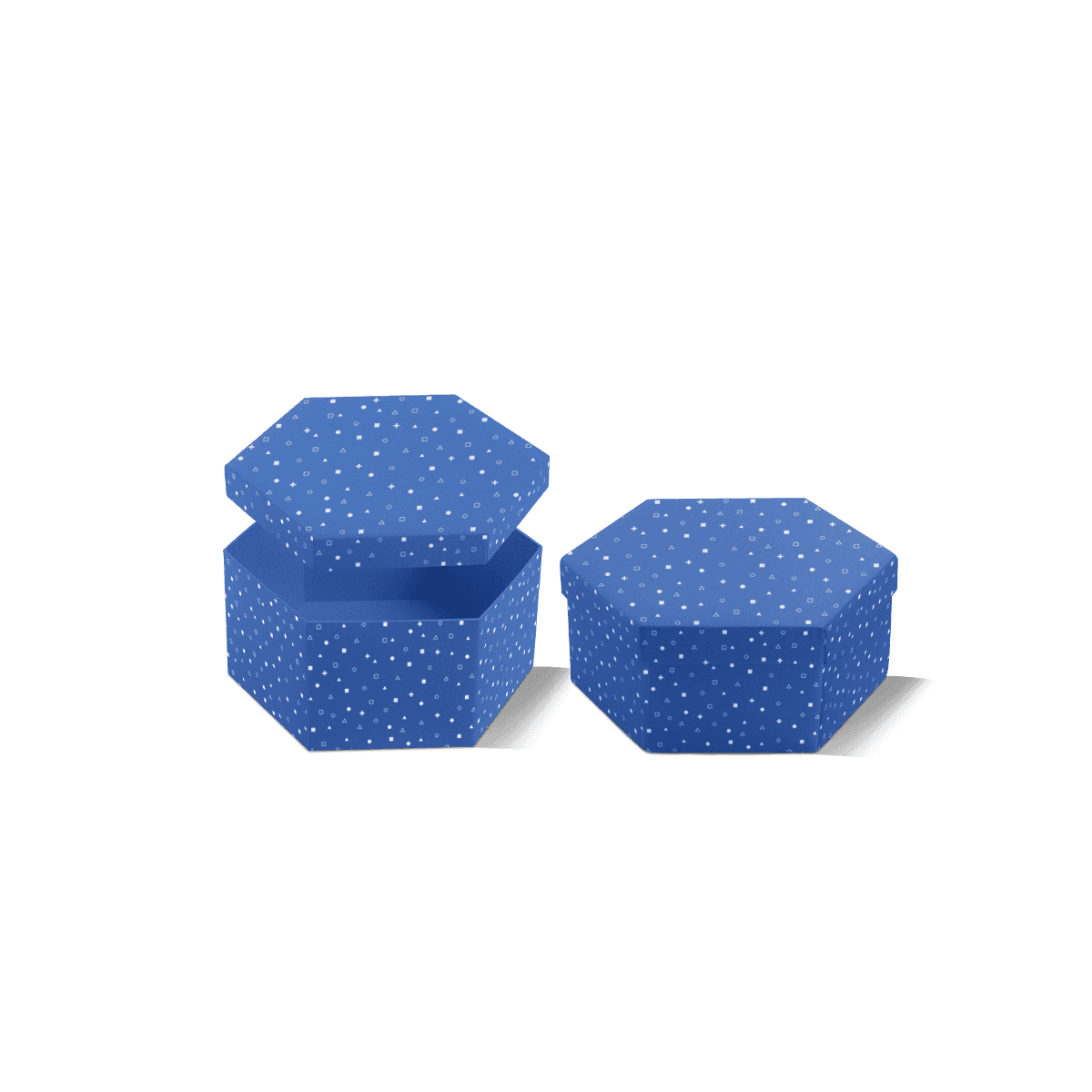
Custom hexagon boxes create six flat vertical faces around the product instead of the four walls found on a conventional carton. That geometry gives the package its distinctive shelf shape, but it also changes how internal dimensions should be measured.

A rectangular product does not automatically use a hexagonal interior efficiently. A candle tin, compact bottle, rolled textile, confectionery set or other product with a rounder footprint may sit naturally near the centre, while a wide rectangular object can leave unused corner space or press awkwardly against two opposing panels.

That is why the product should determine whether the six-sided shape is useful before artwork or finishing is considered.

Within Custom Box Styles and Shapes, hexagon cartons make most sense when the geometry itself contributes to product presentation and the contents are light enough for a shaped paperboard structure.
Measure the Interior Differently

A hexagonal carton needs more than a conventional length, width and height assumption.

The important measurements depend on the orientation of the product inside the six-sided footprint.

Check Width Across Faces

One useful measurement is the internal distance between two opposite flat panels.

For a cylindrical jar, candle or round product, this dimension often controls whether the item can sit comfortably without pressing against the walls.

Leave enough clearance for loading and board thickness rather than matching the product diameter exactly.

Check the Widest Span

A regular hexagonal footprint is wider from one corner to the opposite corner than it is between two flat opposing faces.

That extra corner space can be useful around round products, but it should not be mistaken for fully usable rectangular width.

A square object sized from the corner-to-corner dimension may still collide with the narrower faces when rotated into the carton.

For unusual products, custom product packaging is the better starting point than adapting dimensions from an existing rectangular box.

Use the Corners Wisely

Six-sided packaging creates internal corner spaces that can either help the product sit neatly or simply become unused volume.

The right result depends on the product footprint.

Centre Round Products

Round candle vessels, tins or similar products can sit naturally in the middle of a hexagonal carton because the surrounding faces create relatively even clearance.

That does not remove the need for movement control. A glass jar that can strike the paperboard repeatedly may still need a simple platform or insert depending on weight and handling.

For heavier fragrance products, candles and home fragrance packaging should be considered from the container outward, including weight, glass protection and the sales channel.

Avoid Forced Rectangles

Broad rectangular products often waste the geometry.

If the contents need straight walls on four sides, forcing them into a hexagon can create extra board, more complicated packing and a larger outside footprint without improving presentation.

A distinctive silhouette should solve a visual or fit requirement. It should not become additional packaging simply for novelty.

Closure Is a Separate Decision

“Hexagon” describes the footprint. It does not define one compulsory lid or base.

A folding paperboard hexagon can use different closure arrangements depending on weight, access, assembly method and the intended reveal.

Match the Top to Access

Some products need simple top access for filling. Others benefit from a more decorative folded closure or separate presentation lid.

The opening should remain practical. Six top panels meeting around a central area can look distinctive, but a decorative closure that takes too long to assemble may be difficult to justify on larger repeat runs.

Match the Base to Weight

The bottom also needs to suit the product.

A lightweight favour pack does not need the same lower structure as a dense candle jar. Increasing board thickness alone does not make every hexagonal base appropriate for a heavier load.

If substantial weight, fragile glass or a very premium lid-and-base experience drives the specification, custom luxury packaging may provide a more suitable route than pushing a lightweight folding carton beyond its purpose.

Six Panels Change the Artwork

Hexagon boxes provide more individual vertical faces than a rectangular carton, but each face is narrower.

That changes how branding should be distributed.

Choose a Primary Face

Do not make all six panels compete equally.

Select one or two main viewing faces for the logo, product name and most important visual information. Secondary panels can then carry supporting copy, ingredients, instructions, barcodes or repeated pattern.

This creates hierarchy while still using the geometry.

Plan Continuous Graphics Carefully

A pattern or illustration can wrap around all six faces, but every vertical crease interrupts the flat artwork.

Fine lines that must align precisely across several folds require more care than broader colour fields or repeating patterns.

Premium offset printing, CMYK artwork and Pantone colour references can all work well across shaped cartons. Packaging customisation can also coordinate foil, embossing, debossing and coatings once the structural panels are confirmed.

Keep Creases Functional

Avoid positioning heavy foil, deep embossing or dense decorative treatments directly across every vertical fold.

The carton still needs to form cleanly into its geometric shape. The clearer the six faces remain, the more deliberate the silhouette usually looks.

Shape Uses Shelf Space

A hexagon can create more visual presence without being physically larger in every dimension, but it does not organise shelf space as efficiently as a rectangular carton.

Angled faces change how neighbouring packs sit together.

Test Several Side by Side

Do not assess only one finished sample.

Place several cartons together and check how much space remains between them, whether the primary artwork faces the customer consistently and whether staff can replenish the display without rotating each unit individually.

For custom retail packaging, shelf footprint can matter as much as individual appearance when several SKUs need to sit together.

Check the Base Stance

The bottom should sit evenly across its intended support points.

A six-sided carton that rocks or twists loses much of the visual precision that justified the unusual shape in the first place.

Test the filled carton, because internal weight can reveal instability that is not obvious when the package is empty.

Hexagon or Pillow?

Both structures can make a lightweight product look less conventional, but they create very different presentation.

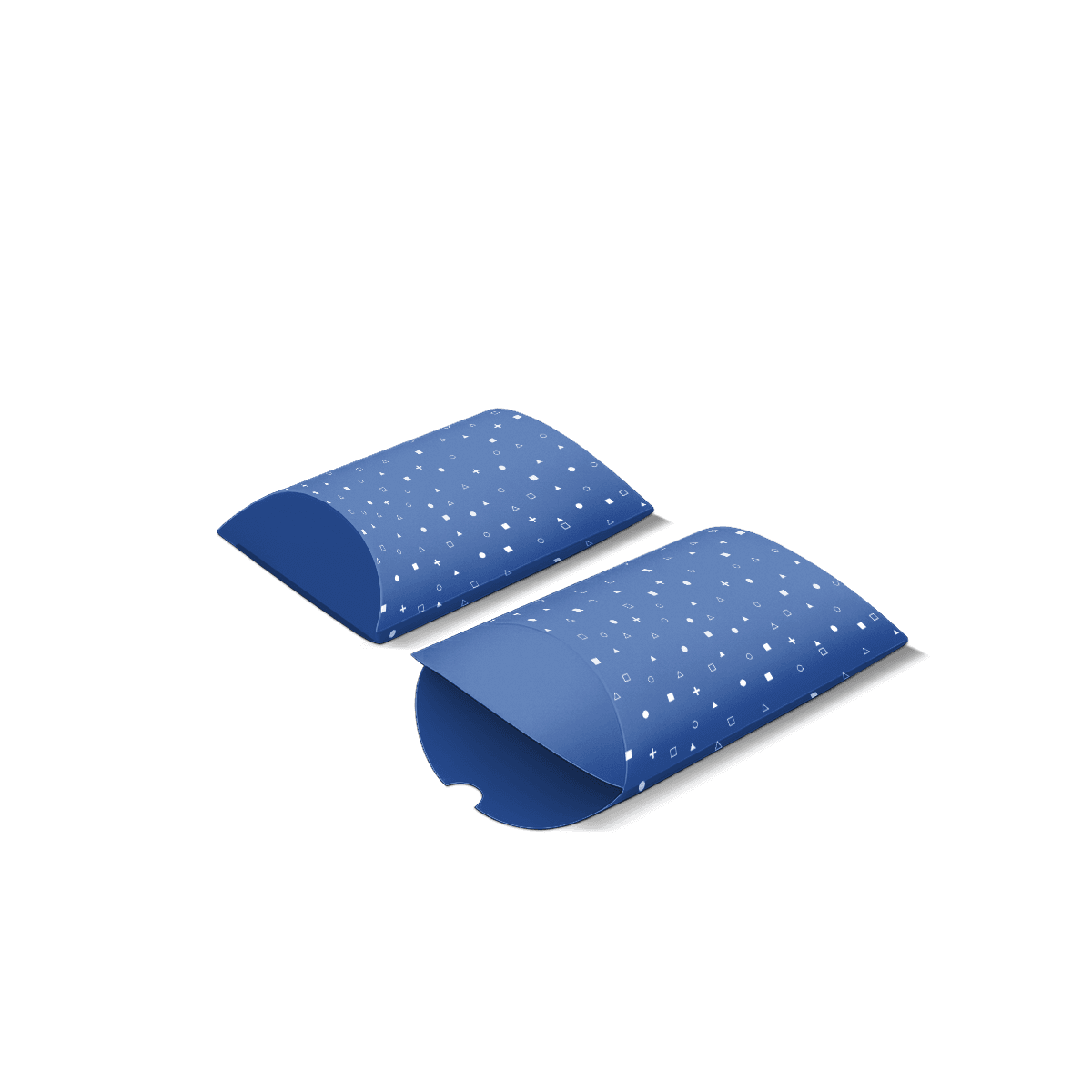
Custom pillow boxes use curved panels and tapered ends. Their visual character is soft, compact and lightweight.

Hexagon boxes have flat faces, defined vertical edges and a more architectural silhouette. They generally provide clearer individual panels for graphics and a more stable upright presence.

Choose pillow packaging when curved simplicity and quick hand assembly matter most. Choose hexagon packaging when a geometric shelf shape and multiple printable faces justify the added folds and shaped footprint.

Neither structure should be chosen for heavy transit protection.

Paperboard or Rigid Hexagon?

The market uses “hexagon box” for both folding cartons and more substantial presentation boxes, so the material route should be made explicit.

Use Paperboard for Lighter Runs

Folding paperboard works well when the box needs to store relatively efficiently before assembly and the product is lightweight enough for a carton construction.

It suits seasonal gifting, promotional items, favours and compact retail products where the shape creates most of the visual value.

Move to Rigid for Keepsakes

If the packaging needs substantial walls, a separate fitted lid, wrapped papers or a keepsake feel, Rigid Boxes are the stronger comparison.

Rigid construction changes storage, weight, unit economics and assembly. It should be selected because the product positioning needs that extra permanence, not simply because the outer shape is hexagonal.

This boundary is important because many competitor pages combine lightweight cartons and rigid gift boxes under the same product name even though buyers are purchasing very different packaging.

Seasonal Shape Needs Discipline

Hexagon boxes naturally suit limited editions, event favours and seasonal product families because the outer shape immediately looks less routine than a standard carton.

That advantage can also encourage over-decoration.

Let Geometry Do Some Work

A distinctive shape does not need six different panel designs, several foil colours and complex closure details to attract attention.

A restrained colour system, one repeating graphic or a simple pattern flowing across the faces can let the structure remain visible.

This is especially useful for events, hospitality and gifting packaging, where several products may need to feel coordinated without becoming visually identical.

Reuse the Structure Carefully

Seasonal artwork can change while the physical carton remains constant if the products genuinely share the same dimensions and weight.

That can make repeat specifications easier to control.

Do not force differently sized products into one hexagon simply to reuse tooling. An attractive geometric box still needs the contents to sit intentionally inside it.

Protect the Shape in Transit

A six-sided presentation carton is not automatically a courier box.

Its angled edges and decorative faces can be crushed or scuffed if the carton is sent through parcel handling without an appropriate outer layer.

For ecommerce, place the presentation pack inside correctly sized shipping boxes where needed.

The outer transit carton should prevent the hexagon from moving excessively while avoiding pressure that deforms its corners.

This allows the presentation structure to do the job it was selected for without asking lightweight paperboard to handle stacking and courier loads it was never intended to carry alone.

Prototype the Geometry

Hexagon packaging is particularly difficult to approve from flat artwork alone.

The assembled sample reveals whether the product fits the internal geometry, the faces stay straight and the closure meets cleanly.

Rotate the Product Inside

Test more than one orientation.

A product that appears tight in one direction may gain useful clearance when rotated. The reverse can also happen: a rectangular item can appear to fit based on one dimension but strike the angled walls after turning.

Find the orientation that gives controlled clearance without creating unnecessary empty volume.

Review Every Face

Rotate the finished carton through all six panels.

Check that important artwork remains readable, panel transitions look intentional and no one face becomes visually overloaded.

A paid custom pre-production sample is useful where exact fit, closure behaviour or multi-panel artwork needs physical approval before a larger order.

Price the Geometry First

Send the product’s widest footprint, height, packed weight, quantity and intended orientation inside the carton. Include the preferred closure and any platform, insert or window that changes the internal geometry.

For round or unusually shaped products, add a product photograph or drawing. A 3D mockup can check panel hierarchy and artwork flow, while a paid physical sample is more useful where exact fit or closure behaviour needs approval.

Send the specification through the detailed quote form once the six-sided footprint has been defined.

FAQs

Hexagon boxes are best suited to compact and fairly lightweight items that benefit from a more decorative outer shape. Candles, chocolates, soaps, favours, smaller accessories and boutique gift products all work well in this structure. If the contents are bulky, fragile or unusually heavy, another build with more straightforward internal support will usually be easier to manage.

Choose hexagon boxes when the pack needs firmer lines, clearer branding panels and a more stable shelf stance. Pillow boxes feel softer and lighter in hand, while hexagon builds look more structured and more graphic. If the goal is a shaped gift pack with stronger panel definition, the hexagon route is usually the better fit.

Start with the product’s widest point, overall depth and how it should sit inside the pack. Then confirm the closure style, board grade and whether an insert, divider or platform is needed to stop movement. These details matter because a geometric structure looks strongest when the contents sit cleanly and the panels hold their intended shape.

Yes. This structure can take die-cut windows, foil stamping, embossing, debossing, matte lamination and gloss accents very well. The key is to keep the embellishment balanced with the panel layout so the shape still reads clearly. For smaller packs, a restrained finish plan often looks stronger than covering every surface with effects.

They can work well as the presentation layer, but they are usually better placed inside a mailer or shipping carton rather than sent unprotected on their own. The shaped profile is part of the appeal, so it is worth protecting that form during delivery. If postal use is expected, confirm outer pack support early rather than treating it as a last-minute addition.

Process

How it works

Your Packaging Journey, From Idea to Production and Delivery

01

Tell Us Your Specs

Custom packaging boxes

Tell Us Your Specs

Provide size, quantity, printing, and finishes.

02

Get a Fast Quote

Custom packaging boxes

Get a Fast Quote

Instant transparent pricing, no hidden fees.

03

Design and Approval

Custom packaging boxes

Design and Approval

Artwork checks, revisions, and final sign-off.

04

Produce

Custom packaging boxes

Produce

Expert manufacturing to meet deadlines.

05

Ship to Your Door

Custom packaging boxes

Ship to Your Door

Hassle-free, flexible delivery options.

Get Your Quote for Custom Hexagon Boxes

Share your product details, dimensions, quantity and artwork needs. We’ll help choose the right packaging style and send a clear quote.