Skip to content
Details

Custom Gable Boxes

Handled folding cartons sized around the product, carry weight and top clearance for gifts, events, takeaway orders and branded handover.

The Handle Has to Work

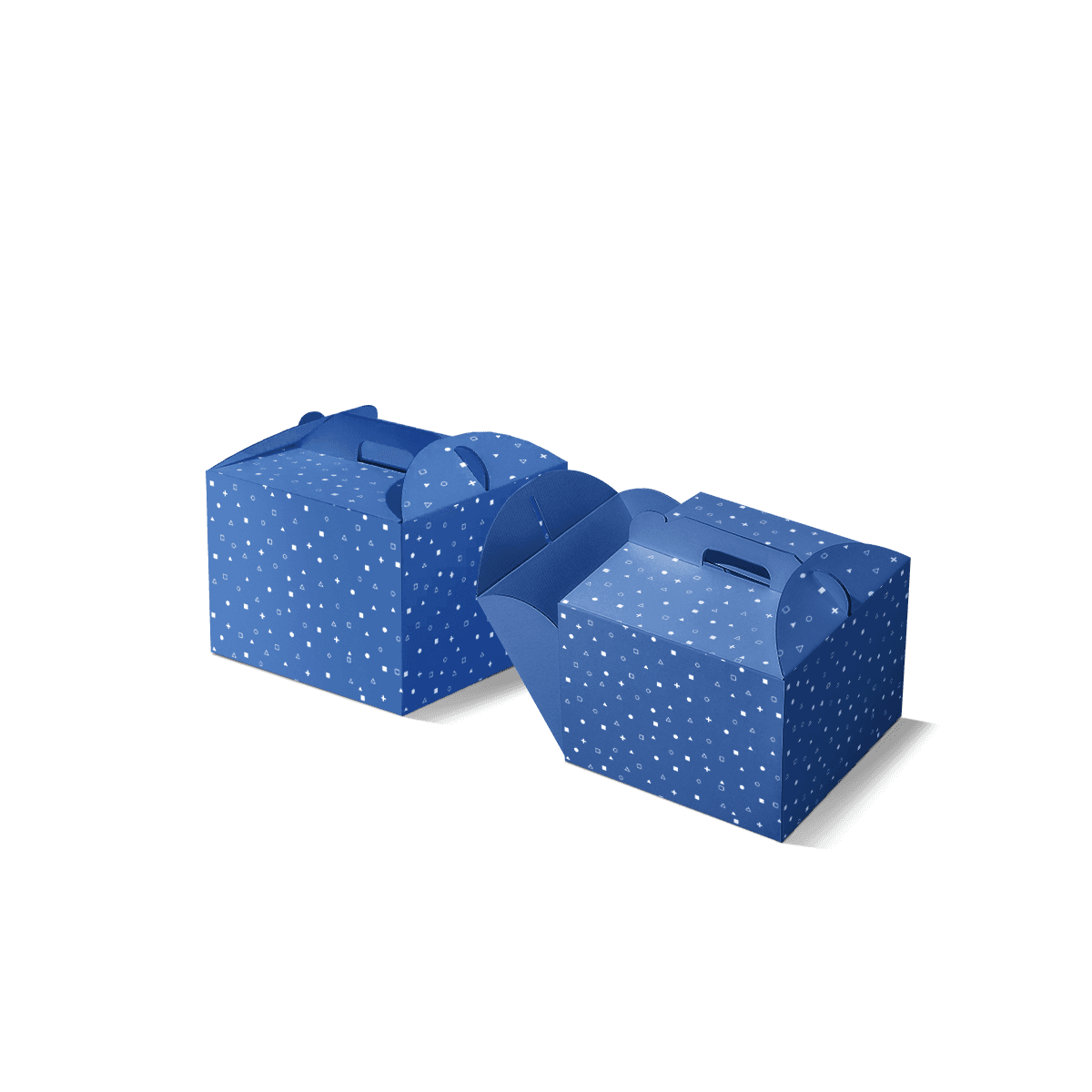
A gable carton earns its place when the package itself needs to be carried. The upper panels rise into a peaked shape and form an integrated handle, allowing the customer to pick up the complete carton without automatically adding a separate carrier bag.

That convenience changes the specification. The handle now carries the packed weight, the top fold takes up internal height and the finished shape becomes less efficient to stack than a regular rectangular carton.

Custom gable boxes work well for event favours, bakery collections, hospitality gifts, small promotional kits and lightweight retail sets where the handover experience matters. Across Custom Box Styles and Shapes, they are the clearest choice when carrying is part of the box’s actual job rather than an afterthought.
Balance the Packed Weight

Handle strength is only useful if the filled carton hangs properly.

A gable box can be made from suitable paperboard and still feel awkward if the contents sit too far to one side or move while the customer is carrying it.

Keep Weight Near the Centre

Plan the internal dimensions around the complete packed arrangement rather than the largest individual item.

If one dense product sits against an outer wall, the box may tilt when lifted. Mixed gift sets can create the same problem when a bottle or jar is paired with much lighter items.

Position heavier contents closer to the centre where practical and use fit, dividers or product layout to prevent them travelling significantly during carrying.

Test the Handle Loaded

Do not approve handle strength from an empty carton.

Load the finished contents, lift the box repeatedly and carry it for a short distance. Watch the handle slots, narrow board sections around the grip and the upper folds for stretching, tearing or distortion.

The useful test is not simply whether the handle survives one lift. It is whether the carton remains comfortable and presentable after realistic handling.

Leave Room Below the Peak

The stated box height does not tell the whole story with a gable structure.

The upper walls angle inward to create the roof-like top and handle, which means the product should not fill every millimetre of the external height.

Measure the Finished Product

Measure the product after all lids, toppings, tissue, internal trays or decorative elements are in place.

A bakery item with tall decoration or a gift set with upright components can fit comfortably in the rectangular lower body but interfere with the folding gable panels above.

The safest internal height is the usable space below the point where those panels begin moving inward.

Protect Delicate Tops

This is particularly important for bakery and confectionery packaging, where icing, toppings or tall baked goods can be damaged by packaging that technically has enough overall height but insufficient clearance beneath the gable fold.

For a product with a fragile top surface, leave enough headroom that the upper panels can close without touching it.

The Handle Needs Board

A carry handle concentrates force into a relatively small area of paperboard. Board choice therefore affects more than the feel of the carton.

The handle cut-out, panel width, packed weight and distance the box will be carried all influence how the upper structure performs.

Keep Strength Around the Cut

Avoid placing an oversized handle opening into a narrow strip of board simply because a larger grip looks convenient.

The remaining material around the handle has to transfer the load into the wider upper panels. Thin bridges of board can become stress points, particularly where the carton is carried repeatedly.

The final handle shape should balance finger comfort with enough surrounding material to support the load.

Do Not Solve Everything with Thickness

A heavier board can improve stiffness, but thickness alone cannot correct a poorly balanced load or weak handle geometry.

It can also make the peaked top harder to crease and close cleanly if the structure has not been adjusted for the chosen material.

Board, handle design and carton dimensions should therefore be specified together rather than treating GSM as an isolated strength setting.

Gable Describes the Top

A useful structural distinction is often missed: gable describes the peaked upper section and handle, not one mandatory bottom closure.

The lower structure can be designed differently according to product weight, assembly method and production requirement.

A lighter product may need a straightforward folding base. A denser product or faster packing operation may justify a more supportive bottom arrangement.

Where the packing operation specifically benefits from a pre-glued base, custom auto bottom boxes show how automatic erection works as a separate structural decision.

The correct approach is to choose the gable top because carrying matters, then choose the base because of packed weight and assembly requirements.

Flat Before, Tall After

Gable boxes can be efficient to store before use because many paperboard versions arrive flat and are erected during packing.

Once assembled, however, the raised handle changes storage and stacking behaviour.

Plan Packing-Bench Space

Flat cartons are easier to store in batches than fully assembled presentation boxes. That can be useful for bakeries, event teams and retail operations that make boxes up as orders are prepared.

The packing sequence still deserves testing. Staff should be able to square the lower body, load the product and form the upper handle without repeatedly fighting the contents.

Expect Poorer Vertical Stacking

The same handle that makes the box easy to carry makes it less efficient for stacking.

Regular rectangular cartons offer broad flat top surfaces. Gable boxes do not.

The types of packaging boxes comparison highlights this trade-off: raised handles make gable structures less efficient for palletisation and vertical stacking than standard rectangular cartons.

If large quantities need to move through storage or distribution, plan how the erected boxes will be grouped rather than assuming they can be stacked like normal cartons.

Box or Carrier?

A gable box can sometimes remove the need for a separate paper bag, but the two packaging types solve different jobs.

The gable box holds the product directly and becomes part of its presentation. The integrated handle is simply an extension of that carton.

Custom paper bags are better when several boxed products need to be carried together, when till staff need a quick general-purpose carrier or when the product already has suitable primary packaging.

Choose a gable carton when combining containment, branding and carrying into one structure genuinely simplifies the handover. Choose a bag when carrying needs to remain separate from the individual product pack.

For shops planning several customer-facing formats, custom retail packaging can coordinate cartons and carriers without forcing one structure to perform both jobs.

Print Around the Handle

Gable boxes provide useful front and side panels, but the upper area contains more folds, cuts and changing panel angles than a standard rectangular carton.

Artwork should follow that structure.

Keep Logos on Stable Panels

Large logos, product names and important information usually read best on the broader vertical faces rather than crossing several upper folds.

If artwork continues into the peaked section, check how the panels meet once the handle is formed. A graphic that looks continuous on the flat dieline may break visually after folding.

Custom printed boxes can use premium offset printing, CMYK or Pantone colour control across the main printable surfaces.

Give the Grip Breathing Room

Avoid crowding the handle cut-out with small text, borders or fine decorative elements.

The opening itself already creates a strong visual interruption, and repeated handling can place extra wear around that area.

Matte, gloss, foil, embossing, debossing or spot UV can be used where they support the design, but the handle and working creases should remain functional first.

Carrying Is Not Shipping

A gable handle makes handover easier. It does not automatically make the carton suitable for courier networks.

The peaked top, handle and presentation surfaces can be exposed to crushing or abrasion when mixed with larger parcels.

For ecommerce or longer-distance distribution, the gable box may need to sit inside a suitable shipping box so the outer carton takes stacking, conveyor and courier loads.

This distinction matters for events, hospitality and gifting. A gable box can work very well when guests receive the product directly at a hotel, event or venue, but the same units may still need conventional transit cartons to reach that location safely.

Use the gable structure for presentation and carrying. Use transit packaging for the journey that happens before the handover.

Test the Handover

Gable boxes should be sampled as filled carrying packages, not simply judged as attractive folded cartons.

The strongest approval test follows the real customer journey.

Lift, Carry and Set Down

Fill the box completely, form the handle and carry it by the intended grip.

Check whether:

  • The carton hangs reasonably level
  • The handle feels comfortable
  • The handle slots remain intact
  • The upper panels stay closed
  • The base remains stable
  • The contents stay away from the folding peak
  • The box still stands cleanly after being carried

Repeat the test rather than assessing only the first lift.

Check the Handover View

Look at the box while it is being carried.

The panels facing outward may be different from the panel that looked most important while the carton sat on a table. For event favours, gifting and branded collections, that can influence logo placement and artwork hierarchy.

The package should still look intentional in the customer’s hand, not only when photographed from the front.

Price the Carrying Job

Price the box as a filled carrier rather than an empty carton. Send the product layout, total carry weight, quantity, usable height required below the peaked top and the expected carrying use. Include the preferred lower-base style if already known.

For shorter event, takeaway or hospitality runs, the MOQ starts from 100 boxes. If handle strength or balance is still uncertain, include product photographs and the packed weight with the detailed quote so the handle, top fold and base can be reviewed together.

FAQs

Choose gable boxes when the product needs to be carried easily and the pack should feel more distinctive than a standard carton. They are a strong fit for lighter gift packs, takeaway items, party favours, confectionery and promotional bundles. If the main priority is stacking strength or heavier product support, another construction will usually perform better.

Gable boxes are better when built-in carrying convenience and a more expressive shape matter most. Tuck top boxes usually suit products that need a cleaner rectangular profile and simpler shelf stacking. If the pack will be handed over, carried away or used as a gift-style carton, the gable structure often gives the stronger result.

They can work for some medium-weight products, but they are usually better suited to lighter contents. The handle area and the base both need to be specified carefully if the load increases. For denser products, confirm stronger board, a suitable bottom style and whether an insert or reinforcement is needed before approving production.

Yes. Gable boxes can be produced with die-cut windows, foil stamping, embossing, matte lamination, gloss coating and printed interiors where needed. Those details work well for gift-led, bakery and promotional packaging. The main decision is whether the finish adds value without interfering with folding accuracy around the top handle and closure lines.

Start with product dimensions, total packed weight and how the box will be filled. Then check whether the handle will be used for regular carrying, whether the base needs extra support and whether the pack needs inserts, food-safe board or a window. These details shape the final dieline and help avoid a box that looks right but performs weakly in use.

Process

How it works

Your Packaging Journey, From Idea to Production and Delivery

01

Tell Us Your Specs

Custom packaging boxes

Tell Us Your Specs

Provide size, quantity, printing, and finishes.

02

Get a Fast Quote

Custom packaging boxes

Get a Fast Quote

Instant transparent pricing, no hidden fees.

03

Design and Approval

Custom packaging boxes

Design and Approval

Artwork checks, revisions, and final sign-off.

04

Produce

Custom packaging boxes

Produce

Expert manufacturing to meet deadlines.

05

Ship to Your Door

Custom packaging boxes

Ship to Your Door

Hassle-free, flexible delivery options.

Get Your Quote for Custom Gable Boxes

Share your product details, dimensions, quantity and artwork needs. We’ll help choose the right packaging style and send a clear quote.