Skip to content
Details

Custom Countertop Display Boxes

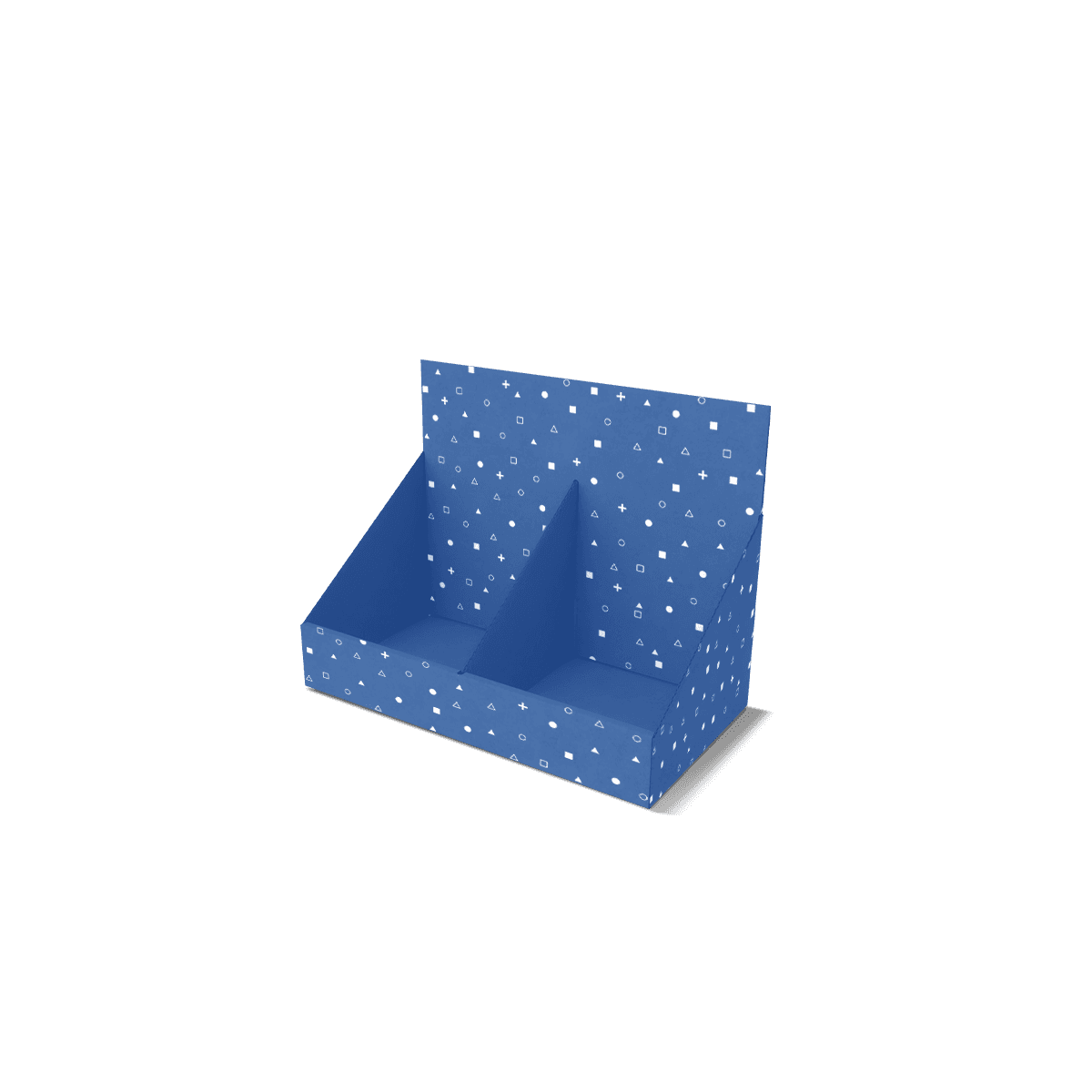
Countertop display boxes give products a stronger branded presence than a simple open tray, making them useful for launches, add-on sales and compact retail zones where visibility, access and tidy stock presentation all need to work together.

Height Has to Earn Its Space

Vertical space is what makes a countertop display worth choosing. Extra height should reveal rear products, organise tiers or carry a useful header; otherwise the unit is simply occupying more visual space without improving the presentation. For custom countertop display boxes, tier rise, header height and stock depth need to justify that vertical footprint.

That makes the viewing angle more important than it is with a low tray. A display on a pharmacy desk, beauty counter, reception surface or café counter may be seen from standing height, from several metres away and then again at arm's length. Products in the back row cannot disappear behind the front row, and the header should not dominate the items being sold.

The available surface still sets the outer footprint, but countertop displays can justify more depth and height than compact till-point units when the product needs a stronger branded presence or greater stock holding. For brands planning several store-facing formats together, custom retail packaging provides the broader retail context.
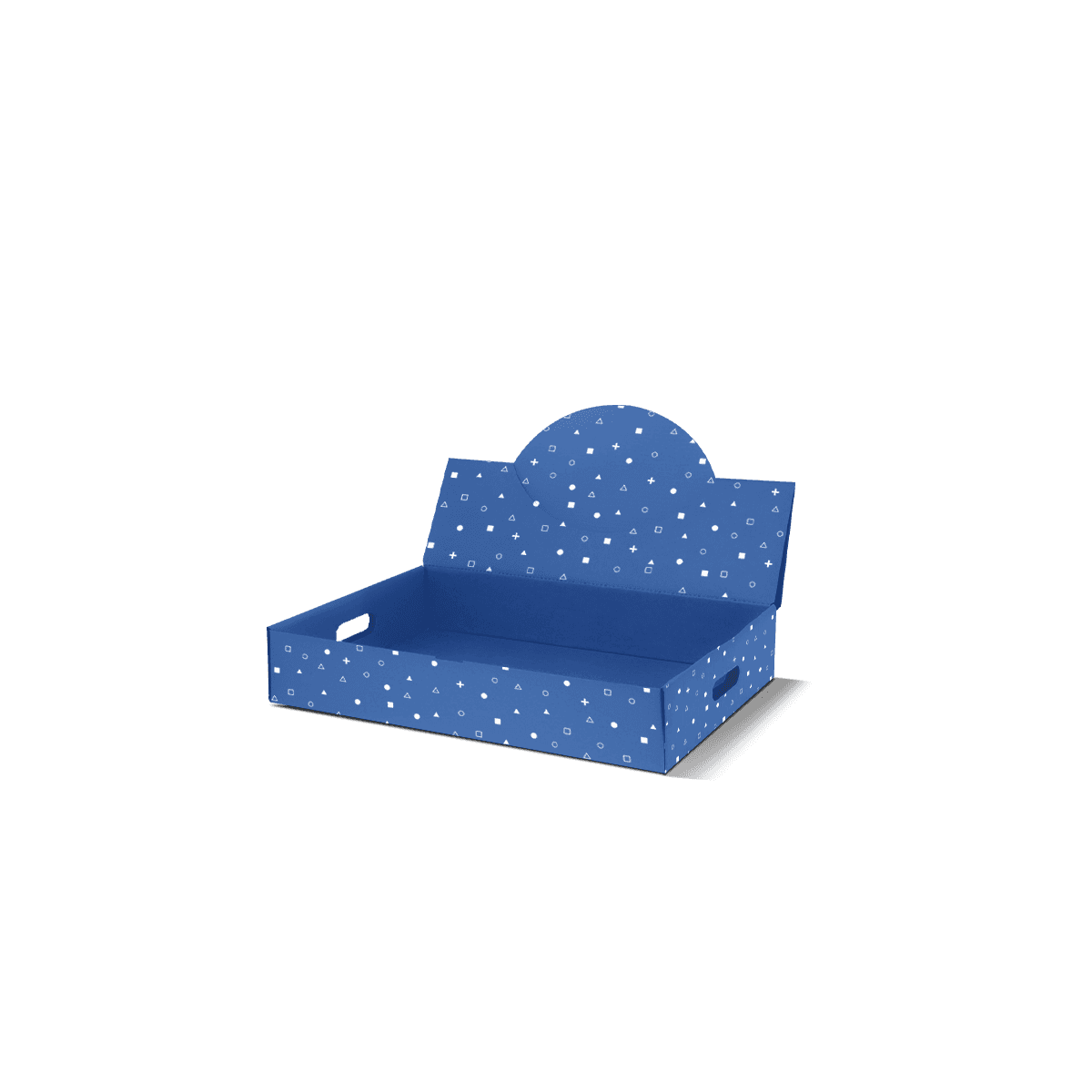
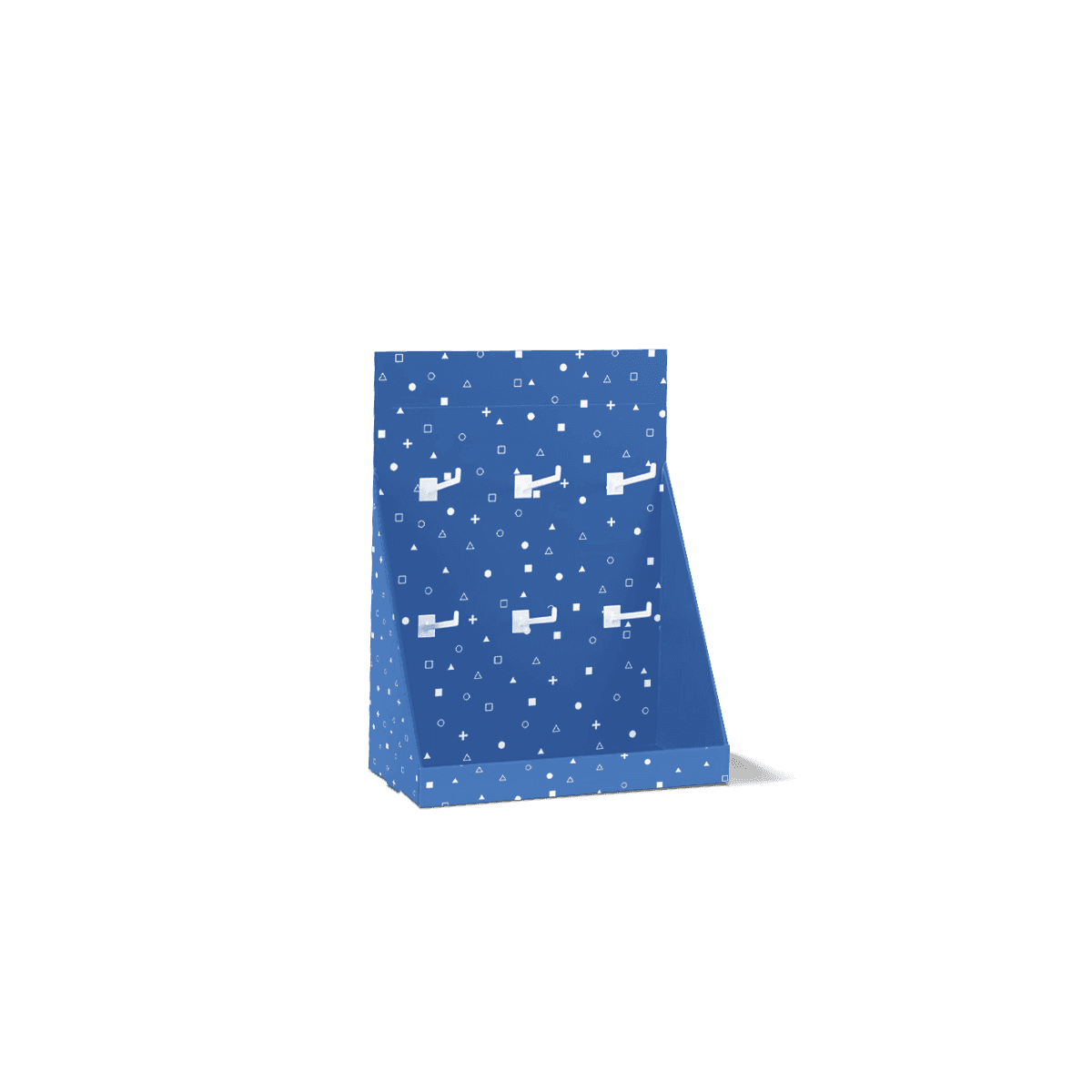
Tier Geometry Controls Visibility

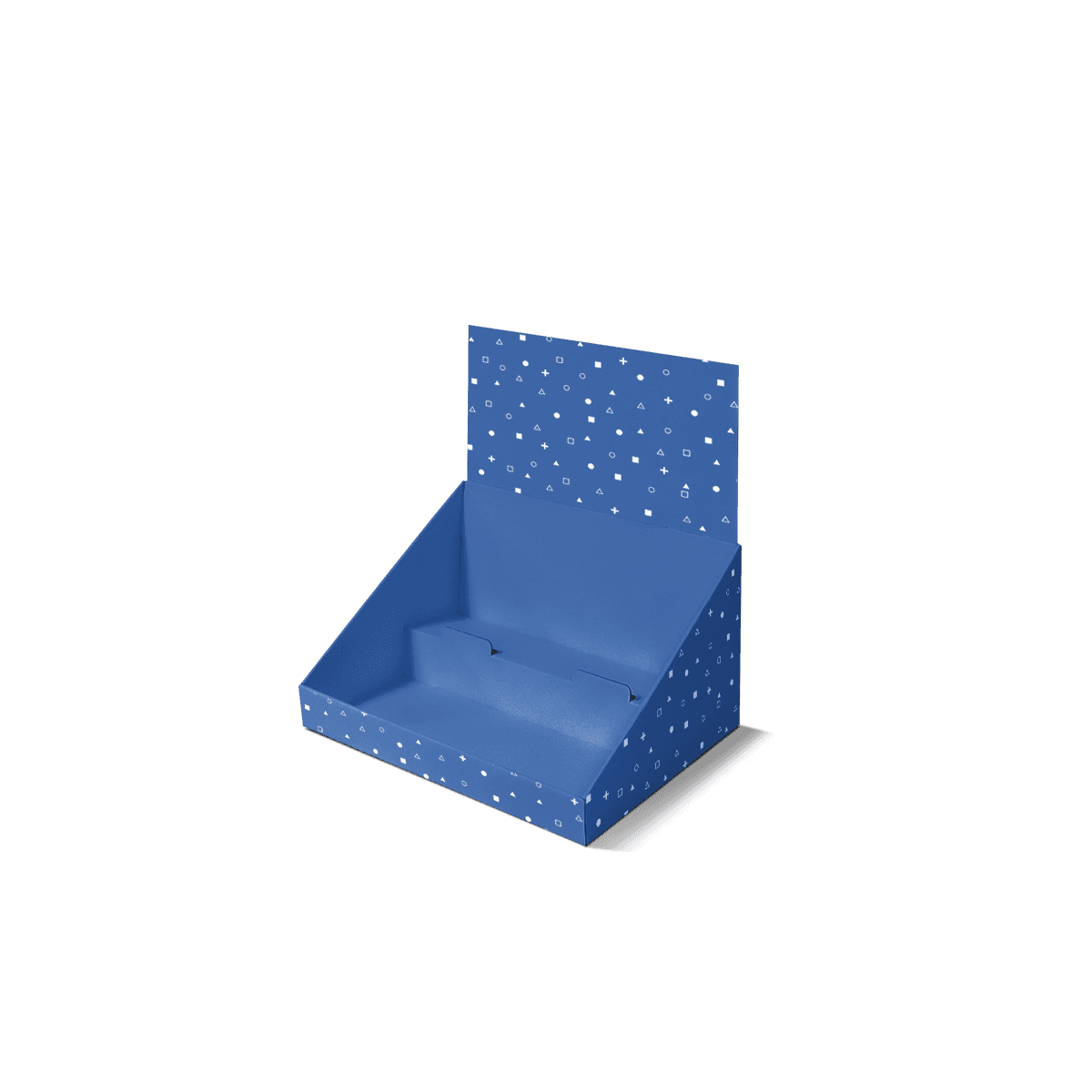
Stepped layouts are one of the most useful reasons to move from a simple open tray to a countertop display. They allow products behind the front row to remain visible without spreading the unit across more counter width.

Rear Rows Need a Clear Sightline

The vertical rise between tiers should be based on the height of the product and the part of its packaging that needs to remain visible. A 10 mm step may technically lift the rear row but achieve nothing if the front carton still covers its brand name. A much taller step can waste material, raise the centre of gravity and make the display unnecessarily bulky.

The important measurement is not the tier height by itself. It is the amount of recognisable product area that remains exposed from the normal customer viewpoint.

Consider three rows of 65 mm-high skincare cartons in a countertop unit. If each row rises only 8 mm, the second and third rows may be almost invisible behind the products in front. Increasing the step height and slightly reducing the overlap between rows can expose each carton name without making the outer footprint wider. A low front edge then keeps the first row restrained without cutting across its main label.

That change solves a visibility problem through geometry rather than a larger display or more printed messaging.

Mixed Products Need Deliberate Levels

Tiers can also separate variants or products of different heights. A shorter product may need to sit higher than a taller one so the whole assortment reads evenly from the front.

The internal layout should not be based only on how many units fit. It should consider which products deserve the front positions, whether the range should read left to right or front to back and how gaps will look when one SKU sells faster than another.

Simple dividers, die-cut apertures or stepped platforms can stop products migrating between positions. The best solution is usually the least complicated insert that keeps the display readable.

Headers Work Above the Product

A raised back panel gives countertop display boxes more communication space than a low counter tray. That space is valuable because it remains visible even when the display is fully stocked, but its proportion and support need to be considered as part of the structure.

Brand Area Without a Top-Heavy Display

A header should be large enough to identify the brand, product family or campaign from a normal viewing distance. It should not be so high that the unit becomes unstable, blocks staff sightlines or looks disconnected from the products below it.

Shaped headers can give a display more character without adding excessive overall height. Curved tops, product silhouettes or restrained die-cut profiles can create recognition while keeping enough board around the edge for stiffness.

For a refillable display, the back panel also needs to tolerate repeated handling. If staff naturally hold the header while moving or refilling the unit, a weak fold or narrow neck can crease long before the base wears out.

Free 3D mockups are useful here because the relationship between product height, tiers and header area is much easier to judge in an assembled view than on a flat dieline.

Artwork Across Raised Panels

The header normally carries the strongest visual message, while the front lip and side panels handle shorter product or variant cues. That does not mean every visible surface needs different copy.

At countertop distance, one strong headline, clear brand colour and recognisable product arrangement can work harder than a dense mixture of claims, icons and finishes. Artwork also needs safe distance from shaped cuts, folds and slots supporting internal tiers.

Packaging dielines explained covers cut lines, creases, bleed and safe areas when the artwork is being prepared for production.

Premium offset printing can support detailed graphics, smooth solid colours and repeat-run consistency. When multiple SKUs share the same display structure but use different artwork, digital vs offset printing can help frame the production decision before print is fixed.

Check Visibility at Mid-Stock

Remove products from the front row and then from only one side. The tier behind should remain visible and the remaining products should stay organised rather than leaning into the empty positions.

Reach for the final rear product from the normal customer position, then refill the display from the staff side. If either action disturbs another tier, the row overlap or refill direction needs another adjustment.

A physical sample is useful when tier stiffness or rear access is uncertain, while a 3D mockup can confirm sightlines and header proportion before print.

A Deeper Footprint Changes Stability

Extra stock depth is one of the advantages of a countertop display, but every additional row puts more load onto the base and can make rear products harder to reach. Depth should therefore be added only when it improves stock holding without compromising access.

Base Strength Under Repeated Handling

The base needs to remain level when the display is full and when products are removed unevenly. A display carrying small but dense items such as jars, candles, glass bottles or boxed supplements can place significant load across a relatively small footprint.

Internal platforms and stepped decks also transfer weight into the side walls and base. If those components are too light, they can sag even when the outer walls still look intact.

Physical sampling is useful for these displays because loaded behaviour is difficult to judge from artwork alone. Test the actual product weight, remove items from one side first and refill the rear positions several times. A sample that remains square through those actions is much more informative than an empty presentation sample.

Paperboard or Fine-Flute Corrugated

Folding paperboard can suit lightweight countertop displays where the footprint is moderate and a smooth print surface is important. Fine-flute corrugated board becomes more useful as the display gets deeper, carries more weight or needs stronger tier support.

The visible edge profile and print method should be considered alongside strength. The practical differences between these material systems are covered in paperboard vs corrugated vs rigid packaging.

Material should follow the loaded structure. A heavier stock cannot compensate for poor tier support, excessive span or badly positioned folds.

Refilling Must Not Disturb the Display

Countertop units often hold enough stock to stay in place throughout the day, which makes refill access more important than it is with a very small impulse tray. Staff should be able to replenish the back rows without unloading the front of the display or lifting the entire unit from the counter.

Top-loading works well when there is enough clearance above the display and the internal tiers remain accessible. Rear access can suit deeper structures when staff work from behind the counter. The better option depends on where the unit sits and who is expected to maintain it.

A display for a staffed beauty counter may be refilled from behind while customers browse from the front. A self-service unit on an open retail table may need straightforward top access because staff can approach it from several sides. The structure should reflect that operating pattern before the artwork is approved.

For repeat retail programmes, the refill sequence should stay consistent from one unit to the next. Warehousing and scheduled deliveries can support staged replenishment when a larger production run is being released across several locations.

When Vertical Merchandising Justifies the Footprint

Counter Display Boxes are the tighter choice when the product belongs beside the transaction and the available surface is limited.

Countertop displays earn the additional footprint when raised rows, stronger brand height or greater stock depth materially improve presentation. If several formats are being planned for the same store environment, custom retail packaging can coordinate the display with the primary packs and other fixtures.

Use the Tier Stack as the Production Reference

Once tier rise, row overlap, header height and refill direction are approved, that arrangement should remain the reference for repeat production. Preserving only the outside dimensions is not enough if the tier geometry that created the visibility changes.

If the tier configuration is still open, send the product sizes and intended viewing position through the custom packaging quote. Custom Packly can develop the structure before final artwork is applied.

FAQs

The right size depends on product dimensions, stock quantity and the depth of the surface where the unit will sit. A display that is too deep can hide items at the back, while one that is too narrow empties too quickly. Confirm product count, front-facing width and refill frequency before fixing the final footprint.

A lot of the visible structure can be printed, including the front panel, side walls, back card and header area. That gives space for product names, variant colours, launch messages, price prompts and brand graphics. The most effective layouts keep the product visible first and use the extra print area to support quick recognition and selection.

Yes, provided the board grade and layout are matched to daily handling. Countertop display boxes often work well for refillable product lines because they can hold stock neatly while staying easy to top up from the rear or above. If the unit will be refilled frequently, confirm base strength, wall rigidity and access space before production.

It depends on the display role. Counter display boxes are usually tighter, simpler and better for very small till-point placement. Countertop display boxes are generally the stronger choice when you need more brand presence, a taller visual profile or a little more stock depth on a desk, service point or wider retail surface.

Yes, they can be produced in recyclable paperboard or corrugated board, depending on the construction and weight requirement. The final sustainability profile also depends on the chosen finish and any added components. If recyclability matters, confirm the stock, coating and print treatment together rather than treating material choice as a separate step.

Process

How it works

Your Packaging Journey, From Idea to Production and Delivery

01

Tell Us Your Specs

Custom packaging boxes

Tell Us Your Specs

Provide size, quantity, printing, and finishes.

02

Get a Fast Quote

Custom packaging boxes

Get a Fast Quote

Instant transparent pricing, no hidden fees.

03

Design and Approval

Custom packaging boxes

Design and Approval

Artwork checks, revisions, and final sign-off.

04

Produce

Custom packaging boxes

Produce

Expert manufacturing to meet deadlines.

05

Ship to Your Door

Custom packaging boxes

Ship to Your Door

Hassle-free, flexible delivery options.

Get Your Quote for Custom Countertop Display Boxes

Share your product details, dimensions, quantity and artwork needs. We’ll help choose the right packaging style and send a clear quote.