Skip to content
Details

Custom Counter Display Boxes

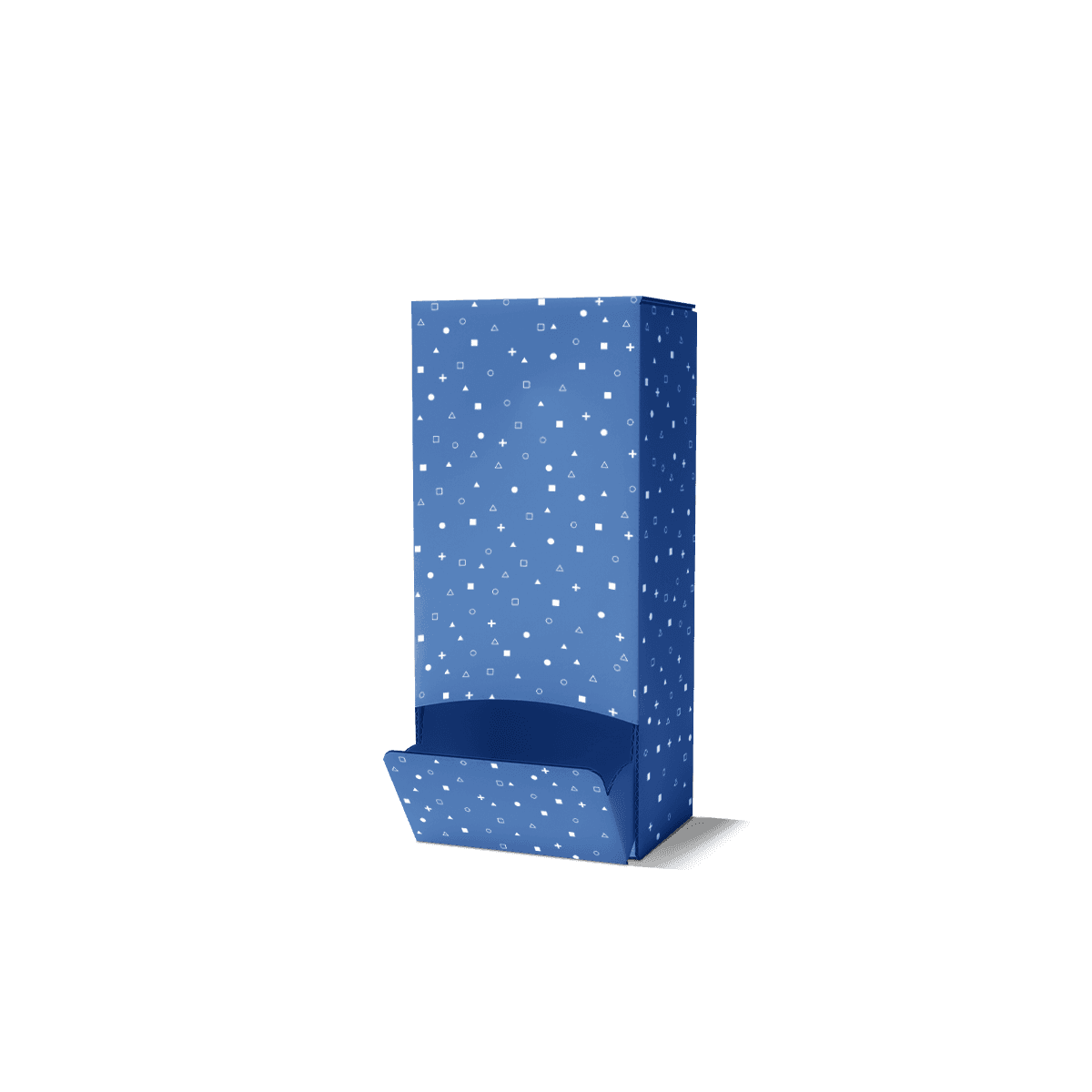
Counter display boxes keep small products visible, organised and easy to take at tills, service desks and promotional counters, with printed board construction that supports both retail presentation and quick day-to-day handling.

Counter Space Sets the Limit

Till space disappears quickly once a card terminal, receipt printer, bags and staff working area are taken into account. Custom counter display boxes have to earn a very small footprint while keeping the product close enough for a quick pick.

The first decisions are therefore physical: how much width and depth are actually available, which direction the customer approaches from, how the product should be picked up and how often staff will refill the unit. A compact display near a payment point has less room for wasted depth than a larger countertop unit on a reception desk or consultation surface.

Small cosmetics, confectionery, supplements, samples and accessories are common fits because they can be grouped in a tight selling area without needing a floor fixture or long shelf run. For brands planning several store-facing formats together, custom retail packaging covers the retail formats that sit around the same product. A counter display becomes the more precise choice when a small grouped product presentation has to work within a restricted checkout or service-counter footprint.
Footprint Before Capacity

The biggest counter display is rarely the best one. Adding more stock can reduce refill frequency, but it can also push the display too far back from the shopper, hide rear products and occupy space needed for card terminals, bags, receipts or staff tasks.

Facing Count and Reach

Start with the finished product dimensions and decide how many units should be visible across the front. Then add only enough depth to support the required stock count without making the rear row difficult to reach.

A display with four products across and two rows deep may work better than a narrow unit holding the same quantity in four deep rows because the customer can see more of the options without reaching into the display. The correct arrangement depends on the counter, not simply the number of units the brand wants to load.

Where several flavours, shades or SKUs share one CDU, visible facings also help shoppers distinguish the options quickly. The layout should make the choice obvious without requiring staff to rearrange the stock throughout the day.

Header Height and Staff Sightlines

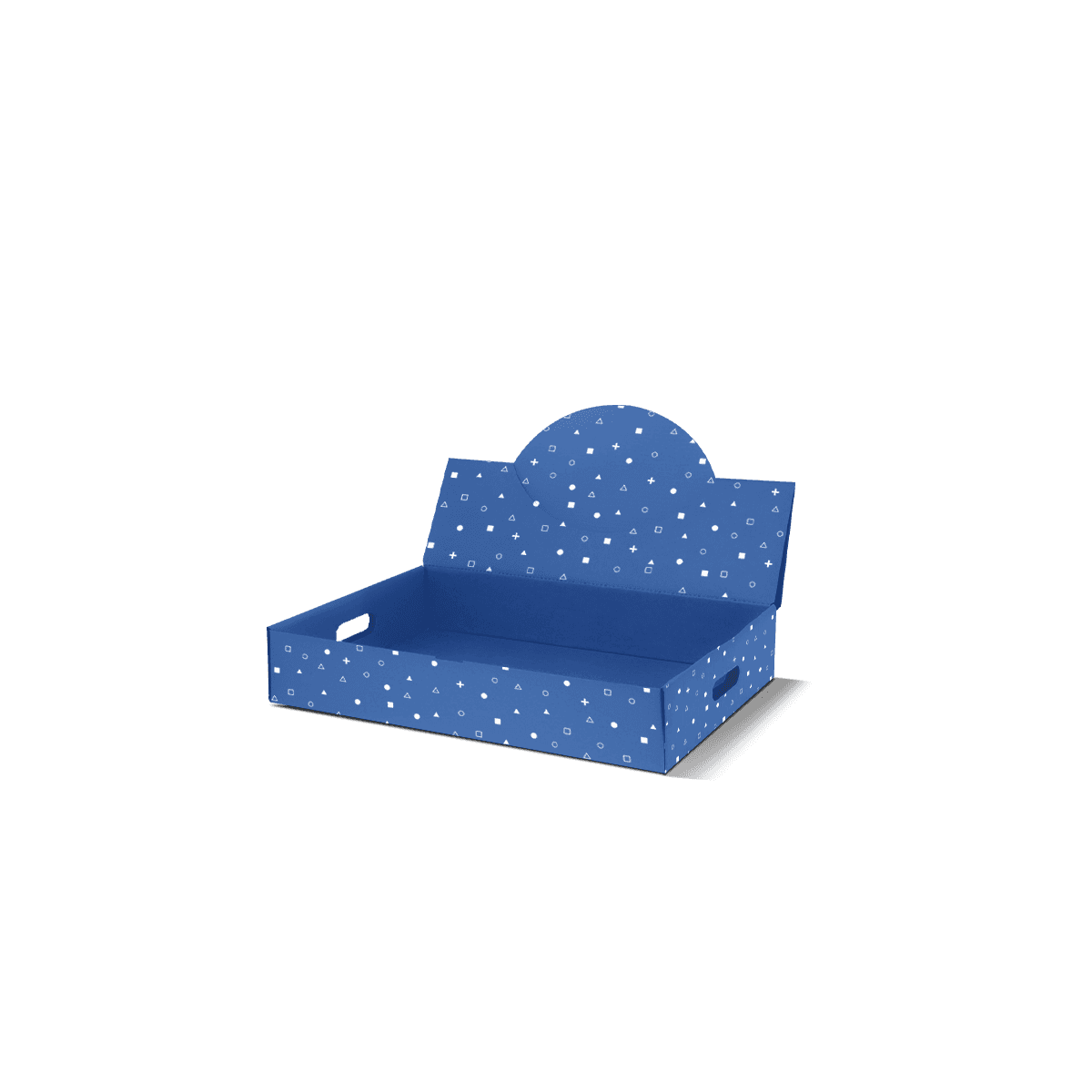
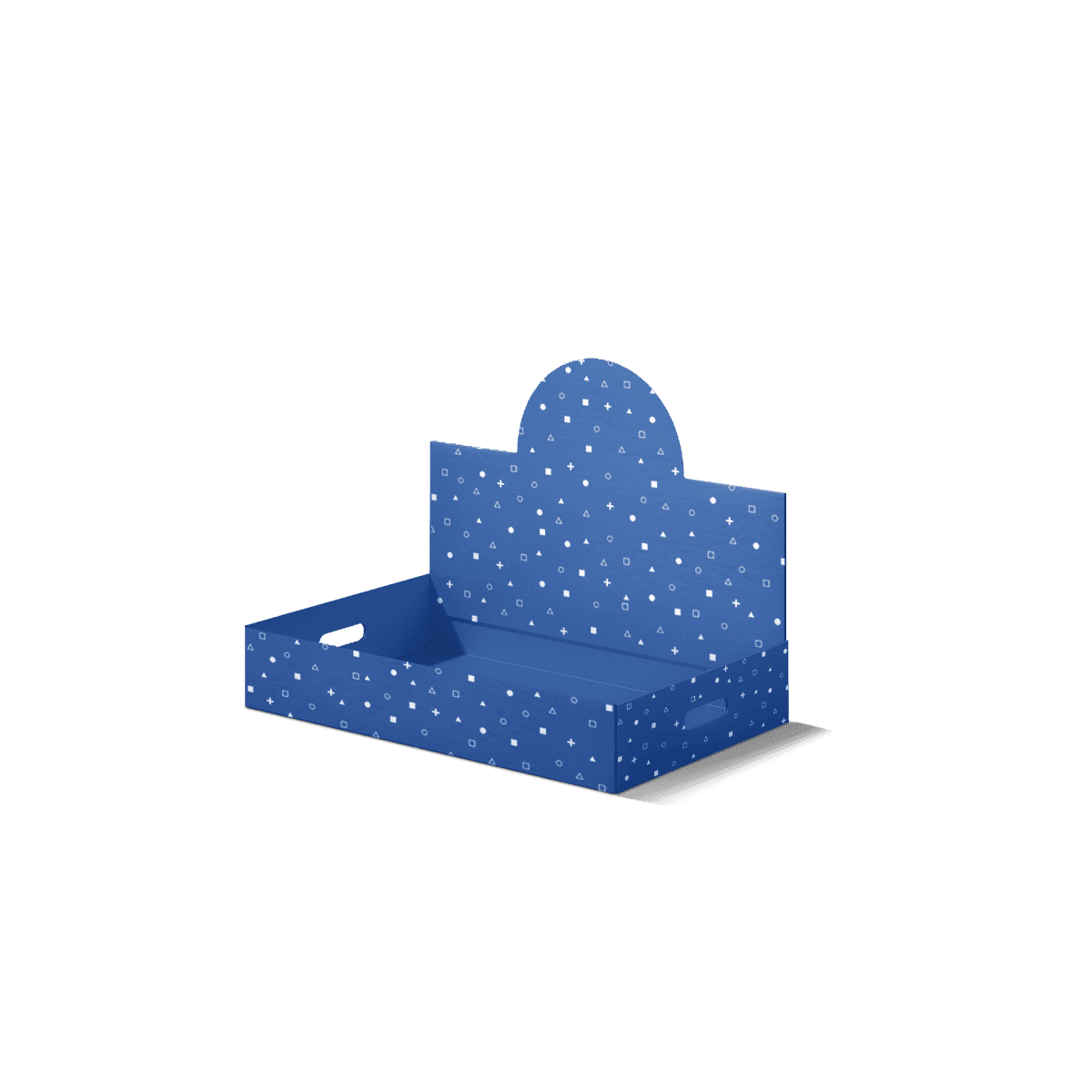
A printed header can give a compact counter display useful vertical branding without increasing its footprint, but height needs restraint. A tall header may block staff sightlines, interfere with shelving behind the till or look disproportionate beside a very small product.

The strongest header normally carries one clear brand or product message rather than trying to reproduce the information from the primary pack. Its width, height and support should be considered with the display fully loaded so the header feels connected to the product rather than like a separate sign attached to the back.

Free 3D mockups help review those proportions before production, particularly when a shaped header, stepped product arrangement or unusual counter footprint is being considered.

Check It Beside the Till Equipment

Place the loaded sample beside the card terminal, till screen, receipt printer or other equipment that will share the surface. A unit that feels compact on a meeting table can block staff movement once those constraints are real.

Approach it from the customer's side, remove front and rear products with one hand, then refill from the staff side. If either movement forces the display to be lifted or shifted, the footprint or access direction needs adjusting.

Product Orientation Changes Pick-Up

Counter displays are handled at close range. Customers may take an item with one hand while carrying a bag, holding a phone or completing payment. Product orientation should make that movement straightforward.

Upright Cartons Need Restraint

Slim cartons and narrow boxed products can lean once the front units disappear. Small changes to side clearance, divider position or the front lip can keep the remaining products facing forward without making the display difficult to refill.

A front wall should be high enough to stop cartons sliding out but low enough to preserve the primary product name, shade or flavour cue. If the packaging itself already carries strong branding, the counter display should support it rather than hide half of it behind printed board.

Tubes and Cylindrical Products Need Control

Loose cylindrical products create a different problem because they can rotate, roll or fall into empty spaces as stock sells.

Consider a till-point unit holding 18 lip balm tubes, each about 20 mm in diameter and 70 mm high. If all 18 are placed loosely in one open cavity, the presentation can deteriorate after only a few are removed. Tubes tilt into the gaps, labels turn away from the shopper and the last units become harder to pick cleanly.

A die-cut top grid or simple internal cell layout can hold each tube upright while keeping the outer footprint almost unchanged. The display then retains its arrangement as individual products are removed, and staff can see immediately which positions need refilling.

For beauty lines using similar compact products, custom cosmetic packaging can help coordinate the primary cartons and the counter presentation rather than developing them in isolation.

Compact Strength Without Bulk

Counter display units do not usually need the same material depth as large floor displays, but their small size does not make structure irrelevant. The base carries the full product load, the side walls are handled during refilling and the rear panel may support a printed header.

Paperboard for Light Products

Folding paperboard can work well for lightweight products and short-depth displays where a clean print surface is a priority. It keeps the profile refined and can suit cosmetics, small confectionery packs, sachets and lightweight accessories.

The board still needs to be specified around the loaded unit. A wide paperboard base carrying dense products can bow even when each item is individually small.

Corrugated for Higher Loads

Fine-flute corrugated board can add rigidity when the display is deeper, repeatedly refilled or carrying heavier grouped stock. E-flute is often useful where strength and a relatively neat retail appearance need to coexist.

Material choice should follow product weight, span and expected handling rather than a blanket assumption that thicker is better. Paperboard vs corrugated vs rigid packaging explains how these material systems differ when the board decision is still open.

A free sample is useful for checking base stiffness, wall behaviour and assembly with the actual products loaded. Counter displays are small enough that minor dimensional errors can become immediately obvious in use.

Artwork Works at Arm's Length

Counter displays are usually viewed from close range, often for only a short moment. The printed areas need a clear hierarchy rather than a large amount of copy.

The header can carry the strongest brand or campaign message. The front lip can identify the product line, flavour group or offer. Side panels matter when customers approach the counter from an angle, but they should not be overloaded with information that is already visible on the primary packs.

Premium offset printing is available when detailed graphics, large areas of brand colour or repeat-run consistency matter. CMYK suits full-colour artwork, while Pantone references can help where specific brand colours need closer control.

Finishes such as matte, gloss, foil or spot UV can be applied selectively, but the product and message should remain the focus. A tiny counter unit with several competing finishes can become visually busy very quickly.

Artwork should also respect folds, cut edges, header supports and any die-cut product holders. Packaging dielines explained covers bleed, safe areas, creases and panel placement. For campaigns with several artwork variants or changing SKUs, digital vs offset printing helps frame the production trade-offs before the print method is fixed.

Refill Rhythm Shapes the Layout

A counter display that empties quickly can either be topped up in place or replaced as a complete pre-filled unit. Those are different operating models and should influence the structure.

For in-place refilling, staff need clear access from the top or rear without removing the display from its position. Deep internal steps, awkward locks or a tall rear wall can make a visually impressive unit frustrating to maintain.

For pre-filled promotional units, the focus shifts towards consistent product count, protection during movement and fast placement at the counter. If the display travels with products already inside it, the transit solution must stop stock escaping or shifting without making store setup unnecessarily complicated.

MOQ starts from 100 boxes, which can suit a limited product launch or a trial across selected counters before a larger rollout. Once the format works, the approved dimensions, insert layout, header and print file should remain controlled so repeat units occupy the same counter footprint and refill in the same way.

For larger repeat programmes, warehousing and scheduled deliveries can support staged stock requirements rather than sending the full quantity to one location at once.

When a Larger Counter Unit Makes Sense

A compact counter display works best when the product belongs close to the transaction and the available surface is tight.

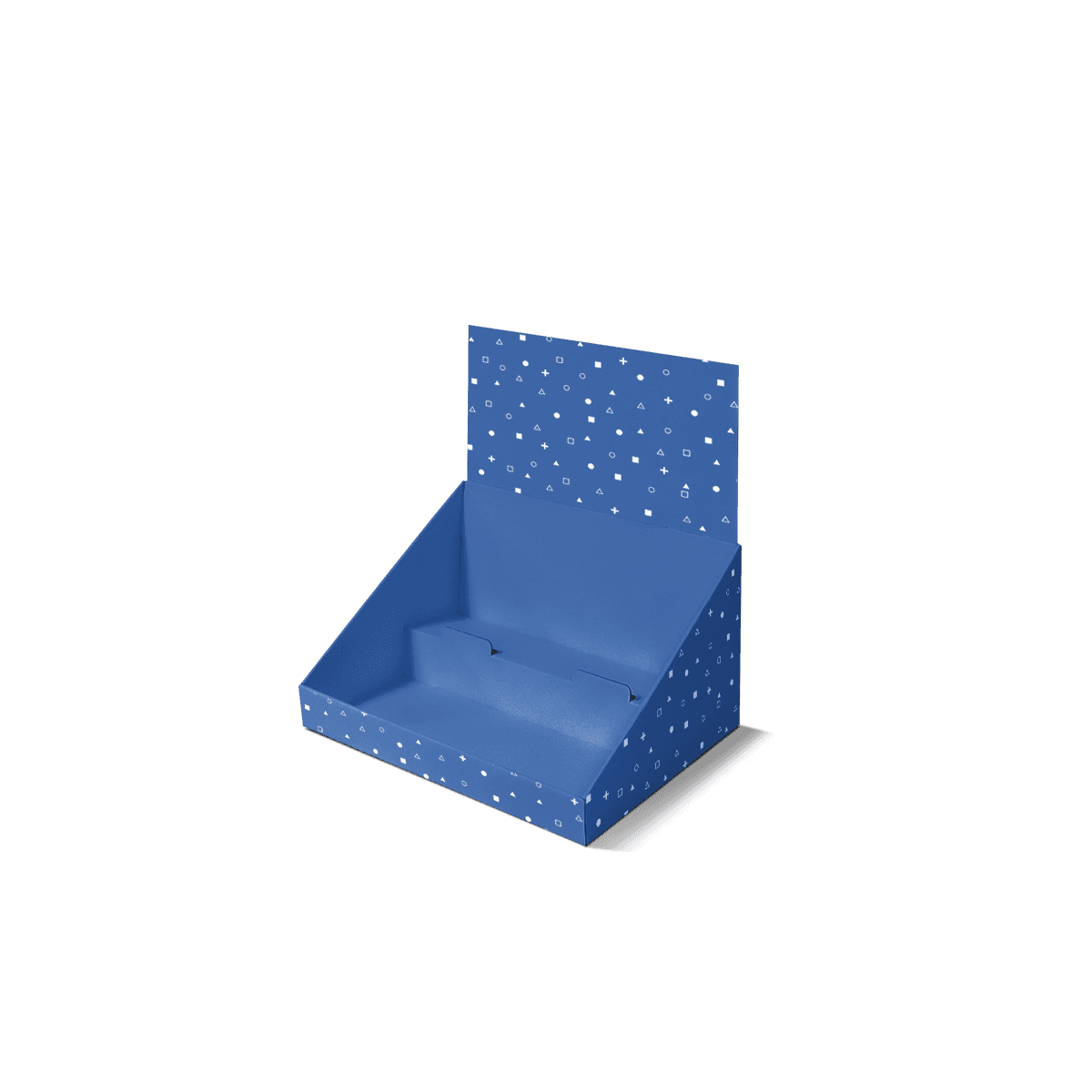
Countertop Display Boxes become more useful when the surface can support a taller header, stepped presentation or deeper stock holding.

If several store-facing formats are being planned together, custom retail packaging can coordinate the counter unit with the primary pack and other retail formats.

Price the Space the Display Is Allowed to Use

Counter pricing should be based on the usable retail footprint and loaded product count rather than an arbitrary outside size. Available width and depth, facing count and pick direction determine the structure.

A photo or sketch of the counter can be attached to the custom packaging quote. Custom Packly can develop the dieline around that real surface before the artwork is finalised.

FAQs

Small, lightweight and frequently picked items usually suit this construction best. Lip balms, confectionery, sample packs, sachets, capsules, lashes and travel-size accessories are all common uses. If the product is bulky, fragile or needs a larger quantity per unit, a deeper countertop display or another retail display structure may work better.

Confirm product size, unit count, refill method and where the display will sit first. You should also check whether items need to stand upright, lean back slightly or sit in stepped rows. Counter depth, front lip height, header size and board grade all affect stability, visibility and how tidy the unit looks after repeated product pick-up.

Yes, most visible surfaces can be printed, including the front lip, side walls, back panel and header card. That makes this build useful for price messages, flavour cues, product benefits and campaign graphics. The most effective layouts keep the front clear for stock visibility while using the header and side panels for stronger brand communication.

They can, provided the board choice matches the load and the base is designed properly. Light products often work well in folding box board or heavier paperboard, while fuller units or repeated refills may need corrugated support. If the display will be moved often or packed densely, confirm the weight per unit before approving the final construction.

Shelf Ready Display Boxes are usually the better option when products ship in larger case quantities and need to move straight from transit to shelf with minimal unpacking. Counter display boxes are the stronger choice when the unit must be smaller, easier to place near tills and built around close-range visibility, hand reach and compact retail presentation.

Process

How it works

Your Packaging Journey, From Idea to Production and Delivery

01

Tell Us Your Specs

Custom packaging boxes

Tell Us Your Specs

Provide size, quantity, printing, and finishes.

02

Get a Fast Quote

Custom packaging boxes

Get a Fast Quote

Instant transparent pricing, no hidden fees.

03

Design and Approval

Custom packaging boxes

Design and Approval

Artwork checks, revisions, and final sign-off.

04

Produce

Custom packaging boxes

Produce

Expert manufacturing to meet deadlines.

05

Ship to Your Door

Custom packaging boxes

Ship to Your Door

Hassle-free, flexible delivery options.

Get Your Quote for Custom Counter Display Boxes

Share your product details, dimensions, quantity and artwork needs. We’ll help choose the right packaging style and send a clear quote.