Skip to content
Details

Custom Retail Ready Display Boxes

Retail ready display boxes help products move from case pack to shelf with less handling, giving brands a cleaner in-store presentation, faster replenishment and a more controlled front-facing layout across everyday retail environments.

What Remains on Shelf Matters Most

Retail ready packaging is judged after the transit portion has been opened or removed. At that point, the remaining tray, walls and printed panels become part of the shop-floor presentation. Custom retail ready display boxes therefore need to do more than arrive safely and open quickly. They need to leave a controlled selling unit behind.

That changes the design priorities. The visible front edge should support the products without hiding them. Side walls should keep the row organised without making the last units awkward to reach. The case count should suit the shelf footprint rather than simply maximise how many products fit into one outer. Most importantly, the display should still look deliberate after several units have sold.

This is where retail ready packaging deserves its own role beside shelf-ready packaging. Shelf-ready structures are primarily about getting grouped stock onto a shelf with less handling. Retail-ready display packaging takes that operational requirement further by placing more weight on the shopper-facing result, branded presentation and repeatable merchandising once the case is open.

For brands planning cartons, displays and other store-facing formats together, custom retail packaging is the broader starting point. A retail ready display becomes more specific when the secondary case itself must remain visible and useful as part of the selling fixture.
Design Around the Open Display

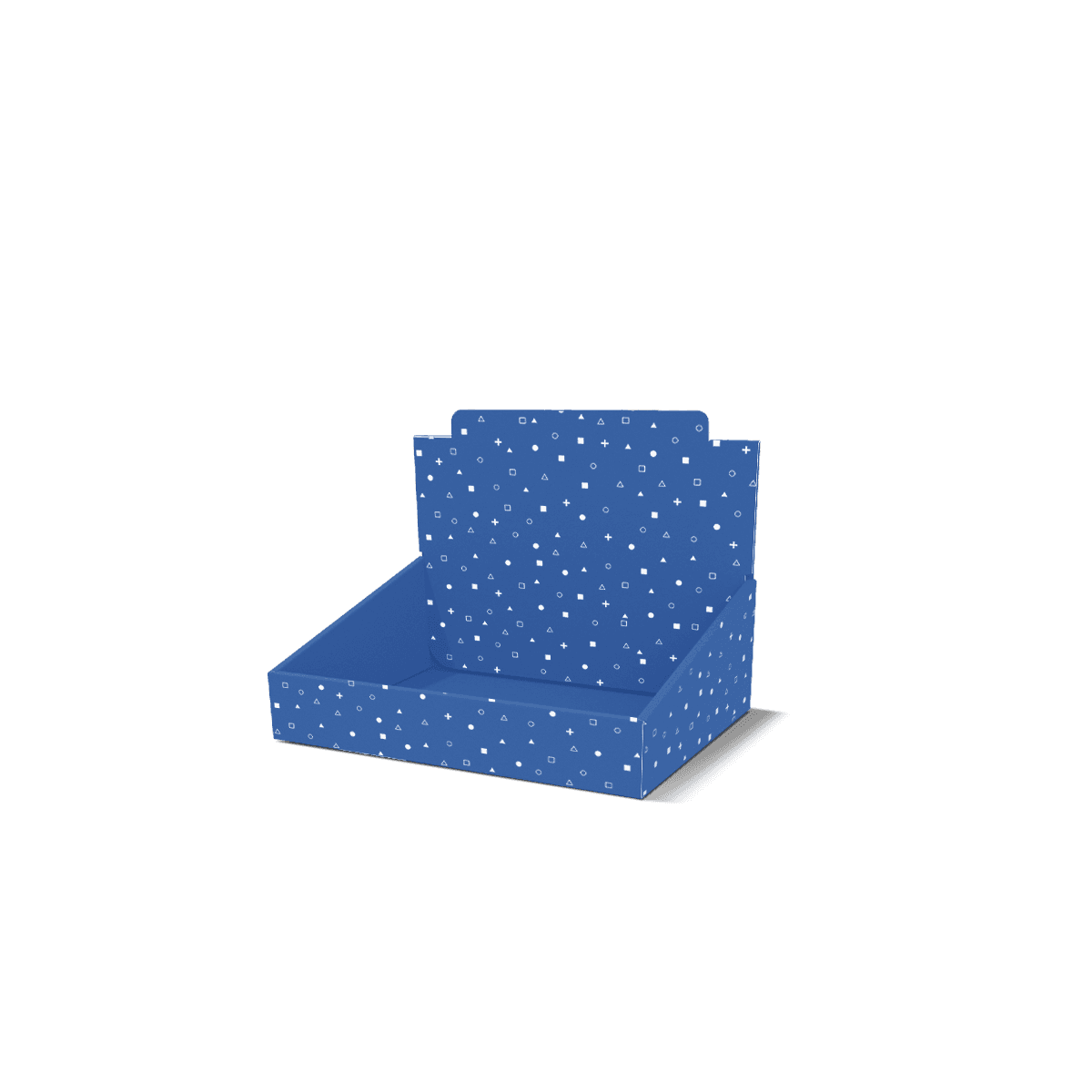
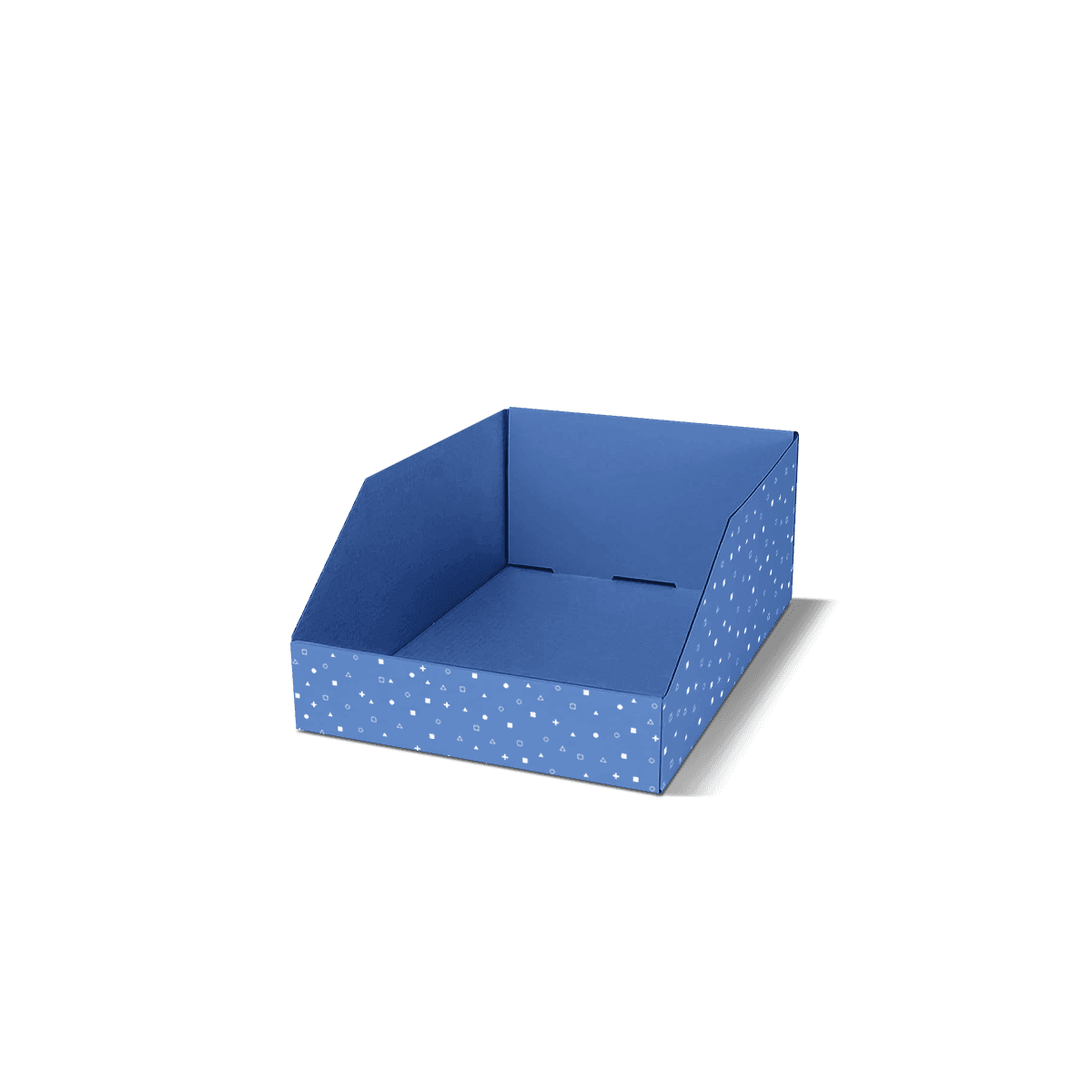
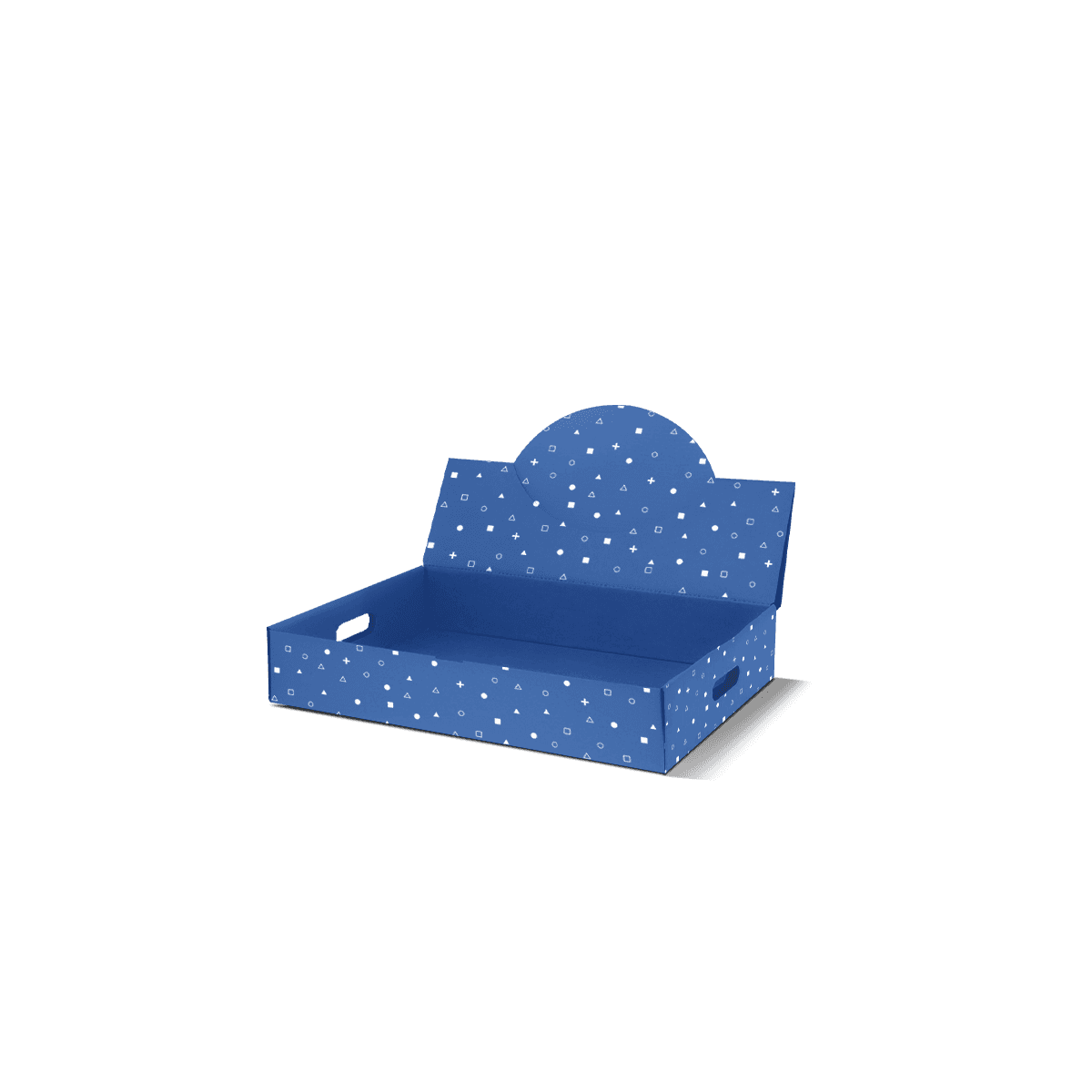
The most useful design view is not the closed shipping case. It is the opened display with products inside it. That view reveals whether customers can identify the item, reach the front units, distinguish variants and still see enough branding when stock begins to fall.

Front Lip Versus Product Visibility

A higher front lip gives the first row more restraint and creates useful print space. Raise it too far and it starts covering product names, flavour cues, shade labels or other selling information on the primary pack.

A lower edge exposes more of the product but may leave tall or narrow cartons less controlled. The right height comes from the product artwork as well as its dimensions. Before the dieline is approved, identify what needs to remain visible on the product and what information can move onto the display face.

The same principle applies to side walls. They should hold the outer rows without creating a boxed-in appearance that makes the display harder to shop.

Facings, Variants and Empty Gaps

Facing count should reflect how the product is meant to appear in store. A line with one SKU may only need evenly spaced rows. A mixed range may need lanes, dividers or a stepped arrangement so different flavours, shades or pack types remain identifiable.

Consider four skincare carton variants displayed in four front-facing lanes. If all 24 units sit in one oversized cavity, the layout may look acceptable when full. Once the fastest-selling variant loses several cartons, neighbouring packs can drift sideways into the empty space. The display becomes harder to read and the planned colour blocking disappears.

A better specification can reduce lateral clearance and introduce simple partitions between variants. The products stay in their assigned lanes while the front lip is lowered enough to expose the carton names. The result is not a more complicated display. It is a more controlled one as stock sells through.

Test the Half-Empty Display

The best approval test removes products rather than adding them. A full retail-ready display is naturally at its most supported and visually complete. The weaknesses appear after customers begin shopping it.

Open, Shop and Refill the Sample

With a physical sample, open the case using the intended tear-away or removable section. Check whether the conversion leaves a clean edge and whether important artwork remains intact.

Then remove the first row, take stock from only one side and leave a gap in one variant. This exposes issues that a full display can hide: leaning cartons, weak side walls, inaccessible rear units, an unstable divider or a front edge that no longer controls the remaining stock.

Refill the display as well. Retail-ready packaging should support day-to-day store use, not just the first placement. If staff have to remove the unit from the shelf or dismantle part of it to replenish the rear, the layout needs another look.

Launch Quantities Can Stay Controlled

Custom Packly's MOQ starts from 100 boxes, which can suit pilot retail programmes, new SKUs and limited promotional rollouts as well as larger repeat requirements. Once the physical behaviour and print are approved, the same specification can scale into subsequent runs.

For programmes tied to a store launch date, guaranteed 4–6 working day production and delivery gives the schedule a defined production window. The structure, artwork and retailer requirements should still be resolved before approval so speed does not replace specification control.

Board Has Two Jobs

Retail ready display boxes often use corrugated board because the same unit may need to handle grouped-product transport and remain structurally useful after opening. The grade should be selected around loaded weight, dimensions, stacking conditions and how much material disappears during conversion.

Transit Strength Before Opening

A case can have excellent shelf graphics and still fail if the base bows or the side walls crush before reaching the store. Heavier products, deeper cases and taller pallet stacks increase structural demand. Oversized internal space can also make the load less stable because products have room to shift.

Corrugated board adds stiffness through its fluted structure. Compact retail lines may suit a finer flute where a cleaner print face and lower profile are useful, while heavier loads may need a stronger specification. The correct decision comes from the complete loaded case rather than choosing a flute because it sounds stronger.

The differences between material systems are covered in paperboard vs corrugated vs rigid packaging, which is useful when the retail display must balance print quality with physical load.

Display Strength After Opening

Removing a top, hood or tear-away front changes where the remaining board gets its rigidity. A case that feels solid when closed can become flexible after a large panel disappears.

This is why samples should be evaluated in the opened state. Load the products, remove the transit portion and then take products out unevenly. Watch the front edge, side walls and base. A useful retail-ready display should not depend on being completely full to stay square.

Free samples are particularly useful when wall height, perforation placement or board stiffness needs physical checking before a larger retail run.

Artwork Must Survive the Conversion

Retail-ready artwork should be planned around permanent panels and removable panels separately. Branding placed on a section that disappears in store does nothing for the finished shelf presentation.

Permanent Panels Carry the Retail Message

The front edge and side walls usually provide the most dependable branded areas after opening. Those panels can carry the brand mark, variant cue, product family or short promotional message, but the available height is limited. The design hierarchy has to work within the real visible area.

Premium offset printing is useful when detailed graphics, strong colour consistency or multiple coordinated SKUs need a polished retail result. CMYK can handle full-colour artwork, while confirmed Pantone references can help control important brand colours across repeat runs.

Custom Packly provides free 3D mockups, which are particularly useful for retail-ready packaging because the artwork should be reviewed as both a closed case and an open display. A flat artwork file alone can hide problems such as a logo crossing a tear line or a key message disappearing with the removable hood.

Operational Information Still Needs Space

The closed case may also need product identification, variant references, barcodes or handling information for warehouse and store teams. These should not compete with the permanent shopper-facing artwork or sit across perforations where readability may be compromised.

Packaging dielines explained covers cut lines, crease lines, bleed and safe areas in more detail. Those fundamentals become especially important when one printed sheet contains both disposable transit areas and permanent display panels.

Finishes should be used selectively. Matte or gloss surfaces can influence appearance and handling, while spot UV or foil can emphasise particular retail-facing details. Decoration cannot compensate for poor product visibility or an awkward open structure, so finish decisions should come after the display geometry is settled.

Store Consistency Starts in the Specification

Retail ready display boxes become more valuable when the same presentation has to be repeated across many locations. Leaving too much interpretation to store staff can produce different facing counts, uneven opening and inconsistent product presentation from one shop to another.

Case Count Should Support the Shelf Plan

The outer quantity should relate to the intended shelf footprint and rate of replenishment. More units per case can improve distribution efficiency, but an over-deep display may leave rear stock difficult to reach or push the case beyond the available shelf depth.

If a retailer supplies shelf dimensions, planograms or pack-out requirements, those should inform the structure before artwork begins. Where no formal retail brief exists, start with the desired number of facings, units per facing and the maximum footprint available.

This is one reason an experienced packaging team should challenge a requested outer size when the internal retail logic does not work. Unlimited customisation is most useful when it solves a physical merchandising constraint rather than simply creating an unusual dimension.

Repeat Orders Need a Controlled Master

Once the display works, preserve the approved internal dimensions, board specification, perforation geometry, print references, divider layout and artwork version. A repeat order should recreate the same selling behaviour, not merely produce an outer that looks similar.

Warehousing and scheduled deliveries can support larger retail programmes where production is needed in one run but stock is released in stages. That becomes easier when each reorder is based on a stable approved specification rather than a new interpretation of the previous box.

When Presentation Outlives Replenishment

Retail-ready packaging becomes the stronger choice when the opened case remains visible for much of the selling cycle and has to keep organising the line after replenishment is complete.

Shelf Ready Display Boxes place more emphasis on rapid case-to-shelf handling and minimal decanting. Retail-ready displays place more weight on permanent branded panels, facing control, shopper access and how the unit looks as stock falls.

Both can use corrugated cases and tear-away sections. The decision comes down to what the opened case must keep doing after staff place it on shelf.

Turn the Shelf Layout Into the Store Standard

Once the facing count, variant lanes, shelf footprint, removable section and permanent branded panels are agreed, that open-state layout should become the reference for repeat production.

If a retailer planogram or shelf constraint already exists, attach it to the custom packaging quote. Custom Packly can translate that retail setup into the structural and print specification used across the rollout.

FAQs

Retail ready display boxes place more emphasis on the final in-store appearance after opening, while shelf ready display boxes are often specified more tightly around fast replenishment and ship-to-shelf efficiency. The two can overlap, but retail ready structures are usually the better choice when branded presentation and neat facings remain important after the case is opened.

Confirm the product dimensions, case quantity, shelf depth and opening method first. You should also check whether the display needs a low front cut for visibility, a higher front for stability or dividers for grouped variants. Board grade, perforation position and how much of the outer case stays visible all affect the finished shelf result.

Yes, they can be printed across the front, sides, top and internal-facing panels depending on the design. The most effective artwork plans for the opened state, not only the closed case. That means the branding should still read clearly after the removable section is torn away and the products are exposed on shelf.

They can, but the structure has to be matched to the pack weight and stacking load. Heavier items usually need stronger corrugated board, a more supportive base and careful attention to row count. If the case becomes difficult to lift, bows at the front or opens unevenly, the specification should be adjusted before production.

They can be, especially when made from paperboard or corrugated board without unnecessary mixed-material additions. The final recyclability depends on the full specification, including coatings and print treatments. If disposal performance matters, confirm the material and finish together so the pack supports both retail use and responsible recovery.

Process

How it works

Your Packaging Journey, From Idea to Production and Delivery

01

Tell Us Your Specs

Custom packaging boxes

Tell Us Your Specs

Provide size, quantity, printing, and finishes.

02

Get a Fast Quote

Custom packaging boxes

Get a Fast Quote

Instant transparent pricing, no hidden fees.

03

Design and Approval

Custom packaging boxes

Design and Approval

Artwork checks, revisions, and final sign-off.

04

Produce

Custom packaging boxes

Produce

Expert manufacturing to meet deadlines.

05

Ship to Your Door

Custom packaging boxes

Ship to Your Door

Hassle-free, flexible delivery options.

Get Your Quote for Custom Retail Ready Display Boxes

Share your product details, dimensions, quantity and artwork needs. We’ll help choose the right packaging style and send a clear quote.