Skip to content
Details

Custom Heavy Duty Shipping Boxes

Heavy Duty Shipping Boxes are built for loads that need more than a standard transit carton. They suit bulkier, denser or more fragile goods where crush resistance, stacking strength and dependable handling matter from warehouse shelf to final delivery.
Dieline preview

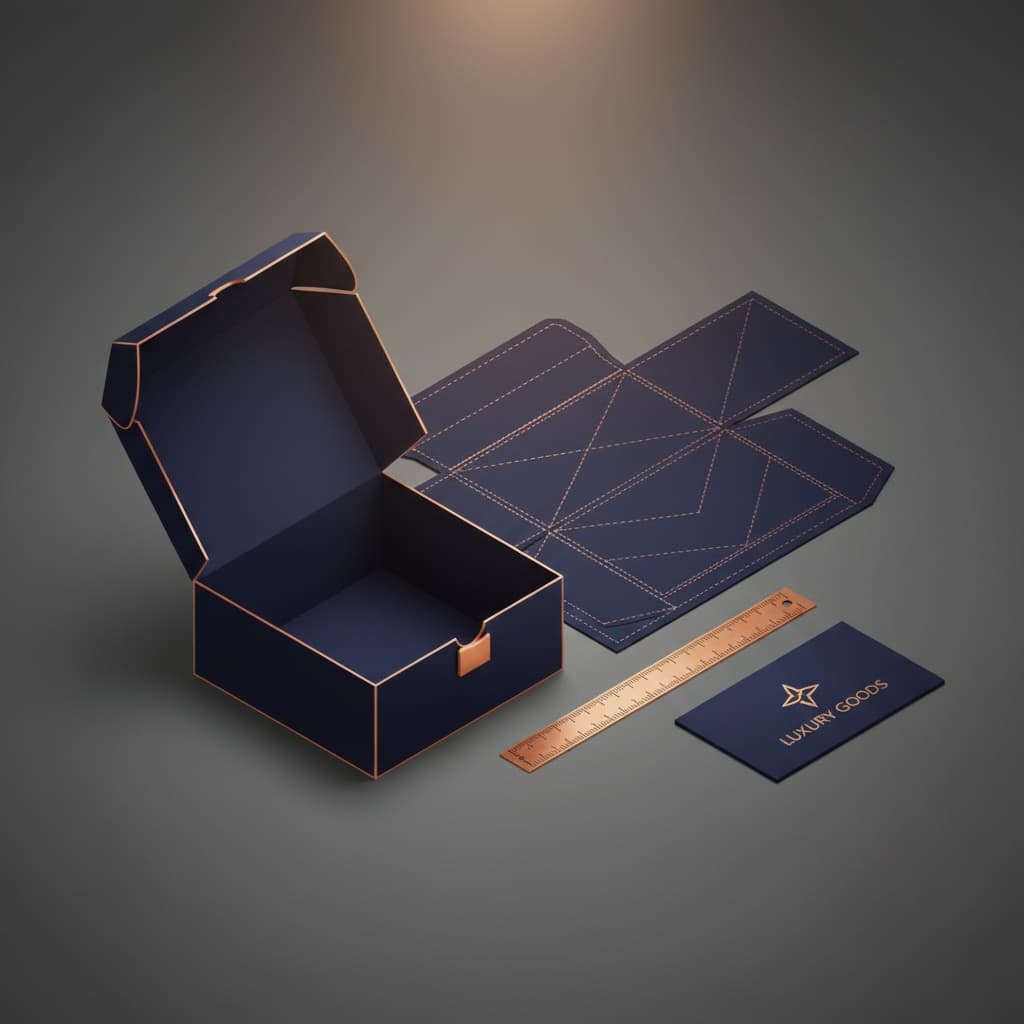
Generate a Centre Special Slotted Containers (CSSC 0204) Dieline

Use custom dimensions to view the dieline for this box style and plan artwork with more confidence.

Bleed
Crease
Trim

No preview available

Centre Special Slotted Containers (CSSC 0204)

Calibrated controls

Current size300 × 150 × 180 mm
Preview scale100% centered
StateValidated
Next Step

Turn Your Dieline Into Custom Packaging

Share your box size, quantity, material, print and artwork details on the quote page. We’ll review your dieline and email your custom packaging quote with the dieline file.

Continue to quote

The Weakest Stage Sets the Heavy-Duty Brief

Failure often appears after the carton has already been packed: sidewalls bow in a pallet stack, a base begins to deflect during handling or a concentrated component drives into one panel. Heavy-duty packaging starts with that weakest stage. The specification should be built around the point where an ordinary transit carton stops performing reliably.

Custom Heavy Duty Shipping Boxes are therefore defined by the job they must survive rather than one fixed board thickness or one carton style. The finished pack may need stronger corrugated board, better base support, reinforced closure, more deliberate internal restraint or a different case geometry. Often it needs several of those working together.

That distinction matters because adding material is only useful when material is the limiting factor. If a carton remains square but the product moves inside it, stronger walls will not solve the main problem. If the base bows under a dense load, adding loose filler will not solve the outer-case weakness either.

Load, Handling and Time Work Together

A 20 kg shipment carried individually presents a different problem from the same weight stored three cartons high for several days. A bulky product with moderate mass can also stress large panels differently from a compact dense component.

Review the complete movement of the packed case: lifting, stacking, pallet storage, courier handling, internal transfers and any period where the carton supports weight above it. The heaviest moment is not always the hardest moment.

Failure Evidence Is More Useful Than a Label

Bowed walls, crushed corners, base deflection, split seams and cartons losing shape in a stack all point towards an outer-pack problem. Those signs give a stronger basis for specifying heavy-duty performance than simply calling the contents fragile, expensive or industrial.

Where the outer case is still sound but the contents arrive damaged, fragile product packaging failures should be diagnosed from movement, impact and separation before the board is increased.


Case Geometry Changes Under Load

Heavy-duty performance depends on shape as well as board grade. Length, width and height determine panel span, stacking behaviour and how the load reaches the base. A compact case with evenly distributed contents can behave very differently from a long carton carrying the same total weight.

This is why the shipping box structures should be chosen around the load path and packing operation rather than appearance alone.

Long Panels Need More Support

As unsupported panel area increases, walls and top faces have more opportunity to bow. A long product can therefore require a more deliberate specification even if its total weight is not extreme.

Reducing unnecessary span can sometimes improve the pack more efficiently than increasing every material layer. Where the product shape cannot change, board strength, internal supports and case style have to compensate.

The Base Carries More Than Weight

Dense machinery parts, hardware, tools and grouped products may load the bottom panel unevenly. A strong side wall does little if a small contact area is forcing the base to flex.

Load-spreading pads can help distribute pressure. In other cases, a structure with greater flap coverage may be more appropriate. Full Overlap Boxes extend the major flaps across the width and can add useful material at the top and base when that is where support is needed.

Pallet Fit Affects Stability

Heavy cartons often become part of a palletised load. Overhang leaves edges unsupported, while poor alignment can transfer pressure unevenly through the stack.

Carton dimensions should therefore be reviewed against both the product and the planned pallet pattern where pallet movement is part of the operation. A small dimensional change can sometimes create a more stable unit load without changing the product itself.

Board Grade Is Only One Lever

Heavy-duty corrugated does not mean one compulsory material. Double wall is a common route, while more demanding jobs may require another reinforced specification. The correct choice depends on case dimensions, packed mass, stack conditions and the amount of support provided by the contents.

The useful distinction is simple: board grade is one component of heavy-duty performance, not the definition of it.

Double Wall May Be Enough

Double Wall Shipping Boxes use two fluted layers and three liners. That additional structure can improve rigidity and compression behaviour where a single wall case is reaching its limit.

For many demanding shipments, a correctly specified double wall case may provide all the support required. There is no benefit in escalating beyond it simply because “heavy duty” sounds safer.

Heavier Is Not Automatically Better

Additional board increases material, folded thickness and storage bulk. It can also change folding resistance and closure behaviour.

The specification should therefore stop when the finished case reliably meets the job. Over-engineering every SKU can create unnecessary cost and handling complexity without addressing any real failure.

Flute and Liner Choices Still Matter

Wall count alone does not describe the complete board. Flute profiles and liner grades affect stiffness, cushioning, folding character and surface quality.

If the requirement is still at the broader corrugated-material stage rather than a defined high-load problem, corrugated shipping boxes are the more appropriate starting point.

Heavy Products Turn Movement Into Impact

The more mass a product has, the more damaging uncontrolled movement can become. A strong outer case may resist compression while a dense component still shifts into a wall, tears through a divider or strikes another item during handling.

Heavy-duty packing therefore needs restraint as well as outer strength.

Contact Points Need Deliberate Support

A 26 kg engineering spares kit containing several metal components could arrive with an intact outer carton but still damage its internal partitions if the parts are allowed to migrate towards one side. Increasing the wall grade would leave the core problem largely unchanged.

A better arrangement would separate the components, support the heaviest pieces at stable contact points and spread their load across the base. A corrugated pad beneath the densest component and correctly sized partitions could then work with the stronger outer case rather than asking the walls to absorb every internal force.

The practical improvement is a more controlled load with less local pressure and less opportunity for components to become moving impact points.

Dividers Are Not Just for Fragile Goods

Inserts and dividers can separate dense products, maintain orientation and spread force as well as protect delicate items. They are useful when repeated shipments need the same internal arrangement rather than improvised filler on each packing shift.

Loose cushioning still has a place for suitable products, but high-mass items generally benefit from more predictable restraint when position matters.

Physical Packing Checks Belong Here

A free sample can be useful once the likely outer structure and internal support have been selected. Pack the actual product, close the case and check whether the load sits where intended, whether panels distort and whether staff can assemble the pack consistently.

That validation belongs beside the load-control decision. It is more useful than treating sampling as a final administrative stage after every structural choice has already been fixed.

Closure Can Become the Weakest Component

Stronger walls do not guarantee a stronger closed carton. Heavy contents put additional demand on the bottom seam, top closure and any area that carries force when the case is lifted or shifted.

Tape, adhesive, flap geometry and application method should therefore be considered part of the performance specification.

Base Security Matters First

If a filled carton is lifted before the base is properly secured, the load is transferred directly into the closure. Dense products make that weakness more obvious.

The closure method should suit the packed weight and case structure. A heavier board paired with an inadequate sealing method is an unbalanced specification.

CSSC Is a Structure, Not a Strength Rating

A centre special slotted case can provide a particular flap arrangement, but it is not automatically heavy duty. The same principle applies to regular slotted, full overlap and other corrugated case styles.

The physical style determines where panels and flaps sit. Board grade and the complete packed system determine whether the result performs at the required level.

Once the chosen style and dimensions are clear, the dieline generator can help translate those measurements into a workable flat layout for artwork planning.

Heavy Duty and Export Solve Different Briefs

Heavy-duty and export packaging can overlap, but the trigger is different. Heavy-duty starts with the performance demand of the packed case. Export starts with a longer or more complex movement chain that may add freight handling, pallet storage and repeated transfer stages.

A domestic industrial shipment can need heavy-duty packaging without being an export order. An international shipment can also need an export specification even when the individual product is not especially heavy.

Performance Requirement Leads Here

Use heavy-duty thinking when the primary concern is high load, compression, large panel span, awkward mass distribution, demanding handling or a standard case repeatedly losing shape.

The answer may involve double wall, another reinforced corrugated grade, stronger closure, altered geometry or internal load management.

Route Complexity Leads to Export

Export Boxes become more relevant when international or multi-stage freight conditions drive the specification. Pallet pattern, longer storage, repeated loading and the complete route then deserve greater attention.

The two requirements can coexist. The important point is to understand why the shipment needs more protection rather than treating “heavy duty” and “export” as interchangeable descriptions.

Packing Teams Have to Live With the Box

A heavy-duty design that performs well in theory can still create problems if it is awkward to erect, close, store or replenish. Packing efficiency matters more as volume increases because small handling difficulties are repeated across every case.

The stronger specification should fit the operation as well as the product.

Thicker Cases Occupy More Storage

Reinforced corrugated blanks are bulkier when stored flat. Moving several high-volume SKUs to heavier material can therefore increase the space occupied by empty packaging.

For repeat production, bulk custom boxes can be planned around controlled board, size and artwork specifications. Warehousing and scheduled deliveries can also separate an efficient production quantity from the amount of packaging that needs to sit beside the packing line.

Assembly Should Stay Repeatable

Creases, flap sequence and sealing should be straightforward enough for staff to reproduce the same result. If every case needs improvised reinforcement, extra tape or a different packing method depending on who is working, the specification is not finished.

Custom Packly can support unusual dimensions, internal fitments and reinforced transit requirements as one packaging system rather than leaving the outer case and internal components to be resolved separately. 24/7 packaging support is available where the load or structure needs clarification before production.

Transit Print Should Help Operations

Heavy-duty shipping boxes can still carry branding, but operational information often deserves priority. Product references, orientation marks, handling instructions, batch information and label areas may matter more than decorative coverage on a warehouse-first case.

The artwork should support the way the carton is stored and moved.

Clear Panels for Labels and Tape

Courier labels, pallet labels and sealing tape need predictable space. Important branding or instructions should not be placed directly where they will be covered during packing.

A free 3D mockup can help check panel hierarchy and artwork placement before print is approved. Premium offset printing is available where a more detailed branded outer case is commercially useful, but the print method should follow the chosen corrugated surface and visual requirement.

Repeat Marks Reduce Guesswork

For recurring industrial or wholesale shipments, clear SKU identification and orientation information can help staff distinguish similar cases quickly. The objective is not to cover every panel with text. It is to make the outer case useful throughout storage, packing and dispatch.

Stronger Packaging Has to Earn Its Cost

The commercial question is not whether a stronger carton costs more per unit. It is whether the heavier specification removes a real weakness in the current packing system.

If a standard carton is already performing reliably, replacing it with a more substantial case may simply add material and storage bulk. If the existing case bows, needs repeated reinforcement or forces staff to improvise around the load, then a correctly engineered heavy-duty pack can simplify the operation.

The common packaging cost mistakes are often system problems rather than unit-price problems: oversized boxes, unnecessary material and specifications that do not match the real job.

Once the required performance is clear, request a custom packaging quote around the finished packing system rather than asking for the thickest available board. Instant pricing can then be used against a defined requirement rather than an undefined request for the strongest possible case.

FAQs

They become the better option when the contents are heavy, fragile, awkward to handle or likely to be stacked for part of the journey. They are also useful when a standard transit carton starts bowing, crushing or losing shape under load. If the packed order is light and the route is straightforward, a lighter corrugated case may still be the more efficient choice.

In most cases, stronger corrugated constructions such as double wall are the starting point, but the right board depends on the packed weight, box size and transit conditions. A large carton carrying moderate weight can still need more support than a smaller dense pack. The best approach is to review the full packed load, not only the product itself, before finalising the board grade.

Double Wall Shipping Boxes are one of the main heavy duty routes, but the phrase heavy duty is broader. It describes the performance level the carton needs to reach, while double wall refers to a specific board construction. If the goal is simply extra strength, double wall may be the answer. If the job also needs a particular shape, reinforced closure or specialist internal fit, the final build may go beyond that single specification.

Yes. A heavy duty transit case can still be printed with branding, handling guidance and stock references. Many businesses keep the print practical and controlled so the box remains warehouse-friendly while still arriving in a more consistent branded form. The key is deciding whether the case is mainly a protection-first outer carton or also part of the arrival experience.

Confirm internal dimensions first, then check the full packed weight, the sealing method and how the case will be stored, stacked and moved. It is also important to review whether the contents need void fill, pads, dividers or a fit-to-product insert. A sample pack test is worthwhile because even a very strong carton can underperform if the product shifts or the box is oversized.

Process

How it works

Your Packaging Journey, From Idea to Production and Delivery

01

Tell Us Your Specs

Custom packaging boxes

Tell Us Your Specs

Provide size, quantity, printing, and finishes.

02

Get a Fast Quote

Custom packaging boxes

Get a Fast Quote

Instant transparent pricing, no hidden fees.

03

Design and Approval

Custom packaging boxes

Design and Approval

Artwork checks, revisions, and final sign-off.

04

Produce

Custom packaging boxes

Produce

Expert manufacturing to meet deadlines.

05

Ship to Your Door

Custom packaging boxes

Ship to Your Door

Hassle-free, flexible delivery options.

Get Your Quote for Custom Heavy Duty Shipping Boxes

Share your product details, dimensions, quantity and artwork needs. We’ll help choose the right packaging style and send a clear quote.