Skip to content
Details

Custom Shoulder Neck Rigid Boxes

Shoulder neck rigid boxes create a more engineered premium reveal, with the lid settling over an inner neck for a cleaner fit, sharper alignment and a more elevated unboxing experience than a standard two-piece rigid box.

The Neck Controls the Reveal

The raised inner neck is the reason this box exists. If it is too low, the stepped effect almost disappears. If it is too high, the lid has farther to travel, the proportions become heavier and the product can sit too deep inside the finished presentation.

Custom Shoulder Neck Rigid Boxes work best when the neck height is chosen from the reveal you want rather than copied from another box. The inner neck projects above the outer base and gives the lid a defined surface to locate around. When the lid lifts away, that raised layer appears before the product and creates the characteristic stepped opening.

That makes the structure particularly useful for compact high-value products where a small change in proportion is easy to notice. Perfume, jewellery, watches, cosmetics and presentation pieces can all benefit, but only when the neck is doing real visual or functional work.

Choose Visible or Concealed

A visible neck leaves a deliberate band between the lid and base when the box is closed. That band can introduce a second colour, texture or material and make the three-part structure obvious before opening.

A concealed neck keeps the closed exterior quieter. The inner neck still helps guide the lid, but the outside reads more like a clean two-piece rigid box until the lid is removed.

Neither treatment is inherently more premium. Choose visible when the stepped architecture contributes to the identity. Choose concealed when the reveal should happen only after the lid begins to lift.

Set the Reveal Height

Neck height should relate to the product, base depth and lid depth. A narrow raised band can add definition without dominating a small jewellery box. A taller neck creates a stronger architectural effect but needs enough proportion around it to avoid making the box feel top-heavy.

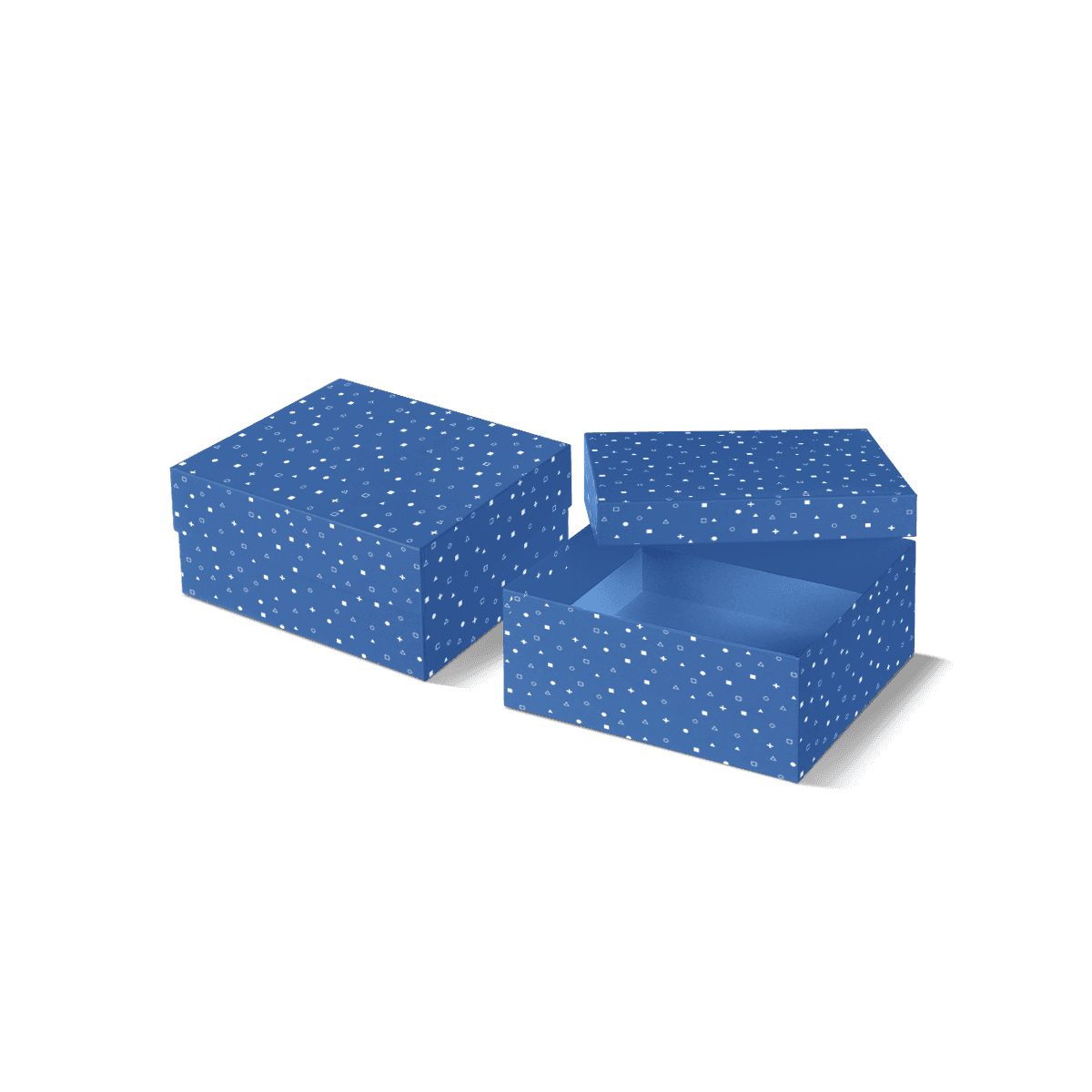
Free 3D mockups are useful at this stage because they let you review the visible band and overall proportion before print is committed.
Make the Lid Land Properly

The inner neck also acts as a locating surface for the lid. That extra layer is what separates this style mechanically from a standard two-piece box.

The lid needs enough clearance to travel over the wrapped neck without scraping, yet not so much space that it rocks from side to side. Wrap thickness, corner accuracy and the finished outside dimensions of the neck all affect that relationship.

Allow for the Wrap

A dieline shows the structural pieces, but the finished fit includes paper, adhesive and wrapped corners. Ignoring those layers can turn a correct drawing into a lid that feels tight after production.

This is where the packaging customisation options need to be considered as part of engineering rather than added after it. A thicker textured wrap or laminated printed sheet can change the final surface the lid has to clear.

Custom Packly can coordinate sizing, dielines, wrapping, inserts and artwork as one specification. That one-stop approach is useful on shoulder neck boxes because the fit depends on several finished layers working together.

Avoid a Floating Lid

If the lid stops before reaching its intended seating point, the closed box can show an uneven gap. If it drops too freely, the neck loses the controlled feel it is supposed to create.

A physical sample is worth using when the neck is unusually tall, the wrap is thick or the lid fit is intentionally close. Free sample options can help establish materials and presentation direction before the final production decision.

Decide What the Step Shows

The shoulder creates a natural visual break between lid and base. That gives the box a branding surface many other rigid styles do not have.

A contrasting neck can frame the product before the lid is fully removed. A tone-on-tone neck creates depth more quietly. Matching all three surfaces can make the stepped structure feel architectural without introducing another colour.

Use Colour at the Joint

The narrow neck band is often more effective with disciplined colour than with dense artwork. A dark base with a lighter neck, or a restrained metallic detail against an uncoated wrap, can make the reveal clear without covering every surface.

Premium offset printing is useful when the lid and base need controlled brand colour or fine artwork. The practical differences in digital and offset printing still matter, so the method should follow the artwork and quantity rather than the word “luxury”.

Protect the Seating Edge

Foil, embossing, debossing and soft-touch effects can all suit the outer panels, but the neck and lid contact area needs restraint. Repeated rubbing can mark delicate surface treatments where the lid travels.

The principles in packaging design that actually works apply strongly here: the physical movement should decide where decoration belongs, not the other way around.

Separate Neck From Insert

The raised neck is not automatically the product holder. Its first job is to shape the lid seating and stepped reveal.

The product still needs its own fit strategy. Treating the neck as if it were an insert can leave small items loose inside a large cavity or force bottles against structural surfaces that were never intended to restrain them.

Lift the Product Deliberately

An insert can raise the product so it appears sooner after the lid clears the neck. That works particularly well with compact jewellery, fragrance or cosmetic items that would otherwise sit too low in a deep rigid base.

Use inserts and dividers to control the actual item, then set the neck height around the intended presentation. The two dimensions should support each other without becoming the same component.

Support Dense Products Below

Glass fragrance bottles and heavy jars need support at stable contact points. A decorative neck around the perimeter does not stop a dense product moving inside its cavity.

For Custom Perfume Boxes, work from the filled bottle, cap clearance and insert support before deciding how much shoulder should remain visible. The product weight should be carried by the base and insert, not by the reveal feature.

Small jewellery and accessories have the opposite problem: oversized cavities can make a valuable item look lost. Here the neck, insert and outer footprint need to stay proportionate to the piece.

Use the Step for Focus

Shoulder neck boxes are strongest when the stepped architecture frames one focal product or a tightly organised set. The structure naturally draws the eye inward as the lid lifts.

That makes it useful for a watch centred on a cushion, a fragrance bottle in a fitted cavity, a medal, a piece of jewellery or a small beauty set with a clear hero item.

The same treatment becomes less convincing when the interior is crowded with unrelated components. If every product needs its own deep compartment, the stepped border can stop contributing anything meaningful.

Give Small Products Presence

A compact product does not always need a compact-looking presentation. The neck can create a deliberate boundary around the item without simply increasing empty space around it.

The Ring Boxes use case makes this easy to understand. A small object can still feel substantial when the insert, visible border and lid proportions are controlled around the product rather than enlarged at random.

Avoid Empty Theatre

Do not add a raised neck solely because it looks expensive in a photograph. The added layer uses more material, needs closer fit control and adds another visible junction to manufacture consistently.

If a clean removable lid already gives the product enough presence, a simpler structure may be the stronger commercial choice.

Separate the Three Two-Piece Styles

The closest alternatives solve different physical problems, and the distinctions should stay clear.

Rigid Lid and Base Boxes are the simpler choice when direct top access and a removable lid matter but a raised inner neck adds little. Their fit comes from the lid and outer base rather than an additional stepped collar.

Telescopic Rigid Boxes make more sense when the lid needs deeper side coverage. The defining issue there is overlap down the outside of the base, not an inner neck projecting above it.

Within Rigid Boxes, shoulder neck construction earns its place when lid location and a layered reveal are both useful. If neither matters, the extra layer is difficult to justify.

The same discipline applies before choosing rigid packaging at all. Paperboard, corrugated and rigid packaging solve different commercial jobs, and a lighter structure may be better when storage, unit efficiency or courier performance matters more than presentation.

Protect the Raised Geometry

A shoulder neck box is presentation packaging, not a substitute for a transit carton. Its wrapped edges, lid seating surfaces and visible neck can all be marked by abrasion even when the rigid core remains structurally sound.

For courier delivery, protect the finished box inside an appropriate outer shipping carton or mailer. The outer layer should take impacts and rubbing while the rigid box handles presentation and internal organisation.

Pay particular attention to the neck if it uses a contrasting or delicate wrap. It may be one of the first surfaces visible during opening, so a scuff there can undermine the effect even when the product arrives undamaged.

This is another reason to separate product protection from reveal design. The neck should not be made oversized or heavier simply to compensate for an unsuitable delivery system.

Repeat the Same Step

Shoulder neck packaging exposes small inconsistencies more clearly than many simpler boxes. If one neck sits slightly higher, one lid stops earlier or one visible band is wider, a row of boxes can look uneven.

For repeat programmes, keep the approved dimensions, neck height, wrap specification, insert and artwork tied to the same production specification. That matters for fragrance collections, jewellery lines and gift sets where several SKUs may sit together.

Where several fragrances, jewellery pieces or gift variants share one footprint, keep the approved neck height and lid fit constant unless the product geometry genuinely changes. Artwork or insert cavities can vary without changing the visible step.

For recurring programmes, scheduled deliveries can release assembled boxes in batches when holding the entire quantity on site would use unnecessary space.

Approve the Step Before Artwork

Before final artwork placement, decide how the neck should appear in both the closed and open states. A side-view reference showing the visible band, lid seating point and product height is more useful than a generic request for a luxury rigid box.

Add the product dimensions, packed weight and insert position so the neck can be checked against the actual cavity. If the step is only decorative and adds no lid guidance or framing value, simplify the structure before pricing.

Use the existing custom packaging quote link once the visible step and internal arrangement are resolved. This keeps the quotation tied to the feature that makes shoulder neck construction different.

Use the custom packaging quote when the product arrangement and reveal direction are ready. If the correct neck height is still uncertain, 24/7 packaging support can help resolve the proportion before artwork and production are locked.

FAQs

The inner neck changes both fit and presentation. It guides the lid into position, reduces sideways movement and creates a deliberate reveal when the box opens. That makes the pack feel more precise than a simple lift-off rigid box. It is especially useful when the product is premium, suited to gifting or arranged in an insert that needs to stay visually tidy.

Choose shoulder neck construction when you want a more engineered fit, a cleaner reveal and stronger premium cues. Choose Rigid Lid and Base Boxes when you want a simpler two-piece solution with fewer structural details and a lower cost profile. Both are strong rigid options, but shoulder neck boxes usually suit higher-end presentation better.

This style works best for products that benefit from careful presentation and stable positioning. Common examples include fragrance, jewellery, watches, confectionery, premium apparel accessories, invitation kits and corporate gift packs. It is less about bulk packing and more about display value, unboxing quality and keeping the product centred and well-supported inside the box.

Usually, no. Shoulder neck rigid boxes are excellent presentation boxes, but they are not normally the outer shipping pack for parcel networks. Most buyers place them inside a corrugated mailer or shipping carton for transit protection. That approach protects corners, preserves the finish and ensures the premium box still looks sharp when it reaches the customer.

Confirm the exact product dimensions, total packed weight, insert design, lid depth, neck height and the amount of reveal you want visible when the lid is closed. You should also confirm whether the box is for retail display, gifting or postal fulfilment, because that affects board choice, finish durability and whether an outer shipper is needed.

Related Industry Packaging

Process

How it works

Your Packaging Journey, From Idea to Production and Delivery

01

Tell Us Your Specs

Custom packaging boxes

Tell Us Your Specs

Provide size, quantity, printing, and finishes.

02

Get a Fast Quote

Custom packaging boxes

Get a Fast Quote

Instant transparent pricing, no hidden fees.

03

Design and Approval

Custom packaging boxes

Design and Approval

Artwork checks, revisions, and final sign-off.

04

Produce

Custom packaging boxes

Produce

Expert manufacturing to meet deadlines.

05

Ship to Your Door

Custom packaging boxes

Ship to Your Door

Hassle-free, flexible delivery options.

Get Your Quote for Custom Shoulder Neck Rigid Boxes

Share your product details, dimensions, quantity and artwork needs. We’ll help choose the right packaging style and send a clear quote.




