Decide the Lid Overlap
The defining decision in a telescopic rigid box is how far the lid should travel down the outside of the base. More overlap changes the opening resistance, the amount of sidewall covered and how much of the base remains visible when the box is closed.
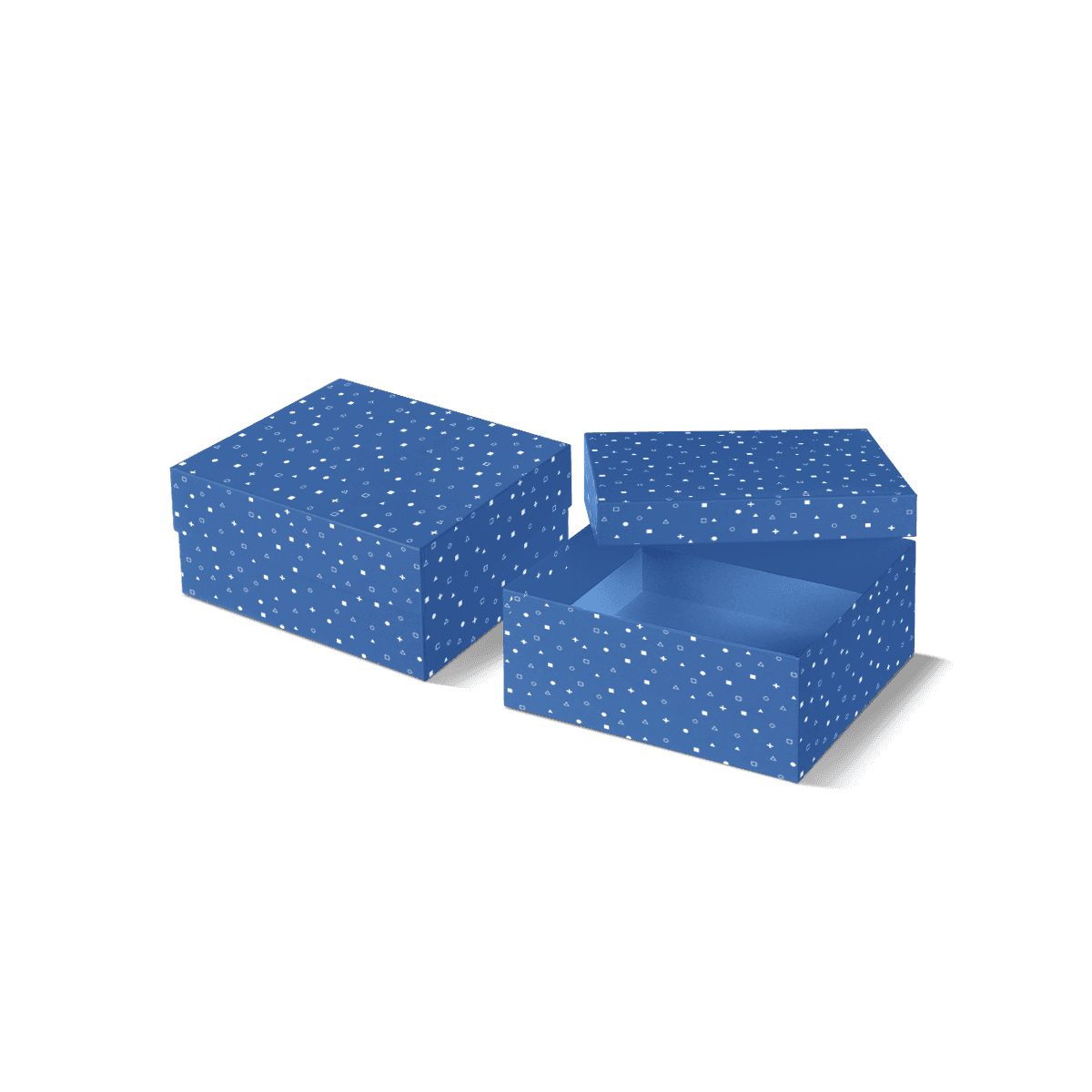
Custom Telescopic Rigid Boxes are fixed-dimension rigid presentation boxes with a separate lift-off lid and base. They should not be confused with adjustable corrugated telescope boxes used for shipping and storage. In this rigid style, the product size and finished box dimensions are set first, then the lid depth is chosen around the opening and presentation required.
That distinction gives this structure a clear job. A standard Rigid Lid and Base Box uses a shorter lift-off lid. A telescopic version extends farther down the outer walls, sometimes close to the full depth of the base.
Choose Full or Partial
A full telescope lid covers most or all of the base sidewalls. It creates a more enclosed profile and keeps the lid-to-base junction low on the box.
A partial telescope lid stops higher and leaves a visible band of the base. That band can become part of the visual design, while the shorter travel can make the lid quicker to remove.
Neither is automatically better. Full coverage suits products where the box should read as one enclosed object. Partial coverage works when a visible base colour, faster opening or lighter proportion matters more.
Do Not Borrow Shipping Logic
Searches for telescopic boxes also include corrugated cartons whose lids slide to accommodate different product heights. That is a different packaging problem.
A rigid presentation box should not rely on an adjustable-height lid to compensate for uncertain product dimensions. Size the cavity around the finished product and insert, then decide the lid overlap deliberately. The packaging should feel controlled because it was specified correctly, not because the lid can stop anywhere.