Skip to content
Details

Custom Cup Sleeves

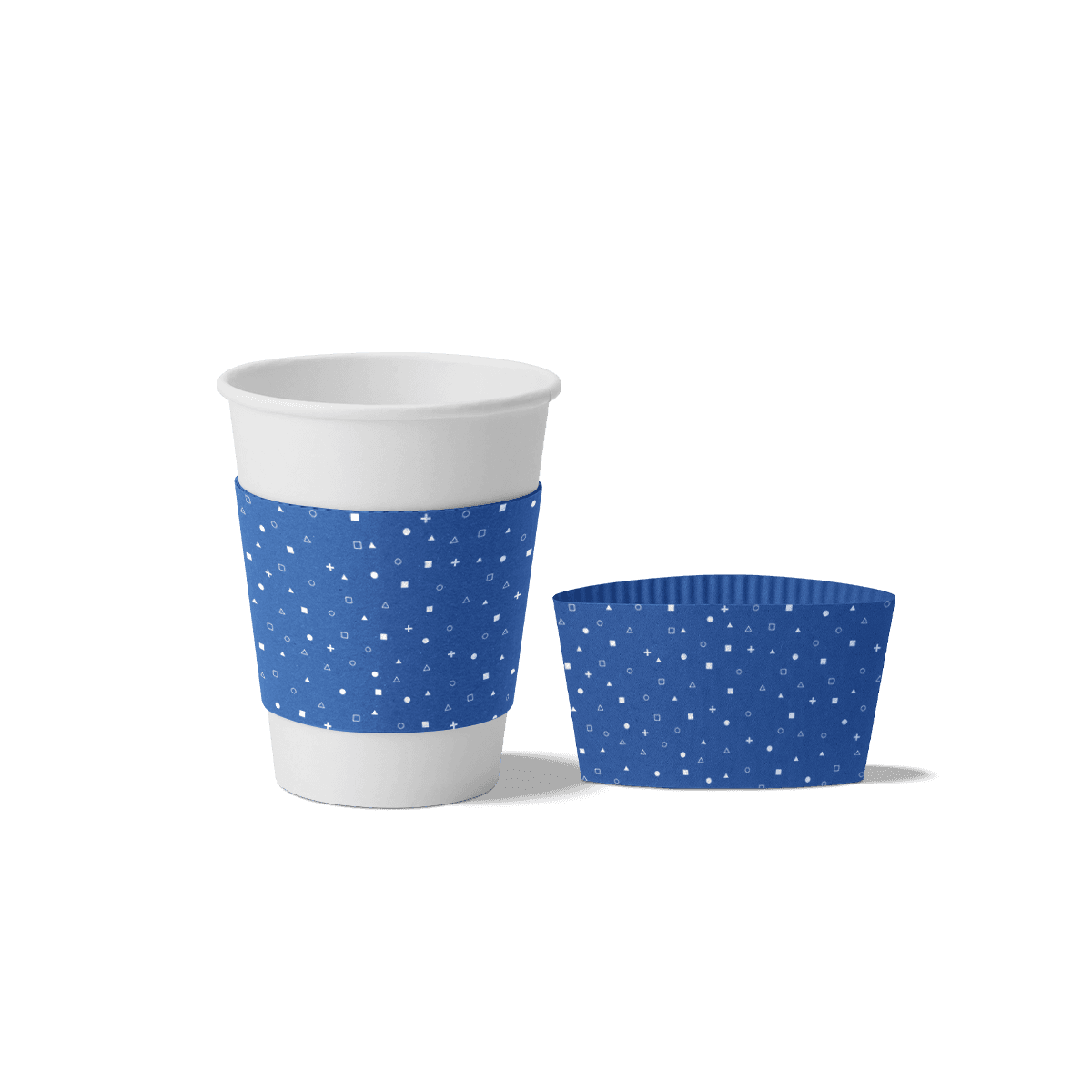
Cup sleeves add heat protection, grip and branding without changing the cup itself. They suit cafés, takeaway counters and event service where drinks need to feel safer to hold, quicker to serve and more polished in hand.

Solve Heat at the Hand

A hot drink can be perfectly made and still feel awkward if the cup wall becomes uncomfortable to hold. Custom Cup Sleeves add a separate grip layer around the part of the cup customers actually touch, without changing the cup itself.

That makes the sleeve a service component first and a branding surface second. Its fit has to suit the cup profile, its material has to stay comfortable in hand and its closure has to survive repeated handling from counter to customer.

The strongest use case is usually a single-wall hot-drink cup that benefits from extra separation and grip. If the cup already uses a double-wall or ripple structure, a separate sleeve may add little beyond branding. For the cup itself, Paper Cups covers wall construction, rim fit, lid compatibility and drink capacity.
Fit the Cup Profile

Cup capacity alone is not enough to size a sleeve. Two cups labelled 12 oz can have different top diameters, base diameters and tapers, which changes where the sleeve sits and how tightly it grips.

Measure the Contact Zone

The useful dimensions are the cup diameter where the top of the sleeve will sit and the diameter where the bottom of the sleeve will sit. Sleeve height then determines how much of the cup is covered.

A physical cup sample or manufacturer drawing is better than relying on nominal ounce size. The sleeve needs to match the real geometry of the cup being served.

A sleeve that is too loose can drop lower than intended, rotate or slip when the customer lifts the drink. One that is too tight can distort, spring open or slow staff during application.

Taper Controls the Dieline

Cup sleeves are not simple rectangles wrapped around a cylinder. Most takeaway cups taper from a broader rim area to a narrower base, so the sleeve blank needs an arc or tapered shape that follows that profile.

The packaging dieline principles are still useful for understanding cut lines, bleed and safe areas, but a cup sleeve should be drawn from the actual cup geometry rather than adapted from a straight box sleeve.

Put Grip Where Hands Land

The sleeve should sit where customers naturally hold the cup, not wherever the artwork looks most balanced.

For many takeaway cups, that means the middle-to-lower body rather than directly beneath the lid. The position should leave enough cup exposed at the top for drinking and lid handling while placing the sleeve over the main contact area.

Too High Can Interfere

A sleeve placed too close to the rim can crowd the lid area or make it harder to check whether the lid is seated correctly.

Too Low Can Miss the Job

A sleeve placed near the base may look neat but provide little benefit if customers naturally grip higher up.

The best position should be checked with a filled cup in hand. This is a physical service decision, not only an artwork decision.

Choose the Sleeve Material

Cup-sleeve material affects hand feel, stiffness, print quality and the amount of separation between the hand and hot cup wall.

Solid Paperboard Keeps It Slim

Solid paperboard can create a clean printed band with good colour reproduction and compact storage. It is suitable when the main needs are grip, branding and modest separation from the cup surface.

Kraft stock changes the visual character and print response. If brown fibre, ink contrast and natural stock appearance are part of the brief, Kraft Sleeves explains those material-specific trade-offs.

Fluted Stock Adds Air Space

A fluted or corrugated sleeve can create more separation between the hand and cup because the material contains an air space within its structure. It also feels thicker and may use a different print approach from smooth paperboard.

Do not choose the thickest sleeve automatically. The drink temperature, cup wall, customer hold time and service style should decide whether the added bulk is justified.

Free sample examples can help compare thickness, surface feel and print before a final material is chosen.

The Cup Still Carries Heat

A cup sleeve can improve hand comfort, but it is not a substitute for choosing the correct cup wall for the drink.

If the beverage is very hot or customers are expected to hold it for a long time, the cup itself may need a more insulating wall structure. Adding a sleeve to an unsuitable cup does not turn it into a high-performance thermal system.

The current takeaway food packaging options place cup sleeves alongside paper cups because the two components solve different parts of the same service problem.

That distinction should remain clear: the cup contains the drink and manages the primary hot-liquid requirements. The sleeve adds grip, hand comfort and another printed surface.

Pick the Closure Method

The way the sleeve closes affects cost, assembly speed, appearance and storage.

Interlocking Sleeves Store Flat

Interlocking sleeves use cut slots or tabs that connect the two ends without a glued seam. They can be supplied flat and assembled during service or before use.

The benefit is compact storage and no permanent adhesive join. The trade-off is an extra assembly action and a visible locking area that has to sit away from the strongest artwork.

Glued or Taped Sleeves Arrive Formed

A glued or taped overlap creates a continuous loop that can be opened and slid onto the cup quickly. This can reduce service steps during a busy period.

The join still needs to sit in a low-priority position, usually away from the main logo or message.

The right choice depends on how the café stores sleeves, how quickly drinks move across the counter and whether staff will assemble them during service.

One Size May Not Fit All

Using one sleeve across several cup sizes can simplify stock, but only if the cup profiles are genuinely close enough.

A sleeve may fit an 8 oz and 12 oz cup from one manufacturer while sitting poorly on another supplier's cups. Ounce capacity does not guarantee the same diameter or taper.

For multi-size drink menus, test each cup physically. If one sleeve has to sit noticeably higher or lower to stay secure, separate sizes may produce a better service result.

This is where the existing cup programme matters more than the sleeve artwork. The food and takeaway packaging system can help keep cups, bags and other service items coordinated around real menu use instead of treating each printed component in isolation.

Keep Artwork Above the Fingers

A cup sleeve is highly visible before the drink is picked up and partly covered once the customer grips it. Artwork should account for both moments.

Use the Main Face Quickly

A logo, short campaign line or simple product cue usually reads better than dense copy. The printable area is small and curved, so fine text loses impact quickly.

If the sleeve carries a QR code, give it enough clear space and place it where fingers are less likely to cover it while someone tries to scan.

Respect the Join

Do not place a key logo, QR code or critical text across an interlock, tape seam or glued overlap.

A free 3D mockup can help check logo position and visual balance around the cup before production. For complex multi-colour artwork, premium offset printing can provide strong detail and consistent brand colour when the run and design suit it.

The digital versus offset printing decision becomes useful when seasonal sleeve artwork or multiple café locations split one total order into several designs.

Design for Service Speed

Cup sleeves live in one of the fastest packaging environments. Staff may be making drinks, fitting lids, calling orders and handling payment within the same short sequence.

The sleeve should not add a fiddly step.

Test the Pickup Motion

Staff should be able to take a sleeve, open it if needed and place it on the cup without searching for the correct orientation or forcing it over the taper.

If artwork requires a specific front position, make that position easy to identify during service.

Plan Counter Storage

Flat interlocking sleeves use less space before assembly. Pre-formed sleeves take more room but remove an assembly step.

The better choice depends on counter space and drink volume. A low-volume café may accept an extra folding step that would become irritating during a high-throughput morning rush.

Cup dimensions, sleeve structure, print orientation and supplied state should be approved together because a change in one can slow service or shift the customer-facing artwork.

Use Sleeves for Campaign Flexibility

One practical advantage of a separate sleeve is that the café can change the visible message without changing the cup artwork.

That can suit seasonal drinks, events, collaborations, promotions or short-term campaigns where the underlying cup remains consistent.

The sleeve should still earn its place physically. Adding one only for extra advertising can create unnecessary material if the cup is already comfortable to hold and the branding could sit on the cup itself.

For campaigns tied to a fixed launch date, Custom Packly provides guaranteed 4–6 working day production and delivery once the cup profile and artwork are settled.

MOQ starts from 100, which can make smaller promotional runs more practical. The custom packaging cost factors are useful when deciding whether a separate sleeve, fully printed cup or combination gives better value for the intended run.

Coordinate the Counter Set

A cup sleeve is rarely the only branded item leaving a café counter. Cups, lids, carriers, napkins and takeaway bags all appear together.

They do not need identical graphics. They do need enough shared colour, typography or logo treatment to feel intentional.

For multi-item orders, Takeaway Paper Bags should be sized around the complete order rather than the cup sleeve. The sleeve's job remains local to the drink: grip, comfort and branding at the hand.

The packaging customisation options can support colour, stock and finish decisions when the sleeve needs to match other printed food-service items.

Test With the Real Drink

A sleeve should be approved on the actual cup, filled to a realistic serving temperature and held the way a customer would hold it.

Check whether it slides after a few minutes, whether condensation or moisture affects the material, whether the join presses into the hand and whether the sleeve stays clear of the lid.

A screen proof cannot answer those questions.

For straightforward repeat work, a 3D mockup can confirm print placement. When thermal comfort, unusual material or multi-size compatibility is important, a physical test gives more useful evidence.

Lock the Cup Reference

Cup sleeves remain repeatable only while the cup profile remains repeatable. A supplier change can alter top diameter, base diameter or taper even when the replacement cup carries the same stated capacity.

Keep the approved cup reference with the sleeve specification. If the café changes cup supplier, test the sleeve on the new cup before ordering the next run. If no technical drawing exists, include the physical cup or manufacturer dimensions with the cup sleeve quote rather than pricing from ounce capacity alone.

For chains using several locations, use the same approved cup-and-sleeve pairing wherever possible so one branch does not receive sleeves sized around another supplier's cup.

FAQs

Coffee cup sleeves are a better choice when you want added heat comfort and branding flexibility without changing your main cup stock. They work well for operations that serve several hot drinks from the same cup range. Double-wall cups are often better when insulation needs to be built into the cup itself or when a faster one-piece serving setup matters more.

The right board should feel comfortable in the hand, hold its shape and suit hot drink service. Food-safe paperboard with reliable stiffness is the usual starting point. If the sleeve feels too light, it can slip or collapse during handling. If it is too heavy, application can feel less efficient, so matching the board to cup size and service pace matters.

No. The sleeve should be matched to the cup capacity and wall profile for a secure fit. A wrap designed for one size may sit too loose or too tight on another, especially where cup taper changes. Confirm all intended cup sizes before ordering and decide whether you need one sleeve size per cup or a more limited range.

Confirm the cup sizes, top and base diameters, drink temperature, expected service speed and whether staff will apply sleeves one by one at the counter. You should also check if the design needs space for campaign artwork, QR codes or legal marks. Those details influence fit, board choice and print layout from the start.

Yes, and that is one of their strongest advantages. Sleeves are often used for short-run campaigns, festive drinks, loyalty pushes and location-specific branding because the artwork can change without replacing the cup itself. Keep the design clear and high contrast so the message stays readable in hand, on the move and at quick glance.

Process

How it works

Your Packaging Journey, From Idea to Production and Delivery

01

Tell Us Your Specs

Custom packaging boxes

Tell Us Your Specs

Provide size, quantity, printing, and finishes.

02

Get a Fast Quote

Custom packaging boxes

Get a Fast Quote

Instant transparent pricing, no hidden fees.

03

Design and Approval

Custom packaging boxes

Design and Approval

Artwork checks, revisions, and final sign-off.

04

Produce

Custom packaging boxes

Produce

Expert manufacturing to meet deadlines.

05

Ship to Your Door

Custom packaging boxes

Ship to Your Door

Hassle-free, flexible delivery options.

Get Your Quote for Custom Cup Sleeves

Share your product details, dimensions, quantity and artwork needs. We’ll help choose the right packaging style and send a clear quote.