Skip to content
Details

Custom Cell Dividers

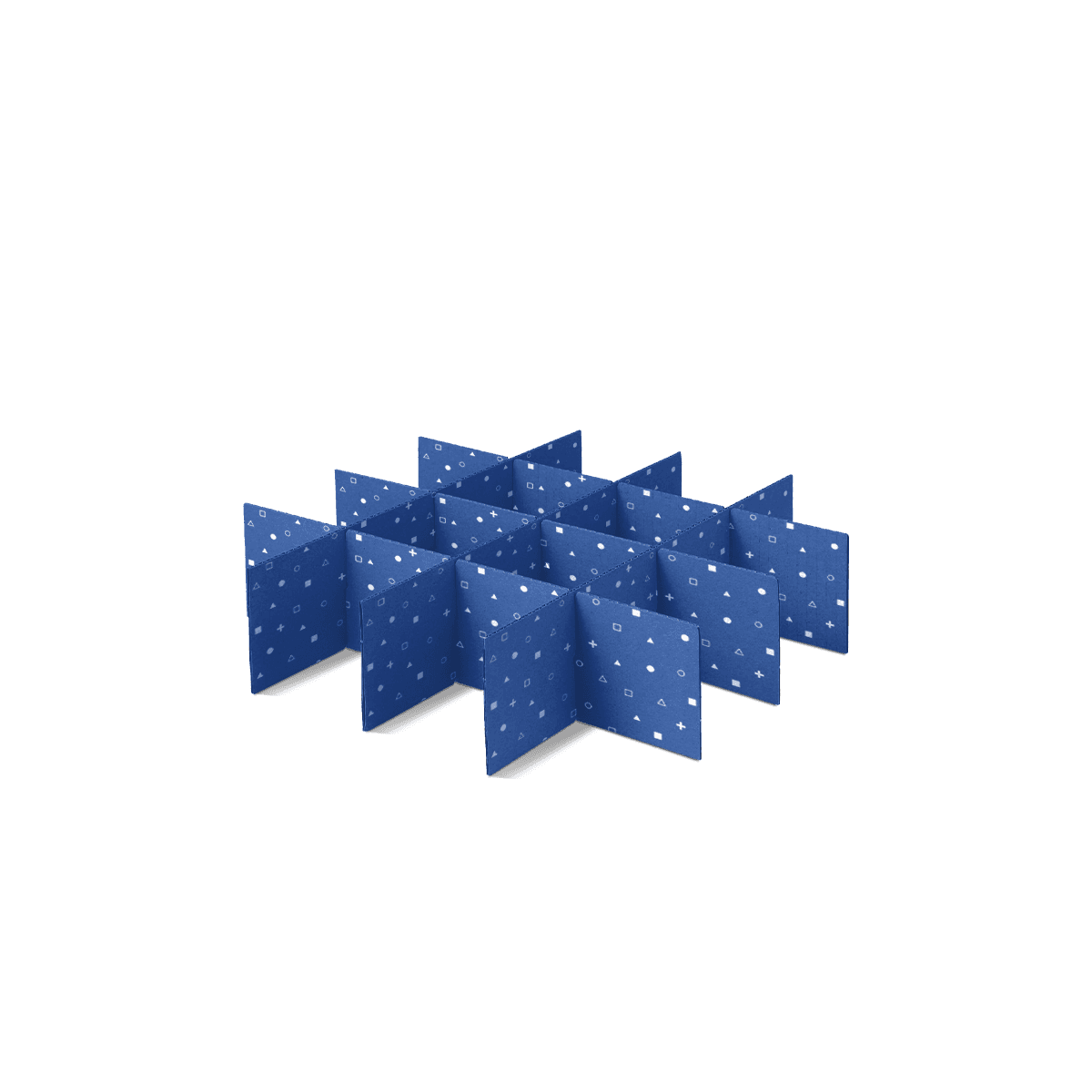
Cell dividers split one carton into repeated sections so each product sits in its own cell. They suit packs with uniform items that need tidy loading, steadier separation and a more controlled internal layout than loose fill or broad inserts provide.

A Repeated Grid Has One Job

A cell divider only works when every repeated compartment behaves predictably. If one cell is tighter, shallower or harder to load than the next, the grid may look organised while creating inconsistent packing and product contact.

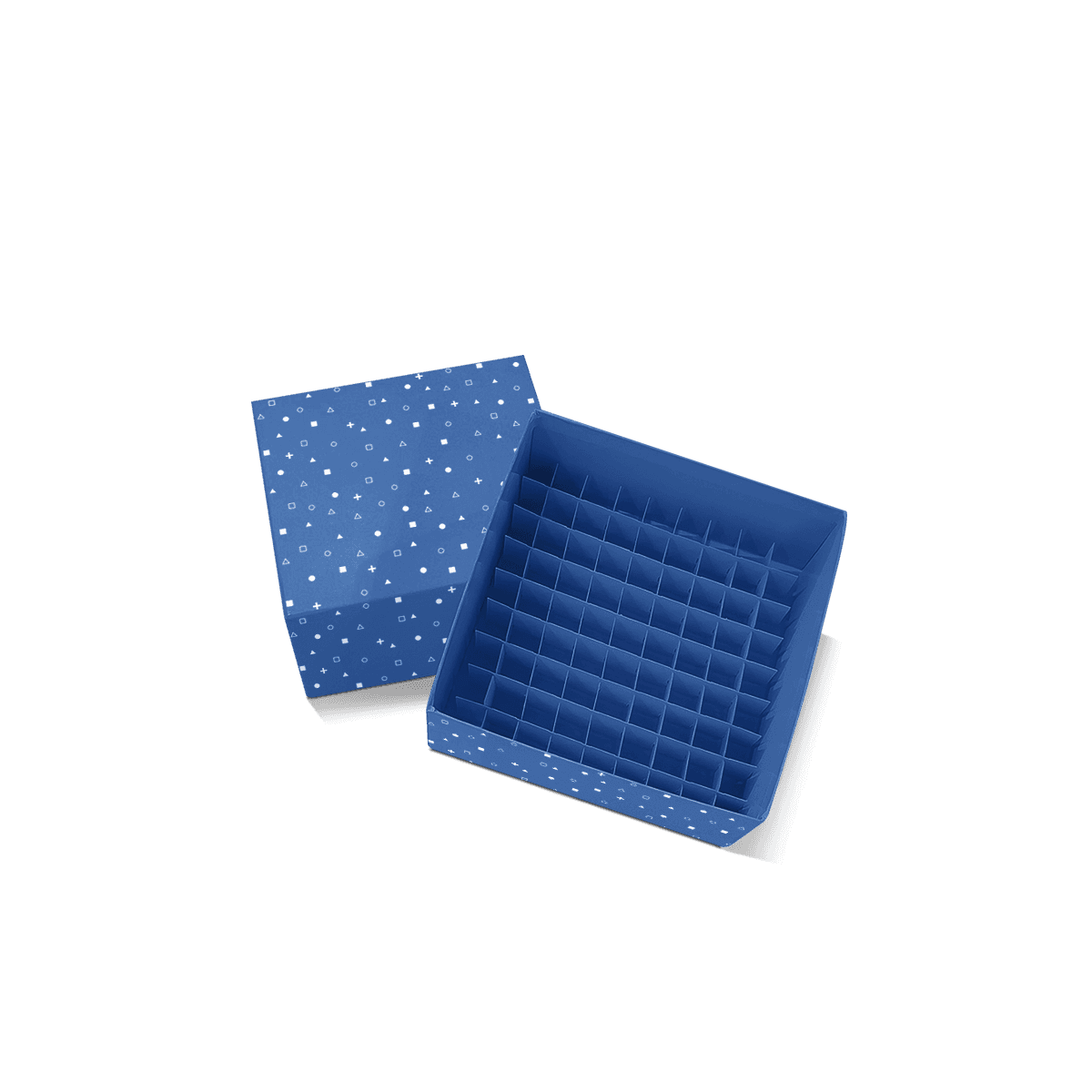
Custom Cell Dividers split one carton into equal or closely matched compartments for repeated products. They suit jars, sample units, small candles, tins, components and other matching items packed in a fixed count. Their value comes from repetition: the same item should enter the same size space in the same orientation across the whole carton.

The key decision is therefore not how many lines can be fitted into the box. It is whether one cell specification can be repeated without creating tight edge cells, wasted clearance or loading differences across the grid.
Start With One Proven Cell

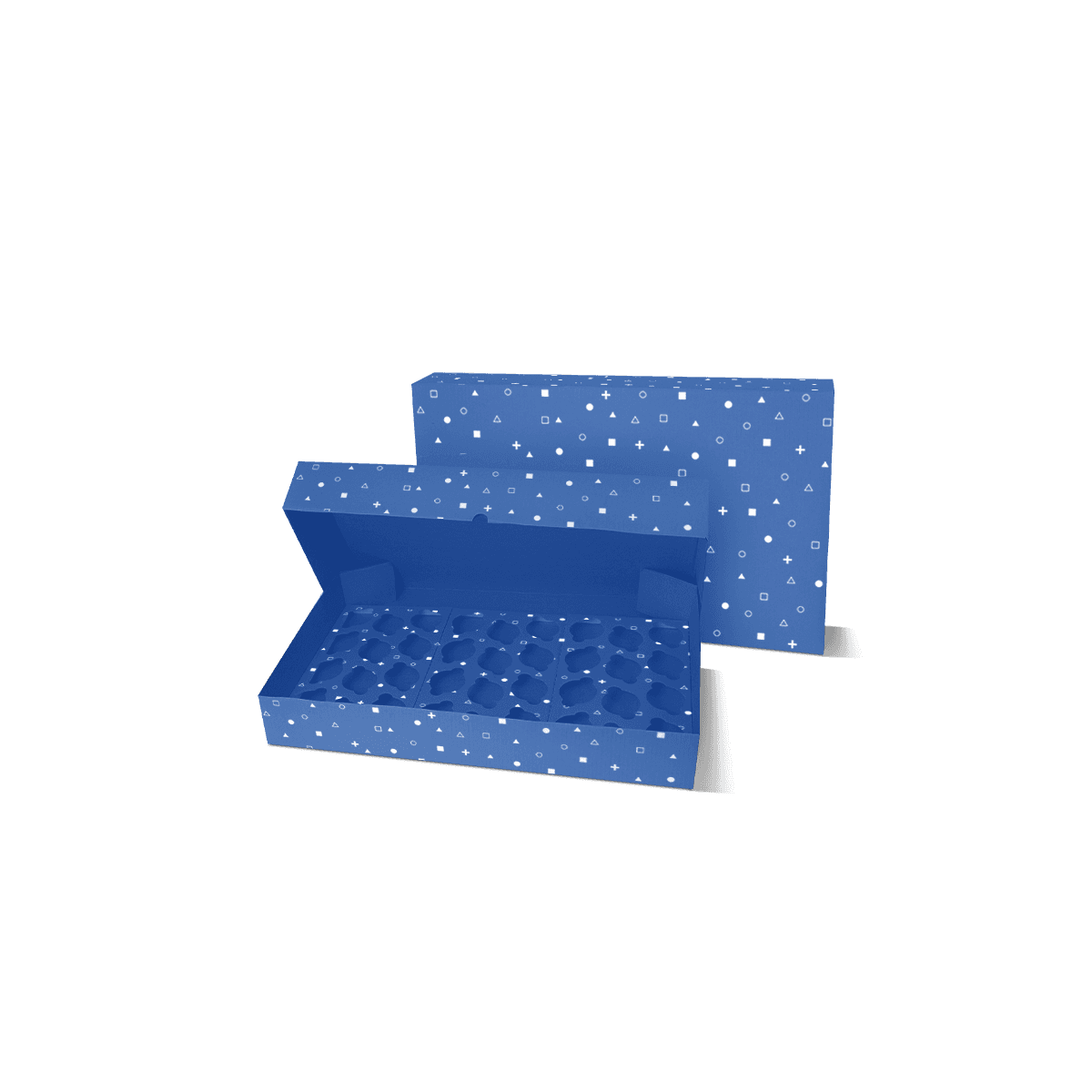
The full divider grid should be built from one cell that already works.

Size the Finished Product

Measure the item at its widest packed point, including labels, lids, sleeves or closures. A nominal jar diameter or component size can miss raised features that become the actual contact point.

For Custom Product Packaging, the cell dimensions and outer carton can be resolved from the same finished product rather than forcing a repeated grid into a box chosen earlier.

Set Working Clearance Once

A repeat cell should allow the product to enter without force while limiting unnecessary travel. Too little clearance slows loading and can rub finished surfaces. Too much clearance lets every unit shift inside its compartment.

Once the correct clearance is established, repeat that dimension consistently across the grid rather than adjusting individual cells unless the products genuinely differ.

Count Changes the Carton

A 4-cell layout and a 24-cell layout are not the same structure at different sizes. Increasing the count adds divider thickness, intersections and more opportunities for cumulative dimensional error.

Add Material Across the Grid

Each divider wall consumes internal space. Across several rows and columns, those small thicknesses add up.

The outer carton therefore cannot be calculated by multiplying the product width by the number of cells. The calculation must include working clearance and every divider wall that sits between products.

The sizing principles in What Size Tuck Box Do I Need? apply here too: use the packed internal system rather than the bare product alone.

Check the Edge Cells

Cells beside the carton walls can become tighter than cells in the centre if the complete grid is squeezed into an undersized box.

Test products at the corners and perimeter as well as in the middle. A grid is not consistent if only the central cells have the intended clearance.

Choose Rows and Columns Deliberately

The same product count can often be arranged in more than one way.

Twelve units could sit in a 3 × 4 or 2 × 6 arrangement. Those layouts create different carton proportions, wall lengths and packing motions.

A more compact grid may reduce empty space, while a longer arrangement may suit shelf dimensions, warehouse handling or the shape of the outer carton. The best pattern is the one that fits the product and handling process without creating unnecessarily long divider spans.

For products that are not actually uniform, Box Dividers are usually the better starting point because unequal compartments can be allocated deliberately.

Uniform Products Still Vary

Repeated products rarely arrive from production with zero dimensional variation.

Glass jars, moulded containers, caps and secondary cartons can vary slightly between batches. A cell that only accepts the smallest measured sample is too tight for reliable production.

Measure More Than One Unit

Where tolerance matters, check several finished products rather than one perfect sample. Look for the maximum real width and any recurring projection that affects loading.

The cell should accommodate normal manufacturing variation without becoming so loose that the product loses meaningful separation.

Watch Supplier Changes

A replacement jar, revised cap or new component supplier can alter the real footprint while keeping the product name and stated capacity unchanged.

Record the approved product profile with the divider specification so repeat orders are checked against physical dimensions, not only an SKU code.

Height Controls the Collision Zone

Cell width and depth separate products at the base, but divider height determines which parts remain apart higher up.

A low cell wall may be enough for short tins or boxed components. Taller jars can lean above a shallow divider and make contact even though their bases remain centred.

Set wall height around the part of the product most likely to collide. Avoid extending the divider unnecessarily into the closure area if that makes removal harder or interferes with the lid.

For glass bottles where shoulder shape, caps and filled weight determine the contact risk, Bottle Dividers should take priority over a generic repeated-cell specification.

Cell Dividers Are Not Partitions

Both products can use intersecting strips, but the decision problem is different.

Cell Dividers make most sense when the products and spaces repeat. Consistency of cell size, count and loading position is the main requirement.

Partition Inserts are better when a fixed internal framework needs different compartment sizes, deliberate cross-members or more complex grouped geometry.

Punch Partition Inserts move further towards a firmer punched-slot assembly where locked engagement and disciplined repeat packing matter.

This separation prevents three internal structures from competing for the same job simply because all of them can create compartments.

Material Follows Unit Weight

The repeated nature of the grid does not decide the material. Product weight, cell height and handling conditions do.

Paperboard or solid card can suit lighter units where surface separation and organised packing are the main requirements. Corrugated material becomes more useful as the units get heavier, the walls become taller or transit pressure rises.

If the internal component must also support significant load beneath the product rather than merely separate adjacent units, Corrugated Box Inserts solve that structural requirement more directly.

The aim is enough stiffness to keep the cells consistent without consuming unnecessary internal space.

A Grid Simplifies Counting

One strong operational advantage of Cell Dividers is that the carton count becomes visible.

A 4 × 5 grid should contain 20 units when every cell is filled. Missing products are easier to spot than they are in a loose carton or mixed internal layout.

That can help with repeat fulfilment, sample sets and stock preparation where fixed counts matter. The benefit is strongest when the cell arrangement remains identical from one order to the next.

MOQ starts from 100 boxes, so a repeat cell specification can be established for smaller commercial runs before moving into higher-volume packing.

Do Not Confuse Separation With Cushioning

A cell divider reduces product-to-product contact and limits side travel. It does not automatically cushion impact or stop vertical movement.

A fragile jar can remain inside its own cell and still strike the top panel if the carton has excessive headspace. A strong outer carton can also arrive intact while the products inside have collided with their cell walls.

The decision process in Fragile Product Packaging: Stronger Box, Insert or Both? helps identify whether the remaining problem is external strength, internal movement or both.

If products are stacked in multiple levels, Layer Pads can separate horizontal tiers while the cell grid controls units within each level.

Assembly Must Preserve the Grid

Flat divider strips save storage space, but the finished cells only remain accurate if the pieces are assembled fully and squarely.

Slots should engage without requiring staff to crush the material. Intersections should seat to the intended depth and the complete grid should lie flat inside the carton.

A layout that needs repeated hand adjustment can slow packing and create inconsistent cell dimensions between operators.

Custom Packly's free 3D mockups can help confirm rows, columns, overall proportions and product orientation before production. Where fit is tight or product surfaces are sensitive, physical checking with actual units remains important.

Printing Should Aid the Process

Most cell walls disappear once products are loaded, so elaborate printing is rarely necessary.

Print can still have a functional role. A visible top edge can carry a simple orientation mark. Numbered cells can support fixed packing sequences. Colour coding can help distinguish two closely related SKUs when the contents are removed and repacked.

Premium offset printing is available where exposed surfaces need controlled brand colour or fine artwork. Packaging customisation can be resolved after cell size, material and wall height are fixed.

Decoration should not interfere with slot positions or make routine internal packaging more expensive without improving presentation or packing control.

Test More Than One Cell

Approving one product in one compartment is not enough.

Load the complete grid. Check centre cells, edge cells and corners. Remove several units in sequence and see whether neighbouring walls shift once the carton is partly empty. Tilt the closed carton and check vertical movement as well as side contact.

Free samples can help assess material and print direction. For a new grid, the important structural check is repeatability: the twentieth cell should behave like the first.

Custom Packly's experienced packaging team can also coordinate the cell layout, outer box and dieline through one specification, with 24/7 support available when counts, cell dimensions or material choices need resolving.

Lock the Count Matrix

A repeat Cell Divider specification should record the grid as a count matrix, not merely as a finished insert size.

Keep the number of rows and columns, finished cell width and depth, divider height, material, intersection positions, outer-carton internal dimensions and the approved product profile.

That record makes replenishment more reliable because both parties know exactly what “12-cell” or “24-cell” means for that product. If the product changes, the cell can be rechecked before the full grid is repeated.

Custom Packly provides guaranteed 4–6 working day production and delivery once the approved specification is ready for repeat production.

Specify the Count Matrix

For Custom Cell Dividers, start with one product and the exact quantity that must fit in each carton.

Provide the maximum finished width and depth of the unit, its height and weight, then state the required count. If you already prefer a row-by-column arrangement, include it. If not, give the internal carton dimensions or handling constraints that should influence the grid.

Also flag any labels, lids or projections that need extra clearance and whether products travel upright or flat.

Use the custom packaging quote to submit that count matrix. Instant pricing can then begin from a defined quantity while the structural work checks that one proven cell can be repeated cleanly across the entire carton.

FAQs

Confirm the product size, the number of units per carton and the internal dimensions of the outer box. It is also important to check whether the items travel upright, how much movement is acceptable and whether labels, lids or closures create wider points. Those details decide the cell width, depth and board strength.

Yes, they can work very well for fragile repeated items because they keep each unit in its own space and reduce side contact. The fit still needs to reflect the product weight and breakage risk. For heavier glass or tougher delivery conditions, a stronger board grade or a more reinforced partition structure may be needed.

Cell dividers are usually the better choice when the carton holds repeated items in a regular grid, such as six or twelve matching units. Box dividers are more flexible when the inside layout needs broader separation or mixed section sizes. One focuses on repeated cells and the other suits more varied grouped arrangements.

Often, yes. When the contents are similar in size and the pack works best with a repeated layout, cell dividers can be the cleaner and simpler route. Partition inserts are often stronger for mixed products, heavier grouped loads or builds that need more reinforced internal control. The better choice depends on uniformity, weight and handling conditions.

Yes. They are not limited to warehouse-style shipping cartons. They can also work inside presentation packs when the contents are repeated and need a neat organised arrangement. The look is usually more practical than a shaped insert, but for jars, candles or small repeated units, that ordered grid can still feel clean and well considered.

Process

How it works

Your Packaging Journey, From Idea to Production and Delivery

01

Tell Us Your Specs

Custom packaging boxes

Tell Us Your Specs

Provide size, quantity, printing, and finishes.

02

Get a Fast Quote

Custom packaging boxes

Get a Fast Quote

Instant transparent pricing, no hidden fees.

03

Design and Approval

Custom packaging boxes

Design and Approval

Artwork checks, revisions, and final sign-off.

04

Produce

Custom packaging boxes

Produce

Expert manufacturing to meet deadlines.

05

Ship to Your Door

Custom packaging boxes

Ship to Your Door

Hassle-free, flexible delivery options.

Get Your Quote for Custom Cell Dividers

Share your product details, dimensions, quantity and artwork needs. We’ll help choose the right packaging style and send a clear quote.