Skip to content
Details

Custom Book Mailers

Book mailers are built for titles and printed goods that need close-fitting board protection, quicker dispatch and better corner control than lighter postal packaging can usually provide.

Protect the Book’s Weak Points

Book damage is usually concentrated at the corners, cover edges, spine and exposed surface rather than across the whole parcel. Custom Book Mailers should therefore be sized around the actual edition, binding and cover condition before the outer wrap is finalised.

That gives this product a narrower job within custom mailer boxes. Book Mailers are not simply flat mailers with a different name because the fit should be planned around the trim size, binding, thickness and surface condition of the actual edition being dispatched.

For valuable or presentation-led titles, the goal is not only preventing major damage. A bent corner, rubbed dust jacket or marked cover can be enough to turn an otherwise usable book into an unacceptable customer order.

Corners Take the First Hit

Book corners are small load points, so uncontrolled movement can concentrate damage in a very small area. If the mailer is too loose, the book can slide into an outer corner during handling, while an over-tight fit can put the packaging fold directly against the cover edge.

Leave enough clearance for the corrugated material to fold cleanly around the book while keeping movement low. A close fit should restrain the title rather than clamp it.

Give the Spine Breathing Room

Hardback spines, rounded spines and books with dust jackets should not be forced against a hard fold. The spine side may need different clearance from the fore-edge depending on the binding and how the book is loaded.

Test the closed mailer with the real edition rather than assuming a rectangle with the same overall dimensions will behave identically. Binding shape matters as much as the headline measurements.
Size by Edition

Books that share a title do not necessarily share a packaging size. Paperback, hardback, special edition and boxed versions can have different trim dimensions and thicknesses, so repeat ecommerce fulfilment should record packaging against the exact SKU or edition rather than the title name alone.

Measure Trim and Thickness

Measure the book’s finished length, width and maximum thickness in the condition it will be shipped. Do not compress the spine or pages to produce a smaller number because the book’s natural resting thickness affects the finished wrap.

The packaging dieline workflow explains why these dimensions should be settled before artwork is placed. Moving a fold after the design is finished can shift print panels and closure areas.

Include Jackets and Sleeves

A dust jacket, belly band, protective sleeve or presentation wrap can change both the dimensions and the scuff risk. Measure with those components fitted and allow for anything that extends beyond the cover or moves easily during packing.

For collector editions or coated covers, a thin protective layer may be more useful than simply making the entire mailer larger. The aim is controlled separation without creating unnecessary movement.

Single Copy or Multiple Books

A mailer that works well for one book may not be the right choice for two or three books stacked together. The footprint may stay similar while the load, thickness and movement risk change sharply, so decide whether the packaging is intended for one title per parcel, a fixed bundle or variable customer orders.

Stacks Change the Load

Several books create more concentrated weight at the corners and can shift against one another during delivery. If a multi-book order is common, size the structure around the real stack and check whether the outer corrugated specification still provides enough face and edge protection.

The corrugated mailer specification is the better place to resolve flute and material strength when combined weight becomes the main concern. Book Mailers should stay focused on book fit and condition.

Mixed Sizes Need Restraint

Two books with different trim sizes can create a step in the stack, allowing the smaller title to move unless the wrap or packing arrangement controls it. Do not rely on the larger book to act as an insert for the smaller one.

If mixed orders vary widely, a shallow postal box may be easier to standardise than a close-fitting book wrap. A cavity gives more freedom when order composition changes from parcel to parcel.

Wrap or Cavity

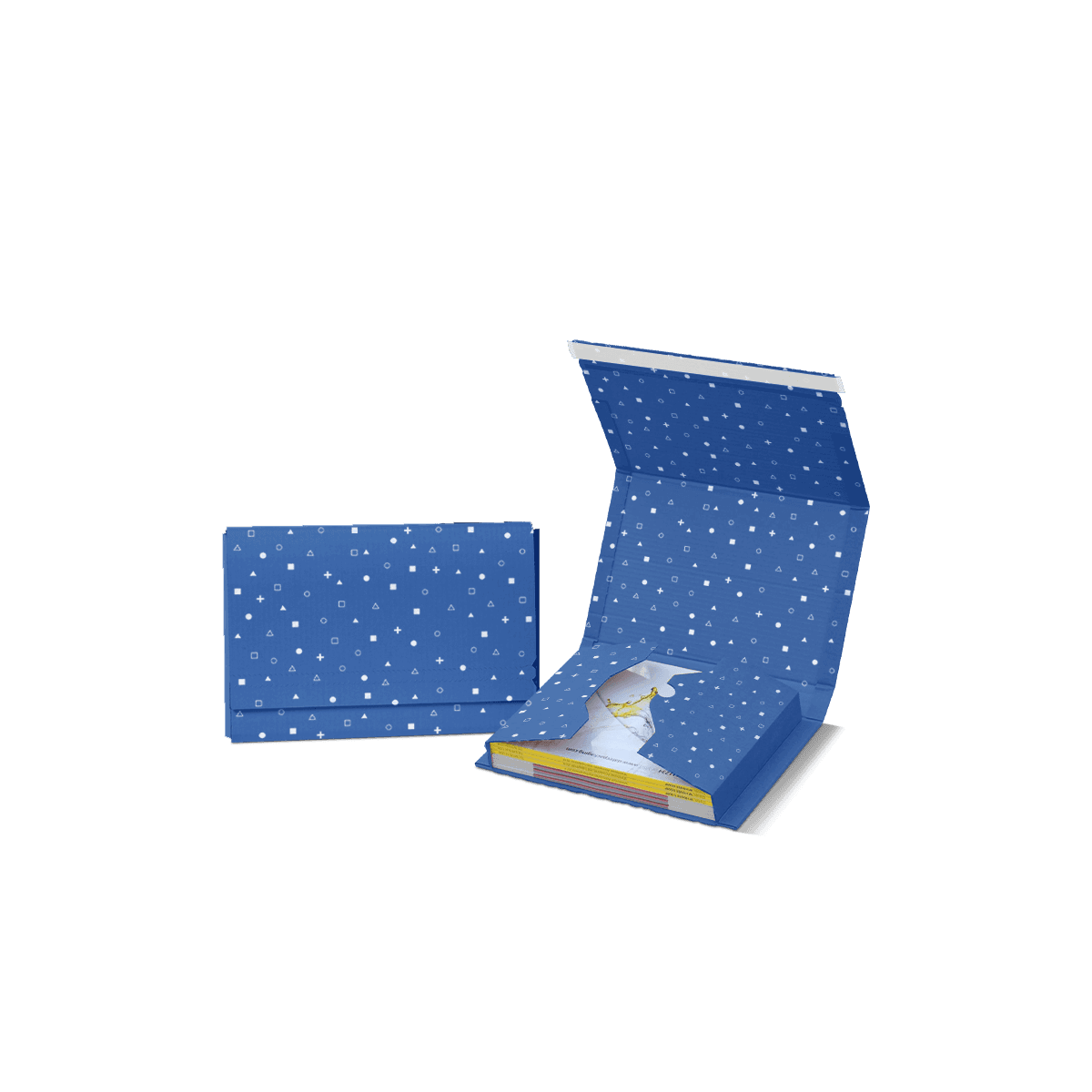
Book mailers often use a fold-around principle, which creates genuine overlap with One Piece Folder Boxes. The distinction is buyer intent, not a claim that every Book Mailer uses completely different engineering.

Use a Book Mailer when the specification is driven by book-specific risks such as spine pressure, cover scuffing, corner condition and edition thickness. Use a One Piece Folder when the same fold-around logic needs to serve a wider mix of flat goods such as prints, frames, catalogues or documents.

Choose the Narrower Brief

If one folder-style dieline protects the book correctly, there is no benefit in inventing a more complicated structure simply to make the two product names look different. The useful difference is the specification work around the product, so Book Mailers should be assessed as book packaging first.

Use a Cavity When Needed

A conventional postal or mailer box can make more sense when the order includes several different items, a substantial insert, gifts or accessories alongside the book. Fold-around protection is strongest when the contents remain relatively flat and predictable.

Once the parcel becomes a mixed kit, a defined cavity usually gives the packing team more control. The extra depth then solves a real packing need rather than merely adding empty space.

Stop Covers From Rubbing

A mailer can prevent a book from falling out and still allow enough internal movement to scuff the cover. Gloss-coated covers, dark solid colours, foil details and dust jackets can reveal rubbing more readily than a basic uncoated paperback, so the structure needs to control movement as well as impact.

Reduce Sliding First

The first fix is fit. If the book can travel back and forth through the wrap, reduce that movement before adding more protective material because a close fold can often do more than loose filler.

The wider packaging cost mistakes are relevant here. An oversized pack can add material, filler and delivery volume without improving the product experience.

Protect Sensitive Surfaces

For high-value jackets, collector editions or easily marked finishes, test whether the inner corrugated liner rubs the surface during packing and removal. Where necessary, use a suitable paper layer or sleeve between the book and outer wrap.

Keep the solution thin and deliberate so it does not create a new thickness problem. Protection should solve the sensitive surface without undoing the close fit.

Keep Closure Away From Covers

The closure should secure the outer mailer without creating a new risk to the book. Where a chosen book-wrap structure supports peel-and-seal or tear-strip features, position them so adhesive, perforations and opening forces remain in the packaging rather than near an exposed cover edge.

Seal the Mailer, Not the Book

A tape or adhesive strip should never be able to touch the book if the mailer is closed slightly off-centre. Leave enough structural separation between the product and sealing area, especially where a dust jacket or coated cover could be damaged by adhesive contact.

Test the Opening Direction

The customer should be able to open the mailer without dragging the book across a rough flap or cutting towards the cover. For higher-value titles, a clean opening path matters nearly as much as the shipping journey.

The first interaction should release the book rather than make the customer pry it from a tight corrugated wrap. Good protection should not create a difficult removal experience.

Print Around the Thickness Folds

Book wraps can use several fold or score positions around the depth of the product. Those working lines can interrupt artwork more than they do on a large uninterrupted mailer panel, so logos, small type and important campaign copy should stay clear of uncertain crease positions.

Let Variable Creases Stay Quiet

If one mailer is deliberately made to accommodate a small thickness range, treat the score band as a working zone. Patterns or background colour can cross it more safely than fine typography that depends on one exact fold position.

For a fixed custom edition, artwork can be planned more tightly because the final fold positions are known. That gives designers more control over panel balance.

Use the Broad Face

The largest outer panel is usually the best place for the main branded message. Inside print can support a launch note, publisher message or repeat-order prompt where the opening sequence leaves that surface visible.

The packaging design workflow is useful when the design needs to follow the physical opening rather than simply look balanced on the flat file.

Check Postage After Packing

A book can be compact but surprisingly dense, so postal planning needs both the final external dimensions and the complete mailed weight. Do not choose the mailer from a postal category first and then force the book into it because protection should establish the parcel before the postage band is checked.

Use Large Letter Only When It Fits

Some slim books may suit a Royal Mail Large Letter box, but the finished parcel still needs to satisfy the applicable postal limits after the packaging is added.

A thicker hardback, protective wrap or multi-book order can move beyond that format quickly. Keep the postal classification separate from the book-protection decision.

Do Not Thin Protection for Postage

If the book genuinely needs stronger corner or surface protection, removing it purely to preserve a cheaper postal band can create more expensive returns or replacements. The right order is book protection first, then the most efficient postal route that fits the finished parcel.

Control Repeat Title Runs

Publishers, booksellers and subscription businesses often reorder the same packaging around recurring titles or edition groups. A small specification library can prevent repeated measuring and inconsistent packing by keeping the approved dimensions, book SKU or edition, material, closure and artwork version together.

Watch Reprints and New Editions

A reprint can look familiar while the binding, page count, paper stock or cover treatment changes the physical book. Before repeating a large packaging run, confirm that the current edition still matches the approved mailer rather than assuming the old dieline remains correct.

For urgent launches, the fast-turnaround mailer process also shows why settled dimensions and artwork approvals remove delays earlier than production. Repeatability starts with keeping the physical specification current.

Test the Damage You Care About

A free 3D mockup can check branding, panel direction and how the finished Book Mailer should look. It cannot show whether a hardback corner dents, a dark cover scuffs or a dust jacket catches during packing, so physical testing is more useful when those are the expensive failure points.

A paid custom sample can be particularly useful for collector editions, premium hardbacks, tightly fitted wraps and books with unusual cover materials. Pack the actual title, close it normally, handle the parcel and reopen it several times.

Check the corners, spine, fore-edge and cover surface after the test. The goal is not merely proving that the book fits but proving that the condition customers care about survives the journey.

Match Production to the Title Mix

For useful pricing, describe the books that will actually use the mailer. Share the trim size, maximum thickness, binding type and packed weight, then note whether the title has a dust jacket, sleeve or surface that marks easily.

State whether the run is for one fixed edition, a small group of similar titles or variable multi-book orders. That tells Custom Packly whether a close custom wrap, a controlled thickness range or another mailer structure makes more sense.

Custom Packly can review the structure and artwork with free design support and a free 3D mockup before production. MOQ starts from 100 boxes, with UK production, free delivery and a typical 4–6 working day turnaround after final approval.

If several suppliers are quoting, compare the same dimensions, corrugated specification, closure, print coverage and quantity. The mailer quote checks help expose differences hidden behind a simple unit price.

Once the edition profile and dispatch quantity are clear, request a custom packaging quote around the actual book rather than a generic mailer size.

FAQs

Yes, provided the size and board strength match the packed title. Book mailers work well for both, but heavier hardbacks usually need a firmer specification and tighter fit. The key is to size the mailer around the actual shipped book, not the nominal trim size alone.

Book mailers are usually specified with stronger emphasis on corner control, spine protection and the denser weight profile of books. Literature mailers often suit flatter printed materials such as brochures, catalogues and document packs. If the item has real thickness and its condition matters on arrival, book mailers are often the safer choice.

Yes. Outer panels can carry branding, shipping instructions, campaign graphics or simple presentation print. Most buyers get the best result from clean external print rather than heavy decorative finishing, because the main job of this style is still protective dispatch.

Often, yes. A close-fitting book mailer can reduce or remove the need for loose filler because the structure already wraps the title tightly. For delicate finishes, collector books or multi-book orders, you may still want tissue, a paper slip or another light protective layer.

Start with the finished book length, width and packed thickness, then check weight and how sensitive the corners and cover finish are. It also helps to confirm whether bookmarks, invoices, belly bands or extra printed slips need to travel inside. Those details affect fit, closure tolerance and board choice.

Process

How it works

Your Packaging Journey, From Idea to Production and Delivery

01

Tell Us Your Specs

Custom packaging boxes

Tell Us Your Specs

Provide size, quantity, printing, and finishes.

02

Get a Fast Quote

Custom packaging boxes

Get a Fast Quote

Instant transparent pricing, no hidden fees.

03

Design and Approval

Custom packaging boxes

Design and Approval

Artwork checks, revisions, and final sign-off.

04

Produce

Custom packaging boxes

Produce

Expert manufacturing to meet deadlines.

05

Ship to Your Door

Custom packaging boxes

Ship to Your Door

Hassle-free, flexible delivery options.

Get Your Quote for Custom Book Mailers

Share your product details, dimensions, quantity and artwork needs. We’ll help choose the right packaging style and send a clear quote.