Skip to content
Details

Custom Royal Mail Large Letter Boxes

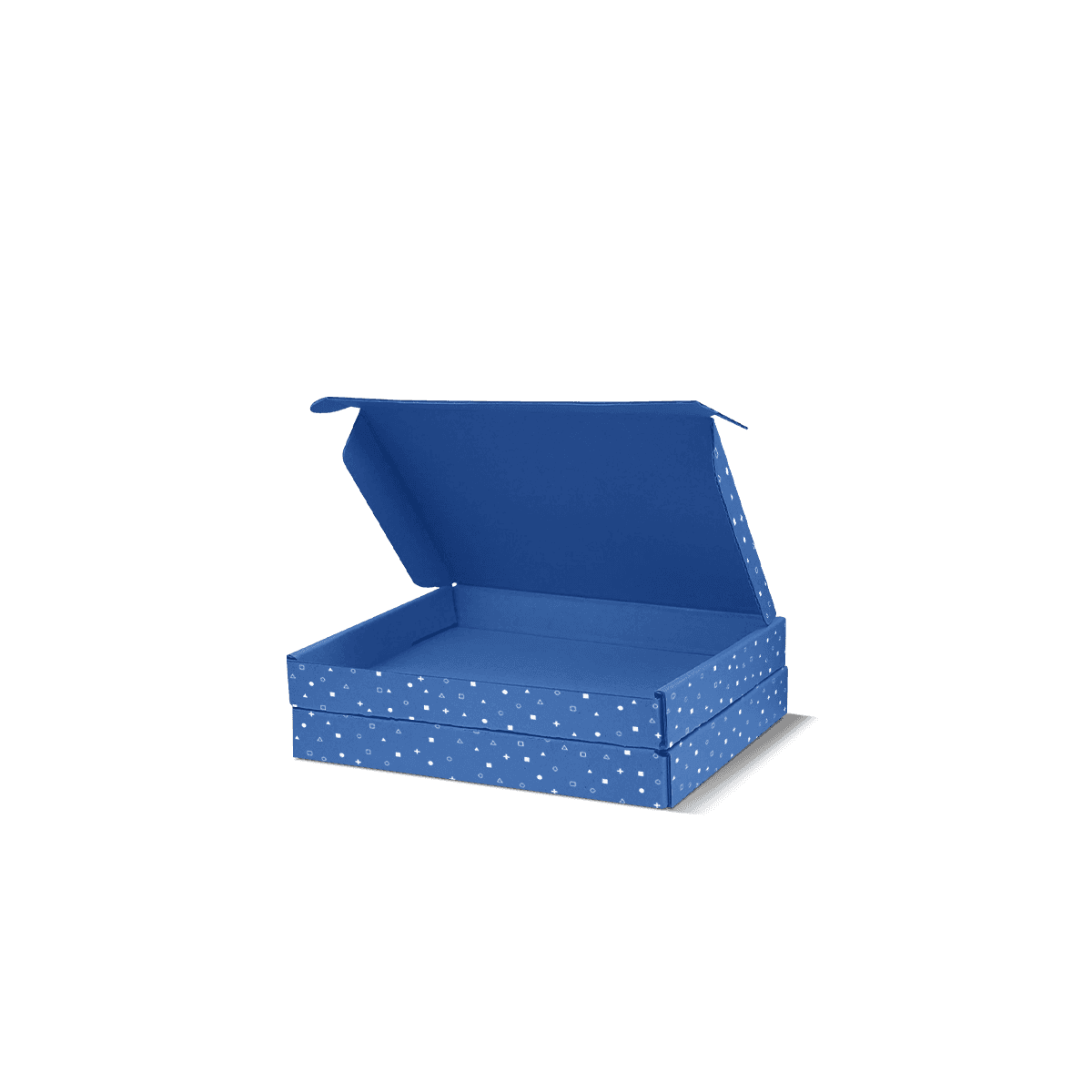
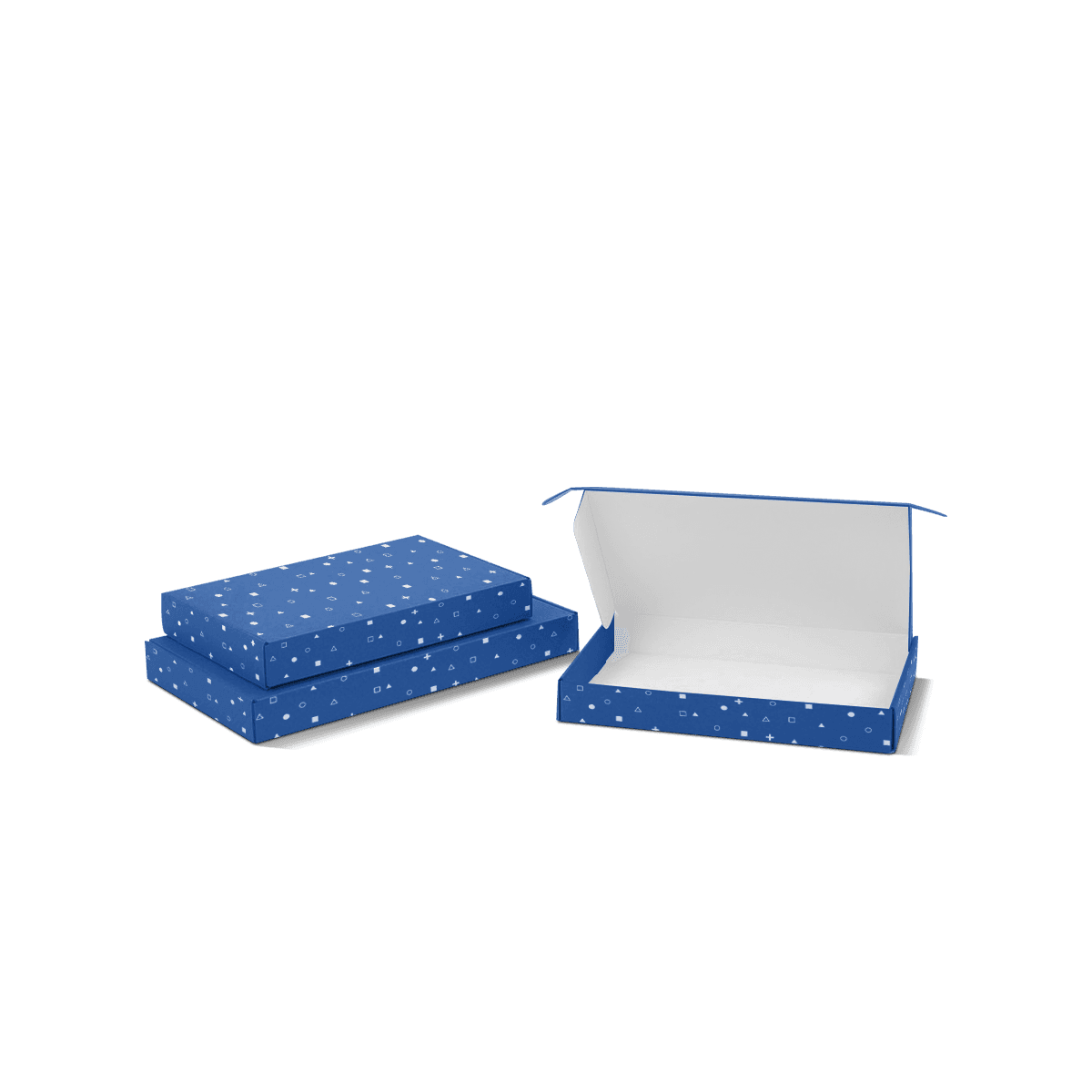
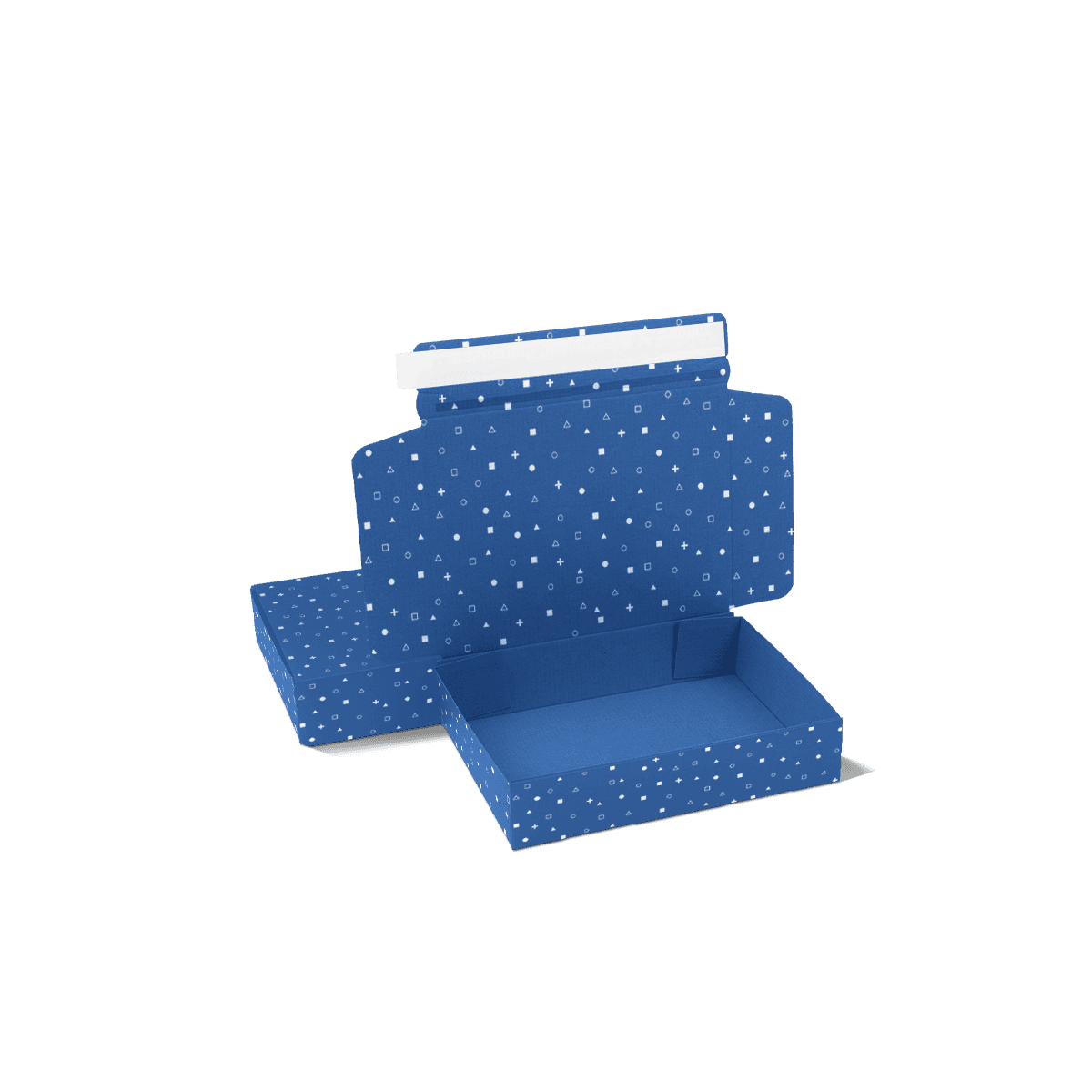
Royal Mail Large Letter Boxes are designed for slim, post-friendly delivery, helping brands send flat or low-profile products in a box style that supports cleaner presentation, easier dispatch and better control over size-sensitive fulfilment.

Large Letter Is a Specification

Large Letter packaging starts with a postal envelope, not a generic shallow-box brief. Custom Royal Mail Large Letter Boxes must keep the finished mailed item within the intended size and weight limits after the product, insert and printed material are added.

Those are maximum external mailing dimensions. The box still has to contain the product, internal support and printed material while remaining within the chosen postal service once fully closed.

That gives this style a precise role within custom mailer boxes. Use it when Large Letter qualification is an important commercial requirement. If the main goal is simply getting a parcel through a household door, letterbox boxes solve a different problem.

External Dimensions Win

Internal box dimensions tell you whether the product fits. Royal Mail classification depends on the outside of the finished mailing.

Corrugated thickness, folded side walls, closure pressure and a product pushing against the lid can all make the outside larger than expected. Start with the usable internal space the product needs, then calculate whether the finished outer dimensions still leave enough postal margin.

Do not approve a Large Letter box using internal measurements alone.

Weight Includes Everything

The 750 g ceiling applies to the mailed item, not just the product. The box, insert, cards, instructions, samples and any other components all contribute to the final weight.

For lightweight products this may never become the limiting factor. For books, several refill pouches, small electronics or multi-item sample sets, weigh a finished packed box rather than adding product weights from a spreadsheet and assuming the packaging contribution is negligible.
Build Below the Maximum

The safest custom specification normally sits below the limit rather than exactly on it. A design measuring precisely 353 × 250 × 25 mm on the drawing leaves no room for normal production or packing variation.

That does not mean adding arbitrary clearance everywhere. It means choosing a controlled margin that reflects the material, structure and contents.

Protect the 25mm Limit

Thickness is often the hardest dimension because every internal layer competes for the same shallow space.

A 20 mm product does not automatically fit into a 25 mm external mailing. The corrugated material has thickness of its own. An insert consumes more depth. Folded literature can lift the lid. Tissue can bunch. Flexible contents can overlap.

Measure the finished parcel at its thickest point after closure. Do not press the lid flat during the check.

The principle is similar to other packaging size decisions discussed in how box dimensions affect product fit: internal and external dimensions solve different questions.

Leave Production Margin

Die-cutting, creasing, material caliper and manual packing all introduce small variations. The closer a specification sits to the postal ceiling, the more important those variations become.

A few millimetres saved in the product layout can provide more operational value than using the full allowable size. This is one reason many stock Large Letter boxes on the UK market are sold below the absolute maximum rather than exactly at it.

Spend the Depth Carefully

Large Letter packaging has a fixed depth budget. Product height, material thickness, inserts and protective components all draw from it.

The best specification gives depth to the parts that actually protect or organise the order.

Spread Instead of Stack

Where possible, arrange several slim products across the length and width rather than stacking them vertically.

Three sample sachets positioned side by side may stay comfortably shallow. The same three stacked on top of one another can consume the entire postal allowance before the outer box is considered.

This makes Large Letter boxes particularly useful for flat samples, refill products, stationery, lightweight accessories and other products whose footprint can be used instead of adding height.

For sampling campaigns, product sample mailer boxes provide more detail on organising trial products, printed instructions and promotional components into one controlled send.

Keep Inserts Low

An insert can stop small items sliding into one corner, but a presentation platform that raises every product wastes valuable depth.

Use inserts and dividers only where they control movement, separate products or make packing more repeatable. In this format, thin retention features and shallow cut-outs often make more sense than a high display tray.

The insert should support the postal target, not compete with it.

Control Every Repeat Pack

A Large Letter specification can work in the sample room and still fail during normal fulfilment if different packers produce different finished profiles.

The box alone does not guarantee the postal band. The complete packing method does.

Set One Packing Orientation

Decide where the product, leaflet, insert and any flexible components sit before repeat production begins.

If one team member places two cards side by side while another stacks them, the same box can leave the bench at different thicknesses. Folding garments, refill pouches and soft accessories need the same discipline.

Document the arrangement when Large Letter classification materially affects fulfilment cost.

Check the Worst Combination

If one box serves several SKUs, test the largest and heaviest realistic order rather than the easiest product.

A shared outer size can simplify inventory, but only if every approved combination stays within the intended dimensions and weight. If one SKU repeatedly pushes the limit, a second box size can be cheaper than allowing the whole range to lose the postal advantage.

The cost effect of carrying unnecessary dimensions across repeat shipments is also covered in common custom packaging cost mistakes.

Postal Fit Is Not Door Fit

A Large Letter postal format and a household letter opening are not the same specification.

Royal Mail defines the mailing category by its published postal limits. Domestic doors vary in aperture size, brush depth, inner flaps and access angle.

That means a box can meet the intended Royal Mail Large Letter dimensions without guaranteeing through-door delivery at every address.

Choose this style for postal-band control. Choose Letterbox Boxes when the physical customer-door experience is the main requirement.

For thicker ecommerce orders where neither restriction is necessary, postal boxes give considerably more freedom around depth, internal layout and closure.

Pick a Structure That Stays Slim

The outer structure needs enough rigidity to protect the contents without consuming excessive depth.

A fine corrugated profile can work well because it adds stiffness while remaining relatively compact. The final choice still depends on product weight, footprint and handling risk.

Do not choose material by flute name alone and then hope the postal dimensions work afterwards. The outer profile is part of the brief from the beginning.

Use Fold-Around Protection Where Useful

Some products need edge protection more than an open cavity. Books, documents, prints and similar flat goods may suit a one piece folder box, where the corrugated sheet wraps more closely around the item.

A conventional Large Letter mailer makes more sense when the product needs a defined shallow cavity, several components or a more deliberate opening presentation.

The postal band does not dictate one universal box structure.

Branding Has a Weight Budget

Large Letter packaging can still carry detailed branding, but the print plan should work with the thin format rather than adding decorative components that consume space or weight.

Outside print gives the mailing a clear brand identity. Inside print can replace a separate thank-you card, instruction sheet or campaign insert when the message is short enough to live directly on the box.

Use Panels Before Add-Ons

If the main goal is stronger presentation, make better use of the available print surfaces before adding another sleeve, card or decorative layer.

Premium offset printing can support detailed graphics and controlled brand colours where it suits the order. CMYK or Pantone requirements should be agreed alongside the material and print coverage.

The packaging dieline workflow helps keep important artwork away from creases and closure areas. The free dieline generator can also provide a starting layout once the intended dimensions and structure are established.

Check the Service Being Used

The standard Royal Mail Large Letter maximum is currently 353 × 250 × 25 mm and 750 g, but businesses should still verify the actual Royal Mail service used before committing a high-volume packaging run.

For example, Royal Mail publishes different dimensional requirements for some machine-readable Business Mail options.

This matters because “Royal Mail Large Letter” should not be treated as a permanent universal engineering standard independent of the mailing product.

Keep the postal requirement written into the packaging specification and recheck it when carrier services or fulfilment arrangements change.

Do Not Force the Postal Band

Keeping an order inside Large Letter only makes commercial sense while the product can still be protected and packed consistently.

Do not flatten a fragile item unnaturally, remove necessary protection or create an over-tight closure merely to preserve the postal band.

If the product needs deeper cushioning, stacked components or a substantial insert, moving to a general postal box may produce a better overall result.

A useful decision rule is:

  • stay with Large Letter when the product naturally suits the format
  • redesign the internal layout when unnecessary height causes the problem
  • move to another postal format when protection genuinely needs the extra depth

The packaging should support the distribution model, not force the product into a tariff category it no longer suits.

Prove the Finished Mailing

A free 3D mockup can check branding, panel direction and the visual proportions of a custom Large Letter box. Postal qualification needs another check: the finished physical profile.

For a specification with generous margin, confirmed external dimensions and stable contents may be enough during routine production planning. When the order sits close to the size or weight ceiling, a paid custom physical sample becomes much more useful.

Test More Than One Unit

Pack several samples using the normal fulfilment method.

Measure the maximum length, width and thickness after closure. Weigh the complete mailing. Look for central lid bowing, overfilled corners and flexible contents that create different profiles between units.

The purpose is not simply to confirm that one carefully prepared sample passes. It is to establish that the normal packing process can reproduce the same result.

Lock the Postal Envelope

For pricing this box accurately, start with the postal envelope you need to preserve. Share the target maximum finished external dimensions, expected total mailed weight and the product arrangement inside that space.

Then identify anything that can consume or vary the 25 mm depth: inserts, literature, overlapping soft products, protective wrap or raised components. If several SKUs will use the same box, state the largest approved combination rather than giving only one product measurement.

Keep the postal envelope as a controlled specification on the quote, not a note added after the box size. Any later change to board, insert, literature or product count should trigger another finished-size and weight check before repeat production.

For urgent production, keep the Royal Mail target fixed before artwork approval. The fast-turnaround mailer process explains why changing dimensions late creates avoidable production delays.

If the service, packed profile and quantity are already confirmed, request instant pricing against that controlled Large Letter specification.

FAQs

They help by making size control part of the packaging plan, not a last-minute check. When the box is designed around the packed order, businesses can keep dispatch more consistent and avoid unnecessary bulk. That matters for flatter ecommerce items where added depth from tissue, inserts or loose packing can quickly change the mailing format and make fulfilment less predictable.

Usually, the best fit is a product that stays slim once fully packed. That includes printed materials, refill pouches, skincare samples, flat accessories, lightweight electronics accessories and selected apparel items. If the order needs thick inserts, deeper cushioning or stacked components, a broader postal box is often the safer choice because it gives more room for protection without forcing the dimensions.

Before anything else, confirm the packed dimensions and total mailed weight of the finished order. That means product, insert, wrap, leaflet and box together. You should also check the latest Royal Mail limits you want the order to meet, because the intended postal format is part of the specification. A box that looks slim when empty can become unsuitable once the full contents are added.

Choose Royal Mail Large Letter Boxes when your priority is a flatter pack format, tighter postal planning and a smarter alternative to envelopes. Choose Postal Boxes when the item needs more depth, more cushioning freedom or less restrictive internal space. In simple terms, large letter boxes are specification-led and efficiency-led, while postal boxes are broader and more forgiving for mixed or thicker orders.

Yes, but they have to be planned with restraint. Slim inserts, tidy internal sleeves and disciplined artwork can all work very well in this format, especially for samples, flat accessories and branded literature. The key is to add presentation without letting the structure become unnecessarily thick. Premium results usually come from precise sizing and clean print choices rather than heavy decoration.

Process

How it works

Your Packaging Journey, From Idea to Production and Delivery

01

Tell Us Your Specs

Custom packaging boxes

Tell Us Your Specs

Provide size, quantity, printing, and finishes.

02

Get a Fast Quote

Custom packaging boxes

Get a Fast Quote

Instant transparent pricing, no hidden fees.

03

Design and Approval

Custom packaging boxes

Design and Approval

Artwork checks, revisions, and final sign-off.

04

Produce

Custom packaging boxes

Produce

Expert manufacturing to meet deadlines.

05

Ship to Your Door

Custom packaging boxes

Ship to Your Door

Hassle-free, flexible delivery options.

Get Your Quote for Custom Royal Mail Large Letter Boxes

Share your product details, dimensions, quantity and artwork needs. We’ll help choose the right packaging style and send a clear quote.