Skip to content
Details

Custom Eyeshadow Boxes

Eyeshadow boxes need to protect palettes, singles and pressed pans while keeping shade layout, finish cues and front-facing branding clear. The right carton supports retail display, launch edits and cleaner fulfilment for delicate colour cosmetics.

Start With the Palette

An eyeshadow carton should be dimensioned from the closed compact or palette, because pan count tells you almost nothing about the outside footprint. A quad with a thick mirror lid can need more depth than a larger palette using a much flatter component.

Measure the widest, longest and highest points of the finished palette, then note the hinge, clasp and any raised frame around the lid. Those features determine where the carton can fit closely and where clearance matters more than tightness.

Measure the Closed Component

Measure length, width and depth with the palette fully closed. Include any raised clasp, hinge barrel, decorative frame, mirror housing or domed lid that extends beyond the main body.

Do not calculate the carton from pan count. Two nine-pan palettes can use completely different component dimensions, and even a small raised feature can change the internal depth required.

Find the Highest Point

Broad cosmetic components are rarely perfectly flat from edge to edge. The centre of the lid, clasp or hinge area may sit higher than the surrounding surface.

Use that highest point when setting internal depth. If the carton is sized only from the flatter body section, closing pressure can be transferred directly onto the palette lid.
Protect the Wide Span

Eyeshadow palettes behave differently from the tall tubes covered by mascara and lip gloss packaging. Their larger flat footprint means panel stiffness, corner movement and pressure across the face deserve more attention than vertical headspace.

A carton that is slightly oversized can let the compact strike its corners during handling. A carton that is too tight can press across the lid or make loading slow.

Control Corner Movement

Aim for even clearance around the component rather than a large void on one side. The palette should enter without being forced, but it should not slide noticeably once the carton is closed.

For a lightweight single shadow or small quad, a close-fitting folding carton may be enough. Larger or heavier palettes may need internal support if their outer component does not sit securely on its own.

Support Larger Footprints

As palette width increases, stiffness across the carton face matters more. A broad shallow box made from unsuitable stock can bow even when the product itself is not especially heavy.

Do not solve every large palette by jumping automatically to rigid packaging. Start with the component weight, footprint, retail price and handling route. Stronger paperboard, a better carton geometry or a targeted insert may solve the problem with less material.

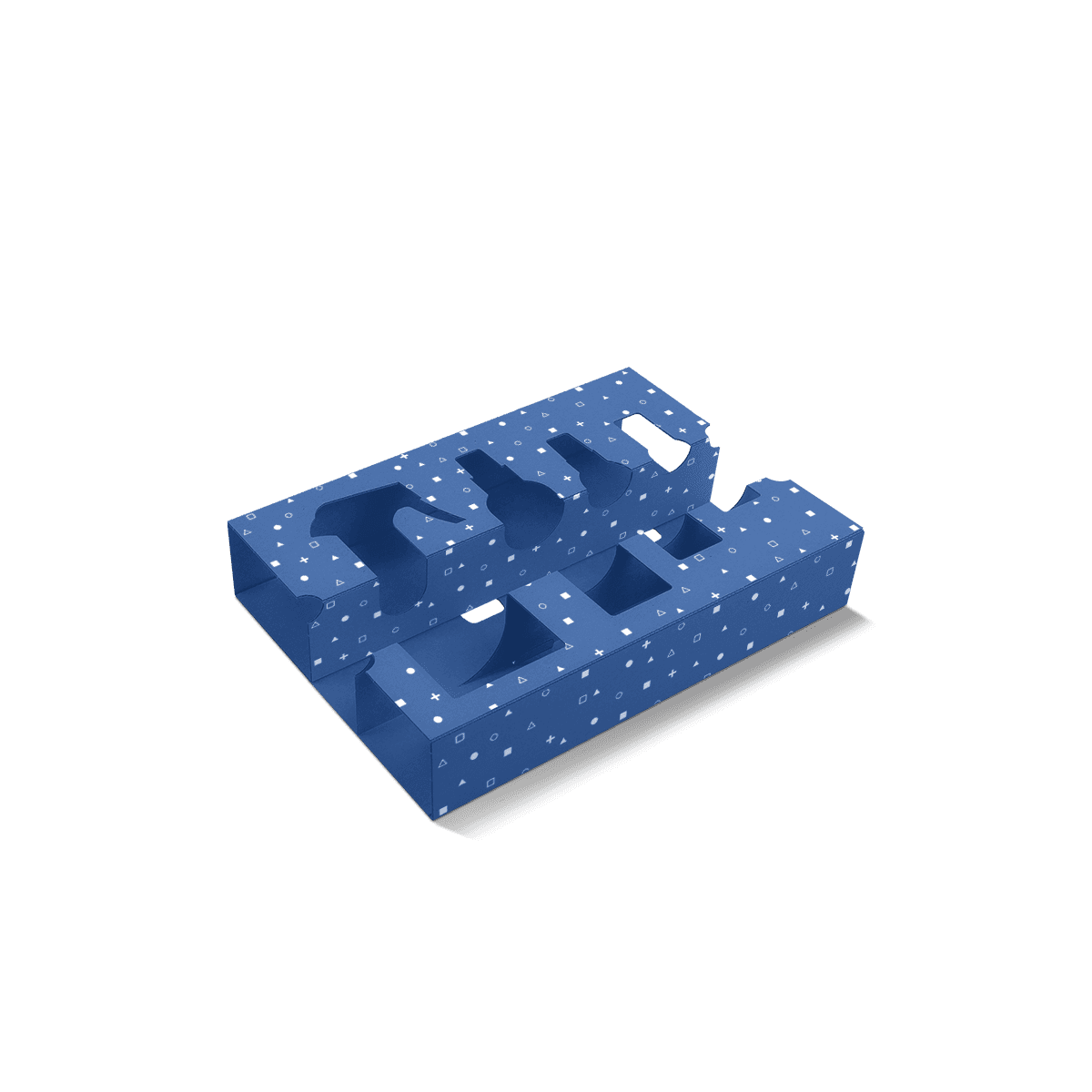
If internal support is genuinely needed, Cosmetic Box Inserts should handle the detailed cavity and retention work rather than turning the outer eyeshadow carton into an overcomplicated structure.

Keep Pressure Off the Lid

Pressed powder is fragile, but the outer carton cannot make a poorly engineered palette impact-proof. Its useful contribution is more specific: reduce movement, protect exposed edges and avoid adding pressure to the lid, mirror or hinge area.

That distinction matters because excessive internal force can create its own damage risk.

Allow Hinge Clearance

A protruding hinge should not be used as a load-bearing point inside the carton. Leave controlled clearance around it and check that the palette can be inserted and removed without catching.

If the palette opens from one particular edge, note that orientation before the box dieline is finalised. It affects how the product is loaded and where important artwork will appear once the carton is standing or stacked.

Do Not Clamp Mirrors

When the palette contains a mirror, avoid a carton specification that presses continuously against the lid. The mirror sits inside the cosmetic component, so the outer packaging should support the pack without squeezing the mirrored section.

For gift sets or heavier palettes, an insert can support the base or outer perimeter instead of applying force over the centre of the lid.

Make Shade Maps Accurate

Multi-pan palettes create an artwork problem that lipstick and mascara cartons do not: the outer box may need to explain a specific internal shade layout.

If shade names, numbers or finishes are mapped on the back of the carton, that printed map must match the real pan arrangement and the orientation in which the customer opens the palette.

Match the Pan Order

Lock the final pan sequence before building a numbered or named shade map. A late change to the physical palette can make otherwise correct outer artwork misleading.

Use one agreed reference orientation, such as hinge at the top or clasp at the bottom, and keep that convention consistent between palette artwork, outer-carton artwork and approval files.

Separate Collection From Shade Detail

The front face normally needs the collection or palette identity first. Detailed shade names can move to the rear or another sufficiently large panel rather than competing with the main visual story.

If the wider brand includes lip, eye and complexion products, Makeup Boxes can coordinate the shared visual system. Eyeshadow Boxes should own the palette-specific shade map, orientation and edge-protection decisions.

Decide What to Reveal

A window only helps an eyeshadow carton when there is something useful to see through it. Many palettes are closed opaque compacts, so a cut-out may reveal only the outer case rather than the actual shades.

That makes windows a functional decision, not an automatic beauty-packaging feature.

Windows Need a View

If the component has a transparent lid or the product itself is intentionally exposed, a window can help customers see colour and finish before opening the carton. Custom Window Boxes are useful when that visibility is central to the sales experience.

If the palette lid is opaque, the same aperture may sacrifice print area and panel stiffness without showing the pans. In that case, strong printed artwork can communicate the colour story more efficiently.

Use Graphics as the Preview

A colour story does not have to be represented by a literal photograph or full-size shade swatches. Typography, controlled colour blocks and collection graphics can signal the palette character while leaving shade names and required copy readable.

The strongest direction should be chosen from the actual competitive setting. Packaging design ideas are useful when deciding whether the pack should rely on material, proportion, colour or finishing rather than simply adding more decoration.

Choose Structure by Format

Single shadows and full palettes should not be forced into one structural answer. A small compact can work well in an efficient folding carton, while a wide premium palette or gift edit may justify a sleeve, tray or stronger presentation structure.

The choice should follow the finished component, not the number of shades printed on the label.

Keep Singles Lean

A single compact or small quad usually benefits from a close carton with little internal complexity. Extra inserts, oversized walls and elaborate opening sequences can add cost without improving the way the product is sold.

If several single shadows share the same compact dimensions, one structural dieline can support multiple artwork files. That keeps production simpler while allowing each shade or collection to remain identifiable.

Give Palettes More Support

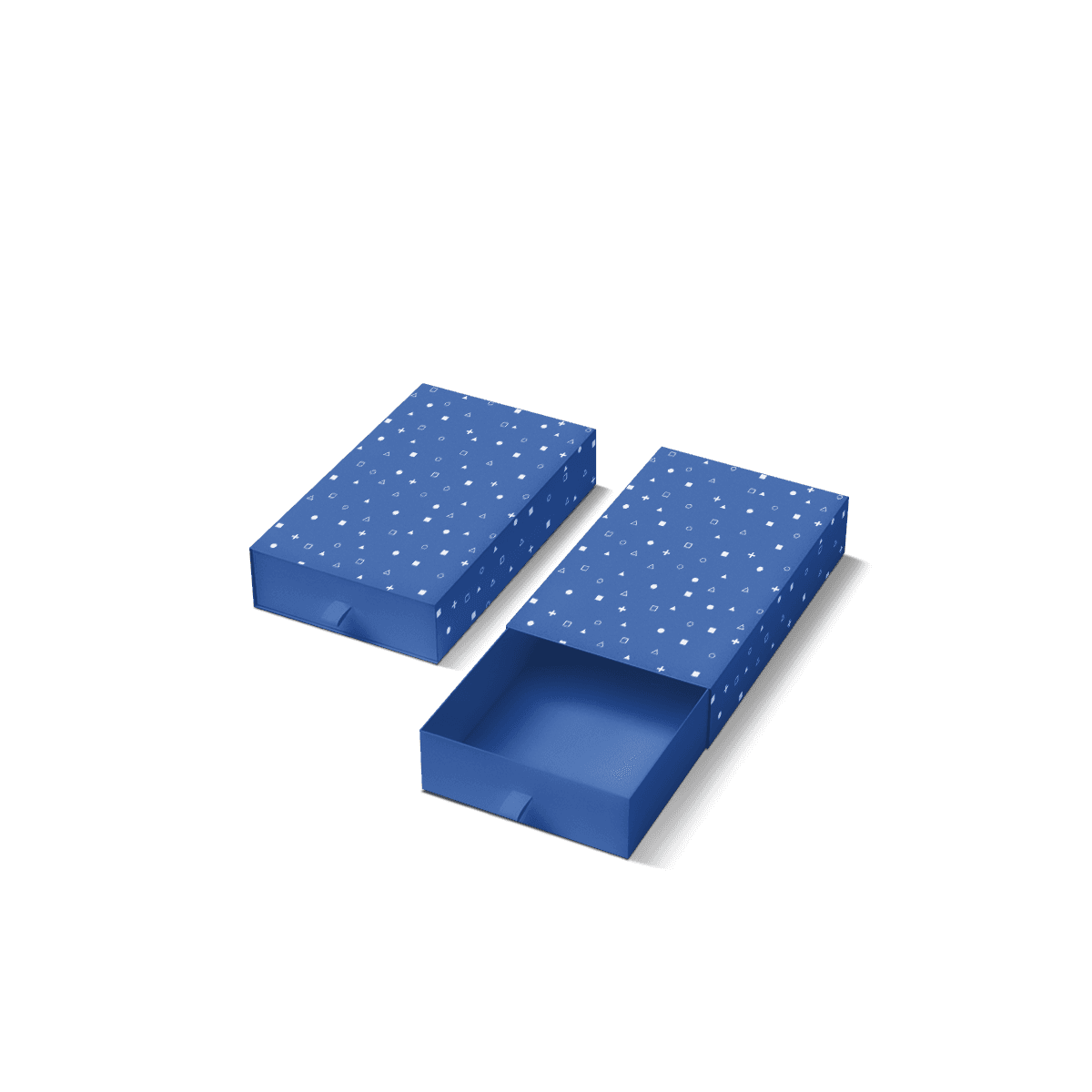
Larger palettes need more attention to flatness, edge clearance and the way the component is removed. A sleeve-and-tray direction can suit some presentation-led products because the broad face remains visually clean while the tray controls the palette.

Do not select a more elaborate structure purely to make the product feel premium. The cost of overcomplicated packaging becomes real when extra board, inserts or assembly steps do not solve a buyer or product problem.

Plan Retail and Delivery Separately

Eyeshadow cartons can protect a palette during normal retail handling, but they should not be treated as the only protection required for courier delivery.

Pressed powders can be sensitive to hard impacts. Ecommerce packaging should therefore manage the parcel journey around the retail unit rather than making the eyeshadow carton unnecessarily bulky.

Keep the Retail Carton Clean

A folding carton can carry the palette identity, shade information and finish treatment while staying compact for shelf display and storage.

When the product is sold online, Cosmetic Mailer Boxes can provide the outer delivery structure for one or several beauty products. Void control and parcel-level protection should be planned there.

Do Not Confuse Fit With Impact Testing

A close-fitting carton can reduce movement. It does not prove that a pressed-powder palette will survive every drop or courier event.

For a fragile launch, test the finished product, retail carton and delivery packaging together. A sample that merely looks neat on a desk does not answer the same question as a packed parcel moving through distribution.

Lock Orientation Before Artwork

Wide palette cartons make orientation mistakes easy to spot. A beautifully composed front can still fail if the hinge direction, opening edge or shade map ends up reversed when the product is packed.

Confirm the physical orientation before serious artwork begins.

Mark Hinge and Opening Edges

On the dieline, identify the front face, rear face, hinge side, opening side and any glue area. The designer should know which way the palette sits inside the carton before placing shade maps or directional graphics.

The packaging dieline workflow is especially useful when broad front and rear panels need to align with smaller side walls and folds.

Place Finishes Away From Stress

Foil, embossing, debossing and spot UV can work well on palette packaging, but do not place precision finishing across working creases without checking the production specification.

Use packaging customisation after the structure and print hierarchy are stable. Premium offset printing can suit large solid colours, exact Pantone requirements and fine typography, while digital can be commercially useful when palette artwork changes frequently or quantities are split across several designs. The digital-versus-offset decision should be made from the actual artwork and SKU split.

Send the Closed Palette, Not Pan Count

Start with the closed physical palette or an accurate production drawing. Show the hinge, clasp, highest point, overall weight and whether the lid contains a mirror. Pan count alone is not enough to establish the outer-carton dimensions.

If the printed box includes a shade map, send the final pan sequence at the same time. Those details can go through the detailed quote form so the carton and artwork orientation are priced from the actual palette rather than an assumed eyeshadow format.

FAQs

It depends on the palette size and how fragile the product is. Compact singles and smaller palettes often suit efficient tuck-end cartons that keep storage practical and the range easy to manage. Larger palettes, mirrored formats and grouped beauty sets may need inserts or a stronger presentation structure. The correct route should follow the product depth, edge profile and intended retail or delivery use.

Start with the finished palette or compact dimensions, including hinge depth, mirror allowance and the highest point of the component. Confirm the total unit weight, shade-count variations and whether the carton needs inserts, leaflets or protective spacing. It also helps to confirm how the packs will be assembled, whether they will be shipped after packing and how much panel space is needed for claims and coding.

A disciplined hierarchy solves most of that issue. Collection name, palette name and finish family should hold the main visual focus while shade lists or pan references sit in secondary positions. Side or base panels often work well for more detailed identifiers. If the palette has many shades, the outer carton needs layout planning early rather than trying to squeeze everything in after the design is finished.

Yes, often more than in many other cosmetic categories. Inserts help reduce movement, support the component edges and make the opening feel more considered, especially for larger palettes or gift edits. They are less critical for lightweight singles in snug cartons. The decision should come from palette weight, break risk and how controlled the reveal needs to feel.

Eyeshadow Boxes without a window are usually stronger when protection, print space and a more polished front panel matter most. They give better room for artwork, claims and collection identity while keeping the component covered during handling. Window Boxes can work well when the palette finish or pan colours need immediate visibility, but they need careful planning so the structure does not feel weaker or visually crowded.

Process

How it works

Your Packaging Journey, From Idea to Production and Delivery

01

Tell Us Your Specs

Custom packaging boxes

Tell Us Your Specs

Provide size, quantity, printing, and finishes.

02

Get a Fast Quote

Custom packaging boxes

Get a Fast Quote

Instant transparent pricing, no hidden fees.

03

Design and Approval

Custom packaging boxes

Design and Approval

Artwork checks, revisions, and final sign-off.

04

Produce

Custom packaging boxes

Produce

Expert manufacturing to meet deadlines.

05

Ship to Your Door

Custom packaging boxes

Ship to Your Door

Hassle-free, flexible delivery options.

Get Your Quote for Custom Eyeshadow Boxes

Share your product details, dimensions, quantity and artwork needs. We’ll help choose the right packaging style and send a clear quote.