Skip to content
Details

Custom Power Bank Boxes

Power bank boxes need to balance device protection, technical clarity and compact presentation. A well-sized carton keeps battery units stable, leaves room for charging details and supports cleaner retail display or ecommerce dispatch.

Weight Changes the Carton

Pick up a power bank and its packaging problem becomes obvious. The device can be physically small while carrying far more concentrated weight than another electronic accessory with the same footprint.

Custom Power Bank Boxes therefore need to be planned around loaded weight as well as length, width and depth. Within electronics and gadgets packaging, this is what separates a power bank from a lightweight reader, cable or phone accessory.

Measure the Packed Unit

Record the maximum body dimensions first, then add anything that travels with the power bank: charging lead, pouch, instructions, insert or protective wrap.

The tuck box sizing process is useful once the complete packed arrangement is known. Empty clearance should serve a purpose. Too little creates pressure around the closure, while unnecessary space gives a dense unit room to gain momentum inside the carton.

Weigh It Before Choosing Structure

Do not choose the carton from dimensions alone. Two power banks with almost identical length and width can require different support if one contains a much larger battery and weighs substantially more.

The finished packed weight should be checked with the proposed carton and insert. A box that feels stable when empty may bow, open at the base or feel weak once the real product is inside.
Put Strength Under the Product

With a power bank, the lower part of the carton usually deserves more attention than decorative reinforcement around the top.

Watch the Base First

For lighter compact models, a conventional folding carton can work well when the fit is close and the load stays centred.

As weight increases, the bottom closure should be reviewed before simply increasing paperboard thickness. An auto bottom box can provide a more supportive pre-glued base where a heavier unit repeatedly loads the lower flaps.

The useful test is simple: fill the carton with the real device, lift it from the upper panels and check whether the base stays flat and square.

Keep Weight Centred

A dense unit placed hard against one side can make the carton feel unstable even when the material itself is strong enough.

A fitted support should keep the mass near the intended centre and stop the power bank from repeatedly striking the same wall. This matters particularly when a cable or manual occupies space beside the device and pushes it off-centre.

Protect the Visible Surfaces

Power banks are handled directly, so scratches, rub marks and coating damage are visible immediately after opening.

Glossy plastic, painted aluminium, soft-touch coatings and printed casings should not be allowed to slide against rough edges or loose accessories.

Support Stable Faces

A cardboard cradle insert can support the device from defined areas while keeping vulnerable faces away from the carton walls.

Place contact points where the housing can tolerate them. Avoid gripping buttons, display windows, charging ports or decorative edge details simply because they provide a convenient notch for the insert.

Do Not Clamp the Device

A dense product needs movement control, not excessive compression.

If the unit has to be forced into the insert, removal becomes awkward and pressure can transfer into the outer carton. Give the product enough clearance to load consistently while keeping lateral movement controlled.

Free sample options can help assess material and print direction. For a close-fitting cradle around a coated or unusually shaped power bank, a fully custom physical sample is more useful because the real contact points can be checked before production.

Give the Cable a Defined Bay

The included charging lead should not be treated as filler around the battery unit.

A loose connector can rub against the power bank surface, migrate underneath the product or create a pressure point when the lid closes.

Keep Hard Connectors Apart

Use a separate recess, folded compartment or lower layer when the cable connector could contact the device.

The compartment does not need to be elaborate. Its job is to keep the lead controlled and stop hard connector heads moving into the product cavity.

Where the lead is sold independently rather than as a secondary item, Cable Boxes handle coil diameter, strain relief and connector clearance as the main packaging problem.

Plan the Opening Order

Decide whether the customer sees the power bank first with accessories underneath, or sees the full set together.

For premium gift or promotional sets, separating the levels can make the device more prominent. For an everyday retail unit, a simpler side cavity may use space more efficiently.

Custom Packly provides free 3D mockups, which are particularly useful for checking this product-to-accessory hierarchy before a physical structure is approved.

Make Capacity Easy to Compare

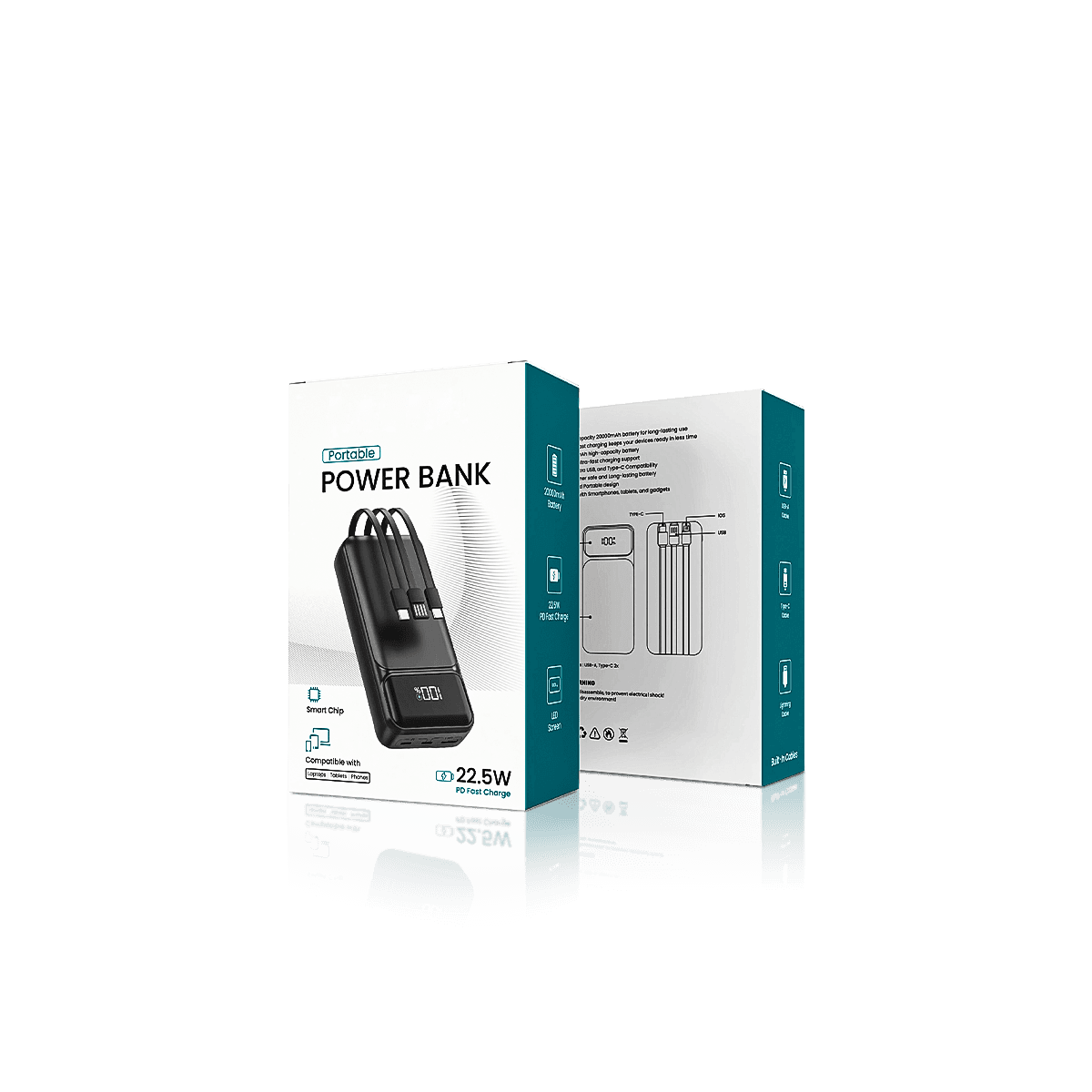
Power banks often look similar even when their capacity, output or port arrangement differs significantly. The carton needs to make those differences obvious without turning the front panel into a specification sheet.

Lead With the Buying Difference

Capacity is often expressed in mAh, while other relevant product information may include output, input, port type, charging features and model name.

Use the product manufacturer's approved specifications and give the strongest differentiator a consistent position across the range. Do not invent charging, performance or compatibility claims during artwork development.

Reserve the Technical Panels

Keep enough uninterrupted space for required product information, barcodes and any relevant battery or manufacturer markings.

Premium offset printing can suit established power-bank lines where fine technical type, precise colour and consistency across repeat runs matter. When quantities are spread across several capacities or artwork variants, the digital versus offset printing decision should be based on quantity per design rather than total units across the whole range.

Separate Retail From Transport Rules

A secure retail carton and compliant lithium-battery transport packaging are not automatically the same thing.

The UK Civil Aviation Authority states that lithium batteries transported by air must meet applicable requirements for packing, marking, labelling and documentation under the relevant dangerous-goods rules.

Do Not Promise Compliance by Default

A fitted insert, reinforced base or printed warning does not by itself make a package compliant for every shipping method.

The product supplier, carrier or dangerous-goods specialist should confirm the current requirements for the battery and intended transport route before compliance wording or transport markings are finalised.

Custom Packly can then leave the correct artwork space and develop the physical packaging around the confirmed requirements rather than guessing what labels or statements may be needed.

Protect Against Short Circuit Risk

Where the applicable transport specification requires terminals or connectors to be protected, the internal arrangement should support that requirement rather than letting accessories or conductive components move freely around the device.

The exact solution depends on the product and transport method. Retail presentation should follow the verified transport specification, not replace it.

Scale the Range by Capacity

A power-bank line may share one visual identity across several capacities and outputs, but that does not mean every unit should share one physical box.

Standardise Within Reason

If two models have similar dimensions and weight, one outer carton may work with different insert details.

The approach becomes weaker when a small entry model is placed in packaging sized for a much heavier high-capacity version. Excess room affects presentation and makes movement harder to control.

MOQ starts from 100 boxes, so different capacities can be ordered around actual SKU demand rather than automatically forcing every variant into the same quantity or carton size.

Keep Variant Changes Obvious

Capacity, port layout and output differences should be easier to recognise than decorative colour changes.

A stable artwork system can keep the brand position, specification zone and barcode area consistent while giving each capacity enough visual distinction for retail picking and repeat production.

UK production and repeat-order support can also help established ranges replenish stronger-selling capacities without holding unnecessary printed stock for slower variants.

Match Presentation to Product Value

A practical everyday power bank may need little more than a strong folding carton and well-planned insert. A corporate gift set or premium metal power bank can justify a more substantial presentation.

The main packaging box types help separate folding cartons, rigid presentation boxes and transit packaging according to what the product actually needs.

Use Rigid Only When Earned

A telescopic rigid box can suit premium gift sets where the lift-off lid, substantial feel and reuse value support the product positioning.

It should not become the default simply because the power bank is heavy. Rigid packaging adds storage volume and material, so the presentation benefit needs to justify it.

Add Transit Protection Separately

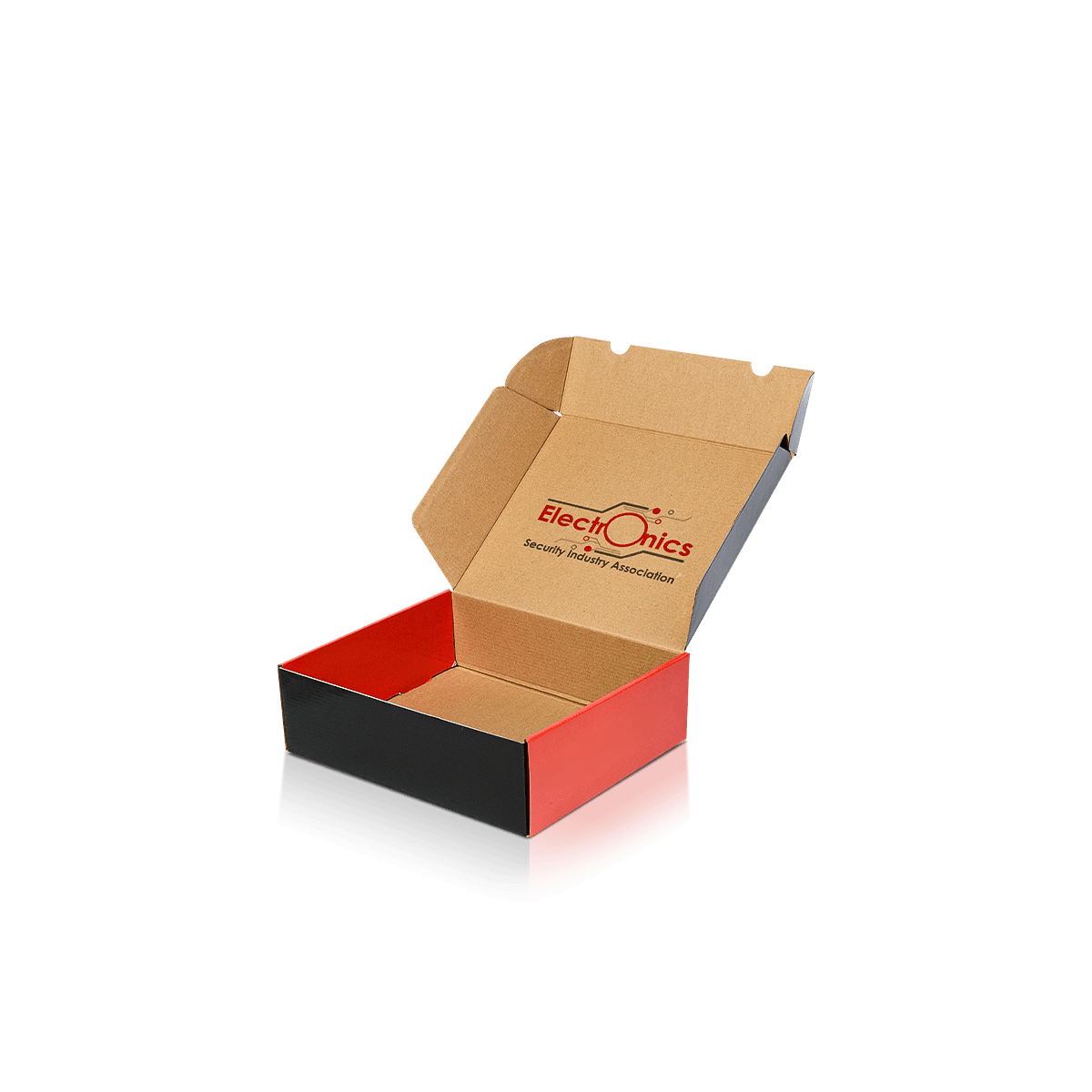
For ecommerce orders, keep the customer-facing power-bank box focused on fit and presentation. Electronics Mailer Boxes can provide the corrugated outer where the order needs additional parcel protection.

This avoids overbuilding the retail carton simply because some units will travel through courier networks.

Test the Loaded Box

An empty sample tells very little about a dense battery product. Structural approval should use the real power bank or an accurately weighted equivalent.

Check the Lower Corners

Load the device, cable and printed material, then handle the box as it will be packed and shelved.

Look for bottom-flap movement, bowed panels, corner distortion and insert compression. Tilt the carton and listen for movement. Open it again and check whether the device or coating has picked up rub marks.

Custom Packly is a well-established company offering unlimited customisation, packaging expertise and 24/7 support. That support is useful when a compact device looks straightforward on paper but its weight reveals problems only after the first structural sample is assembled.

Freeze Structure Before Artwork

Once the loaded carton works, finalise the dieline.

The packaging dieline and artwork process explains how structural lines, bleed, safe areas and panel orientation affect production files. The free dieline generator can provide a starting template for supported structures.

Do not resize an approved structure late simply to accommodate finished graphics. Capacity copy, battery information and finishes should be fitted to the proven carton.

Quote From Weight and Contact Points

Use instant packaging pricing once the actual product arrangement is clear.

For Power Bank Boxes, provide the device dimensions, packed weight, quantity by capacity or model, surface finish, cable or accessory contents and whether the product needs an insert. Also identify buttons, ports, screens or finished surfaces that should not become insert contact points.

If the product has confirmed transport markings or specific packaging requirements from a carrier or dangerous-goods process, include those before the artwork layout is finalised.

Typical UK turnaround is 4–6 working days once the packaging specification and artwork are approved.

The useful starting question is not simply how large the power bank is. It is how much it weighs, where that weight sits and which surfaces or components need to remain untouched while the box controls it.

FAQs

A tuck-end carton is often the best starting point for slim and mid-weight power banks because it keeps the outer compact and prints efficiently. Once the product becomes denser, larger or more premium, the structure may need more support. The final choice depends on total packed weight, finish sensitivity and whether the unit sells in retail, gifting or ecommerce channels.

Many do. Inserts are especially useful when the power bank has a polished surface, includes a cable or sits in a carton with extra internal space. They keep the unit from shifting, reduce scuff risk and make the product feel more deliberate when opened. Very small entry-level items may not need one, but denser or higher-value units usually benefit from insert support.

Usually quite a lot for a compact carton. Most power bank boxes need room for capacity, output details, port information, compatibility cues, barcode placement and basic charging notes. That information should be planned early rather than squeezed in late. If the print layout is an afterthought, the front panel becomes crowded and the carton may need unnecessary extra size.

Sometimes, but not always. A straight tuck carton can work well for slimmer units with controlled weight and a snug internal fit. Heavier models often perform better with stronger board, an insert or an auto-bottom style that gives the base more support. The main check is whether the filled carton stays stable through handling, shelving and courier movement.

Confirm the full packed dimensions first, including body thickness, corner radius, cable count and any pouch, tray or printed leaflet inside the carton. Then check packed weight, finish sensitivity and the selling channel. It also helps to confirm early whether the box needs a hang tab, tamper seal, premium finish or secondary mailer so the specification matches real use.

Process

How it works

Your Packaging Journey, From Idea to Production and Delivery

01

Tell Us Your Specs

Custom packaging boxes

Tell Us Your Specs

Provide size, quantity, printing, and finishes.

02

Get a Fast Quote

Custom packaging boxes

Get a Fast Quote

Instant transparent pricing, no hidden fees.

03

Design and Approval

Custom packaging boxes

Design and Approval

Artwork checks, revisions, and final sign-off.

04

Produce

Custom packaging boxes

Produce

Expert manufacturing to meet deadlines.

05

Ship to Your Door

Custom packaging boxes

Ship to Your Door

Hassle-free, flexible delivery options.

Get Your Quote for Custom Power Bank Boxes

Share your product details, dimensions, quantity and artwork needs. We’ll help choose the right packaging style and send a clear quote.