Skip to content
Details

Custom Bottle Dividers

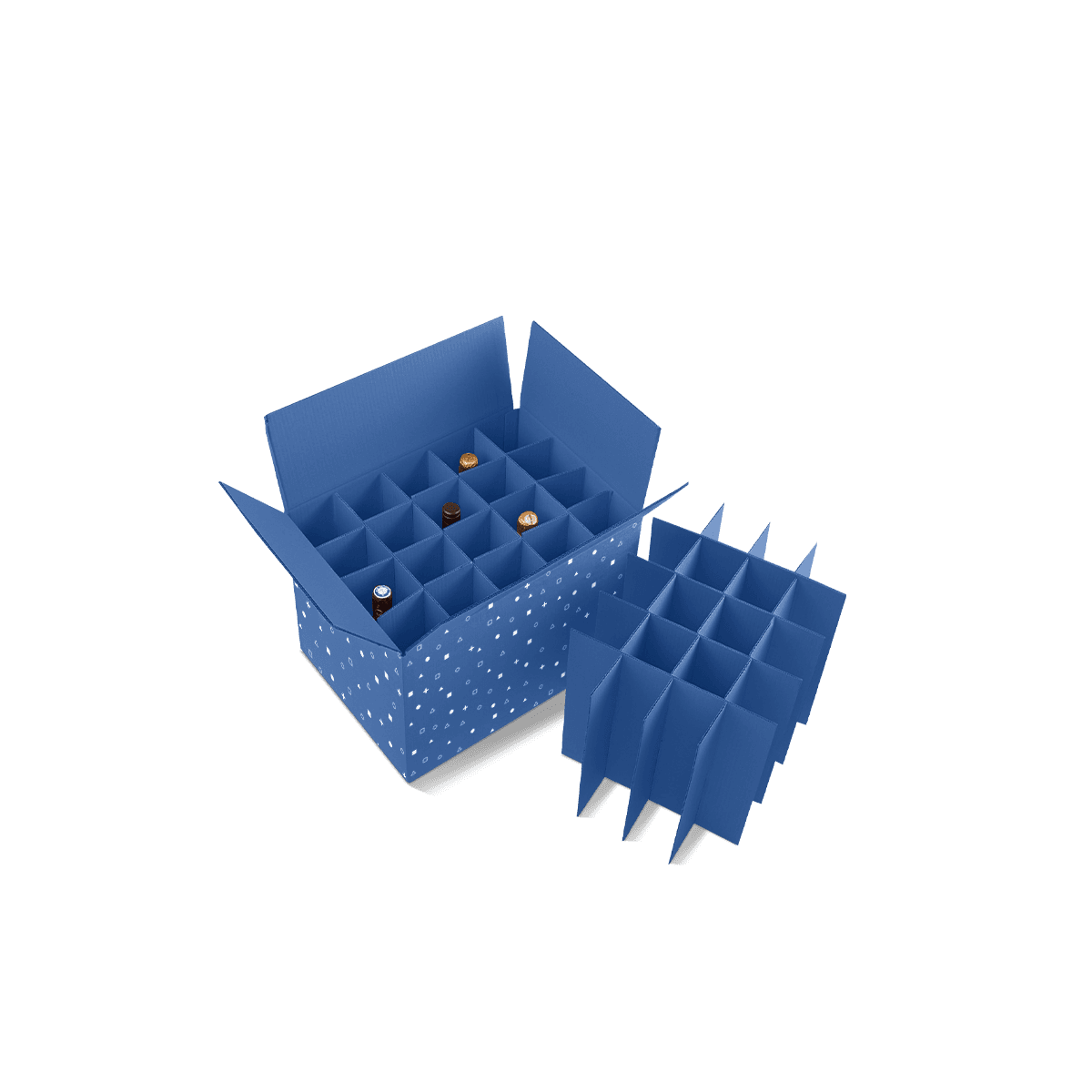
Bottle dividers separate bottles inside one carton to reduce contact, control movement and support safer handling. They suit glass, fragrance and drink-style packs where upright spacing and repeat packing consistency matter more than a shaped presentation insert.

Stop Shoulder-to-Shoulder Contact

Two bottles can fit neatly into a carton and still be badly separated. If their shoulders are wider than their bases, the glass can meet above a divider that looked adequate when the layout was measured only at the bottom.

Custom Bottle Dividers create individual upright spaces around bottles so glass, labels, caps and decorated surfaces are less likely to strike or rub against neighbouring units. They suit fragrance bottles, diffuser vessels, oils, drinks, syrups and other fragile containers packed in pairs, sets or repeat case quantities.

The divider should follow the bottle profile that can actually make contact. That makes bottle diameter, shoulder width, filled weight, height and closure shape more useful than a nominal bottle volume alone.
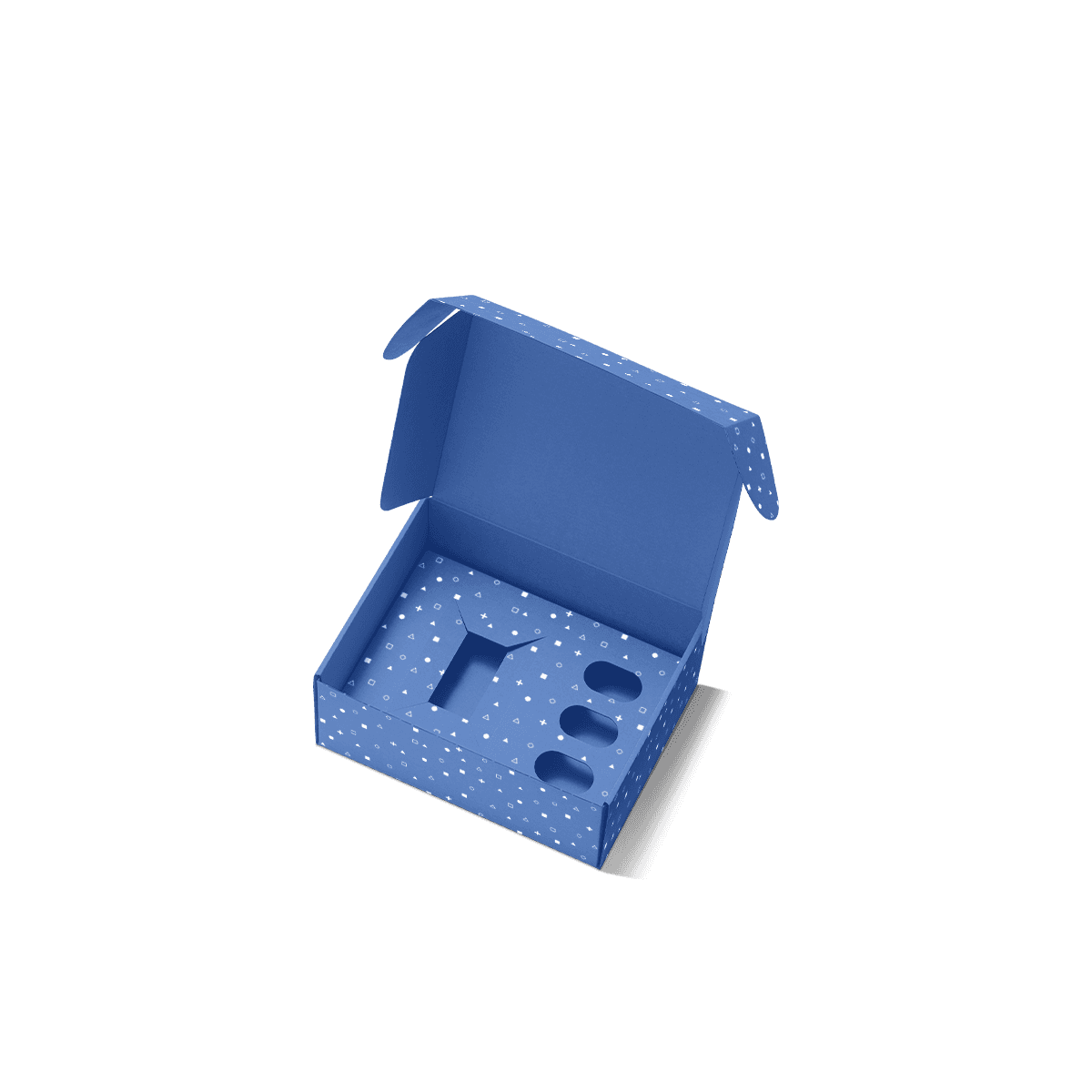
Measure the Widest Point

Bottle capacity does not determine divider size. Two 250 ml bottles can have completely different diameters, shoulders and centres of gravity.

Use the Finished Bottle

Measure the bottle after the label, sleeve, cap, pump, dropper or other closure has been fitted. If several bottle shapes share one carton, record the maximum footprint of each rather than assuming one cell size will suit them all.

For made-to-fit product packaging, the bottle dimensions, divider and outer box can be resolved together so internal clearance is not left until the end.

Protect Labels from Rubbing

A cell can stop glass-to-glass contact and still be too tight for decorated bottles. Raised labels, textured print, shrink sleeves and premium finishes can rub against the divider edge during loading or vibration.

Leave working clearance around sensitive surfaces. The aim is controlled separation, not a friction fit around every bottle.

Shoulders Need Their Own Clearance

Bottle geometry often changes sharply above the main body. A divider that works around the base may become ineffective where shoulders flare outward.

Match the Contact Height

Set the divider height according to the area most likely to collide. For straight-sided bottles, a lower wall may be enough. For rounded shoulders or tall glass vessels, the wall may need to rise higher before neighbouring bottles are properly separated.

The divider does not automatically need to reach the cap. It needs to interrupt the risky contact zone without making bottle removal awkward.

Do Not Brace the Closure

Caps, pumps, corks, droppers and sprayers are rarely the best places to carry side pressure.

A fragrance bottle may need clearance around an ornate cap while its main glass body is separated lower down. Custom Perfume Boxes face the same cap-clearance problem when dense glass and delicate closures share a compact carton.

Upright Does Not Mean Immobilised

Bottle Dividers mainly prevent neighbouring units from colliding. They do not automatically stop a bottle lifting, dropping or bouncing inside a deep carton.

If a divider grips the bottle body but 20 mm of unused height remains above the closure, the bottle can still move vertically when the parcel is inverted. The fragile product packaging decision explains why side restraint and vertical restraint should be checked separately.

Top clearance, base support and outer-box depth therefore belong in the same test as cell width.

Bottle Count Changes the Layout

A six-bottle divider is not simply a two-bottle divider repeated three times. The carton proportions, cross-members and packing sequence change as the count grows.

Keep Edge Cells Consistent

Bottles around the outside of the grid sit next to carton walls rather than another cell. Their available clearance can differ from bottles in the centre unless the divider and box dimensions are planned together.

Check edge cells as carefully as internal ones. A grid that is mathematically regular can still produce tighter spaces at the perimeter once material thickness is included.

Mixed Bottles Need a Map

Gift sets and sample assortments may combine several bottle diameters or heights. Bottle Dividers can accommodate a custom layout, but the cell pattern should follow the actual set rather than forcing different containers into repeated equal spaces.

When the products are not primarily bottles, Partition Inserts can make more sense for a fixed mixed-product framework.

Choose Bottle-Specific Separation

Several internal structures create cells, but Bottle Dividers earn their place when upright containers are the central problem.

Cell Dividers suit repeated small products where regular cell geometry is the main requirement. Bottle Dividers go further into bottle behaviour: widest diameter, shoulder contact, closure clearance, filled weight and the need to keep tall fragile units apart.

For heavier bottles that also need support beneath or around the load, Corrugated Box Inserts can add more structural support than standing separator walls alone.

The best choice is the simplest internal structure that controls the real movement risk.

Filled Weight Sets Wall Stiffness

An empty glass bottle can feel light enough for a slim divider, then behave very differently once filled.

Paperboard can suit lighter retail sets or presentation cartons where the main job is preventing surface contact. Corrugated material becomes more useful as filled weight, carton depth and transit pressure rise.

Do not choose material from bottle size alone. A small dense fragrance bottle can create more pressure than a taller lightweight plastic container. The complete filled weight and delivery journey matter.

If the carton itself also needs greater transit strength, Shipping Boxes should be specified around the loaded case while the divider handles bottle-to-bottle separation inside it.

Give the Base a Job

Divider walls control side contact, but the base determines whether bottles stand evenly.

An uneven bottom, loosely folded carton or unsupported insert can let one bottle sit higher or lean towards another. Heavy glass concentrates load through a relatively small footprint, so the base should stay flat under the filled set.

For cartons packed in stacked bottle tiers, Layer Pads can separate horizontal levels and spread pressure between one row and the next. Vertical dividers and horizontal pads solve different axes of the same packed load.

Loading Should Feel Obvious

Bottle packing becomes slower when staff have to rotate each container carefully, force shoulders through narrow cells or correct a divider that shifts with every insertion.

Load Without Catching

Cell openings should let bottles enter cleanly without snagging labels, caps or decorative sleeves. If the bottle widens at the shoulder, confirm that the loading path works from above rather than checking only the final seated position.

Keep the Grid Located

The complete divider should stay in position as the first and last bottles are loaded. If the internal grid slides across the carton while partly empty, operators spend time correcting it and cells can end up uneven.

Free 3D mockups can help review bottle count, orientation and internal layout before production. Tight physical interactions should still be checked against the real filled containers when glass weight, unusual shoulders or delicate finishes make screen review insufficient.

Outer Dimensions Follow the Set

The carton should be sized around the complete bottle arrangement, divider thickness and safe clearance, not around a rough multiplication of bottle diameters.

Material accumulates across the grid. Several divider walls can add meaningful width and depth to a multi-bottle carton. Ignoring that thickness can leave edge cells too tight or force the assembled grid against the outer walls.

The Inserts and Dividers options can be considered alongside the outer structure when bottle separation, pads or additional supports must work together.

Custom Packly can coordinate the carton, divider geometry, material, artwork and mockup through one experienced packaging team so the internal and external dimensions are based on the same bottle set.

Print Has a Supporting Role

Bottle dividers often sit below the shoulders and disappear once the carton is full. Heavy decoration on hidden surfaces rarely improves the result.

For presentation sets, exposed top edges or visible walls can carry controlled colour, simple identifiers or restrained branding. Premium offset printing is available when those visible surfaces need fine artwork or accurate brand colour.

The packaging customisation options cover material, print and finishing choices once bottle fit and divider geometry are settled.

For transit-focused cases, simple orientation or product identifiers may provide more value than decorative finishing.

Test the Full Bottle Set

Do not approve Bottle Dividers using empty containers when the final product will be substantially heavier.

Load the actual filled bottles, close the carton and check side movement, vertical travel, leaning, cap clearance and contact with the outer walls. Lift and tilt the complete case. Remove bottles in the order a warehouse worker or customer would use.

A divider that performs well with one bottle should also stay stable while the carton is partly loaded and partly emptied.

Free samples can help confirm material and production direction. Exact divider performance should be judged with the bottle profile and filled weight the production carton will actually carry.

Keep Bottle Changes Visible

A bottle redesign can invalidate the divider even when the stated volume does not change.

A supplier may widen the shoulder, increase glass thickness, alter the base, change the cap or move to a taller neck while keeping the same 100 ml, 250 ml or 500 ml capacity. Those changes can alter cell clearance and contact points.

Record the approved bottle diameter, maximum shoulder width, total height, closure profile, filled weight, cell dimensions and divider height with the repeat specification.

MOQ starts from 100 boxes, and established repeat orders can use the approved bottle layout rather than rebuilding the cell plan each time. Custom Packly provides guaranteed 4–6 working day production and delivery once the specification is ready for production.

Set the Case Count Before Pricing

Decide how many bottles must travel in each carton before finalising the divider. Case count changes the carton footprint, the number of intersections and the pressure carried by each internal wall.

Then provide the maximum body or shoulder width, total height with the closure fitted and filled weight. For mixed bottle sets, identify each profile separately.

Case count, material and carton dimensions also affect custom packaging cost in the UK. Use the custom packaging quote once the required bottle count is clear.

FAQs

Confirm the bottle diameter at its widest point, overall height, closure type and the number of bottles in each carton. It also helps to check whether the bottles travel upright, how heavy the filled pack becomes and whether labels, pumps or collars create extra width. Those details shape the divider spacing and board strength.

Yes, that is one of their most common uses. They help keep glass bottles from touching one another and support a cleaner internal layout during handling. The design still needs to reflect bottle weight and fragility. Heavier glass or longer shipping routes may call for stronger board or a more reinforced partition-style build.

Bottle dividers are usually the better choice when the internal layout needs to reflect bottle-specific dimensions, upright spacing and glass-friendly separation. Cell dividers also create repeated sections, but they are often broader in application and better suited to uniform items more generally. Bottle dividers are the more purpose-built route when bottles are the clear focus of the pack.

Not always. Bottle dividers are excellent when the carton carries bottles of the same or closely related size and the main goal is clear separation. Partition inserts often become the better option when the pack includes mixed bottle sizes, added accessories or heavier grouped contents that need a more reinforced internal framework. The better route depends on pack complexity and weight.

Yes. They are often associated with shipping cartons, but they can also work inside presentation-led packs where bottle order and neat spacing matter. For premium gift sets, the outer carton can deliver the visual finish while the divider keeps the bottles controlled inside. The result is practical support without sacrificing overall pack quality.

Process

How it works

Your Packaging Journey, From Idea to Production and Delivery

01

Tell Us Your Specs

Custom packaging boxes

Tell Us Your Specs

Provide size, quantity, printing, and finishes.

02

Get a Fast Quote

Custom packaging boxes

Get a Fast Quote

Instant transparent pricing, no hidden fees.

03

Design and Approval

Custom packaging boxes

Design and Approval

Artwork checks, revisions, and final sign-off.

04

Produce

Custom packaging boxes

Produce

Expert manufacturing to meet deadlines.

05

Ship to Your Door

Custom packaging boxes

Ship to Your Door

Hassle-free, flexible delivery options.

Get Your Quote for Custom Bottle Dividers

Share your product details, dimensions, quantity and artwork needs. We’ll help choose the right packaging style and send a clear quote.