Skip to content
Details

Custom Child Resistant Mylar Bags

Controlled-access pouches planned around the opening action, adult grip space and the information needed to use the closure correctly.

Controlled Access Must Be Deliberate

Custom Child Resistant Mylar Bags are for products where ordinary resealing is not enough and the opening method needs a more controlled action. The closure should be chosen because the product or sales context requires restricted access, not because “child resistant” sounds like a stronger version of a standard zip.

Within custom Mylar bags, this is a closure-led decision. The pouch may still be flat or stand up, and it may still use a heat seal, but the key requirement is how access is controlled after the pack reaches the customer.

Define What the Closure Does

A standard press-to-close zipper is made for convenience. A child-resistant closure uses a more deliberate opening sequence or specialist mechanism.

That difference should be clear in the specification before the pouch size or artwork is final. Do not assume that a stiff zipper, tight seal or difficult first opening automatically gives the finished pouch child-resistant performance.

If the product is subject to a specific legal or regulatory requirement, confirm the standard and evidence required for that exact package system before production. The closure name alone is not enough.

Separate Access, Tamper Evidence and Resealing

Child resistance, tamper evidence and resealability solve different problems.

A child-resistant closure is about restricting easy access. A tamper-evident feature helps show whether the package has been opened. A resealable zip lets the customer close the pouch again after use.

One pouch can combine more than one of these functions, but they should be specified separately. Heat Seal Mylar Bags are useful when the unopened top seal is the main concern. Zip Lock Mylar Bags are the better reference when repeated convenience is the priority.

Test the Opening Sequence

A child-resistant closure should be reviewed as an action, not just as a component on a pouch drawing.

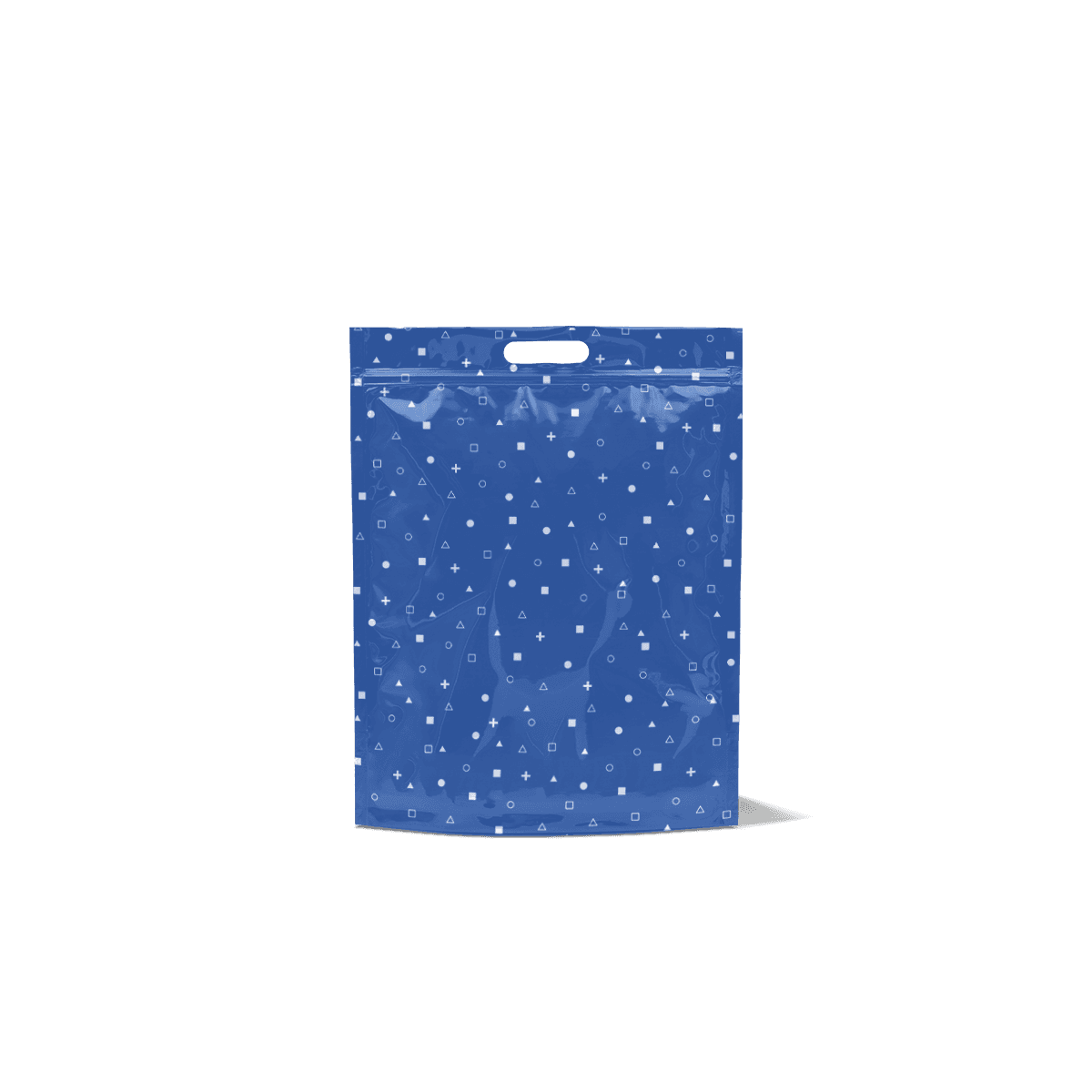
The customer may need to pinch, press, slide or combine two movements before the closure releases. That sequence affects the space above the zipper, the stiffness of the pouch and how clearly the opening method needs to be communicated.

Adult Use Still Matters

A closure that is difficult for everyone is not a strong specification.

Adults should be able to understand where to grip and how to open the pouch without resorting to scissors, tearing the film unpredictably or damaging the closure before the product has been used.

Test the intended opening with the real pouch size. A mechanism that works comfortably on a large bag can feel much more awkward when the same top arrangement is compressed onto a small pouch.

Small Bags Need More Care

Compact pouches leave less room for fingers, instructions, a heat seal and the child-resistant mechanism.

If every feature is pushed into the same narrow top strip, the customer can end up with too little grip space or with opening instructions crowded into a fold.

Do not shrink a successful larger specification automatically. Recheck the closure position and hand clearance for each size.

Leave Space for Hands

The top of the pouch is functional working space.

The customer needs enough material to hold while performing the opening action, and the closure itself needs enough clearance from the product to work without constant interference.

Keep Fill Below the Mechanism

Powders, crumbs and small pieces can migrate towards the closure during transport and repeated use. If they enter a zipper track or sit directly beneath the opening area, they can make the mechanism harder to use.

Leave practical headroom rather than filling the pouch to the highest possible line.

For powders, capsules and wellness products, Supplement Mylar Bags show why fill volume, closure position and information space should be planned together rather than independently.

Shape Affects Grip

A Stand Up Mylar Bag gives the product a gusseted base, which can make the pouch easier to hold upright during repeated opening. A Flat Mylar Bag keeps the packed profile slimmer but may offer less structure when nearly empty.

Neither shape is automatically better for controlled access. Choose the silhouette around the product and shelf behaviour, then make sure the child-resistant closure remains usable on that shape.

Make Instructions Part of Function

If the opening action is not obvious, the pouch needs enough clean space to explain it.

Opening instructions should sit where the customer looks and handles the pack, not on a crowded area hidden by a fold or below the fill line.

Show the Action Clearly

Keep instructions short and physical. The wording should tell the adult what to do, while the graphics should point to the correct grip or release area if the specification uses one.

Do not let decorative artwork obscure the closure mechanism. A visually strong pouch that makes the access method confusing has failed an important part of the job.

The same principle applies across wider packaging design decisions: graphics should support how the package is handled, not compete with it.

Reserve Regulatory Copy Early

Some products need more label space than ordinary retail goods.

Warnings, dosage or use information, batch details, ingredients, product strength and other required text can quickly compete with branding on a small pouch. The exact requirements depend on the product and market, so do not invent them from another brand’s pack.

The Wellness Packaging area shows why products with dense information requirements benefit from planning readable space before decorative finishes are added.

Treat the Whole Pouch as the System

Controlled access does not come from the zipper alone.

The film, pouch dimensions, top geometry, seal arrangement and closure all interact. A change that appears minor can alter how the opening feels or performs.

Keep the Approved Package System Together

If a project has been approved around a particular closure and pouch specification, do not assume a different zipper, film or top layout is equivalent because it looks similar.

For regulated or tested applications, changes may need fresh evidence or review. MHRA specifically notes that changes to aspects of a child-resistant medicine package can require further evidence that the revised system still complies.

Keep the approved component specification tied to the artwork and reorder record.

Barrier Performance Is Separate

A child-resistant closure does not tell you how the film handles light, moisture or aroma.

If the product needs opaque metallic barrier material, Foil Mylar Pouches address that material decision more directly. If aroma containment is a major concern, Smell Proof Mylar Bags should be assessed around film, seals and closure together.

Avoid using “child resistant” as shorthand for every other protective property.

Check the Filled Pouch

Opening tests should be performed with the product inside, not only on an empty sample.

A filled pouch has different stiffness, weight and tension. Contents can push against the closure, settle into the hand area or change how easily the customer holds the pack while opening it.

Test Full and Partly Used

The pouch should be reviewed at the beginning and later in the use cycle.

A full pouch may feel firm and easy to grip. A half-empty pouch can collapse around the closure and require a different hand position. If the product is meant to be opened repeatedly, both states matter.

This is particularly relevant when the closure also needs to be re-engaged after each use.

Use Physical Sampling for the Mechanism

A 3D mockup is useful for checking artwork, instruction position and the appearance of the top panel.

It cannot tell you how much force the closure needs, whether adult fingers have enough room or how the filled pouch behaves after repeated opening. When those details materially affect the project, a physical custom sample is the more meaningful check before a larger run.

Avoid Unverified Safety Claims

This is one area where conservative wording is commercially smarter.

Do not print or market a pouch as meeting a specific child-resistant standard merely because a supplier calls the zipper child resistant. The applicable requirement depends on the product, package system and market.

For UK medicines, MHRA distinguishes reclosable and non-reclosable child-resistant packaging and identifies recognised standards for each. Hazardous chemical packaging can have separate GB CLP requirements. The practical rule is to identify the requirement first, then specify and document the packaging against it.

Use Child Resistant, Not Child Proof

The purpose is to make access harder for young children, not to claim that access is impossible. UK public-safety guidance similarly warns that child-resistant packaging should not be treated as child-proof.

That distinction matters in customer-facing copy, artwork approval and internal specifications. Avoid absolute wording unless it is explicitly supported by the appropriate evidence for the product.

Control Cost Through Specification

Specialist closures add complexity, so cost should be managed by removing unnecessary variation rather than weakening the access requirement.

The custom Mylar bag cost breakdown already shows that child-resistant closures, pouch dimensions, film, print method and SKU count can all affect the final unit price.

Standardise Where It Is Safe

Several SKUs can sometimes share one pouch size and closure arrangement when their fill volumes and access requirements are genuinely similar.

That can simplify repeat production and reduce unnecessary specification changes. It should not be forced across products that need different opening behaviour, different fill clearance or different regulatory treatment.

Keep Artwork Flexible

If ingredients, warnings, strength or regulatory information may change, avoid committing too much stock purely to reach a lower unit price.

A shorter or more flexible print run can be commercially safer when product information is still evolving. The decision should consider total stock risk, not only cost per pouch.

Set the Access Requirement First

Do not begin with artwork if the product needs documented child-resistant performance. First identify the standard, test evidence or market requirement that applies to the complete pouch system.

Then send the product type, fill amount, pouch shape and any first-open seal alongside that requirement. This lets the package be priced against a defined access condition rather than against the words “child resistant” alone.

Send the controlled-access specification once those requirements are known.

FAQs

Choose them when the pouch needs a more deliberate opening action than a regular resealable closure provides. They are useful where access control is part of the brief, not just freshness retention. If the product only needs simple everyday opening and reclosing, Zip Lock Mylar Bags may be the easier and more economical option.

Start with the fill weight, product dimensions and how often the pouch will be opened after purchase. Then confirm the required barrier level, closure type, seal area above the closure and any print or finish requirements near the top of the pouch. It also helps to share how the pouch will be filled, because closure design can affect usable headspace.

Yes, they are often chosen for products used over time rather than consumed in one sitting. The key difference is that reopening usually takes more intention than a standard zip pouch. That makes them useful where closure control matters, but the pouch still needs to remain practical in day-to-day use.

Not automatically. A child-resistant closure focuses on how the pouch opens and re-closes, while smell-control performance depends more on the film structure, seal quality and overall pouch build. Some projects need both, but they should be specified together rather than treated as the same feature.

Yes, it can suit all three when the dimensions, barrier level and closure design are matched to the contents. Dry products are usually the strongest fit because they work well with flexible pouches and controlled closures. The smarter route is to specify the pouch around the product’s weight, flow and storage conditions from the start.

Process

How it works

Your Packaging Journey, From Idea to Production and Delivery

01

Tell Us Your Specs

Custom packaging boxes

Tell Us Your Specs

Provide size, quantity, printing, and finishes.

02

Get a Fast Quote

Custom packaging boxes

Get a Fast Quote

Instant transparent pricing, no hidden fees.

03

Design and Approval

Custom packaging boxes

Design and Approval

Artwork checks, revisions, and final sign-off.

04

Produce

Custom packaging boxes

Produce

Expert manufacturing to meet deadlines.

05

Ship to Your Door

Custom packaging boxes

Ship to Your Door

Hassle-free, flexible delivery options.

Get Your Quote for Custom Child Resistant Mylar Bags

Share your product details, dimensions, quantity and artwork needs. We’ll help choose the right packaging style and send a clear quote.