Skip to content
Details

Custom Zip Lock Mylar Bags

Resealable pouches planned around repeated opening, usable grip space and the way customers actually reach and store the contents after first use.

Give the Zip Working Space

Repeated opening turns the top of a pouch into a working interface. Custom Zip Lock Mylar Bags need enough film above the zipper to grip and enough headroom below it to keep the contents out of the track.

The closure should be sized around what the customer actually does: pinch out a piece, scoop powder, pour a refill or take several portions over time. That use pattern matters more than adding a zip as a standard feature.

The pouch may be flat or gusseted. On this page, the zipper and access routine remain the main decision.

Leave Room Above the Zip

Customers need material above the zipper to grip when pulling the pouch open.

If the zipper sits too close to the top edge, there may be too little film to hold comfortably. This becomes more noticeable on small pouches where saving a few millimetres can make the opening noticeably harder to use.

That upper area may also need space for a tear notch or a first-open heat seal. Those features should be positioned together rather than competing for the same narrow strip of film.

Keep Fill Below the Track

The product should settle below the zipper rather than constantly pressing into it.

Powders can enter the track. Fine crumbs can collect along the closure. Irregular pieces can push the two sides out of alignment when the customer tries to close the pouch.

Allow enough headroom for normal handling after purchase, not just enough space to close the bag immediately after production.
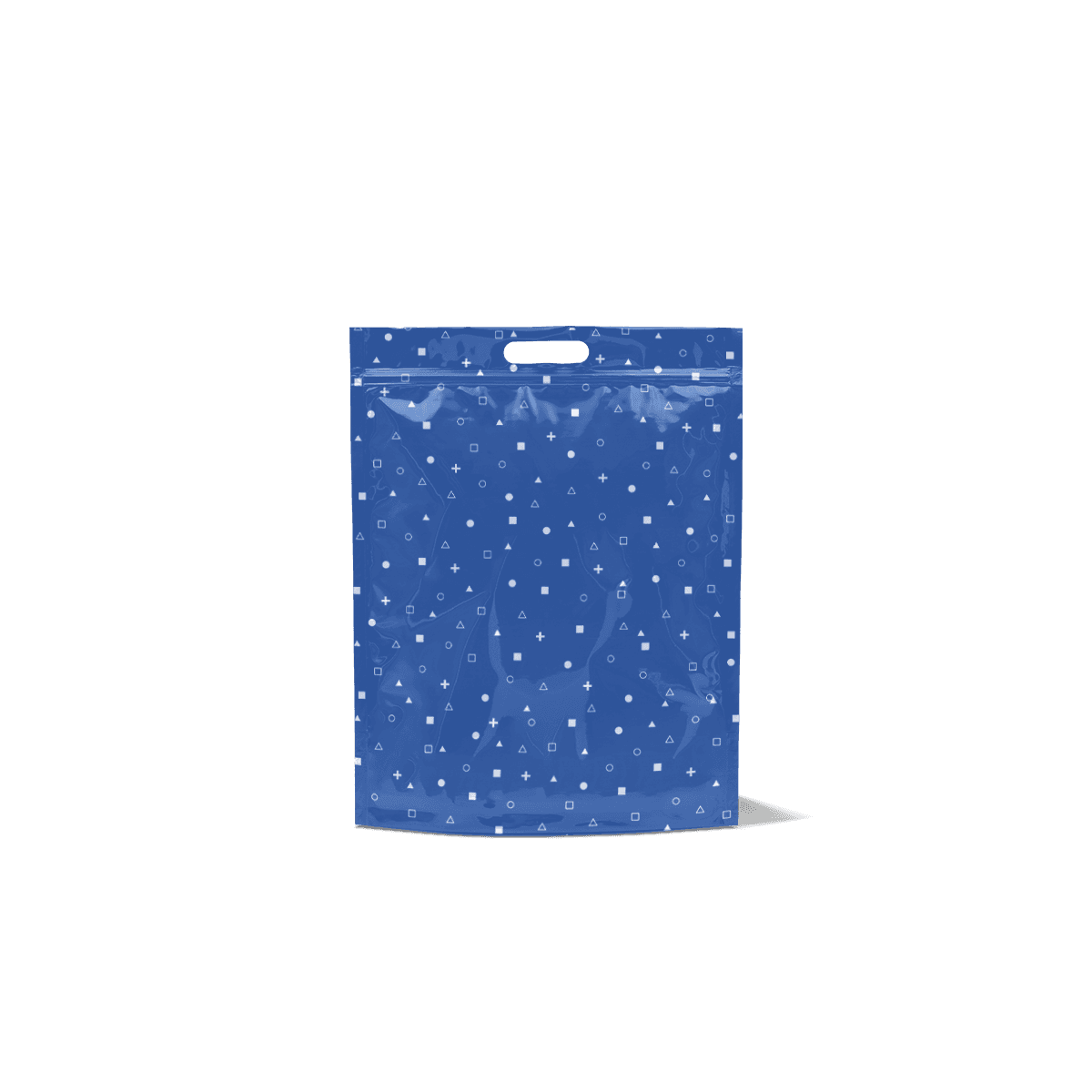
Size for Product Access

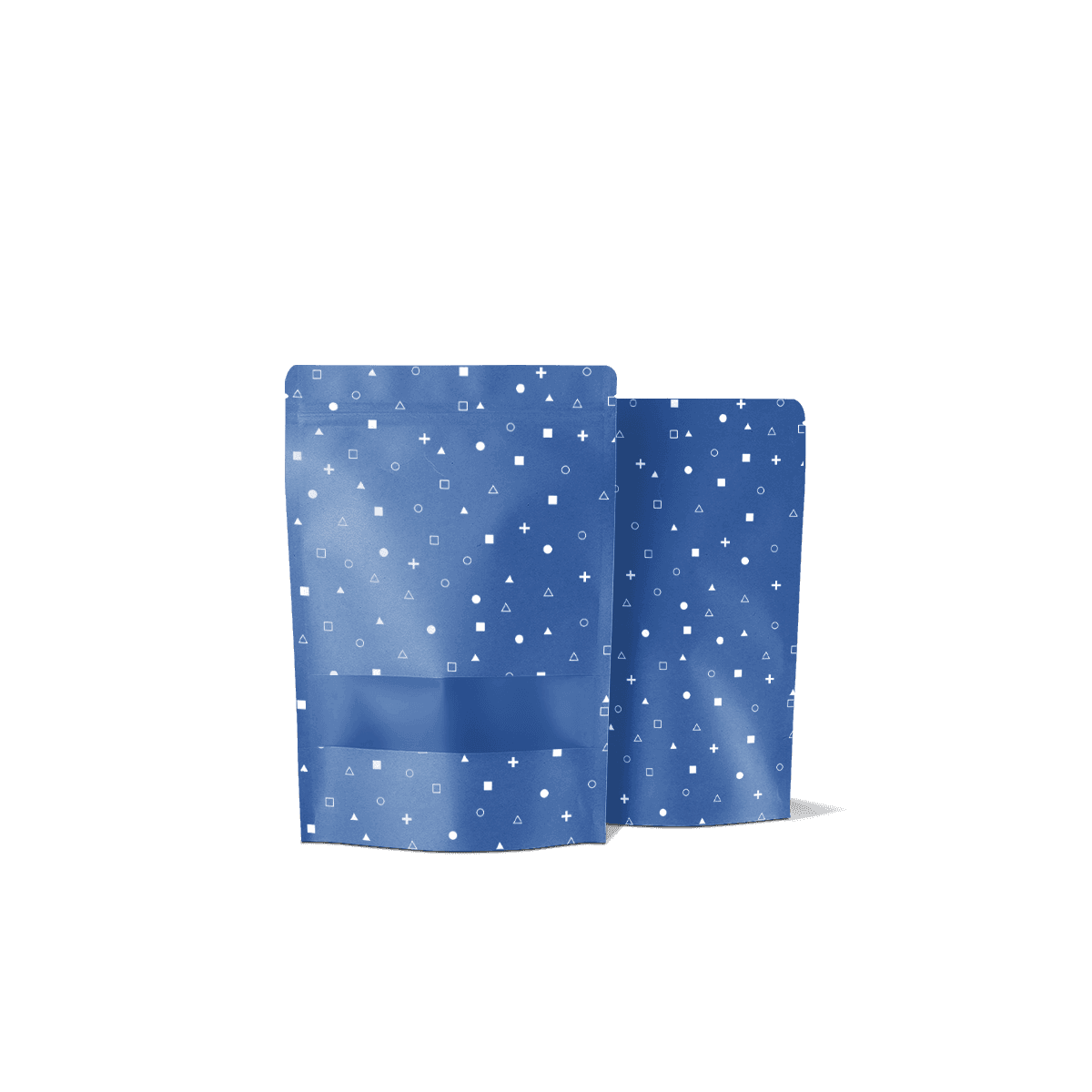
A resealable pouch has to let the customer reach the contents conveniently. Capacity alone does not answer that question.

Think about how the product leaves the bag. A customer may pinch out a treat, pour a refill, insert a scoop or shake out a measured amount. Each action places different demands on the opening width and the space beneath the zipper.

Scoops Need Hand Clearance

Powders and supplements often need more access than their fill volume suggests.

A pouch may technically hold the correct quantity but still feel awkward if the opening is too narrow for a scoop or if the zipper sits so low that the customer's fingers repeatedly touch the contents.

For Supplement Mylar Bags, decide whether a scoop sits inside, how wide it is and how easily the customer needs to retrieve it before finalising the opening width.

The product volume determines capacity. The access method determines usability.

Pieces Need a Clear Opening

Treats, sweets and other larger pieces can interfere with the zipper if the bag is filled too high.

A wider pouch opening can make repeated access easier without necessarily increasing the total capacity by much. This can be more useful than simply making the bag taller.

Do not size the pouch only around how efficiently it can be filled at the factory. The customer may open it dozens of times afterwards.

Refills Need Pour Control

A refill pouch may be opened mainly to pour the contents into another container.

In that case, a very wide opening can make the product harder to control. Pouch width, stiffness and the customer's likely pouring action should be considered together.

The best opening is therefore not universally the largest one. It is the one that suits how the product is actually removed.

Test More Than One Reclose

A zipper that closes properly once has not yet proved that it works well as repeat-use packaging.

The relevant test is repeated opening and closing with the real product inside. Check how easily the two tracks align, whether product residue accumulates and whether the upper pouch remains comfortable to grip.

Listen and Feel for Alignment

Many zipper closures give tactile or audible feedback as the tracks engage. Customers often rely on that feedback rather than visually inspecting every millimetre of the seal.

Test the full width. A zipper that engages easily in the centre but repeatedly misses near one edge can create frustration even when the pouch still looks normal.

The closure should not require excessive force, especially on smaller pouches where there is less material to hold.

Test After Product Has Moved

Do not keep the sample perfectly upright between opening cycles.

Turn it, store it, allow the contents to move and then use the zipper again. That is closer to what happens after the pouch reaches a kitchen cupboard, shop counter, gym bag or storage drawer.

If particles repeatedly reach the closure track, the issue may be fill height or headroom rather than the zipper specification itself.

Check the Near-Empty Pouch

A nearly empty flexible pouch behaves differently from a full one.

With less product supporting the walls, the top can fold or twist more easily. Customers still need to align the closure without fighting the pouch.

This is one reason repeat-use testing should cover the expected life of the product rather than only the first opening.

Separate Reclosing From First Opening

A zipper and a heat seal solve different problems.

The zipper controls what happens after the customer has gained access. A heat seal can close the pouch before that first use. They can work together, but they should not be treated as interchangeable features.

Heat Seal Can Sit Above

For products that need a fully closed top before sale, a heat seal can sit above the zipper. The customer opens or removes that upper section before using the resealable closure beneath it.

Heat Seal Mylar Bags go deeper into the sealing process itself, including clean seal zones and filling contamination.

On a zip-lock pouch, the important point is spatial: the first-open area must not consume the grip room the customer needs afterwards.

Standard Zip Is Not Child Resistant

A conventional press-to-close zipper should not be treated as a child-resistant closure simply because it takes two hands to open.

Where controlled access is genuinely required, Child Resistant Mylar Bags need to be specified around the appropriate specialist closure rather than relying on an ordinary zip.

Do not imply safety performance from the presence of a zipper alone.

Choose the Pouch Around Use

Zip lock describes the closure, not the entire pouch silhouette.

The same repeat-use requirement can lead to a flat pouch for compact storage or a gusseted pouch for stronger shelf presentation. Choose the physical shape separately from the access method.

Stand-Up Suits Shelf Use

Stand Up Mylar Bags are useful when repeated access needs to coexist with an upright shelf stance.

The bottom gusset handles the standing behaviour. The zipper handles reopening. Neither feature replaces the other.

For products kept on a shelf or worktop between uses, test the pouch after several portions have been removed because the remaining fill can change both stance and access.

Flat Keeps Bulk Down

Flat Mylar Bags are stronger when low packed depth matters and the pouch will sit inside a carton, kit, drawer or outer mailer.

Adding a zipper increases the required top area, so check that the closure does not undermine the compact dimensions that made the flat pouch attractive in the first place.

A zipper should earn the space it consumes.

Keep the Top Panel Clear

Resealable pouches have more functional activity near the top than many simple flexible bags.

The zipper, potential heat seal, tear notch and grip area can all sit within a relatively small vertical zone. Artwork needs to respect that space.

Do Not Crowd the Zipper

Keep small copy and important graphics away from the closure line.

The pouch bends each time it is opened and the customer's fingers repeatedly grip the same area. Fine text positioned directly beside the zipper can become harder to read once the bag has been handled.

Use the central face for high-priority branding and information. Let the closure area perform its physical job.

The principles in packaging design ideas are useful here because graphics should follow the physical behaviour of the package rather than treating it as a flat poster.

Plan Variant Information Early

Repeat-use products often appear in several flavours, formulations or strengths.

Keep the zipper position and core layout consistent where possible, then make the variable information easy to identify without redesigning every pouch from scratch.

The number of artworks can also affect production economics. Digital versus offset printing explains why ten thousand units spread across many designs are commercially different from ten thousand identical packs.

Use a Zip for Repeat Access

A resealable closure costs space and adds another production feature. It should solve a genuine customer need.

Products consumed immediately may gain very little from it. Single-use samples, measured portions and products transferred to another container after opening may be simpler without a reusable closure.

Opening Frequency Is the Test

Ask how many times the customer realistically needs to reopen the pouch.

If the answer is once, a zipper may be unnecessary.

If the product is used daily over several weeks, the closure becomes much more important because any awkwardness is repeated every time the customer interacts with the package.

That repeat exposure makes small design errors more noticeable than they would be on single-use packaging.

Cost Follows Useful Features

A zipper should be assessed alongside pouch size, film, print method and quantity rather than treated as a free default.

The custom Mylar bag cost breakdown explains how closure features, material, dimensions and SKU count combine in the finished quotation.

Removing a useful zipper purely to reduce unit cost can damage convenience. Adding one to a product that does not need repeated access simply spends money and usable pouch area without solving a problem.

Specify the Opening Routine

Before pricing, describe what the customer actually does after opening. A scoopable powder, pourable refill and handful of treats can need different opening widths even at similar capacity.

Share the target fill and whether a first-open heat seal sits above the zipper. If closure feel or access is commercially important, a paid custom sample can check the real pouch with the contents inside.

Price the resealable pouch once the opening routine is clear.

FAQs

It is the right choice when the product will be opened more than once and needs to stay protected between uses. Snacks, powders, supplements, tea and pet treats are common examples. If the pack is single-use only, a simple heat-seal pouch may be enough and can reduce overall specification complexity.

Zip Lock Mylar Bags are better for repeat-use products because the closure can be reopened and closed again after the first opening. Heat Seal Mylar Bags are often better for single-portion packs, tamper-evident formats or products that do not need resealing. In many cases, a zip-lock pouch still includes a heat-seal area above the zipper for added pack security.

Confirm the fill weight, product density, required barrier level and whether the pouch needs to stand or hang. It is also important to check zipper position, headspace above the product and the seal area above the closure if first-open evidence matters. Sharp, oily or heavy contents may need a stronger pouch build.

Yes, they are widely suited to dry powders and many food categories when the material structure is matched to the product. Moisture sensitivity, aroma retention and shelf-life goals should guide the final film choice. For food-related use, the specification and compliance requirements should be reviewed before production rather than assumed from a generic pouch build.

Yes, the zip-lock feature can be added to different pouch constructions. A flat version suits samples, refills and slim packs, while a stand-up version gives stronger shelf visibility and easier counter display. The better route depends on whether the priority is compact packing or upright retail presentation.

Process

How it works

Your Packaging Journey, From Idea to Production and Delivery

01

Tell Us Your Specs

Custom packaging boxes

Tell Us Your Specs

Provide size, quantity, printing, and finishes.

02

Get a Fast Quote

Custom packaging boxes

Get a Fast Quote

Instant transparent pricing, no hidden fees.

03

Design and Approval

Custom packaging boxes

Design and Approval

Artwork checks, revisions, and final sign-off.

04

Produce

Custom packaging boxes

Produce

Expert manufacturing to meet deadlines.

05

Ship to Your Door

Custom packaging boxes

Ship to Your Door

Hassle-free, flexible delivery options.

Get Your Quote for Custom Zip Lock Mylar Bags

Share your product details, dimensions, quantity and artwork needs. We’ll help choose the right packaging style and send a clear quote.